It’s October, which means it is time for me to tell you about this year’s Think Before You Pink campaign from Breast Cancer Action. This year’s campaign, “Poison Isn’t Pretty”, has been rubbing some people the wrong way but I’m hoping I can present it to you in a way that helps you understand their position and why I’m supporting “Poison Isn’t Pretty” and I hope you will too.
“Poison Isn’t Pretty” is calling out the Personal Care Products Council and the American Cancer Society for including cosmetic products containing harmful chemicals in kits they give to cancer patients through their “Look Good, Feel Better” program. The “Look Better, Feel Better” program provides free workshops, beauty tips, and complimentary makeup kits to women in cancer treatment. Breast Cancer Action IS NOT saying that the “Look Good, Feel Better” program is bad. What they are asking for is more responsibility from people who are helping women getting treated for cancer.
Many of the products offered to women in “Look Good, Feel Better” kits contain chemicals linked to increased cancer risk, including parabens, Teflon, and formaldehyde releasers. Some of the chemicals in “Look Good, Feel Better” products may actually interfere with breast cancer treatment. The chemical methylparaben, for example, not only increases breast cancer risk by mimicking the hormone estrogen, it can also interfere with the common cancer drug Tamoxifen.
It seems that since the “Look Good, Feel Better” program is a charitable organization established by the Personal Care Products Council, which is described on their on their own website as “the leading national trade association representing the global cosmetic and personal care products industry”, that they should be able to ensure that the makeup kits given to cancer patients only contain cosmetics that are safe for use. I won’t even discuss that perhaps maybe us other ladies who enjoy makeup shouldn’t have to worry about whether or not our cosmetics are increasing our chances of cancer.
To sum up, the “Look Good, Feel Better” program is good, however stocking the makeup kits with potentially cancer causing cosmetics is bad. So let’s tell them that “Poison Isn’t Pretty”!
To learn more about the “Poison Isn’t Pretty” campaign, visit here.
Both the Personal Care Products Council and American Cancer Society responded to the “Poison Isn’t Pretty” campaign here.
I laughed out loud, although I really shouldn’t have. She was a cute as a button. Curly blonde hair and petite, maybe 3 years old at the most. She had on the cutest little dress with a Christmas print, white tights, and bright, shiny Mary Jane shoes to complete the perfect picture. Her Dad, at the other end of her hand, was clearly a work-a-day type. Gnarled and whiskered, there were paint spatters flecking his plaid shirt and blue jeans. As they walked into the black Friday store, Dad remarked, “Look at all the people!” And in a cute, tiny voice with a little-kid accent, the delicate princess exclaimed loudly, “No Shit!” My coffee almost exploded all over me as I guffawed. Red-faced and embarrassed the Dad bent close to his daughter and gave her a loving reminder: “Now Chelsea, we don’t say those bad words in public.” I wondered if it was okay in private. With wide eyes she nodded, obviously confused and overwhelmed by the bustle of the store.
In the 70s, George Carlin made famous the seven words you can’t say on TV. But really, if you ask anyone, there are way more than seven that we classify as expletives or bad words. When we are kids, we rejoice in their delicious sounds. From the “doo-doo head” and “poopy” of childhood, to the rude mother-degrading curses of teens, we continue to thrill at the obvious insults. It’s not just an American thing; I have seen comedic dictionaries about how to curse in every language. We classify them as “bad” words. Never to be spoken, especially not in public.
Of course no words are really “bad.” They are just sounds on our tongue or letters on a page. It is in the meaning and context that the moralistic value occurs. We can exclaim about abundant waste in a toilet but we better not tell someone they are full of it. It’s all about the context. I have to re-train my brain after my various military stints, where bad words are sprinkled throughout casual conversations. I once heard a Platoon Sergeant use more than 14 of them in a single sentence. The worst part is that I understood and agreed with what he said-and how he said it. I shook his confused hand in congratulations. Bad, bad, bad.
What I don’t understand is why other, non-curse words aren’t considered bad. They have negative connotations in all contexts: such as “hate,” “unemployed,” “addiction,” “kill,” and millions of others that produce a visceral response in any setting. We don’t use them in polite society either. I will avoid further examples but I am sure you can think of your own that are far worse than “doody-head.”
As parents and polite adults, we teach our children and train ourselves to avoid using bad words. Even though the best of us occasionally drop an “f-bomb,” most of us don’t cuss like drunken merchant marines. We realize that as reserved and thoughtful adults there are better ways to express our emotions. Only the vulgar cuss-until you stub your toe in the middle of the night. And then that raw instinct forces us to damn something to the nether regions. I’m not holier-than-thou; I am just as likely to slip one in now and then. Especially the milder ones, like sh*t, damn, and hell. Somehow, “doo-doo happens,” or “oh fudge” just doesn’t cut it in all situations.
I have a proposal. Can we create a list of the seven words that we must say? Wouldn’t it be just as important to teach our children those words? The positive rather than negative? Wouldn’t it be amazing to see a dad stooping to teach his to child to say, “Holy love!”? My list of seven words we must say would be: love, faith, caring, peace, giving, forgiveness, and thanks. I’m willing to bet we have just as many reasons to say them in public. Maybe they are prohibited too, since I rarely hear them.
Today, I am going to offer my seven every chance I get. I will fully express myself and let people know how I truly feel. No holds barred. If I offend, so be it. I don’t need a filter. I will pepper my conversation with them and shock people. Even when I stub my toe, I will offer thanks for having a toe to stub. OK, well, maybe after I cuss and fuss a bit.
Express yourself-it’s healthy. Let it out already, Dagnabit!
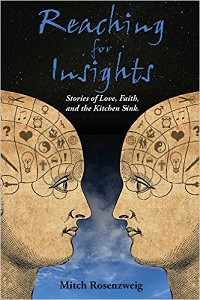
About Mitch Rosenzweig: In this new book “Reaching for Insights: Stories of Love, Faith, and the Kitchen Sink”, veteran clinical psychologist and social worker Mitch Rosenzweig attunes his therapeutic sensibilities to his daily landscape and uncovers life lessons for us all – treasures gained by observing the ordinary from an often amusing, and always positive, perspective. This rich collection of 200 brief essays penned from his personal and professional observations delights us and invites us to grow into better, more compassionate human beings. For more information, visit http://www.reachingforinsights.com/
It’s October, which means many things, but for most of you it means Halloween is coming! Excited? The folks at MorphCostumes were nice enough to put together some fun facts to help us all get into the spirit. (Spirit, get it?)
Young Adult books are the focus of Banned Books Week in 2015. Banned Books Week, the annual celebration of the freedom to read, will run from September 27 through October 3, 2015, and will be observed in libraries, schools, bookstores and other community settings across the nation and the world.
“Young Adult books are challenged more frequently than any other type of book,” said Judith Platt, chair of the Banned Books Week National Committee. “These are the books that speak most immediately to young people, dealing with many of the difficult issues that arise in their own lives, or in the lives of their friends. These are the books that give young readers the ability to safely explore the sometimes scary real world. This Banned Books Week is a call to action, to remind everyone that young people need to be allowed the freedom to read widely, to read books that are relevant for them, and to be able to make their own reading choices.”
In recent years, the majority of the most frequently challenged books in libraries have been Young Adult (YA) titles. Six YA titles were on the list of the Top Ten Most Challenged Books of 2014, according to the American Library Association. Attempted bans on books of all kinds also frequently occur under the guise of protecting younger audiences.
Banned Books Week celebrates the freedom to read by encouraging read-outs, displays, and community activities that raise awareness of the ongoing threat of censorship. Last year, tens of thousands of people participated in Banned Books Week online. More than 500 videos were posted in a virtual read-out, and thousands participated in hundreds of events in bookstores, libraries, and schools and universities across the country.
BannedBooksWeek.org is a hub for information about how individuals and institutions can get involved. The website also includes resources and activities provided by event sponsors.
Banned Books Week is sponsored by the American Booksellers Association, American Booksellers for Free Expression, American Library Association, American Society of Journalists and Authors, Association of American Publishers, Comic Book Legal Defense Fund, Freedom to Read Foundation, National Association of College Stores, National Coalition Against Censorship, National Council of Teachers of English, People For the American Way Foundation, PEN American Center, and Project Censored. (via the American Library Association website)
So what are the top challenged Young Adult* books of 2014-2015?
The Absolutely True Diary of a Part-Time Indian, by Sherman Alexie (Little, Brown Books for Young Readers) Persepolis, by Marjane Satrapi (Pantheon Books/Knopf Doubleday) The Bluest Eye, by Toni Morrison (Holt, Rinehart, and Winston) The Kite Runner, by Khaled Hosseini (Bloomsbury Publishing) The Perks of Being a Wallflower, by Stephen Chbosky (MTV Books/Simon & Schuster) Drama, by Raina Telgemeier (Graphix/Scholastic) Chinese Handcuffs, by Chris Crutcher (Greenwillow Books/HarperCollins) The Giver, by Lois Lowry (HMH Books for Young Readers) The House on Mango Street, by Sandra Cisneros (Vintage/Knopf Doubleday) Looking for Alaska, by John Green (Dutton Books/Penguin Random House)
Data courtesy of ALA’s Office for Intellectual Freedom. A challenge is defined as a formal, written complaint, filed with a library or school requesting that materials be removed because of content or appropriateness.
* Young Adult literature is generally written for an audience between the ages of about eleven or twelve to about seventeen or eighteen. This is not a steadfast rule, but rather a general parameter. For the purpose of this list, the sponsors of Banned Books Week have defined Young Adult as books that have been taught in middle and high schools, and/or are located in the teen collections of public and/or school libraries.
Curious as to what the full list of banned and challenged books were for 2014-2015? Check it out here.
I have worked with valuable coaches who have helped me grow. Yet one stands out above the rest.
He doesn’t mind when I call seek his guidance at odd hours. He is available via the written and spoken word, and when all else fails I can watch his videos on YouTube.
His advice has been priceless both in my personal life and in adding to my understanding of humanity and relationships. As an Intuitive Relationship Coach, I reference his work frequently. Even when I worked in the clinical field I encouraged my clients to seek out his books.
I have paid him very little over the years for the wisdom he has given me, and perhaps even more strange, he does not even know I exist, and I am ok with that.
My long-distance-Mentor is Stephen King.
Once considered the Master of Suspense, King has emerged into something more, at least in my view. Yes, we typecast, and titles are deceiving. Stephen King is the Master of Social Commentary. He has a brilliant knack for reflecting the conflicts of his time.
The first Life Lesson from the King is that we all are on a path of evolution and must allow each other space and time to grow without judgment. Contrast one of the early works written under the pen name Richard Bachman with a more recent and “sober” work like 11/22/63 and the growth is evident.
Not only are there significant shifts in the tone, attitude and depth of King’s works as time goes on, but his characters seem to “grow up” as well. Thus we are reminded not to judge a person by their struggles, but to give them space to grow, or falter, on their path.
Life Lesson 2- Each Individual Possesses a Dual Nature.
King’s characters are, for the most part, complex. He is a master of illustrating the depth of humanity. Very few of his characters are outright evil and even the bad-ass bullies (Ace and his crew from “The Body”, the greaser youths from “It”, and the kids from “Carrie” for example) illustrate social injustices and are products of their culture and times. This is also apparent in King’s characterization of historical figure Lee Harvey Oswald in his fictional depiction for 11/22/63. By portraying the connection between cultural context, early upbringing (domestic violence, alcoholism, incest, poverty, racism to name a few) with antisocial and cruel behavior later on, King provides a psychological framework for characters who have a dirty job which someone has to do. That job is to hold a mirror up to society and individuals and reveal the Shadow side within us all and the dark side of our culture. The “monster” within comes alive in the obsessive, deranged killers of his stories.
Of course his stories seldom feature the bad guy acting alone. There is typically a supernatural element, an abstract “Hand of Fate” which serves to tempt (or push) a fundamentally wounded character over the edge. In It it is the entity Pennywise, representation of the corruption and denial of small town America, which corrupts the mind of the already desperate and unstable, tempting them with seduction of fame, power, revenge etc. A similar phenomenon occurs in The Stand. In this story as well, the battle lines between the righteous and the depraved is a fine line carved by a combination of free will and the failing nature of human desire. The insecurities that would tempt some characters to betray their morals, and each other, to serve the entity personifying evil (Randall Flagg) while other characters, while obviously flawed, find the will to follow a higher calling and follow the path of light, embodied by Mother Abigail.
This brings us to the 3rd Life Lesson from Stephen King. We all have choice and free will and at any given moment we have access to a number of guides who will serve our higher purpose, if only we will occasionally quiet the ego to listen.
King’s characters repeatedly encounter special mentors, guides and teachers. Danny Torrence from the Shining is serendipitously connected to Dick Halloran (the hotel Cook) who recognizes his ability to “shine” and in the sequel, Dr. Sleep, Danny himself becomes mentor to another youth named Abra. King’s characters often don’t realize they are seeking a special kind of assistance until their talents, or needs are met by those they encounter synchronistically. The same occurs in reality and when we open to intuitive guidance and attraction dynamics, we allow powerful connections to be made without the cumbersome presence of ego to get in the way. The examples of this are too numerous to list individually, so pick your favorite Stephen King story and this pattern will be evident.
Life Lesson: Suspense can be a good thing….
More Life Lessons from the King to come as this series continues.
About Angela Kaufman: Angela Kaufman is Your 21st Century Relationship Psychic. As an Intuitive Relationship and Empowerment Coach Angela is passionate about helping modern women interpret their lives and world through a more intuitive, Spiritual lens. While recognizing that Spirit speaks to us in many ways, even through the writing of a novelist from Maine.
For more information on Intuitive Relationship Coaching and other practical, spiritual soul-utions, visit intuitiveangela.com or contact Angela at intuitiveangela@gmail.com.
HyperLoop Actually Happening
Remember that crazy scifi pneumatic tube train that Elon Musk (super villain in training) was talking about a while ago? Sounded like a crazy, looney-tunes idea, right? Super-high-speed trains, running in tubes with little or no air, and getting places in an hour that normally require six. Yeah, that. They’re starting construction in 2016. Really.
Real Locked Room Puzzle
Apparently, there’s a craze spreading around where people build real locked-room puzzles. Remember those things in video games where you find yourself locked in a room, and have to solve a variety of mechanical (or magical!) puzzles to unlock the door. Well, now people are doing that in real life.
Integrated Space Plan
Originally conceived by scientist Ron Jones, the “wildly detailed” plan to map how humans will expand into space has recently been updated. It sets out milestones and technology we’ll need to do things like permanently settle Mars, create a self-sustaining Moon base, and other fun items. Plus it comes in a handy poster form!
About John: John’s a geek from way back. He’s been floating between various computer-related jobs for years, until he settled into doing tech support in higher ed. Now he rules the Macs on campus with an iron hand (really, it’s on his desk).
Geek Credentials: RPG: Blue box D&D, lead minis, been to GenCon in Milwaukee. Computer: TRS-80 Color Computer, Amiga 1000, UNIX system w/reel-to-reel backup tape Card games: bought Magic cards at GenCon in 1993 Science: Met Phil Plait, got time on a mainframe for astronomy project in 1983 His Blog:http://www.glenandtyler.com/
As you know, tomorrow is a one of Rebecca’s high holy days. You know what it is of course. It’s International Talk Like a Pirate Day! It’s a day when you act silly and talk like a cartoony pirate, but more importantly, it’s when we can all partake in the most stereotypical of all pirate activities, rum drinking! Now if you’re not like me and don’t have this date marked on your calendar it is certainly not too late to come up with some ideas for how to celebrate.
First, and most importantly, to truly celebrate you just need to talk like a pirate. So let loose with the salty pirate speech mateys, for the occasion calls for it. If you do that, you have celebrated the day. However, if you’re looking for a little more powder in your keg, might I direct your attention to The Original Talk Like a Pirate Day website?
This site has EVERYTHING! How to talk like a pirate, pirate quizzes, pirate name generators, pirate party kit page (includes invitations, website banners, e-cards, drink recipes, and more!), and then a crazy links page. There are links to every kind of pirate related thing you could imagine: historical pirates, pirate comics, pirate themed restaurants, pirate books for adults, teens, and kids, pirate apps, the Pirates of the Caribbean movies, pirate themed musical acts, pirate alcohol, and many more!
No matter how you choose to celebrate, just do so responsibly with those that you love.
While contemplating what to say about Paul Avgerinos new album “Grace” I decided to look up the actual definition of the word grace on Dictionary.com.
noun
1. elegance or beauty of form, manner, motion, or action
2. a pleasing or attractive quality or endowment
3. favor or goodwill.
4. a manifestation of favor, especially by a superior:
5. mercy; clemency; pardon:
6. favor shown in granting a delay or temporary immunity.
7. an allowance of time after a debt or bill has become payable granted to the debtor before suit can be brought against him or her or a penalty applied:
verb (used with object), graced, gracing.
14. to lend or add grace to; adorn:
15. to favor or honor:
to grace an occasion with one’s presence.
And yes, I found myself thinking, yes, I could feel most of these being evoked when listening to the album. With titles such as “Serenity”, “Guru’s Grace”, “Angelic Presence” and “Always Blessed” it’s not hard to imagine. “Grace” is a soothing, relaxing journey. What I enjoy the most is that each time I listen I’ll notice something I hadn’t heard before; a smooth drone buried in the background, or a playful twinkle flitting throughout a tune.
It should be noted that not only will listeners hear the talents of Avgerinos, but the album also features Grammy winners David Darling, Laura Sullivan and Ricky Kej!
Here is the song “Grace Is” from the album:
“Grace” from Paul Avgerinos is perfect for quiet reflection, yoga, meditation, work (I listen to it while writing), and I suspect much more. Consider giving it a try.
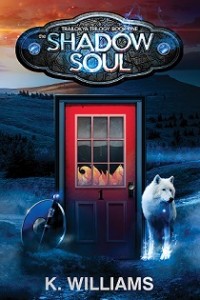
“‘The Shadow Soul’ is the first part of The Trailokya Trilogy, a fantasy series that follows the rise and fall of fabled races and souls at the junction of three worlds: Zion, Earth and Jahannam. K. Williams weaves a tale that will leave you questioning long held convictions about the human legends of Heaven and Hell. Are you ready to enter the gates of Zion and learn the truth?
Captain Maiel is a duta warrior of Zion, a race of giant, winged guardians and chroniclers of the lesser souls. Maiel’s assurances are shaken when she nearly loses a young human girl to the dark forces of Jahannam, the prison realm where the lowest beings reside. To avoid answering to the leaders of her world, Maiel seeks refuge on Earth, but she is pursued by a baron of Jahannam intent on destroying her. Can she be saved before time runs out? Or will she be sacrificed to secure the borders of Zion and to hide the lie her journey uncovers?
With each step further into darkness, long held secrets are revealed and shadows rise from the past to challenge absolutes.”
We’re lucky enough to have a brief excerpt to share:
Reluctantly leaving the child to his whispers, Maiel followed the corridor to the right. A squad might be able to dislodge him, and the suggestion would go in her report. However, right then, there was someone whom she could not ignore. Dashing past the open door of a dim room, Maiel caught a glimpse of a shadowalker. She halted and took several slow steps back.
A dark cloud hovered over the bed of a young patient. The curious brown ether was what her kind called smokers. A nurse checked her pulse with great dismay. In the corner of the ceiling, a youngling was trapped in web-like bonds. Maiel grimaced at the guardian, drew her bow and aimed.
“Smoky,” Maiel called out to the shade.
The wispy figure ignored Maiel, as it crouched over the child, drooling and licking its lips as it waited for the final moment. A string of light stretched from the child’s mouth to that of the shade. The human’s heart beat much too slowly. Maiel’s eyes flicked to the shade and back. The kid didn’t have much time. If the shade drew much more energy, the bio-vessel would die and she would be returned before her time, or stolen to Jahannam.
“I’m talking to you, shit-eater.”
The figure stopped feeding, turning its blank face to look at the duta addressing it. A macabre mash of scars adorned the head. The blank face opened where a mouth should have been. Sparks of lightning flashed in the cloud, followed by a long, snake-like tongue. It sniffed the air through tiny slits and hissed.
“I’ll count to three. Give you a head start.”
The shade opened its mouth, every wisp of smoke making up its sattva tightening, and bellowed a terrible howl. Maiel loosed her arrow. It landed its mark at the back of the smoker’s throat and pressed through. She grimaced as it slumped and dripped black blood all over the bed and floor. She entered the room and freed the young guardian with her dagger.
About the K.Williams: Born in Saratoga Springs, New York, where she continues to reside, K.Williams embarked on a now twenty year career in writing. After a childhood, which consisted of voracious reading and hours of film watching, it was a natural progression to study and work in the arts.
K attended the State University of New York at Morrisville, majoring in the Biological Sciences, and then continued with English and Historical studies at the University at Albany (home of the New York State Writer’s Institute) gaining her Bachelor’s Degree. While attending UA, K interned with the 13th Moon Feminist Literary Magazine, bridging her interests in social movements and art.
Currently, K has completed the MALS program for Film Studies and Screenwriting at Empire State College (SUNY), and is the 2013-2014 recipient of the Foner Fellowship in Arts and Social Justice. K continues to write and is working on the novels of the Trailokya Trilogy, a work that deals with topics in Domestic Violence and crosses the controversial waters of organized religion and secularism. A sequel to OP-DEC is in the research phase, while the adaptation is being shopped to interested film companies. Excerpts of these and more writings can be found at: http://bluehonor.com/.
And we’re even LUCKIER because I happen to have a signed copy of “The Shadow Soul” by K. Williams to giveaway to a reader! Contest ends at midnight Eastern time Sunday Sept. 6, 2015. See the Rafflecopter below!
1. For readers too young to even remember breaking off relations with Cuba. Can you give a brief explanation as to why America decided to sever diplomatic ties with Cuba and put in place the trade and travel embargo?
The United States cut off diplomatic relations with Cuba in 1961 because Washington was suspicious of Fidel Castro and feared that Cuba would become a communist nation. This was the period of the Cold War, when U.S. leaders and the general public were consumed with curbing the power of the Soviet Union, especially in the Americas. While initially Cuba was not communist, the nation opened trade deals with the U.S.S.R. and refused to bow to U.S. commercial demands and political expectations. President Eisenhower approved a CIA plan to remove Castro from power in what would become the Bay of Pigs in April of that year. Tensions mounted and U.S.-Cuban ties were cut.
2. After that, what have relations been like between the United States and Cuba?
Overall they have been rocky, at least in official terms. The October Missile Crisis in 1962 revealed that U.S.-Cuban animosity could escalate to near world war. The CIA continued attempted assassinations of Fidel Castro. By the late 1960s, there was a cool dynamic of non-communication and non-interaction. President Jimmy Carter attempted some form of reconciliation, but in the end this failed. There has been a steady stream of Cubans immigrating to the United States, to the degree that nearly 2 million Latinos claim Cuban heritage today. There also has been a history of Americans traveling to Cuba in defiance of the embargo for humanitarian, academic, or political reasons. Part of what my upcoming book shows is that Cuba was a resource-rich nation for Left politics in the United States during the 1960s and early 1970s.
Cuba – Photo – John A. Gronbeck-Tedesco3. You traveled to Cuba multiple times as an academic while the trade and travel embargo were in place. What was that like?
It was interesting and fulfilling in so many ways. Without proper relations in place, things become much more difficult for Americans. Remember that there is still no U.S. banking in Cuba, so I had to do everything with cash – no travelers checks or credit cards. But these difficulties were not insurmountable and they made the human connections that much more important and heartfelt. People opened their homes, possessions, and knowledge to me. Most Cubans I came to know always had time for a conversation and coffee. The hospitality I received—from people with little to give—was at times extraordinary and showed that populations from countries at odds with one another still could have decent humane interactions.
4. What did it appear life was like for the average Cuban while living under the U.S. embargo?
For the average Cuban, life was (and still is) difficult. “No es fácil” (It’s not easy) is something you hear often around Havana. If one is able to work in proximity to tourists or has additional income from remittances from friends and family living overseas, then his or her life can be better. But for those relying on the government system alone, day-to-day life can be quite encumbering.
5. How did cultural exchanges, perhaps the best known being the Buena Vista Social Club franchise affect Cuba’s relationship with the West?
There has been a constant stream of tourism to Cuba, including from the United States, so when the film came out more tourists were requesting these songs. Cubans found this humorous because this style of music was older, from the 1930s and 1940s, but tourists wanted these songs. So Cuban musicians rediscovered these melodies in order to satisfy the tourist demand for them.
6. And how did academic exchanges, like your experiences and Cuba offering medical training to Americans, influence their relationship with the West?
Cultural and academic exchanges have been hugely important to maintaining some sort of link between countries. A lot of Americans do not know that some of their fellow citizens have trained to become doctors in Cuba. The academic friendships I made have been the foundation to my field of study and my current career. These are avenues of dialogue that have succeeded where traditional government channels have failed.
7. Now the Obama administration wants to re-establish diplomatic ties with Cuba, including a U.S. embassy in Cuba, and the recently opened Cuban embassy in Washington D.C. and a large portion of America flips out. Republicans, Democratic, progressives, and conservatives. What’s going on there?
Actually, for many years now most Americans have favored normalization of ties with Cuba and a repeal of the embargo. A recent Florida International University poll disclosed that now even the majority of Cuban-Americans favor reestablishing diplomatic ties and overturning the embargo. The issue is that the pro-embargo constituency is strong and well connected. They have reliable representation in Congress and still enjoy economic and political influence.
8. Do the guys flipping out have valid points?
Yes they do. One of the main points of contention is human rights violations in Cuba. Political imprisonment, limited access to free speech and information (like internet), political intimidation—there are many things Cubans have to live with that most democratic governments, the U.S. included, do not support. However, anti-embargo people say that the embargo has not forced the Cuban government to abide by U.S. standards of leadership. Normalizing relations has a better chance of doing this because the Cuban government realizes that it will have to make concessions in order to have a fruitful relationship with the United States and with other nations in the hemisphere. In fact, Havana has already made some favorable changes in recent years. Finally, by repealing the embargo, the United States will be conforming to the desires of the international community. In 2013 the UN General Assembly voted 188-2 in favor of the United States ending the embargo. Only the U.S. and Israel voted no. It was the 22nd year in a row that the UN has voted this way.
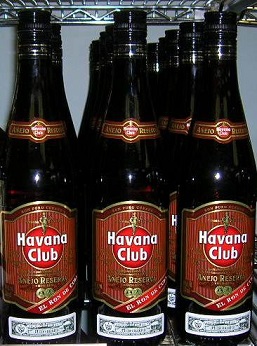
9. So seriously, where does this leave me with getting a bottle of Havana Club Rum at my local liquor store?
That might be some time, yet. However, people have been bringing back Cuban rum into the United States for years, so it depends on the connections of your local spirits guru.
10. Parting Shot! Ask us here at The Magical Buffet any one question.
Is there any room for Cuban food on this buffet?
Oh absolutely! Cuban Sandwich? So good! Frita, the Cuban hamburger sounds delicious. Always room for more food at this buffet!
About John A. Gronbeck-Tedesco: John A. Gronbeck-Tedesco, PhD, became interested in Cuban history when he studied in Spain during his junior year in college. He entered the PhD program in American Studies at the University of Texas at Austin (UT), and after his first (of four) visit to Cuba as a graduate student, decided to make it a part of his specialization. Toward the end of his graduate study, Dr. Gronbeck-Tedesco was awarded UT’s most prestigious dissertation fellowship.
He is currently an Associate Professor and Convener of American Studies at Ramapo College of New Jersey. Dr. Gronbeck-Tedesco has presented at several conferences outside of the United States and is among the growing number of scholars committed to international and transnational studies.
He is the author of the forthcoming book, “Cuba, the United States, and Cultures of the Transnational Left, 1930-1975” (Cambridge University Press, October 2015) and has been published in academic journals and different online forums including Journal of American Studies, Journal of Latin American Studies, Studies in Latin American Popular Culture, American Quarterly, CounterPunch.org, TheHill.com, Truth-out.org.

 Many of the products offered to women in “Look Good, Feel Better” kits contain chemicals linked to increased cancer risk, including parabens, Teflon, and formaldehyde releasers. Some of the chemicals in “Look Good, Feel Better” products may actually interfere with breast cancer treatment. The chemical methylparaben, for example, not only increases breast cancer risk by mimicking the hormone estrogen, it can also interfere with the common cancer drug Tamoxifen.
 What I don’t understand is why other, non-curse words aren’t considered bad. They have negative connotations in all contexts: such as “hate,” “unemployed,” “addiction,” “kill,” and millions of others that produce a visceral response in any setting. We don’t use them in polite society either. I will avoid further examples but I am sure you can think of your own that are far worse than “doody-head.”
 Young Adult books are the focus of Banned Books Week in 2015. Banned Books Week, the annual celebration of the freedom to read, will run from September 27 through October 3, 2015, and will be observed in libraries, schools, bookstores and other community settings across the nation and the world.
 First, and most importantly, to truly celebrate you just need to talk like a pirate. So let loose with the salty pirate speech mateys, for the occasion calls for it. If you do that, you have celebrated the day. However, if you’re looking for a little more powder in your keg, might I direct your attention to
  And yes, I found myself thinking, yes, I could feel most of these being evoked when listening to the album. With titles such as “Serenity”, “Guru’s Grace”, “Angelic Presence” and “Always Blessed” it’s not hard to imagine. “Grace” is a soothing, relaxing journey. What I enjoy the most is that each time I listen I’ll notice something I hadn’t heard before; a smooth drone buried in the background, or a playful twinkle flitting throughout a tune.
 Reluctantly leaving the child to his whispers, Maiel followed the corridor to the right. A squad might be able to dislodge him, and the suggestion would go in her report. However, right then, there was someone whom she could not ignore. Dashing past the open door of a dim room, Maiel caught a glimpse of a shadowalker. She halted and took several slow steps back.
  About the K.Williams:
 9. So seriously, where does this leave me with getting a bottle of Havana Club Rum at my local liquor store?