Super Soul Sunday

This Sunday, July 2, 2017 at 2 pm Eastern OWN (Oprah Winfrey Network) has a “Super Soul Sunday” that I thought some of you may be interested in, so here are the details.

In a special edition, Oprah Winfrey asks today’s top thinkers, teachers, and spiritual leaders life’s big questions. A regular feature on “Super Soul Sunday,” Oprah’s soul questionnaire poses thought-provoking questions such as, “What is the soul?,” “What is the purpose of human experience?,” and “What is the most difficult decision you’ve had to make to pursue your destiny?” It is a soul-stirring celebration of viewpoints from a remarkable roster of guests, including international speaker and entrepreneur Tony Robbins, bestselling author and activist Janet Mock, Emmy-Award winning writer and producer Shonda Rhimes, Senior Pastor of Lakewood Church Joel Osteen, life coach Iyanla Vanzant, global advocate and recipient of the Nobel Peace Prize Malala Yousafzai, and many more.

“Super Soul Sunday” is the three-time Emmy award-winning series that delivers timely, thought-provoking, eye-opening and inspiring programming designed to help viewers awaken to their best selves and discover a deeper connection to the world around them. The series features all-new conversations between Oprah Winfrey and top thinkers, authors, visionaries and spiritual leaders exploring themes and issues including happiness, personal fulfillment, spirituality, conscious living and what it means to be alive in today’s world.

To watch the full episode, please visit the following link the morning after the episode airs: http://www.oprah.com/app/super-soul-sunday.html

Here’s a little tease for you…..

Let’s take a moment to reflect on how great Oprah is looking these days.

About OWN: Oprah Winfrey Network
OWN: Oprah Winfrey Network is the first and only network named for, and inspired by, a single iconic leader. Oprah Winfrey’s heart and creative instincts inform the brand – and the magnetism of the channel. Winfrey provides leadership in original scripted and unscripted programming and attracts superstar talent to join her in primetime, building a global community of like-minded viewers and leading that community to connect on social media and beyond. OWN is a singular destination on cable. Depth with edge. Heart. Star power. Connection. And endless possibilities. OWN is a joint venture between Harpo, Inc. and Discovery Communications. The network debuted on January 1, 2011. The venture also includes the award-winning digital platform Oprah.com. Access OWN anytime, anywhere on WatchOWN.tv or across mobile devices and connected TVs.

Drug Wars

When you read that I’m about to discuss a book called “Drug Wars” your mind probably goes straight to America’s “war” on illegal drugs, but you would be mistaken. There is a war involving prescription drugs going on right now that many of us had no idea existed. It’s one where pharmaceutical companies always win and the public always loses.

A long time ago, before the mid-80’s (I can’t believe I called that a long time ago!) people realized that very few generic drugs were coming onto the market. Wait, let me back up for those of you who aren’t constantly on meds like myself. So in the fashion world designer label Louis Vuitton sells its “Saint Michel” purse for $1,700. It’s a bag, it holds stuff. You can also find on your better handbag websites what are subtly referred to as “knock off” versions for a couple hundred dollars. It’s also a bag. It also holds stuff. That’s essentially prescription drugs and their generic versions, except in this case the FDA makes sure that the bags are made of the same primary material. A prescription drug can be hundreds of dollars, but a generic drug is nearly identical at a fraction of the price. With the state of health insurance then, and now, there is an interest in generics for public consumption.

Thus in 1984 The Drug Price Competition and Patent Term Restoration Act, often called the Hatch-Waxman Act, went into effect to stimulate a generic drug market. The Hatch-Waxman Act is a great idea. It attempts to strike a balance between capitalism and the common good. When a pharmaceutical company goes to market with a new chemical that company is given 5 years of exclusivity. It also streamlined the process for companies looking to bring a generic version to the market. Thus the originator gets 5 years of market dominance to recoup research costs, etc. while providing the eventual competition of a generic to make things easier on the consumer’s pocketbook and encourage pharmaceutical companies to get back to the drawing board to innovate and bring another new drug to market that again gets 5 years of competition free existence. Pretty elegant, right?

What no one saw coming, but let’s face it, those in the know probably did, was that pharmaceutical companies found ways to extend their periods of exclusivity, which of course makes things harder on us sickos of America. The use of lawsuits to stall generics going to market is common, and not surprising once you’re reading “Drug Wars”. What was shocking was the collusion between the manufacturers of the original drug and the companies making the generics. When these companies are in litigation they can fight it out, or settle. Oddly the settlement involves the manufacturer of the original drug paying obscene sums of money to the generic, and the generic agreeing to hold off going to market for several more years. There many ways safe and effect generic drugs are delayed from becoming available, and “Drug Wars” does an amazing job highlighting them. The authors, Robin Feldman and Even Frondorf, also make recommendations on how to fix these issues.

If you’re into intricate bureaucracies, healthcare in America, and a few laugh out loud absurdities then you need to read “Drug Wars: How Big Pharma Raises Prices and Keeps Generics Off the Market” by Robin Feldman and Even Frondorf.

To learn more, visit here.

Oberon Award for Master Wizard

On June 21, 2017 The Grey School of Wizardry announced the first annual “Oberon Award for Master Wizard.” This award is given by the Grey School to recognize public figures who have exhibited visionary wisdom in their lives and works, and who exemplify and/or portray the ideals of Wizardry through outstanding life work dedicated toward the betterment of humankind and of the planet. This is a lifetime achievement award, and is given only once to any individual.

This award of recognition for “Master Wizard” is named in honor of renowned Wizard Oberon Zell, Founder and Headmaster of the Grey School of Wizardry, and an esteemed Elder in the worldwide magickal community since the early 1960s.

The 2017 Award Recipients are:

Science at the Edge: Neil DeGrasse Tyson (Cosmos: A Spacetime Odyssey)

Visionary Technology and Philanthropy: William Henry “Bill” Gates III & Elon Reeve Musk

Film Production: Peter Jackson (Lord of the Rings) & George Lucas (Star Wars)

Film Portrayal—Wizard: Sir Ian Murray McKellen (as Gandalf in Lord of the Rings)

Film Portrayal—Witch: Dame Maggie Smith (as Minerva McGonegal in Harry Potter)

Television Portrayal—Wizard or Witch: Alyson Lee Hannigan (as Willow in Buffy the Vampire Slayer)

Magickal Literature: J.K. Rowling (Harry Potter)

Graphic Novels/Comics: writer: Neil Gaimon (Books of Magic; Sandman; The Dreaming)

Visual Artist: J. H. Williams III (Promethea)

Bardic Arts: Enya Patricia Brennan

Illusion Magic: David Copperfield

Wizardry

Wizardry means “wisdom.” Just as artistry is the craft of an Artist, wizardry is the craft of a Wizard—literally, a “wise one.” Wizards were the first scientists—science means “knowledge,” as wizardry means “wisdom.” Philosophy means “love of wisdom,” and “natural philosophy” was the term used for science up through the 19th century. Many noteworthy scientists are referred to as “Wizards” in their biographies, and brilliant computer engineers today are commonly called “Wizards.” Thomas Edison was known as “The Wizard of Menlo Park,” Steve Jobs was called “The Wizard of Silicon Valley,” and Warren Buffet has been nicknamed the “Wizard of Omaha.”

The Grey School of Wizardry

The Grey School of Wizardry was incorporated as a non-profit Educational Institution in California on March 14, 2005; and in 2007, received a 501(c)(3) from the IRS for charitable and educational purposes. The Grey School provides an extensive program of arcane and Classical studies for youth and adult students.

As a secular online facility of esoteric education, the Grey School is dedicated to preserving the arcane arts and crafts of the past (i.e. “The Wisdom of the Ages”) for generations to follow. The core of those teachings is the School motto: Omnia vivunt; omnia inter se conexa (“everything is alive; everything is interconnected.”).

Learn more about The Grey School of Wizardry here.

Prison Evangelism

I received an interesting press release that I’d like to share, along with some personal observations. First, let’s take a look at the press release:

Oil industry veteran David Howell is working a rich new harvest field—saving souls and reducing the prison population through a graphic guidebook, allowing public funds to be diverted to other pressing needs.

Mailing copies of his How To Be a Child of God to prisoners for just 54 cents a copy offers a remarkable 7,000-to-1 return on investment, according to Howell. That’s because keeping someone from returning to prison by helping them find new life and hope as a Christian saves around $31,000 a year in incarceration costs.

With a record 2 million-plus people currently behind bars in the United States, Howell now wants to expand the reach of his Prison Evangelism project by distributing an additional 600,000 free copies of How To Be a Child of God to prison chaplains nationwide. Doing so responds to Jesus’ admonition in Matthew 25 for his followers to remember those in prison, who have an extremely high conversion rate when presented with the gospel.

“Imagine the impact we can have, not only on individuals and their families, but on society as a whole, as they find new purpose and power for living and put prison behind them,” Howell said.

Prison Evangelism research on distribution to date shows that one in 10 people who reads the 52-page booklet makes a commitment to Christ. That means if the national campaign saw a similar response and those impacted did not return to prison, the saving to taxpayers would be $2.1 billion annually. Additionally, the reduced inmate population would be equivalent to closing 60 prisons.

The owner of Houston-based pipeline consulting firm Pipeline Equities, who began working in the oil and gas fields as a 14-year-old “roughneck,” Howell has been active in sharing his faith since becoming a Christian in 1984. That decision “turned my life around,” forsaking drinking and wayward living, he said.

Involved in a wide range of other ministries at Houston’s Second Baptist Church, Howell created How To Be a Child of God in 2010 to pass out to people he met. Asked to provide some copies for use in prisons, he was amazed by the response. Letters began to come in from prisoners transformed by what they read. Among them was a man in jail in Midway, Texas, who wrote how the book touched his heart. “This book has been an inspiration to me. It opened my eyes to some great things and I soaked it all up like a sponge. I’ve finally put my life in His hands after all I’ve been through. Now I’m growing spiritually every day,” he said.

Since then, Howell has printed and distributed more than 110,000 copies to prison chaplains across the country, including 25,000 in Spanish. The book has been translated into a dozen languages, and turned into a 20-minute online video (www.howtobeachildofgod.com). He has also produced two popular follow-up books in similar style, Seeking God Through Prayer & Meditation and Fully Alive and Finally Free.

Howell credits the impact of the publications, written at a sixth-grade reading level, to their simple language and the emphasis on being transformed by the resurrection power of Jesus Christ. Additionally, as a standalone piece that can be reread and studied by prisoners who may be isolated or have time on their hands, it self-directs the reader into making a commitment to Christ without requiring others’ involvement.

“These are people who have come to an end of themselves, and that is where all of us must come before we are willing to accept the need for a power greater than ourselves,” said Howell.

John Salmon, chaplain at Diboll Correctional Center in Diboll, Tex., said that How To Be a Child of God had been “very popular” with the men there. “They actually read it,” he wrote. “And you know what happens when people expose themselves to the Word of God.”

George Hanson put copies out for chapel services at the Price Daniel Unit in Snyder, Texas, “and they flew out of the door,” he said.

Having poured more than $300,000 of his own money into the project, Howell formed Prison Evangelism as a nonprofit a couple of years ago. Now 77, with three granddaughters and a great-grandson, he said, “I know that this is the reason God is keeping alive, for this project. It is what he designed and created me to do.”

Before deciding to feature this on my site I asked to receive a copy of “How to Be a Child of God” to read for myself. And although I’m not a Christian lass, I found nothing offensive in the book. It’s essentially a simply written book, with full color illustrations, instructing you on how to accept Jesus Christ into your life. The book also has a section about introducing others to Jesus Christ and I liked the part where it said, “we are not seeking to make bad people good, but spiritually dead people alive”. Making sure that they understand that just because a person hasn’t accepted Jesus Christ doesn’t make them a bad person, just different. The focus of the book is on the internal life of the individual, it’s not a vehicle of radicalization.

I think it’s nice that Howell has found something like this to put his energy into. I believe in prison outreach be it through assorted chaplains, yoga and meditation classes, service dog training, or any number of other programs that are out there. Yes prison is a punishment, but it should be a place that offers rehabilitation too.

Prison Evangelism (www.prisonevangelism.com) is a faith-based nonprofit committed to transforming and rehabilitating offenders through the distribution of “How to Be a Child of God” and other evangelistic and discipleship materials designed to help prisoners find new purpose and power in life through a relationship with Jesus Christ.

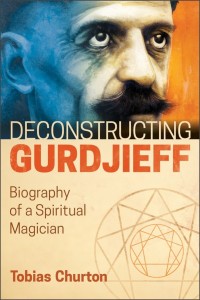
Deconstructing Gurdjieff: Introduction

By Tobias Churton

Caveat Lector*

Biographers of Gurdjieff are faced with a serious problem: the extreme scarcity of authentic independent documentation of Gurdjieff’s life both up to his appearance in Moscow in 1912-13 and between that time and the Russian Revolution in 1917. Gurdjieff was at least forty years old in 1917, his mind, self-appointed destiny, and fundamental attitudes already fully shaped by previous experience. As regards factual support for that experience, Gurdjieff’s name finds its way into barely a handful of official documents, themselves not wholly reliable. Seismic tumults from the collapse of the old Russian Empire, aggravated by the twentieth century’s immense conflicts and totalitarian vandalism, have sundered and fragmented the historic continuity that might otherwise have yielded collaborative resources from the Caucasus and Transcaucasia regions in which Gurdjieff grew up. Gurdjieff destroyed his own papers during a protracted personal crisis in 1930. We have no volume of Gurdjieff ’s letters or diaries, however slim, to consult. Personal reminiscences of followers, often highly subjective, are frequently at variance with one another and with verifiable facts.

Self-perceived as a man apart, a kind of spy in a confused, damned world, Gurdjieff persistently objectified the human beings around him; the first thing Gurdjieff ’s most influential follower P. D. (Pyotr Demianovich) Ouspensky noticed about his teacher in Moscow in 1915 was that Gurdjieff was always acting. Gurdjieff was many men and appeared in many disguises. Was he hiding something, or was he hiding from something?

In the Introduction to Meetings with Remarkable Men, written after 1924 and published after his death, Gurdjieff explains that part of his purpose in writing the book is to save himself future trouble in having to answer questions from interlocutors concerning his life and, especially, his beliefs. He complains that such questions have been vexatious to concentration on other more pressing matters and regards these questions merely as ones put by “idle curiosity.” Those interested in his personal life are described as “shameless idlers.” To satisfy their curiosity he has nonetheless, “in revising the material destined for this series [he means this book]” decided to present it “in the form of separate independent tales, and to insert in them various ideas which can serve as answers to all the questions often put to me.” The questions put to him are, he says, to do with the “remarkable men” he has encountered; “marvels” seen in the East; questions of the immortality of the soul; whether or not man has free will; the cause of suffering; the credibility of “occult and spiritualistic sciences”; the nature of hypnotism, magnetism, and telepathy; how he first became concerned with such questions; and what then led him to the system practiced in the institute bearing his name.

Gurdjieff, conscious of writing a “new kind” of book, deliberately shaped and reshaped elements of his life and imagination as illustrations or parables of his system. He dramatized ideas. The ideas might be real but individual characters may not be, though their behavior may be truthful regarding human nature or Gurdjieff’s ideas of ideal or misguided action, observed from experience.

The cooked-up book is what the dramatist Bertolt Brecht (1898-1956) would call a lehrstücke, a “learning-play” or experimental teaching piece wherein actors adopt roles, postures, and attitudes that exceed conventional distinctions between stage and audience, between idea, image, event, and reality, fact and fiction. Brecht famously declared, “Realism does not consist in reproducing reality, but in showing how things really are.”

In the case of Gurdjieff’s book, Gurdjieff is principal actor as well as narrator, and elements of his experiences, fantasies, prior reading, and thoughts–and what he considers the fantasies and expectations of his readers–play the parts; Gurdjieff “sings their tune.” We can see why Gurdjieff has most appealed to actors, dancers, musicians, painters, impresarios, and storytellers, those especially conscious of the role of symbol and its encoding in artificial forms of address. Artists get or “cotton on” to congenial aspects of Gurdjieff, whereas more prosaic, sometimes troubled minds–perhaps his principal following–struggle with it all, often for years, perennially taking the “black devil” too literally, perhaps too respectfully.

Gurdjieff’s idea of science was that of the ancient Magi, not the modern classroom. He barely ever disguised his loathing for what today is called, without irony, higher education. I personally suspect he had a chip on his shoulder about never having graduated from university, so vehement were his repeated digs at “wiseacreing,” an ungainly word (in translation) that occurs with tiresome, arguably obsessive repetitiveness throughout all his writings and talks; followers have picked the word up and scatter it like buckshot from on high at critics. Gurdjieff was a “university of life” type of graduate, cynical about cynics. Perhaps to lend authority to conviction, he even invented from the store of reality and myth the archetypal sacred university of wisdom–the Sarmoung Brotherhood–a body of such exalted spiritual purity and genuine universality of insight that its denizens would never soil their elegant hands with the muck of modern education reliant on paper qualifications and bookish memory learning.

Unlike the professional talkers and establishment-acceptable pundits, the self-taught apparently polymathic, autodidact Gurdjieff could turn his hand to anything and persuade people to do things they never dreamed of doing. He was the man you’d think you’d want in a real crisis. He talked the talk because, as far as he was concerned, he had walked the walk. Unfortunately for historians and biographers he mostly fictionalized the walk. He didn’t want people to follow his footsteps, but to find their own.

Gurdjieff’s “Men” are remarkable insofar as they have recognized that the true value of life comes only when that life consciously acquires mythic dimensions, when one, with feet on the ground, has yet traversed the stars and touched the beyond. Remarkable men have seen something unremarkable men have not. Such men should engage our attention. Was Gurdjieff himself one of them?

*“Reader Beware”

To learn more click here.

About Tobias Churton:
Britain’s leading scholar of Western Esotericism, Tobias Churton is a world authority on Gnosticism, Hermeticism, and Rosicrucianism. An Honorary Fellow of Exeter University, where he is a faculty lecturer, he holds a master’s degree in Theology from Brasenose College, Oxford, and is the author of many books, including Aleister Crowley: The Beast in Berlin and Occult Paris. He lives in the heart of England.

Deconstructing Gurdjieff by Tobias Churton © 2017 Inner Traditions. Printed with permission from the publisher Inner Traditions International. www.InnerTraditions.com

A Sandra Kynes Double Header

I love Sandra Kynes. She’s an insanely prolific writer whose work never seems repetitive, is always accessible to the average reader even while being scholarly, and despite my only sporadic support she always personally mails a copy of each of her new books. And you know, I don’t seem to see people talking about her as much as she deserves. I’m hopefully going to remedy that now with a Sandra Kynes book review double header. These two book go together great, and I hope after reading this little article you’ll be inspired to pick them both up!

First, get ready to get excited about gardening because I’ll be talking about “The Herb Gardener’s Essential Guide”. On the cover it also reads, “Creating Herbal Remedies & Oils for Health & Healing.” But it doesn’t do just that. Kynes takes you from how to design your garden, whether it’s a single pot or a whole backyard, to understanding your soil, recommended tools, garden maintenance, and more! Seriously, it’s like a super interesting gardening show in the palm of your hand!

Once you’re through that you get to harvest. Kynes discusses the best way to store your herbs based on type and intended use. This is also where she gets into the nitty gritty of making herbal remedies, and as usual, she leaves no stone unturned. Teas, infusions, infusion oils, infusing with essential oils, decoctions, tinctures, bath oils and salts, compresses, creams, diffusers, powders and capsules, foot soaks, ointments, salves, balms, and still more! If that wasn’t enough ways to use your herbs, Kynes also devotes time to culinary uses of herbs for good health, such as cooking oils, butters, and breads.

Then she has a nice selection of profiles for assorted herbs. It includes the herb’s uses, including precautions and contradictions, and their preferred growing environments. There is also a handy appendix that lets you look up herbs by the ailment they treat.

Maybe it’s just me, but “The Herb Gardener’s Essential Guide” got me really excited about herb and herbal gardening.

The other book I’d like to address is “Plant Magic: A Year of Green Wisdom for Pagans & Wiccans”. This book is a reminder that Sandra Kynes is one of the queens of cataloging connections and correspondences. After all, she did write the book “Llewellyn’s Complete Book of Correspondences: A Comprehensive & Cross Referenced Resource for Pagans & Wiccans”. Whereas “Complete Correspondences” covered anything and everything you can imagine, “Plant Magic” pulls the huge interconnected web in to focus solely on plants.

The book is primarily broken down into the 12 month of the year. Each month features “On the Calendar” (essentially holidays like New Year’s Day and Samhain), “In the Garden”, (highlighting plants that bloom during that month), “In the Wild” (profiling plants that can be found in the wild that month), “In the House” (offering ideas of things to do with plants that are appropriate for the month). Of course there is a handy appendix that’s a plant list/quick guide, and one full of magical correspondences. If you are a Wiccan, Pagan, or magical practitioner that’s into plants, I would call this book a must.

For more information on “The Herb Gardener’s Essential Guide”, visit here.

For more information on “Plant Magic”, visit here.

Tarot of Bones

I love tarot decks! Who doesn’t? I have a stupidly huge amount of tarot decks considering I can barely use them. That doesn’t stop me from collecting them. I like all different styles of decks, but once you get to a certain critical mass, you start looking for decks that bring something different to the topic. This was why I invested in The Tarot of Bones Kickstarter, and am now the proud owner of the deck with accompanying guide by Lupa.

Some of you may recognize Lupa from a review I did of her book “New Paths to Animal Totems: Three Alternative Approaches to Creating Your Totemism”. She’s well known for her interest in and connection with nature. She’s an artist/crafter that works in animal bone and skins. And what started as an artistic interpretation of the Five of Pentacles for a tarot themed art show turned into a passion project to retell the tarot through natural elements.

Assorted wood, animal bones, rocks, shells, and dried greenery create a tarot deck unlike anything before it. The accompanying book, “The Tarot of Bones Companion Book” is a fascinating read, offering a unique perspective on tarot interpretation through the eyes of the animal kingdom. The book will work if you’ve never used a deck before, and offers insights that even an experienced reader will find interesting.

I know, I know. “Enough talk,” you’re saying, “show me what the cards look like!” I hear you, and here are a couple of images to whet your whistle.

The back of the cards.

By this point you’re hopefully kicking yourself for not supporting the Kickstarter campaign so you could get your own “Tarot of Bones” deck and companion book. Well don’t panic because you can buy your own copy right now from www.thetarotofbones.com! But, if you’re feeling lucky, perhaps I could interest you in a giveaway?

That’s right! Lupa, the creator of “The Tarot of Bones” was nice enough to give me a deck and book to giveaway to one lucky reader! This contest is open internationally to readers aged 16 or older. The contest runs until Friday, May 19, 2017 at 11:59pm Eastern.

a Rafflecopter giveaway

Supermarket Magic

Well this is a bit embarrassing. I bought a book to review because I thought it was brand new and it wasn’t until I went to the publisher’s website that I realized it was published in 2013. 2013! But the book is good, it’s still available to purchase, and it was new to me, so I’m sharing it with you! We’re going to be talking about “Supermarket Magic: Creating Spells, Brews, Potions, & Powders from Everyday Ingredients” by Michael Furie.


I love food, as my ever widening ass can attest to. Which is why I love books that let me look at food in different ways. I also liked the idea of using a supermarket to do your magical shopping. It reminds me of all the times I would buy supplies at the local dollar store. I guess what I’m saying is that it was inevitable that I would end up reading this book, and it didn’t disappoint.

Now when I picked up “Supermarket Magic” I expected it to be wholly focused on what kind of magic you can work when your local supermarket is the closest thing you have to a magical supply shop. I was pleasantly surprised to see that Furie discussed a lot of magical basics and ethics. He then divides the book up into the most frequently used categories of magic: clearing and cleansing, harmony, healing, love, lust, and beauty, luck, money, protection, and psychic ability and divination. He also includes a section about Sabbats.

In each chapter Furie discusses what is involved in the category. Items that are associated with that type of magic, and several spells and/or recipes to use. There is a shopping list at the end of each chapter listing all the items he mentioned in the chapter. I found that particularly clever. He stresses that “Supermarket Magic” isn’t a cookbook, however there are a lot of recipes for brews and potions that sound…..magically delicious. (I couldn’t help myself!) Seriously, if something is tasty AND can have potential magical benefits, why wouldn’t you want to give it a go?

One of the shopping lists.

With its blend of beginner and advanced ideas “Supermarket Magic” is a great addition to any magic user’s library, whether you’re just starting out, or have been working with magic for years.

You can learn more here.

And by the way, “Supermarket Sabbats”, also by Michael Furie comes out this October! You can learn more, and preorder it here.

Yoga Science Teaches Us How to Transform Energy

© By Leonard Perlmutter

You learned in grade school science class that energy can appear in either the potential or kinetic form. The electricity in the wiring of your home is available for any use you choose. When you turn a light switch to the “on” position, energy appears in the form of light. This is the kinetic state because the energy is being used or expended. However, when you turn the light switch to the “off” position, the energy remains in the potential state–ready to be used at the flick of a switch.

The inherent power of fear, anger and self-willed desire can also be stored potentially or expended kinetically, and it is your personal attention that determines in which state the energy resides. If the mind’s conscience, known as buddhi in Sanskrit, defines a particular thought as a form of energy that will enable you to fulfill the purpose of your life (a shreya), it is suggesting that you transform the state of that thought energy from the potential into the kinetic by taking some appropriate action. In other words, you are encouraged to think about the shreya, speak in service to the shreya, and take some physical action in service to the shreya.

Such emotions as fear, anger and greed are not inherently bad or negative, for if they’re handled skillfully, they can become helpful resources. If the conscience (buddhi) recognizes them as merely an ego or sense gratification that conflicts with your own Inner Wisdom, (known as preya), you are being asked to renounce your attachment to them so that their intrinsic power can be transformed and stored for your future use.

The laws of physical science state that energy cannot be created nor destroyed, but it can be transformed. Viewing Yoga as a sister science, the ancients experimented with controlling, conserving and transforming the energy of thought. Through trial and error they realized that when they renounced a single preya desire-what could be seen as a momentary temptation or a negative thought — the energy of that desire manifested in a different form.

Recognizing this process, imagine what would happen if, instead of gasoline, twenty gallons of crude oil directly from the fields of Saudi Arabia were pumped into your car’s gas tank. It would wreck your engine. Crude oil is simply of no use in a combustion engine. To become an appropriate fuel for your automobile, the raw oil must first be refined.

Each of us has the capacity to employ a refining process that can transform the raw, inherent power of every thought, desire and emotion. When the mind’s conscience, the buddhi, intuitively advises that the unusable, destructive and constrictive power of a particular fear, anger or self-willed desire is appearing in your awareness in the form of preya, you, as a Yoga scientist, have access to a mechanism for capturing and transforming that power. This refinement process is accomplished by consciously and willingly renouncing your attachment to the preya.

Remember, in every moment, the buddhi is always present to advise you that it’s not in your best long-term interest to give the preya your continued attention. If you consciously or unconsciously choose to serve the preya in thought, word or deed, you will experience some form of physical, mental, emotional or spiritual dis-ease.

Every thought, word and deed is a means for spiritual unfoldment. Recognizing that desire is the fuel for human action, the ancient sages conceived a scientific formula that might well be called the spiritual equivalent of Albert Einstein’s E=MC2. The formula they discerned was D = E + W + C.

Every desire is composed of three basic components: energy, will power and creativity (consciousness). When you align every thought, word and action with the wise and good counsel of the buddhi by serving the shreya, you’ll be led for your highest and greatest good. When you willingly and consciously surrender your attachment to the merely pleasant, comfortable, familiar and attractive preya, you really give up nothing of value. The intrinsic power of the preya is not lost to you. Instead, your voluntary act of sacrifice automatically transforms the preya into internal reserves of energy and will power, and opens the doorway to the superconscious mind–your access to the Divine source of intuitive wisdom and creativity.

Conversely, when you go against the advice of the mind’s conscience (buddhi) by serving the ego or sense gratification that conflicts with Inner Wisdom in thought, word and deed, your internal strategic reserves of energy, will power and creativity are diminished.

The major crisis of our culture today is not one of IQ–intelligence quotient. Rather, the problem we face individually and collectively is one of WQ–will quotient. In twenty-first century America, countless people possess the intellectual capacity to make brilliant decisions, but because they are habituated to serving the limited perspective of the ego, senses and unconscious mind, their reserves of will power have become bankrupt. Without sufficient will power to exercise discrimination, their reserves of energy and creativity are similarly diminished. The more these reserves are depleted, the more frequent and severe the tension, stress, anxiety, burnout and pain.

As in banking, our personal balance sheet always reflects whether deposits or withdrawals have been made. The choice of solvency or bankruptcy is up to each individual.

In modern life, you need plentiful reserves of energy, will power and creativity to fulfill your many duties and responsibilities. You have obligations to yourself, your family, friends, business associates, society, the animal kingdom and the good earth Herself. Yoga Science teaches that everything you need for a happy, healthy and secure life is always available in the form of your thoughts, desires and emotions. A ready supply of power arises within you daily in the form of fear, anger and selfish desires. If you do not expend this power kinetically in the present moment, you can consciously conserve and transform it for use at another time. Yoga Science offers a systematic, practical method for conserving and transforming energy. It’s very simple, and all it takes is knowing how to direct your attention appropriately, based on the intuitive wisdom already within you.

About Leonard Perlmutter:
Leonard Perlmutter, founder of the American Meditation Institute (AMI), is the author of an acclaimed book “The Heart and Science of Yoga: The American Meditation Institute’s Empowering Self-Care Program for a Happy, Healthy, Joyful Life”, an encyclopedic guide to meditation and the Yoga Science that supports it. Praised by such international medical luminaries as Drs. Dean Ornish, Mehmet Oz, Bernie Siegel and Larry Dossey, this ultimate guidebook not only explains what to do, BUT WHY TO DO IT. It delves into Yoga Science, the eight-step method for managing the life force energy that propels us and connects us to the infinite power and creativity that is within and without us all. And the result of mastering it is the bliss and daily joy that comes from the realization of our connection. For more information, visit www.americanmeditation.org


Biblical Conspiracies

I love conspiracy theories. That’s not to say I believe them, but I do love them. I’m not sure why. If you’re like me and enjoy reading conspiracy theories, tell me in the comments why you do. Maybe it will help me figure it out. Anyway, I love me a conspiracy theory and as you might guess from my website, I also love religions. So when the Science Channel folks reached out to me with an advance screener for an upcoming episode of a show called “Biblical Conspiracies” you know I took them up on the offer.

This particular episode, just in time for the Easter/Passover season, is “Biblical Conspiracies: Jesus Family Tomb?” It discusses the controversy of The James Ossuary, a burial bone box that dates to the 1st century, and has on it, an inscription that states, “James, son of Joseph, brother of Jesus.” Some believe it is a simple forgery, others point out that the names James, Joseph, and Jesus were super common names during that time period, and others think it may have a link to the “Jesus Family Tomb”, discovered in 1980 in Talpiot, a Jerusalem suburb. I don’t want to give too much away, but this episode has plenty of history, science, and yes, conspiracy. It was a good time.

“Biblical Conspiracies: Jesus Family Tomb?” premieres Easter weekend, Saturday, April 15 at 10 p.m. ET/PT on Science Channel.