Who Doesn’t Love Caddyshack?

The folks at Audible.com reached out to me with a new book to share. I was excited when I learned it had to do with the movie “Caddyshack”, because who doesn’t love “Caddyshack”? The book is called, “In Caddyshack: The Making of a Hollywood Cinderella Story” by film critic for Entertainment Weekly Chris Nashawaty. Here’s the details:

Caddyshack is one of the most beloved comedies of all time, a classic snobs vs. slobs story of working-class kids and the white-collar buffoons that make them haul their golf bags in the hot summer sun. It has sex, drugs, and one very memorable candy bar, but the movie we all know and love didn’t start out that way, and everyone who made it certainly didn’t have the word classic in mind as the cameras were rolling.

In Caddyshack: The Making of a Hollywood Cinderella Story, film critic for Entertainment Weekly Chris Nashawaty goes behind the scenes of the iconic film, chronicling the rise of comedy’s greatest deranged minds as they form The National Lampoon, turn the entertainment industry on its head, and ultimately blow up both a golf course and popular culture as we know it. Caddyshack is at once an eye-opening narrative about one of the most interesting, surreal, and dramatic film productions there’s ever been and a rich portrait of the biggest and most revolutionary names in Hollywood. So, it’s got that going for it…which is nice.

On a fun side note the audio book is narrated by Peter Berkot, who played Angie D’Annunzio in the “Caddyshack”!

Audible.com was nice enough to provide a clip for me to share with you!

10 More Questions with Gary Lachman

1. Believe it or not, you and I talked all the way back in 2009 about your book “Politics and the Occult.” How does your new book, “Dark Star Rising: Magick and Power in the Age of Trump” differ from that earlier work?

In Politics and the Occult, along with giving an overview of the relation between the two in the modern world, I also wanted to show that the association of occultism and far-right politics, which has become a kind of cliche, is not as necessary or exclusive as writers like Umberto Eco believed, and that there is plenty of evidence for what we can call a ‘progressive’ occult politics. Dark Star Rising is different, first because I am writing about current events – it’s a work of journalism to some degree, or ‘history in the making’ – but also because in it I am looking at what seems to be a rise of a form of occult politics in the alternative-right, both in the United States and in Russia. So in Dark Star Rising I am looking at some occult politics that seem to be happening on the right, here and now.

2. You draw a fairly direct line from New Thought to branches of Christianity (particularly Prosperity preachers) to Chaos Magick. Do you think any of these groups acknowledge their similarities and lineage?

One of the things that struck me as very interesting was that in terms of technique, theory, practice, and aim, there seems to be much in common between New Thought or positive thinking and chaos magic. You wouldn’t think that Norman Vincent Peale and Austin Osman Spare had a lot in common, but in some fundamentals they do. I recognized this when following up the idea that the alt-right had used ‘meme magic’ – via Pepe the Frog – to put Trump into office. Meme magic – using the internet as a way of making things happen in the real world – is an offshoot of chaos magic. Chaos magic differs from traditional magic in that it does not depend on the traditional methods and appurtenances, such as the circle, wand, sword, spells, etc. Instead it relies on the magician’s initiative, creativity, imagination, and will.

Chaos magicians use whatever is at hand, rather in the manner of an objet trouve, or found art, when some ordinary item is taken out of context, placed in another, and called ‘art’. What is most at hand today is the internet and the memes that propagate on it. The idea is that Pepe became a kind of hyper-sigil, or magical symbol or spell, and by saturating the internet with images of him, the people behind this believed they could affect the outcome of the election. And it seemed it did – Trump won. This was why Richard Spencer claimed that “we” – the Pepeists of the alt-right – “willed” him into office.

Now, Trump himself is a devotee of positive thinking; Norman Vincent Peale was a mentor, he says. Peale’s positive thinking comes in an upbeat, cheery Christian wrapping, rather different than chaos magic, but what he is actually getting at is not that different. Both are results oriented, positive thinking aiming at a “realizable wish,” and chaos magic at an “achievable reality.” Both have a very flexible attitude toward facts – in fact our attitude toward facts is for both more important than the facts themselves. There are other similarities. So we have Trump the positive thinker being helped into office by alt-right chaos magicians. But then, what word characterizes Trump’s presidency so far? I’d say chaos and I think others would too. And then Pepe of course turns out to be Kek, the ancient Egyptian god of chaos…

So in answer to your question, no, I don’t think that,say, people following the prosperity gospel know that in some basic way, what they are about is not very different from what a chaos magician may get up to. Some of the more Christian of them would most likely be appalled. In fact many Christian thinkers were appalled by Peale because of the links between positive thinking and more outright occult forms of New Thought, which Peale read and which he translated into a more palatable form. And I should point out that I’m not saying that there is a direct line in any historical sense, between positive thinking and chaos magic, but that what we can call the phenomenology of the magic involved is similar.

3. Are these things, such as New Thought, etc. inherently “bad”?

By asking if New Thought is bad, you have to decide in what sense you are asking this. If you dismiss the idea that New Thought can work, then what’s bad about it is that it is false and, like other scams, can harm people who get involved with it. But if you accept the basic premise that the mind, consciousness, in some way that we do not fully understand, is an active agent in the world and can affect it – that “thoughts are things” – then we enter a different area. This is where the notion of a responsibility of the imagination – as Owen Barfield called it – comes in. And this is something that practically all esoteric, spiritual, what have you traditions make clear. So if it is the case that, unlike Vegas, what happens in the mind doesn’t necessarily stay there, then it becomes rather important to be aware of what’s happening in the mind. Of course, from our rational, scientific perspective, this is nonsense. But as I say in the book, it is precisely this perspective that is being, or has been, undermined in our post-truth, alternative fact world – which is itself the result of a process that started early in the last century. The partitions separating what is possible from what is not are thin, just as the membranes separating fact from fiction, truth from falsehood, reality and fantasy, are dissolving. I’d say we have a responsibility now to be aware of this.

4. “Dark Star” is quite informative for those unfamiliar with Chaos Magick. Would you mind giving my readers a brief description of what Chaos Magick is?

I think I’ve given that in 2.

5. So, is the alt-right filled with unintentional magick users?

Ditto.

6. Several magick groups have been supporting and promoting group rituals to counter the effects of a Trump presidency. Do you think these can have any effect?

I know that the global “binding spell” cast to impede Trump and all those who abet him, goes on, and that there are other forms of what’s being called the “magical resistance.” Will it help? That is usually the first thing people ask. But as realistic magicians know, there are always many different forces at work, and what needs to be aimed it is, as I mention above, a “realizable wish” or ” achievable reality.” Which means, ironically enough, don’t expect miracles. But the idea of magical political opposition has been around for a long time. That was one of the points of Politics and the Occult – that the two are not as strange bedfellows as we might at first think. Did the witches put a monkey wrench into Trump’s first shot at the travel ban?

7. With such a fast-changing Presidential administration, and the inherently slower pace of writing and publishing a book, how much has changed between writing the book and now? Will you consider a book with timely subject matter again?

The main change since writing the book has been Steve Bannon’s exit from Trump’s inner circle. I finished the book last August. A lot happens very quickly these days – that, as we all know by now, is the fluid character of our time – and not long after I delivered it I knew that some of it would be old news by the time it appeared. I was able to add a short note at the end to say precisely this. But as I say above, this is ‘history in the making’. It struck me, as I’m sure it did other people, that with Trump’s election, something very different had taken place. In the book I say that in one sense we can see this as the singularity people have been waiting for for awhile now. A singularity is an event in which our usual, normal ideas about reality breakdown, or at least no longer apply. It strikes me that this is precisely what has happened, and we have our post-truth, alternative fact world to show for it. A world in which there is very little difference between reality and its electronic representation. This too is the result of a process that got going more than a century ago. We are feeling the effect of what I call “trickle down metaphysics.” The post-everything world is the outcome of the nihilism that the philosopher Nietzsche saw was irrevocably on its way back in the 1880s. The relativity of all values that we welcome as a liberation from the dominance of western rationality, is exactly what Nietzsche said was coming. To see this happening is disturbing but also thrilling. History has caught up to us.

In fact I am working on a follow up book about Russia but I can’t say more than that now.

8. In the mid-nineties you moved from the U.S. to London. How do think America and Britain compare when it comes to politics and magick?

I think Americans believe in the possibility of political change – or at least used to – more than Brits, but the Brits have a longer tradition of magic. But when Americans do occult politics, they do it up right. In October 1966, during the anti-Viet Nam War march on Washington, Abbie Hoffman and Allen Ginsburg tried to levitate the Pentagon, while the filmmaker and magician Kenneth Anger tried to exorcise it. The Brits are mostly just worried about Freemasons.

9. Do you have any upcoming projects that you can share with my readers?

Covered in 7.

10. Parting shot! Ask us at The Magical Buffet any one question.

What do you think? New Thought, positive thinking, chaos magic – do they work?

Indeed I do. You see the power of the placebo effect and you learn that the human mind is capable of pretty amazing things.

About Gary Lachman:
Gary Lachman is the author of many books on consciousness, culture, and the Western esoteric tradition, including “Rudolf Steiner: An Introduction to His Life and Work”, “A Secret History of Consciousness”, and “Politics and the Occult”. He writes for several journals in the US and UK and lectures on his work in the US and Europe. His books have been translated into more than a dozen languages, and he has appeared in several radio and television documentaries. A founding member of the rock group Blondie, Lachman was inducted into the Rock & Roll Hall of Fame in 2006.

Are you still reading? Congratulations because you’re about to learn about our giveaway! That’s right, the kind folks at TarcherPerigee gave me an extra copy of Lachman’s new book “Dark Star Rising: Magick and Power in the Age of Trump” to give to one lucky reader! The giveaway will end Sunday, June 3rd at 11:59pm Eastern. Must be 18 years or older to enter. Open to international readers.

a Rafflecopter giveaway

Lunar Nomad Oracle

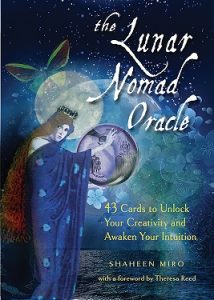
If you follow me on social media and/or have been a long-time reader you know I have a big tarot/oracle deck addiction. To me there really isn’t such a thing as a bad deck, but after a while you start to seek out things that stand apart from the crowd and I have found something truly unique in “The Lunar Nomad Oracle” by Shaheen Miro.

It’s rare to find an oracle deck with so much intense thought put into its construction. “The Lunar Nomad Oracle” starts on the skeleton of the Lenormand deck, a 36-card deck of symbols that most likely evolved from a card game towards the end of the 18th century. Miro’s deck is expanded to 43 cards but holds firm to its Lenormand beginnings. The art for the deck and the design were both done by Miro, which I feel lends a grounding cohesiveness to the dream-like nature of the oracle. Miro indicates that there are three levels of symbolism in each card: archetypal, general, and personal. Personally, I feel that checks out.

All this work is to help you get in touch with your “Lunar” self, which I would sum up as your creative, magical self. Will it work for you? If it doesn’t, it certainly isn’t for Miro’s lack of trying. “The Lunar Nomad Oracle” truly stands apart from its peers.

Learn more here.

Astrology in Different Cultures

Do you guys remember when I shared “Astrologically Inspired Cocktails”? Well it turns out an astrology website in Australia did and reached out to me. They were like, hey, that’s a fun little infographic you shared. We’ve got one about astrology in different cultures, are you interested? Duh, of course I was and here we are.

So a big thank you to the folks at Astrology.com.au for the cool looking infographic to share! You should check out the full article on their site!

Astrology in Different Cultures

Loves Me, Loves Me Not

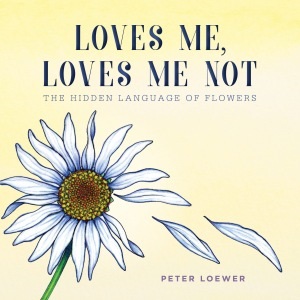
I keep hearing that this strange season called spring is approaching. Flowers will be blooming and markets everywhere will be selling all kinds of arrangements for Mother’s Day. However, before you pick a flower based on its looks, wouldn’t it be cool to know what that flower represents? Enter “Loves Me, Loves Me Not: The Hidden Language of Flowers” by Peter Loewer.

If you read my review of the “Botanical Inspirations” deck then you already know that global culture and folklore has always attributed special meanings for flowers based on their appearance or practical applications. Peter Loewer specifically takes a look at the Victorian era and their love of the language of flowers. “Loves Me, Loves Me Not” profiles 50 flowers and better yet each entry is paired with a beautiful, full color illustration by Loewer.

Obviously this book is great for nature and flower lovers. Now I don’t want to tell you how to live your life, but if I was considering getting flowers for someone as a gift, I would absolutely buy this book, pick the flowers based on their meanings, and then give the flowers AND this book as a gift. But you know, you do you. “Loves Me, Loves Me Not” is a delightful and informative read that is made for sharing!

You can learn more here.

Read Around the World

You wouldn’t think that an online travel company could pitch me something I would absolutely want to share with you, however TravelBird pulled it off. They reached out to ambassadors around the world asking which book they believe best represents their country. Clever, right? The answers are part of a larger study. The larger project began by contacting embassies in over 50 countries around the world, asking ambassadors several simple yet revealing questions about their homeland. Their answers offer cultural insights and unique insider tips on how to experience their country how locals do. The questions were as follows:

If a person is visiting your country for 48 hours, where should they go? What should they see? What should they eat?

Is there a common cliche about people in your country which you believe is misrepresentative or untrue?

Which book, fiction or non-fiction, best represents your country?

You can check out the full results here. But I’m here to talk about the books. The results were interesting, but a lot of them are not in English. This just reminds me that I wish I was fluent in other languages. Sigh.

Facundo Vila, Argentina’s ambassador to Finland: Martín Fierro by José Hernández, 1872
Betina Pasquali Fonseca, Argentina’s ambassador to Norway: El Aleph by Luís Borges, 1945

Nélida María Cintreras de Ecke, Argentina’s ambassador to Sweden: El Aleph by Luís Borges, 1945

Dr. Peter Huber, Austria’s ambassador to Germany: Der Trafikant (English title, ‘The Tobacconist’) by Robert Seethaler, 2012

Elizabeth Ellison-Kramer, Austria’s ambassador to Hungary: Das Buch Österreich: Texte, die man kennen muss (translates in English to ‘The Book of Austria. The text you have to know’) by Hans Rauscher, 2005 and The World of Yesterday by Stefan Zweig, 1942

Dr. Phil. Heidemaria Gürer, Austria’s ambassador to Netherlands: Die gute Küche: Das österreichische Standardkochbuch (translates in English to ‘The good kitchen’: The Austrian Standard Cookbook) by Ewald Plachutta & Christoph Wagner, 1993

Thomas Stelzer, Austria’s ambassador to Portugal: Der Mann ohne Eigenschaften (English title, ‘The Man without Qualities’) by Robert Musil, 1930-1943

Matthias Radosztics, Austria’s ambassador to South Africa: Der Mann ohne Eigenschaften (English title, ‘The Man without Qualities’) by Robert Musil, 1930-1943, Das Augenspiel (English title, ‘The Play of the Eyes’) by Elias Canetti, 1985, Die Dämonen (translates in English as ‘The Demons’) by Heimito von Doderer, 1956, Die Tante Jolesch: oder Der Untergang des Abendlandes in Anekdoten (English title, ‘Tante Jolesch: Or, The Decline of the West in Anecdotes’) by Friedrich Torberg, 1975

Susan Bincoletto, Canada’s ambassador to Switzerland: The Promise of Canade by Charlotte Gray, 2016

Juan José Quintana, Colombia’s ambassador to Netherlands: Cien Años de Soledad (English title, ‘One hundred Years of Solitude’) by Gabriel Garcia Márquez, 1967

Jorge Leyva, Colombia’s ambassador to Norway: El amor en tiempos de guerra (English title, ‘Love in Times of War’) by Gabriel Garcia Marquez, 1985

Román Macaya, Costa Rica’s ambassador to the United States: Cuentos de mi tía Panchita (translates in English to ‘Stories of my Aunt Panchita’) by Carmen Lyra, 1920
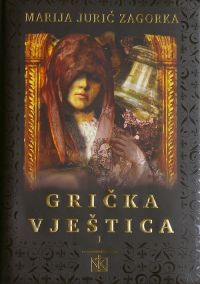
Tomislav Bošnjak, Croatia’s ambassador to Egypt: Gricka vjestica (English title, ‘The Witch of Grič’) by Marija Zagorka, 1913

Jetter Nordam, Denmark’s ambassador to Finland: Den afrikanske farm (English title, ‘Out of Africa’) by Karen Blixen, 1937 or Andersen’s Fairy Tales by Hans Christian Andersen, 1835

Aníbal de Castro, Dominican Republic ambassador to Belgium: Cuentos escritos en el Exilio (translates in English as ‘Tales written in exile’) by Juan Bosch, 1964 or Más cuentos escritos en el Exilio (translates in English as ‘More tales in exile’) by Juan Bosch, 1964

Julio Simon Castaños Z., Dominica Republic ambassador to Switzerland: La Mañosa (no English translation) by Juan Bosch, 1935

Fernando Bucheli, Ecuador’s ambassador to Netherlands: Memorias de Andrés Chiliquinga (translates in English to ‘Memoir of Andrés Chiliquinga’) by Carlos Arcos Cabrera, 2013

Hannu Kyröläinen, Finland’s ambassador to Austria: Putkinotko (no English translation) by Joel Lehtonen, 1919

Timo Ranta, Finland’s ambassador to Belgium: Kalevala, Elias Lönnrot, 1849

Vesa Vasara, Finland’s ambassador to Denmark: Tuntematon sotilas (English title, ‘The Unknown Soldier’) by Väinö Linna, 1954

Ritva Koukku-Ronde, Finland’s ambassador to Germany: A History of Finland by Henrik Meinander, 2011

Erik Lundberg, Finland’s ambassador to Norway: Trollvinter (English title, ‘Moominland Midwinter’) by Tove Jansson, 1957

Nicolas Protonotarios, Greece’s ambassador to Slovenia: Odyssey by Homer, approx. 8th century BC

Luis F. Carranza, Guatemala’s ambassador to Switzerland: Hombres de Maíz (English title, ‘Men of Maize’) by Miguel Ángel Asturias, 1949

Nagy Zoltán, Hungary’s ambassador to Belgium: A Pál utcai fiúk (English title, ‘The Paul Street Boys’) by Ferenc Molnar, 1906

Dr László Zsolt Szabó, Hungary’s ambassador to New Zealand: A gyertyák csonkig égnek (English title, ‘Embers’) by Sándor Márai, 1942

Tom Hanney, Ireland’s ambassador to Austria: Solar Bones by Mike McCormack, 2016

Jacob Keidar, Israel’s ambassador to Switzerland: The Bible, The Old Testament

Giorgio Novello, Italy’s ambassador to Norway: Il nome della Rosa (English title, ‘The name of the Rose’), Umberto Eco, 1980
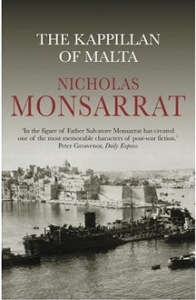
Keith Azzopardi, Malta’s ambassador to Italy: The Kappillan of Malta by Nicholas Monsarrat, 1973

Dr. Albert Friggieri, Malta’s ambassador to Germany: The Kappillan of Malta by Nicholas Monsarrat, 1973

Joseph Cole, Malta’s ambassador to Netherlands: The Kappillan of Malta by Nicholas Monsarrat, 1973

Y. Ramjanally, Mauritius ambassador to Belgium: Paul et Virginie by Jacques-Henri Bernardin de Saint-Pierre, 1788

Eloy Cantú Segovia, Mexico’s ambassador to Belgium: Pedro Páramo (no English translation) by Juan Rulfo, 1955

Carlos Pujante, Mexico’s ambassador to Denmark: Pedro Páramo (no English translation) by Juan Rulfo, 1955

Jorge-Castro Valle, Mexico’s ambassador to Norway: El Laberinto de la soledad (English title, ‘The Labyrinth of Solitude’) by Octavio Paz, 1950 or La Región más Transparente (English title, ‘Where the Air is Clear’) by Carlos Fuentes, 1958

Agustín Gasca Pliego, Mexico’s ambassador to Sweden: Como Agua para Chocolate (English title, ‘Like Water for Chocolate’) by Laura Esquivel, 1989

Lamia Radi, Morocco’s ambassador to Norway: Le Petit Prince (English title, ‘The Little Prince’) by Antoina de Saint Exupery, 1943

Matthijs van Bonzel, Netherlands’ ambassador to Spain: Nijntje (English title, ‘Miffy’) by Dick Bruna, 1955

Nicole Roberton, New Zealand’s ambassador to Austria: Māori Myths and Legends by Alexander Wyclif Reed, 1964

Jørn Eugene Gjelstad, Norway’s ambassador to Greece: Norwegian Wood: Chopping, Stacking, and Drying Wood the Scandinavian Way by Lars Mytting, 2015

Manuel Lobo Antunes, Portugal’s ambassador to the United Kingdom: Mensagem (translates in English to ‘Message’) by Fernando Pessoa, 1934

Manuel de la Cámara Hermoso, Spain’s ambassador to Finland: Don Quijote de la Mancha (English title, ‘Don Quixote’) by Miguel de Cervantes, 1615

Fredrik Jörgensen, Sweden’s ambassador to Denmark: Ett drömspel (English title, ‘A Dream Play’) by August Strindberg, 1902, Nils Holgerssons (English title, ‘The Wonderful Adventures of Nils’) by Selma Lagerlöf, 1907, Pippi Långstrump (English title, ‘Pippi Longstocking’) by Astrid Lindgren, 1945, Rid i Natt (English title, ‘Ride this Night’) by Vilhelm Moberg, 1941 or I Am Zlatan Ibrahimovic by Zlatan Ibrahimovic, 2011

Walter Haffner, Switzerland’s ambassador to Austria: Das Kalb vor der Gotthardpost (translates in English to ‘The calf in front of the Gotthardpost’) by Peter von Matt, 2012

Andrej Motyl, Switzerland’s ambassador to Poland: Die Physiker (English title, ‘The Physicists’) by Friedrich Dürrenmatt, 1961 or Homo Faber (no English translation) by Max Frisch, 1957

Cèsar Mèndez Gonzàlez, Venezuela’s ambassador to Switzerland: Doña Barbara (translates in English to ‘Ms Barbara’) by Ròmulo Gallegos, 1929

Ngo Thi Hoa, Vietnam’s ambassador to Netherlands: Truyện Kiều (English title ‘The Tale of Kieu’) by Nguyen Du, 1820

Traditional Magic Spells for Protection & Healing Review and Giveaway

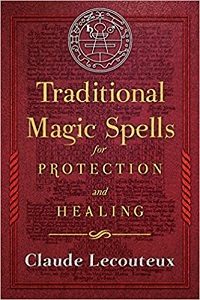
I have a hard time writing reviews for Claude Lecouteux’s books. They’re all dense tomes of knowledge, meticulously researched, and loaded with excerpts and references from medieval texts. One doesn’t casually breeze through one of his books, you slowly follow the path that he lays out before you. And his latest “Traditional Magic Spells for Protection and Healing” is no exception.

As usual Lecouteux turns his scholar’s eye towards highlighting the intersection of Christianity and Pagan beliefs, this time with medical practices tossed in. In medieval times health issues were a matter of body, the spiritual world, and spiritual concerns. Not only does Lecouteux outline means of diagnosis, but addresses the cures whether you’re being afflicted with an evil spell, or tormented by a demon. Incantations against wolf bite, using alum in water to help someone regain their speech, charms against demons, and obviously so much more!

“Traditional Magic Spells for Protection and Healing” is a must for magic nerds like myself. Honestly, every Claude Lecouteux book is a must own.

You can learn more here.

Guess what? Due to a mix up at Inner Traditions I have a copy of “Traditional Magic Spells for Protection and Healing” to give away!

The winner will be selected via the Rafflecopter contest below on Sunday, April 29th at 11:59 PM Eastern time. Good luck!

a Rafflecopter giveaway

The Devil and Father Amorth

The Orchard will release “The Devil and Father Amorth” theatrically in New York and Los Angeles On April 20th.

Years after he changed the landscape of American filmmaking with 1973’s “The Exorcist”, director, co-writer and legendary storyteller William Friedkin moves from fiction to fact with his new documentary, “The Devil and Father Amorth”. What began as a brief conversation between Friedkin and Father Gabrielle Amorth – the head Exorcist for the Diocese of Rome for over 30 years – as two professionals who knew of each other’s work soon transformed into an once-in-a- lifetime opportunity, as Amorth agreed Friedkin could film an exorcism ceremony. It would be the ninth exorcism for a painfully afflicted woman, Cristina (a pseudonym), who had already been under Father Amorth’s care – and it would be filmed by Friedkin alone, with no other crew allowed, no light other than the natural light in the room and a small digital camera-and-mic unit that could capture the ritual and its revelations.

Combining the startling and singular footage from Cristina’s exorcism with interviews from priests and psychologists, neurosurgeons and non-believers, Friedkin guides us on a journey into the twilight world between the boundaries of what we know and what we don’t with a singular and startling guide in the form of the urbane, charming and self-deprecatingly funny Father Amorth, a man who laughs in the face of the Devil both figuratively and literally. Combining Friedkin’s past memories and present observations with archival footage and new interviews – as well as also presenting what may be the only real exorcism ceremony captured on film – “The Devil and Father Amorth” is a startling and surprising story of the religion, the ritual and the real-world victims involved in possession and exorcism.

10 Questions with Judy Hall

1. What first sparked your interest in crystals?

I’ve been attracted by crystals since I was very small. My grandparents lived in the English Lake District and I spent a lot of time walking there with my grandfather picking up ‘shiny things.’ I amassed a wonderful collection of Quartzes. Later I found a rather strange mineral shop in Southend and bought masses of crystals from him. However, he wouldn’t identify anything so, when I found there was no crystal directory available, I ended up writing The Crystal Bible to record my experiences with them. Things snowballed from there.

2. What’s your favorite thing about working with crystals?

I love to work intuitively with them so that they can reveal themselves to me. I’ve been an astrologer for fifty years and always placed crystals on birthcharts when doing karmic readings to balance out the energies. This expanded into sharing them with workshop participants. Now I spend a great deal of time talking to crystal skulls and crystal dragons. It takes me into the multidimensional multiverse, a great place to explore.

3. You’re written so many books about the world of crystals, what sets your latest book, “The Crystal Seer” apart from the others?

(Judy Hall refrained from answering this question, so allow me to insert a little info/review here.) “The Crystal Seer” features content from Hall’s previous release “101 Power Crystals”. It is compact, full color 176 pages of beautiful photos and of course loads of info about crystals! It is a sturdy hardcover that will travel well in purses and messenger bags for crystal identification on the go. It’s good stuff!

4. These days you’ll find crystals in everything from skincare to bottled water. Do you find this further infusion of crystals into items beyond jewelry a good thing?

Crystals have always been in the most surprising of places, even the sparkplugs in your car and the paint on your walls. So this expansion doesn’t surprise me. But, as I believe that there is no such thing as ‘one crystal fits all’ I do feel you need to find the right product for you in order to gain benefit.

5. What’s one of your favorite crystals, and why?

The one crystal I wouldn’t be without is a Brandenberg Amethyst. It literally does everything I could ever require of it – and more.

6. Where do you get most of your crystals? (stores, websites, rock shows, etc.)

From all over the place! I still go out and pick them up from a very special crystal mountain – and any beach I happen to be on. I also buy from trusted websites, wholesalers, rock shows, favourite stores. I’m fortunate in that I’m often sent new crystals to assess. There are some lovely crystal suppliers out there.

7. If someone wants to start using crystals, where do you think they should begin?

Well, once they’ve cleansed and asked the crystal to work with them (how to do this is on my website www.judyhall.co.uk and in virtually all my books), I suggest they ask the crystal how it wants to work with them. Learning to listen to your crystals brings out the best in them. Having said that, I do have an online crystal course and several books that teach the basics. After that, you can follow your heart. Oh yes, and buy my Crystal Companion, it’s the best guide I’ve written. (see no.9)

8. What do you do when you’re not working with, or writing about, crystals?

I visit sacred sites, which are one of my great passions, although of course that often involves crystals (see my Crystals and Sacred Sites book). Quite often from the comfort of my armchair courtesy of a crystal. I travel as often as possible as I really enjoy seeing new places. I’m just off to see some amazing huge rock balls in Romania that are, allegedly, still growing. Really looking forward to that! I also play as often as possible with my great granddaughter who is four, that’s a great way to take a different view of the world. I devour books and I enjoy splashing paint on canvass to see what occurs.

9. What’s next? Do you have any upcoming projects my readers can look forward to?

Yes, my ‘Crystal Companion’ came out on 5th April. This is a book I am really excited about. It brings together information on crystals, introducing many of the latest finds, with how I personally work with them. It’s been colour-themed for the various areas of life in which you can use crystals so if someone works through it they’ll have explored just about every crystal possibility.

10. Parting shot! Ask us at The Magical Buffet any one question?

Well, rather than a question, I have a suggestion. How about asking all your subscribers to dedicate a crystal to world peace and hold it for just a minute a day. It could make such a difference at this troubled time.

(You heard the lady!)

About Judy Hall:
Judy Hall (Dorset, England) is a successful Mind-Body-Spirit author with over 45 MBS books to her credit including the million copy selling “Crystal Bible (volumes 1 and 2)”, “Encyclopedia of Crystals”, “101 Power Crystals”, “Crystals and Sacred Sites”, “The Crystal Seer”, “Crystal Prescriptions”, and “The Crystal Wisdom Healing Oracle”. A trained healer and counselor, Judy has been psychic all her life and has a wide experience of many systems of divination and natural healing methods. Judy has a B.Ed in Religious Studies with an extensive knowledge of world religions and mythology and an M.A. in Cultural Astronomy and Astrology at Bath Spa University. Her expertise are past life readings and regression; soul healing, reincarnation, astrology and psychology, divination and crystal lore. Judy has appeared four times in the Watkins list of the 100 most influential spiritual living writers and was voted the 2014 Kindred Spirit MBS personality of the year. An internationally known author, psychic, and healer, Judy conducts workshops in her native England and internationally. Her books have been translated into sixteen languages. You can learn more about her and her work at her website.

Food & Faith

As most of you know by know, I’m quite the fan of food and learning about religion. That’s why when Christian History Magazine emailed me about their latest issue I was pretty intrigued and wanted to share it with you. The issue is “Faith & Food, 2000 Years of Feasting and Fasting”.

As they explain:
This issue is packed with tid-bits of information about foods mentioned in the Bible and Christianity’s holiest meal, the Lord’s Supper. Many more meals and meal traditions have been documented, among them: potlucks and fellowship meals, soup kitchens and church gardens, Christian cookbooks and Christian diets, the temperance movement, feasting, fasting and practices of hospitality.

Articles:
Good food from the good book, A partial primer on biblical foods by the editor

What should Christians cook?, Faith in the kitchen by Jennifer Trafton – Jennifer Trafton, author, artist, creative writing teacher, and former managing editor of Christian History.

The royal way, Feasting or fasting? the constant Christian tension in the public square by Kathleen Mulhern, who teaches Christian formation and church history at Denver Seminary.

Fasting: from the Orthodox front lines, we should consider the spiritual discipline of not eating by Frederica Mathewes-Green, author of Welcome to the Orthodox Church and numerous other books, and frequent essayist and public speaker.

Recipes, recipe suggestions from friends of Christian History by Josh Hale, Barbara J. Hale, Frederica Mathewes-Green, Julie Byrne, Mary Anne Tietjen Byrne, Quita Sauerwein

Everyday substances, heavenly gifts, From the beginning, the holiest Christian meal used everyday food by Andrew McGowan – J. L. Caldwell McFaddin and Rosine B. McFaddin Professor of Anglican Studies and Pastoral Theology and dean of Berkeley Divinity School at Yale. He is the author of Ancient Christian Worship and Ascetic Eucharists.

Eating (and not eating) with the church fathers, Things church fathers said about food compiled by Jennifer Woodruff Tait – Managing editor, Christian History.

Raise a juice box to the temperance movement, Getting unfermented wine from the vineyard by Jennifer Woodruff Tait – Managing editor, Christian History.

What would Jesus buy?, How nineteenth-century Christians transformed our grocery aisles by Matt Forster – freelance author living in Clarkston, Michigan, and a frequent contributor to Christian History.

The sacred duty, a Seventh-day Adventist menu by LaVonne Neff – freelance author and blogger at LivelyDust, raised an Adventist.

From Cana to Jell-O, Christian fellowship meals: feeding the hungry and each other by Barton E. Price – director of the Centers for Academic Success and Achievement at Indiana University–Purdue University Ft. Wayne and teaches history, music, and religious studies.

Welcoming the Stranger, Serving the guest—including with bread by Carmen Acevedo Butcher – lecturer at the University of California at Berkeley and the author of Man of Blessing: A Life of St. Benedict.

I haven’t read the entire issue yet, but I’ve read a few articles so far and I find it interesting. The articles are well written and the art is beautiful. Are you interested? Well good news, you can read it for free online at the Christian History Institute’s website! And if you like what you read, you can subscribe with a donation of any amount you choose.