1. How did you get started with essential oils?
I started with essential oils after about ten years of practicing magic and had just gotten started in my horticulture studies program. I was looking for a way to work with the plant materials I was studying on a year-round basis, but also to preserve the materials I had an abundance of. I headed to my local natural foods cooperative and found a rack of essential oils and dove right in. The history of the materials as they related to the history of perfumery really enticed me, so I grabbed every book I could find, non-fiction and even a fiction book called, ‘Perfume: The Story of a Murderer’ by Patrick Suskind and John E. Woods.
2. What made you decide to write a book on the subject?
It’s funny what makes each person write, isn’t it? I decided to write a book on the subject of aromatherapy after a death in my extended family. It was a great aunt whom I had never met and was already elderly when I was born. I returned to the family’s Catholic church where my mom grew up to attend the church service for this woman my mother had loved, but I had never encountered.
I arrived before my mother, but after my uncle’s family who were no longer Catholic but had converted to another sect of Christianity. I was a little anxious that my aunt would cause a scene about my being in a church as my family knew I was a Witch and had caused a scene at a previous family funeral. The longer I sat there, the more anxious I got.
Until they wheeled the casket in, with the attendants, and the priest. Suddenly, I was as calm as I’d ever been, I was centered, I was focused and I was ready for a ritual. It was as though someone had thrown a switch in my brain. It took a good minute for me to piece it together.
You see, in my very first coven, my high priestess was raised Catholic. So before every ritual (every full moon, and 8 holy festivals a year), we cleansed our ritual room with frankincense and myrrh, the same incense she had growing up in the Catholic church, and the same incense I encountered that day. My brain didn’t know the difference. My brain just knew it was time for a religious observance and switched gears on me without me having to think about it. I signed up for a clinical aromatherapist program the next day and started writing about my experiences with scent that night.
3. You have a company, Blackthorn Hoodoo Blends, that creates blends of teas. Why tea?
I started working with tea six years before I launched my company because I feel that tea speaks to the soul of people in a way that nothing else does. Tea is comprised of the vital nature of the plants. When you pour that water over the leaves you can’t help but take a deep breath. My aim in taking that time is to encourage people to turn their morning ritual into a ritual.
I had just left a toxic job at a security firm and I knew that if I was going to move on to the next thing successfully, I needed to make room for it in my life. I needed to clear out the baggage left behind by the old job. Anyone who has ever had to put in their two weeks notice knows how that feels.
My first morning as a joyfully unemployed woman, I knew I had to get back to the roots of my magic to make that room. I dug out the big cauldron that I burn my candles in (fire safety!) and my bottle of Vanvan oil for clearing out junk and bringing new opportunities your way. I thought this must be one of the fastest spells I’ve ever worked because the doorbell rang before I even lit the candle. I laughed all the way back to the kitchen after signing for a package from the postal worker.
Then the funniest thing happened. When I got back to the kitchen, I went to light my candle and I was overwhelmed by the scent of the lemongrass in the oil and all I could think to myself was, “If only I had a tea to sip while my candle burned, I could keep working on my working while the candle burned and did its job.” and Blackthorn Hoodoo Blends was born. A week later I had 15 blends, and now four years later I have over 55.
 4. How do you go about creating a tea?
When I go about creating a tea, we have the genesis, an old hoodoo formula I’ve been making into oils for twenty years, ‘Justice, Power, and Peace’ is similar to my recipes for empowering blends like Just Judge and Boss Fix. It’s hard to do 1 to 1 recipe because the oil recipes call for things that aren’t edible, so I have to go back to my other materials, recipes and notes to help inspire me for things that have the same power, use and intent to get the job done. Run Devil Run, for example, nothing in that recipe is edible, but the banishing power of black pepper makes for an incredibly powerful banishing tea, and since black pepper makes sweet things taste sweeter it has a great flavor profile and is an easy drinking tea without the added sugar. You can drink these teas just because you want something good in your body. Magic is all about your intent so you can tap into the intent behind these blends, or you can just enjoy some Money Draw tea because it tastes like a popular fruity breakfast cereal.
5. Ever notice how things meant to clear negative energies stink? Do you think smelly is just a universal repellant? (because that’s my super scientific working theory)
A lot of people talk about how materials meant to clear negative energies to stink, but the stink is in the eye (nose?) of the beholder. There are two schools of thought here. The popular school of thought is that the stink will drive the nasty spirit back to where it belongs, and keep it away from you, and your home. The lesser known school of thought is that working with smells that the end user finds pleasant is infinitely more effective, for a few reasons, A) they’re more likely to use it. It can’t work if it just sits on the shelf. B) they’ll enjoy using it, therefore creating a happy environment which is more difficult for a nasty spirit to cling to. C) You’re more likely to ‘vibe’ with something that’s going to work with you anyway.
6. Given how stressful life seems to be for everyone lately, what are some aromas you’d suggest to help us all chill out?
Chill out, Cheer Up!
3 drops grapefruit essential oil (Citrus paradisi) to heal, protect, renew
3 drops lavender essential oil (Lavandula angustifolia) for harmony, peace, strength
3 drops peppermint essential oil (Mentha piperita) to purify, release, lift spirits
2 tablespoons witch hazel
Place essential oils and witch hazel in a 2-ounce pump spray bottle. Cap it and give it a good shake. Unscrew the cap and fill it the rest of the way with cool water. Spritz well and often to banish melancholy and irritability and bring peace and centering.
7. What advice would you offer to someone looking to start working with essential oils?
Research, take classes online, or with an instructor. You can never know too much about this. It can seem overwhelming. Instead of buying a kit with 10 or twenty oils in it and trying to learn them all, pick three and learn everything you can about those three. Use them for cleaning your kitchen counters or for magic. Use them for everything the books tell you it’s safe to, but know those three inside and out, before adding another. Just keep it simple and you’ll keep yourself from getting overwhelmed. You can do a thousand things with one oil and this book.
8. What are some things people should look for when shopping for essential oils, particularly if shopping online?
Look out for clear bottles, that means they’re likely fragrance oils. The same goes for if the oils are all the same price. If the company offers a lot of organic essential oils, that’s a good sign, but you’re going to pay a lot for the option. If you’re looking to buy oils that are really expensive, melissa, rose, jasmine, sandalwood etc, get the smallest quantity you can buy and quality test it yourself at home. Put a drop of oil on a piece of watercolor paper. Come back twenty-four hours later. Is there red dye smeared on the paper from the rose oil? There shouldn’t be. Does the paper look like someone carried home french fries from the local greasy spoon? It shouldn’t. (For more info on quality testing at home there’s a chapter in the back of Blackthorn’s Botanical Magic.)
9. What’s next? Do you have any projects my readers can look forward to?
I’m happy to say that I’m back working with Weiser on my next book! They’re so great to work with, I just couldn’t stay away. I can’t say what it is just yet, but fans of this book will be dying to get their hands on this next book.
10. Parting shot! Ask us here at The Magical Buffet any one question.
What’s your favorite sense memory related to this time of year?
It’s not tied to a specific fall memory, but kind of general amalgamation of memories. Thanksgiving dinner cooking smells. That warm, toasty kitchen filled with the aroma of roasted turkey and the fixings. I don’t take the holiday seriously because let’s face it, Thanksgiving is a horrible lie because our ancestors were total dicks to the Native Americans, but the food. Oh the food.
 About Amy Blackthorn:
Amy Blackthorn has been described as an “arcane horticulturalist” for her lifelong work with magical plants and teaching of hoodoo. She incorporates her experiences in British Traditional Witchcraft with her horticulture studies. She is a clinical aromatherapist and is ordained. Amy’s company, Blackthorn Hoodoo Blends, creates tea based on old hoodoo herbal formulas. She lives in Delaware. Visit her at www.amyblackthorn.com and https://blackthornhoodooblends.com

 The artwork is striking. The deck contains 32 cards, divided into 4 parts: Emanation, Creation, Formation, and Action. Each part has its own style. There’re more than just images of Santa Muerte, but also Dias de los Muertos imagery, and assorted deities. Did Listrani use this bold style in his previous deck “The Santa Muerte Tarot”? Sadly, I missed out on that one, so I’m unsure.

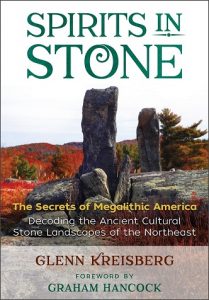 “Spirits in Stone: The Secrets of Megalithic America (Decoding the Ancient Cultural Stone Landscapes of the Northeast)” by Glenn Kreisberg was quite an eye-opening read. Honestly, I read it thinking I would learn there was some giant Stonehenge like structure just down the road from me. Let me go ahead spoil it for you, there isn’t. However, I did learn there is a surprising amount of fascinating stone artifacts all over the northeast, and that there is an inherent bias in the archaeological community as to their importance and the need to study and preserve them.
 It’s a real ‘devil at the crossroads’ moment but, unlike Vegas, what happens at the crossroads doesn’t stay there. To begin with Hobo John has a blast hanging out with the souls of dead musicians but working for Fat Man is dirty business, with untold consequences, and there’s always a price to be paid.
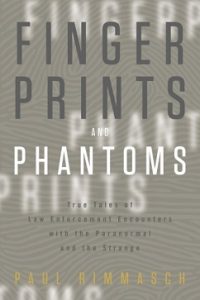 It’s hard to reinvent the wheel when it comes to “true tales of the paranormal”. And I’m not here to tell you that “Finger Prints and Phantoms: True Tales of Law Enforcement Encounters with the Paranormal and Strange” by Paul Rimmasch does that. However, I’m happy to tell you all the wonderful that it is.
 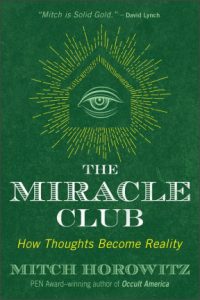 4. You discuss the importance of establishing a moral code before undertaking positive thought work. Why is that?
 About Mitch Horowitz:
 Skye Alexander, author of “Find Your Goddess: How to Manifest the Power and Wisdom of the Ancient Goddesses in Your Everyday Life”, unsurprisingly wants you to find and work with a goddess or two. In her latest book she doesn’t spend loads of time convincing you of this, instead she lets the goddesses themselves do the talking and the teaching.
 Have you heard of the gory, Italian, thrillers known as giallos? I hadn’t, but it turns out they played a huge role in the eventual teenage slasher film. I had no idea that many popular slasher movies came from Canada! Sure, now it seems all movies come from Canada, but the late 70’s, I had no clue. Also, I didn’t realize that Britain had previewed and censored all videos being released in the country. This delayed the release of many slasher movies in the country.
 We have examined something of the meaning of unhappiness, of the war between the opposites in the human soul, of the fear of fear, of man’s consequent isolation from nature, and of the way in which this isolation has been intensified in the growth of civilization. We have also shown how man is intimately and inseparably connected with the material and mental universe, and that if he tries to cut himself off from it he must perish. In fact, however, he can only cut himself off in imagination, otherwise he would cease to exist, but we have yet to decide whether this elusive thing called happiness would result from acceptance of the fact of man’s union with the rest of life. But if this is true we have to discover how such an acceptance may be made, whether it is possible for man to turn in his flight into isolation and overcome the panic which makes him try to swim against the current instead of with it. In the psychological realm this swimming against the current is called repression, the reaction of proud, conscious reason to the fears and desires of nature in man. This raises the further question of whether acceptance of nature involves just a return to the amorality of the beast, being simply a matter of throwing up all responsibility, following one’s whims, and drifting about on the tide of life like a fallen leaf. To return to our analogy: life is the current into which man is thrown, and though he struggles against it, it carries him along despite all his efforts, with the result that his efforts achieve nothing but his own unhappiness. Should he then just turn about and drift? But nature gave him the faculties of reason and conscious individuality, and if he is to drift he might as well have been without them. It is more likely that he has them to give expression to immeasurably greater possibilities of nature than the animal can express by instinct, for while the animal is nature’s whistle, man is its organ.
 About Alan Watts:
 “Earlier this year, Ford announced plans to go full-throttle on sales in the U.S. of trucks and SUVs, which are some of Ford’s highest emission vehicles. Ford is trying to tell us that they care about breast cancer, but in reality they’re making business decisions that will increase our exposure to chemicals that cause breast cancer. We call this pinkwashing,” said Jaggar.