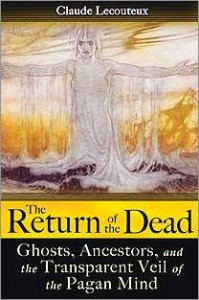
The Return of the Dead

My initial thoughts on “The Return of the Dead: Ghosts, Ancestors, and the Transparent Veil of the Pagan Mind” by Claude Lecouteux were, this is SO COOL! In case that’s not enough for you to go out and give this book a try, let me give you some details.

Now this isn’t my first rodeo, I’ve read all kinds of ghosty folklore type books. However, this book discusses revenants and ghosts from a whole new perspective, through the lens of medieval literature. When I first picked up the book I thought, a former professor of medieval literature wrote this book? Not what I’m used to seeing in the bios of what would be lumped into the ever growing “paranormal” book category. Once I started reading it, I was like, hell yeah, bust out those sagas professor!

How do I love thee “The Return of the Dead”? Let me count the ways. (See I can be all literature-like when I want to be.)

One, it’s nice to see Lecouteux giving revenants their due. Revenants are the animated corpses of the medieval era and honestly, they’re not discussed as much as I’d like. I found myself asking, when was the last time I read anything that even mentioned revenants? I’m not positive, but I think it was in my White Wolf gaming phase, before I moved to a town where all these gamer heathens play Hero and Dungeons and Dragons. Anyway, what I’m saying is that I suspect there are many out there that aren’t familiar with the term revenant, and that’s a shame. It’s a fantastic name for a truly creepy thing. If you’re interested in the paranormal, read this book and up your game by learning about some old school haunting.

Two, sagas. This book is loaded, jam-packed, nearly bursting at the seams with excerpts of sagas. From the “Saga of Kormak” to the “Saga of the Volsungs”, you will find great excerpts and explanations of the ancient literary traditions of medieval times. All with an eye to the restless dead. Sagas are cool, end of discussion.

Three, perspective. Thanks to thoughtful writing and well selected excerpts, I feel I have a better understanding of the medieval Pagan mind. I found it surprising, but how people view death and their dead offers great insight into their lives. All of you modern day Pagans that are interested in learning about the pre-church lives of medieval European citizenry should definitely check this book out.

Four, perspective. That’s what’s fantastic about perspectives, there can be more than one! Due to the time period this book focuses on, Lecouteux has to address the influence of the church. “The Return of the Dead” focuses equally on steps the church took to eliminate Pagan beliefs and how the citizens adapted to the church’s influence. I find the evolution of religions fascinating, making this my favorite thing about the book.

Here we are, at the end of my review. To sum up, and touch back on my initial thoughts. This is SO COOL!

What I Learned From Facebook (Or How Facebook Made Me Whole)

When I set up my Facebook profile, it was to keep in touch with my friends who all seemed to be on there. Then, as anyone who has set up a Facebook profile knows, the next wave of people who got added to my friends were people from high school, which is back in Illinois. Add to that people I knew from my 10 years in retail, and then my current co-workers found me. However, I then found some authors and publicists that I’ve worked with and am friendly with. So I said, what the heck, and added them too.

Then, readers from The Magical Buffet started to find me and ask to be my friend on Facebook. How could I say no? After that, people who have worked with people I have worked with on The Magical Buffet wanted to be added to my friends. Why wouldn’t I?

The other day I took a step back from my Facebook page. What was meant to be my “personal” Facebook profile had spiraled out of control. I’m friends with all these people, not all of whom I know personally. I almost panicked at the sheer volume of people that were privy to status updates about a variety of things. Should Magical Buffet readers know I have a doctor’s appointment? Do my friends really care about articles I’m typing up?

Suddenly I found myself smiling. This wasn’t chaos, or an intrusion, this was integration. In that moment I realized that on a certain level I had become whole. The Rebecca from Illinois, is one with the Rebecca who worked in retail, is one with the Rebecca who works at the office, is one with the Rebecca who drinks and hangs out with gamers, is one with the Rebecca who publishes The Magical Buffet. There are no longer boundaries to who I am; I am all of them, together. To accept me, is to accept all of those different Rebeccas, because they are no longer compartmentalized.

Some may find it scary, and it is in a way. Letting people in is always a little frightening, whether in the real world or online. Maybe I’ll live to regret it, and if so, then I’ll have another Rebecca to fold into my being. For now, I’ve decided to enjoy the liberation that only comes from being open and honest about who you are, even if it’s with a bunch of anonymous people on the internet.

With that in mind, you can find me on Facebook (and you had better become a fan of The Magical Buffet too!).

Shamanism: Seeing in the Dark

By Colleen Deatsman and Paul Bowersox
Copyright © 2009

Though shamanism is the oldest living path of spirituality and healing, many people have never heard of it, or don’t understand what it is. Shamanism is not merely a practice or a set of methodologies, it is a way of living and being in the world that is rich in tradition, eclecticism, and mysticism. It is not a religion. Shamanism is not an ancient archaic art – it is a living power path. It is currently alive in many countries where it often co-exists, blends with, and complements at least one religion, including the major world religions of Christianity, Buddhism, and Hinduism. It is practical, not dogmatic, nor does it have a specific set of rules to follow. Shamanism is interactive, experiential, creative, and in constant dynamic change, based on what works in each unique set of circumstances, not any particular protocol. Shamanism is based in animism. Animism is the understanding that all things are living and are a soul: trees, animals, this magazine, the chair you are sitting in, and you and I.

The term “Shaman” has been adapted from the Tungus people of Siberia, meaning “one who sees in the dark”. This name denotes the ability of the shaman to “see” energy, but shamans not only see energy with their vision, they feel, sense and experience energy using all aspects of their being – physical, emotional, mental, energetic, and spiritual. The work of the shaman is to harness the power of this energy for the benefit of themselves and the people, by acting as the bridge between the energy-based, Spirit Otherworlds and the physical middle world. Using techniques such as journeying, the shaman travels outside of space and time to seek information and harness energy for balance and wholeness for many benefits, including diagnosing and treating illness. They are often called “seers” or “knowers” because of this ability to journey into non-ordinary reality and experience information and energy first-hand.

Shamanism represents the most widespread and ancient methodological system of awareness and mind-body healing known to humanity. Shamans are the visionaries, healers, counselors and psychologists of their communities. They are the medicine people that look out for the well-being of the entire tribe, clan or community, as well as providing individual treatment. Studying shamanism and learning basic journeying techniques does not make one a shaman. To become a shaman requires a deep, undeniable internal calling, intense self-exploration, initiations, and a lifetime dedication to study, training, apprenticing, experiencing, healing, and practicing. It is no easy undertaking and one that few ever consider. However, learning to use shamanic journeys and techniques for personal use is accessible and powerfully healing and enlightening for many people. We all have a natural ability to live from and express our soul-self and to connect with Spirit and the energy of the Otherworlds.

In shamanism there are three worlds: the middle world, the lower world, and the upper world. The middle world is the world in which we live that has both physical and spiritual aspects. It is both the ordinary and the non-ordinary worlds overlapped. It is the world of duality, balance and integration. The upper and lower worlds are places of power where we directly access guidance and empowerment. The lower and upper worlds are non-ordinary worlds that have nothing to do with heaven or hell. These spiritual worlds are referred to as the Otherworlds or spirit realms. These Otherworlds exist within and around all of us, just outside of our daily perceptions. They are the “places” that shamans and journeyers experience and can be accessed through portals, gateways, or tunnels.

Shamans consciously choose to live in two different worlds at the same time. They have one foot here in the everyday ordinary physical world and one foot in the non-ordinary Otherworlds. The fact is, we all live in these two different worlds, but are commonly not aware of the non-ordinary, less visible one. The world that we are most aware of is the world of telephones, cars, airplanes, stress, work, taxi-ing children, paying bills, responsibilities, loves, hobbies and worldly comforts. It is the world of our everyday life.

But there is another world that intermingles and overlaps the everyday world. This world does not exist in some other place, but is right beside us, just outside of our usual perceptions. Because we must hone our perceptions to connect with this subtle world, it seems separate, when in reality it is the undercurrent of the world that we are familiar with.

We often think of non-ordinary reality as the land of mysterious miracles and the paranormal, in which only the wild-eyed few who have ESP can maneuver. Not true. Shamans are ordinary people trained to enter the non-ordinary world to bring its benefits to the aid of the everyday world. We all have the innate ability to do this. Much of the art, music, and wisdom that we enjoy in our daily lives comes from ordinary people who know the power, beauty and ecstasy of the non-ordinary world, even though they may not travel there consciously.

The world of non-ordinary reality is the world of the energy, mystery, and magic that created our world and holds it together by threads of an interconnected web that is the Spirit that moves in all things, referred to by many traditions as The Great Web of Life. Everything is alive with this soul-essence that is both the source of life and the giver of life and vitality to everything everywhere. Through the simple techniques of journeying and performing ceremony and ritual, the veils that separate the worlds are lifted and the Web can be seen, sensed, experienced and accessed, and the Helping Spirits can be contacted. It is by entering this world of non-ordinary reality that shamans tap into the infinite life force energy that heals, creates miracles and reveals wisdom.

A shaman or journeyer enters a trance state in order to access the Otherworlds. This ecstatic state is commonly termed the shamanic state of consciousness (SSC) and/or non-ordinary reality (NOR). This state of deep awareness allows the journeyer to place the conscious, critical, left-brained mind at rest while exploring the realms of vast possibility in the Otherworlds. The trance-state used by shamans and journeyers is the theta state of brain wave activity, a state that is the close to sleep. Thus, many shamans are called “dreamers” or are said to be “dreaming” the journey. This state feels similar to daydreaming though much, much deeper. The shamanic trance is often entered into with the assistance of monotonous rhythmic drumming, rattling, singing or movement. Once the shaman enters this altered state of consciousness, they journey to meet with their Helping Spirits and fulfill the intention of the journey whether it be for growth, guidance or healing for personal use or on behalf of the community or a client. Helping Spirits are ambassadors of the Great Web, and may appear as energy or may take the form of Power Animals or Totems, Angels, Religious Deities, Mythological Beings, or Ascended Spirit Masters, to name but a few.

We are a part of this Great Web of Life. The omnipotent force of the Web is the source of your life and the giver of the energy that you need to live your life. This life force energy within you is your soul essence and constitutes your soul-self. Anytime your connection to your soul-self or the Web of Life is compromised, an imbalance and disharmony is created. If the imbalance continues, it eventually develops into an issue, a symptom or a syndrome. This is your wake-up call. It is your inner wisdom sending a message to your consciousness that something is out of balance. If you don’t get the message, or if you choose to ignore the message, it will eventually develop into a chronic condition. To put an end to this spiraling decline, you must become aware, listen to yourself, and express your soul-self, connecting with The Great Web of Life.

Within your soul-self lives your inner wisdom, inner healer, inner guide and inner peace. Becoming aware of, and connected to these aspects of yourself is integral to living a life full of energy, vitality, passion, purpose, health and wisdom. You can achieve this by living shamanism. Learning how to journey, and journeying on a regular basis, will help you get to know yourself and these important inner aspects for self-healing and self-fulfillment. Bringing this energy and information into your everyday life in real, practical ways makes subtle shifts in your senses, perceptions, experiences, and life. In doing so, you learn how to energize and heal yourself by becoming centered in your universe. You learn how to find your center space within your soul, body, mind, emotions, energy field, life, the Web of Life, the world, and beyond.

Shamanism connects us with the powerful forces of energy, spirit and our own soul-self by using our thinking machinery, wits and senses, awareness skills, and fact-finding abilities to shift our focus from ego to soul/spirit. In the beginning, a person learns about animism, the nature of spirit, navigating through the cosmology of the worlds, multiple effective methods to perceive and receive energy, and techniques that open the doors of the soul to power and energy. Shamanic initiates learn how to stand strong in their own personal power, and find that this power is soul power, not ego power. To advance beyond the basic level, the initiate must build a consistent daily spiritual practice, cultivate intimate relationships with their Helping Spirits, and use their mind, senses, and spirit connections to “see” the world with clarity and act accordingly. Initiates must also dedicate themselves to living from their soul, rather than their ego. This is not an easy task, and is where many initiates lose their way, thus rendering themselves less effective or even directionless. Dismantling the ego allows the shaman’s soul to shine bright and their spirit connections to be clear and strong.

As we recognize, delete or re-write the programs/behaviors, conditionings, masks, and identities that we have unconsciously worn most of our lives, we learn to “get out of our own way” and draw ourselves into harmony with the natural world and its myriad energies. This important aspect of shamanism cultivates the deep work and enables us to take off these “masks” and link up with our authentic soul-self in order to be a clear channel for such things as healing and divination. This process must happen over and over again for the shaman to be free of their programming and clear the energetic, emotional, mental and physical muck out of the way so their soul can shine into the world.

Balance and healing takes place when the energy of the individual is in harmony with the energies of the natural world and the energy body is free of impurities, is whole and has good boundaries. The shamanic path is geared pointedly to this end. This is the path and the tool set that Colleen used to cure herself of fibromyalgia, CFIDS, hypoglycemia, hypothyroidism and asthma.

Once a shaman has learned how to get out of their own way, harmonize with their world, and has become whole and healed, they can begin to effectively interact with the world by interfacing directly with the subtle energies that flow through it, known shamanically as the Great Web of Life. To do so, the shaman must be able to merge with and harness these energies through conscious focus and intent. This allows the shaman to perceive and utilize energy the likes of which others are largely unaware. That’s why the shaman can “see” and affect what is going on with others, the world, and the Web of Life.

The great shamans are like the Yogis that have gained popularity in the Western cultures of late. They are simple but brilliant, direct, to the point, power-filled, powerful, free of their personal demons, and are radiant with pure life force energy which they are honored to share with others. The enormity of the shaman’s art is not in the mystic spirit-worlds but in the bringing of the fullness of soul and spirit into this world. That’s how miracles are created.

Shamanism will help each one of us come as close as we are willing to that state of inner peace and power by providing a process and a way of life that changes us. As time goes on, we learn that living peacefully and powerfully is not only about what we do, but who we become.

About the authors:

Colleen Deatsman www.colleendeatsman.com, cdeats3@gmail.com is the Co-Author of Seeing in the Dark: Claim Your Own Shamanic Power Now and in the Coming Age (Red Wheel Weiser 2009), and the Author of Energy for Life: Connect with the Source (Llewellyn 2006), Inner Power: Six Techniques for Increased Energy and Self-Healing (Llewellyn 2005), and numerous on-line and magazine articles. She holds a Masters Degree and is a Licensed Professional Counselor, Licensed Social Worker, Shamanic Practitioner, Energy Movement Healer, Reiki Master, Certified Hypnotherapist, and Certified Alternative Healing Consultant at Circle of Life Counseling and Healing Services in Mason, Michigan. Colleen is also an expert by personal experience. She has healed herself from chronic fatigue immune deficiency syndrome (CFIDS), fibromyalgia, hypoglycemia, hypothyroidism and asthma.

Paul Bowersox (pbowersox@gmail.com) is the Co-Author of Seeing in the Dark: Claim Your Own Shamanic Power Now and in the Coming Age (Red Wheel Weiser 2009). He holds a Bachelor’s Degree in Biomedical Engineering, is a Shamanic Practitioner and Teacher, Reiki Practitioner, Writing Coach, Editor and Contributing Writer for a number of on-line sources, publications and authors including authors Colleen Deatsman (Red Wheel Weiser and Llewellyn) and Mark Stavish (Red Wheel Weiser and Llewellyn).

Sign Watching With Rebecca

Astute readers will notice that I haven’t done an update on my progress through the House healthcare bill this week. You’re correct, I haven’t. Several factors well beyond my control have kept me from being as diligent in my reading as I would like. For instance, the holiday weekend, my husband’s new PS3, and Kathy Griffin’s new book “Official Book Club Selection”. See? Totally out of my control. However my friends, do not despair because I have something way more fun than that for you. I attended an event featuring my Congressman, Scott Murphy.

Due to my own laziness, the morning of the event I sat on our sofa zoning out watching my husband play a new game on his Playstation 3, so in the end we rushed out the door with me skipping breakfast. (A big deal for anyone who knows me.) But I was determined to be an active participant in my government. Feh, who am I kidding? I went hoping to see someone get hit with a chair.

Much to my displeasure, everyone behaved rather well, and there were no chairs. There was the occasional yell back and forth, but that was pretty much it. My husband wouldn’t let me work my way into the crowd and say inappropriate things to provoke a brawl, which is probably for the best since we don’t own a video camera. On the other hand, we do own a digital camera, and the signs there were worth coming out for.

Here’s Congressman Murphy. He maintained his cool throughout the event. It seemed to me that he, in fact, has read the 1018 page bill. With him was the whole thing printed out, dog-eared, with visible notes written on it. He occasionally discussed things I had read and we both seemed to have read it the same way. Of course, his job was made easier by him stating up front that he wouldn’t vote for that bill the way it was now. This pleased the people who hate it with a white hot passion for its public option and advanced care planning, and it also pleased the progressives who want to hear about single payer universal healthcare and hate the bill with a white hot passion for its wussy notion of a public option. People are neat, aren’t they?

Speaking of people, I think political sign watching is going to be my new hobby. Way more fun than bird watching! The awesome thing about it is that if you want a picture of a sign and can’t get a good shot, you can just ask to take a picture of it; they assume you agree with the message on the poster board. This was made more fun by me wearing my “I’d Rather Be Fighting the Man” t-shirt. A sentiment that works well for most political philosophies these days. I rock.

First up is, “Where’s Tort Reform”. For those of you unfamiliar with tort and the tort reform debate, I’ll direct your attention to Justinian Lane’s website. Although his post is obviously from one side of the debate, it does a good job of defining tort. A thing I heard several times at this event, but had not heard on television anywhere, were people feeling the need to reform how malpractice lawsuits work. They feel the huge expense doctors pay into malpractice insurance causes doctors to pass the expense onto their patients.


Many Americans are fearful of a government run healthcare program. Next are a couple of pretty common sentiments, on television and apparently on a local level. “U Think Healthcare is Expensive Now….Wait Till It’s Free” and “Vote No! Public Healthcare”. Nothing really new there. The media has done an excellent job of digging up dirt on every country that has a single payer system. In my opinion, there is no such thing as a perfect healthcare system. America certainly doesn’t have one, and as far as I can tell no other country does either. It really comes down to how do we make sure that every working American gets the healthcare that they need, without breaking the bank, or collectively hosing everyone?


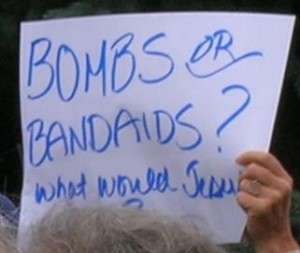
This segues nicely into the next sign. The bottom is cut off, but it reads “Bombs or Bandaids? What Would Jesus Buy?” I’m a big fan of this sign. It was obviously quickly handwritten, which says to me, this is this woman’s immediate gut reaction to the healthcare debate. I also like it because it addresses the healthcare debate in a way that I rarely hear, which is as a moral issue. Some people, this woman for example, feel that as a fairly wealthy, moral nation, it’s our obligation to make sure that our citizens receive healthcare. I suspect this is how so many countries ended up with a single payer system of some type or another. They went; well, it’s impossible to have a perfect healthcare system. The least we can do is try to make sure that everyone has access to what we can offer. I could be wrong about that, for some reason the heads of state from Afghanistan, Argentina, Austria, Australia, Belgium, Brazil, Canada, Chile, China, Cuba, Costa Rica, Cyprus, Denmark, Finland, France, Germany, Greece, Iraq, Iceland, Ireland, Israel, Italy, Japan, Luxembourg, the Netherlands, New Zealand, Oman, Portugal, Russia, Saudi Arabia, Spain, Sweden, South Korea, Sri Lanka, Ukraine and the United Kingdom don’t consult me on these matters. (And yes folks, all those countries listed have some sort of publicly sponsored universal healthcare system.)


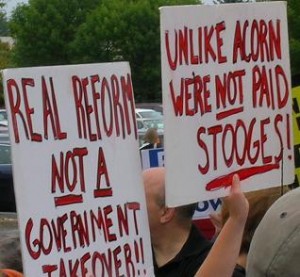
This next sign just perplexed me. “Unlike ACORN We’re Not Paid Stooges”. I’m going to be honest here; I don’t get what she was going for with this one. You may remember that ACORN is the community activist organization that has had a few different scandals, primarily from their mass voter registration drives and penchant for giving tax advice to pimps. I don’t know what she was trying to say, but the bold red ink and big block letters tell me that she really means it. I found the mention of ACORN a fun addition to the muddled political atmosphere at the event. Thank you ACORN lady!


I have saved the best for last. This final sign was THE sign at the event for me. Its horrible fear mongering was only topped by the glaringly obvious lack of understanding of the healthcare bill. This kind of crazy is the stuff I LIVE for! “Government Healthcare. A Lethal Injection. Seniors First. Baby Boomers Next.” Sweet mother it was a beautiful sight. And I had to stalk her to get the photo. She was a nimble lady, weaving around the crowd. The payoff of this photo was worth the effort. Now if you read The Magical Buffet, then you read my last Colbert Healthcare Challenge article where I posted the exact text of the advanced healthcare planning section of the bill. No where in it does it imply any sort of death panel or the administering of lethal injections. In fact, thorough advanced care planning, gives you more control over your death, not less. The idea of death panels and lethal injections also alludes to the concerns over “rationing of care”. This is the idea that the government will determine how your doctors will treat your health issues, etc. I have no doubt that a single payer system will involve some of that, not to the extent of the government killing you when you become too expensive (Although that does sound like an awesome sci-fi book or movie. It’s probably already been done.). On the other hand, I’ve had my assorted health insurance companies throughout the years restrict me from taking certain medications and not cover types of treatment. Remember, no healthcare system is perfect.


So what did I learn? For starters, Congressman Murphy can be one savvy mother (hush your mouth!) when he needs to be. Good for him! More importantly, I learned that we’re all a bunch of irrational individuals, being pulled by the media, our personal sense of ethics, fear of the unknown, and more. That no one can bring themselves to admit the truth, which is there is no answer to the healthcare debate. That dazzling ignorance that we all possess, myself included, is what makes Americans such a heartwarming, frightening, and contrary bunch. I think that’s just fantastic.

First Annual Northern New York Paranormal Expo: The Introduction

The day we launched the first issue of The Magical Buffet, Jim and I packed up our bags and headed up north for a fundraising event for the Northern New York Paranormal Research Society. (You can read about our adventures here.)

What I didn’t convey in that original article was how scared I was. I had just launched a website. Would people like it? Would people like me? Would they think I was crazy, amateurish, a jerk? Would I find friends? With all of that on my mind, I headed up north to present myself as a writer and a voice of a new online community. No pressure.

After an evening and a day with the NNYPRS, I was energized. NNYPRS President, Merrill McKee has an enthusiasm for the paranormal that is infectious. His team, friendly and supportive of a new girl on the internet block. At the end of the visit I was hugging each of them as I left. I had found friends and supporters. People that thought that I had something to offer with The Magical Buffet. I’ve always been a friend and supporter of the Northern New York Paranormal Research Society, but I’ve never really given them the real credit that they’re due. Merrill and his group made me believe I could do this. Who knows how the future of this website would have unfolded if I had not met the NNYPRS then, when I needed them the most.

That was my first October with the NNYPRS. Last year I went out to do my very first paranormal investigation with them. (You can read about that here.) However this year, I’m particularly excited about my October with the NNYPRS.

The Northern New York Paranormal Research Society and the City of Plattsburgh Recreational Department present, the First Annual Northern New York Paranormal Expo!

Join me on Saturday, October 24, 2009 at the Old Air Force Base Gym in Plattsburgh, NY (yes, the place we investigated last year) for a day of paranormal fun! I will be there all day checking out the vendors and attending the lectures that will be going on from 10 AM to 6 PM that night. This looks like it’s going to be a great event, if you’re in the area, you should definitely come on out for it! If you can’t make it, I will be doing a write up about the event, hopefully full of entertaining stories and photos of people other than me!

For the full details, including vendor and speaker lists, directions, and more, visit their website.

Tree Medicine, Magic, and Lore: Elm

By Ellen Evert Hopman
illustration by Will Hobbs

The Elms were important fodder trees for farmers of the Neolithic. The shoots and leaves of Elm, Ash, Linden, Aspen, and Poplar were once used to feed domestic stocks when other food was scarce or unavailable. The barks of both Elm trees and Lindens were used to weave mats, footwear, baskets and wicker. Elm wood was an important material for bows. The Indo-European root word for Elm was most probably “wyg” from which came the Kurdish “viz”, the Low German “wike” and the English “wych” (or witch) from which the words ligature, binding, withy (for weaving), to bend, and to weave were later developed in several modern languages.

Wisewomen and Cunningmen (village counselors, herbalists, midwives and veterinarians) took on the title “Witch” for their ability to bend fate and the future. Wych Elm or Wych Hazel were the names for trees in Britain under which Witches met.

The Elms are a favorite tree of rooks who like to nest in them. In Devon, England it was believed that Elm leaves falling out of season were a portend of cattle disease. Cornish Maypoles were made of Elm trunks. Elms were once called “Elven” among the Anglo-Saxon because they are a favorite of the elves. To strengthen your contact with Wood Elves it is a good idea to bond with one of these trees. Bring it gifts of cider, mushrooms, birdseed, tiny shells, herbs, fertilizer, honey, or song and spend time with it on a regular basis. Once bonding has occurred you can consecrate the relationship with a simple ritual. Wood Elves tend to appear to the seeker after a long night of music and gentle refreshment, under the Elms.

Slippery Elm bark was used by Native American herbalists who wrapped it around a wound. Dried and powdered and then made into a paste by adding water it was applied to injuries to flesh and bone. The tea of the bark, root and leaf was taken to speed bone healing (I have seen it work nicely on carpal tunnel syndrome when the paste was mixed with comfrey leaf and applied daily for one hour for a week).

The powdered bark can be mixed with water to make a jelly that helps urinary and bowel problems, sore throats, scurvy and diarrhea, and which can be eaten as a source of calcium for those allergic to cow’s milk (perfectly safe for babies too).

Slippery Elm poultices are effective for ulcers, tumors, swellings, gunshot wounds, chilblains, and can be placed on the abdomen to draw out fever. Injections of Slippery Elm tea are helpful for dysentery and hemorrhoids. The Iroquois made canoes from Elm as well as sleeping platforms and casks for shelled corn. The Potawatomi used Slippery Elm to poultice inflamed eyes, boils and splinters. Huron women made Elm vessels of various sizes that could hold up to one hundred gallons of liquid. The largest ones were made to hold maple sap.

The Delaware used Slippery Elm to make a paste to keep canoes tight and the Meskwaki used Elm bark to cover their houses. The root of Slippery Elm was boiled to make a tea that eased childbirth when taken for a few months before delivery.

The Penobscot used a tea of White Elm bark for bleeding from the lungs. The Mohegan used it for coughs and colds and the Seneca made bark kettles of Elm, before the kettle was burned through the meat was cooked. The Mohawk twisted Elm bark to make harnesses for sledges.

about the author:

Ellen Evert Hopman is a Druid Priestess, herbalist and author of “Priestess of the Forest: A Druid Journey”, “A Druids Herbal – Of Sacred Tree Medicine”, “Walking the World in Wonder – A Children’s Herbal” and other volumes. Visit her website for more!


Bibliography
Adams, Barbara Means, Prayers Of Smoke, Renewing Makaha Tribal Tradition; Celestial Arts, Berkeley, CA 1990

Baker, Margaret, Discovering The Folklore Of Plants; Shire Publications Ltd., Aylesbury, Bucks, U.K. 1975

Beith, Mary, Healing Threads, Traditional Medicines of the Highlands and Islands; Polygon, Edinburgh, Scotland, 1995

Brunaux, Jean Louis, The Celtic Gauls: Gods, Rites and Sanctuaries; Seaby, London, 1988

Calder, George (translator), Book of Ballymote: Auraicept Na nEces (The Scholars Primer); Edinburgh, 1917

Carmichael, Alexander, Carmina Gadelica, Hymns and Incantations; Floris Books, Edinburgh 1992

Cunliffe, Barry, The Celtic World; St. Martin’s Press, New York, New York, 1993

Cunningham, Scott, Encyclopedia of Magical Herbs; Llewellyn Publications, St Paul, MN 1986

Ellis, Peter Berresford, Celtic Women; Wm. B. Erdman’s Publishing Company, Grand Rapids, MI, 1996

Erichsen-Brown, Charlotte, Medicinal and Other Uses Of North American Plants; Dover Publications Inc., New York, NY 1989

Evans-Wentz, W.Y., The Fairy Faith In Celtic Countries; Citadel Press, New York, NY 1990

Farrar, Janet and Stewart, The Witch’s Goddess; Phoenix Publishing Inc, Custer, WA 98240

Frazier, James G., The Golden Bough, The Roots of Religion And Folklore; Avenel Books, NY 1981

Friedrich, Paul, Proto-Indo-European Trees; The University of Chicago Press, Chicago, IL 1970

Green, Miranda J., The Celtic World; Routledge, London, 1995

Green, Miranda J., The World of the Druids, Thames and Hudson, London 1997

Grieve, M., A Modern Herbal, Dover Publications Inc., New York, NY 1971

Hoagland, Kathleen, 1,000 Years of Irish Poetry, The Gaelic and the Anglo-Irish Poets From Pagan Times To The Present; The Devin-Adair Company, Old Greenwich, CT 1981

Hopman, Ellen Evert, A Druids Herbal For The Sacred Earth Year; Inner Traditions/Destiny Books, Rochester, VT 1995

Hopman, Ellen Evert, Tree Medicine, Tree Magic; Phoenix Publishers, Custer, WA 1991

Kelly, Fergus, A Guide To Early Irish Law; Dublin Institute for Advanced Studies, Dublin, 1991

Kondratiev, Alexei, The Apple Branch; The Collins Press, Cork, 1998

Lust, John The Herb Book; Bantam Books, New York, 1974

Markale, Jean, The Druids; Inner Traditions, Rochester, VT, 1999

Matthews, Caitlin & John, The Encyclopedia of Celtic Wisdom; Element Books, Rockport, MA 1994

Matthews, John, The Druid Sourcebook; Blanford Press, London, 1996

McNeill, F. Marian, The Silver Bough, Vol. One; William Maclellan, Glasgow, 1977

Meyer, Kuno, Selections from Ancient Irish Poetry; Constable, London, 1959

Moerman, Daniel E., Medicinal Plants Of Native America; University of Michigan Museum of Anthropology Technical Reports, Number 19, Ann Arbor, MI 1986

Mooney, James, History, Myths and Sacred Formulas of the Cherokees; Bright Mountain Books, Ashville, NC 1992

Naddair, Kaledon, Keltic Folk and Faerie Tales; Century Hutchinson Ltd., London, 1987

O’Boyle, Sean, Ogam, the Poet’s Secret; Gilbert Dalton, Dublin, 1980

Rees, Alwyn and Brinley, Celtic Heritage; Thames and Hudson, New York, 1989

Ross, Anne, Pagan Celtic Britain; Columbia University Press, New York, NY 1967

Saintine, X.B., The Myths Of The Rhine; Charles E. Tuttle Co., Rutland, VT 1967 (Reprint of the 1875 edition)

Squire, Charles, Celtic Myth and Legend; Newcastle Publishing Co. Ltd., USA, 1975

Stone, Merlin, Ancient Mirrors Of Womanhood; Beacon Press, Boston, MA 1984

The Magical Mofongo

Readers will remember that last month I had been anticipating trying mofongo, which had fallen through but introduced me to Goya Malta. Well folks, this little lady finally got herself some mofongo, and it was magical.

For those of you unfamiliar with it, mofongo is a popular Caribbean dish. It’s made from frying up plantains, smashing them, and frying them again. Yes, twice fried my friends! Then, while they’re still warm you mash them using a mortar and pestle, incorporating pork fat, broth, and whatever goodies the chef includes. As I was sitting with Jim in the restaurant we heard some loud banging. “That’s our lunch,” I told Jim.

Jim tried the mofongo de pollo, which is the dish with chicken. It came out as a dense ball surrounded by chunks of chicken and broth. I ordered the mofongo de queso, which is it with cheese. My logic being, fried starch and cheese must be good. I was right. We were given extra broth and homemade hot sauce to go with them.

If you haven’t tried plantains before, I should explain. Plantains, although looking just like a banana, are actually not very sweet. They are like a dense starchy thing. My dish was chunky, fried, mashed starch, mingling with a salty white cheese, molded into a ball. It was a dish made for having a beer with, so we each had a Presidente, which is the only beer brewed in the Dominican Republic. Since we were eating at a Dominican restaurant, it seemed appropriate. If you like a pilsner, give this one a try if you can find it.

It was a hearty delicious lunch. I think I summed it up when I told Jim, “Mofongo. It’s flavor may be Dominican, but it sits in your stomach like it’s German.”

The Colbert Healthcare Challenge: Part 4

Well, here I am, just about halfway through the dreaded 1018 page House healthcare bill. I’m at page 501! Victory is many, many weeks from being within my grasp. Although still an unwieldy bundle of reading, things have started to get a little interesting. (Don’t know why I’m reading this? Click here.)

I’m going to launch right into the “what I’ve learned” part of the article, however, do keep in mind that this whole thing gives me a big ole’ headache so what I think I’m reading may end up not being what it means at all! Hey, at least I’m being honest about it!

– I’ve definitely been having some fun with language in this part. A “power-driven wheelchair” is now a “complex rehabilitative power-driven wheel-chair”.
– This chunk of the bill mentions the development of “meaningful use of an electronic health record”. It looks like thus far they mention it with regards to “The collection of health data to identify deficiencies in the quality and coordination of care for individuals eligible for benefits under this part.”
– There is a whole lot about trying to “reduce potentially preventable hospital readmissions”. If I’m reading this right, it looks Medicare may reimburse hospitals less for excessive readmissions, bearing in mind that they will be doing a study to determine an average, and also to determine a list of acceptable conditions and reasons for readmissions so that hospitals are not penalized in any way for those.
– With regards to this it appears there will be a commitment (maybe providing funding to hospitals?) to having translators available to be certain that upon discharge patients understand what their follow up care should be.
– They want to establish a “medical home pilot program” for “high need beneficiaries”, which are people who ” require regular medical monitoring, advising, or treatment”. If I’m reading it right, they’ll also be examining home health care options for individuals in general. That may just be wishful reading on my part, but having a doctor come to your home does sound like some super pro-active preventive medicine.
– I don’t know how Medicare works now, so this may be new, or maintaining of the status quo, but preventive services with Medicare would be covered 100%. This includes all the usual suspects, mammograms, colonoscopies, physicals, so on and so forth, etc., etc.
– Now for the part you’ve all been waiting for….the death panels (cue ominous music). Since there has been so much attention paid to this one, allow me to liberally cut and paste (it’s long, but pretty easy to follow):

Advance Care Planning Consultation
Subject to paragraphs (3) and (4), the term ‘advance care planning consultation’ means a consultation between the individual and a practitioner described in paragraph (2) regarding advance care planning, if, subject to paragraph (3), the individual involved has not had such a consultation within the last 5 years. Such consultation shall include the following:

(A) An explanation by the practitioner of advance care planning, including key questions and considerations, important steps, and suggested people to talk to.

(B) An explanation by the practitioner of advance directives, including living wills and durable powers of attorney, and their uses.

(C) An explanation by the practitioner of the role and responsibilities of a health care proxy.

(D) The provision by the practitioner of a list of national and State-specific resources to assist consumers and their families with advance care planning, including the national toll-free hotline, the advance care planning clearinghouses, and State legal service organizations (including those funded through the Older Americans Act of 1965).

(E) An explanation by the practitioner of the continuum of end-of-life services and supports available, including palliative care and hospice, and benefits for such services and supports that are available under this title.

(F)(i) Subject to clause (ii), an explanation of orders regarding life sustaining treatment or similar orders, which shall include—

(I) the reasons why the development of such an order is beneficial to the individual and the individual’s family and the reasons why such an order should be updated periodically as the health of the individual changes;

(II) the information needed for an individual or legal surrogate to make informed decisions regarding the completion of such an order; and

(III) the identification of resources that an individual may use to determine the requirements of the State in which such individual resides so that the treatment wishes of that individual will be carried out if the individual is unable to communicate those wishes, including requirements regarding the designation of a surrogate decision maker (also known as a health care proxy).

(ii) The Secretary shall limit the requirement for explanations under clause (i) to consultations furnished in a State—

(I) in which all legal barriers have been addressed for enabling orders for life sustaining treatment to constitute a set of medical orders respected across all care settings; and

(II) that has in effect a program for orders for life sustaining treatment described in clause (iii).

(iii) A program for orders for life sustaining treatment for a States described in this clause is a program that—

(I) ensures such orders are standardized and uniquely identifiable throughout the State;

(II) distributes or makes accessible such orders to physicians and other health professionals that (acting within the scope of the professional’s authority under State law) may sign orders for life sustaining treatment;

(III) provides training for health care professionals across the continuum of care about the goals and use of orders for life sustaining treatment; and

(IV) is guided by a coalition of stakeholders includes representatives from emergency medical services, emergency department physicians or nurses, state long-term care association, state medical association, state surveyors, agency responsible for senior services, state department of health, state hospital association, home health association, state bar association, and state hospice association.

(2) A practitioner described in this paragraph is—

(A) a physician (as defined in subsection (r)(1)); and

(B) a nurse practitioner or physician’s assistant who has the authority under State law to sign orders for life sustaining treatments.

(3)(A) An initial preventive physical examination under subsection (WW), including any related discussion during such examination, shall not be considered an advance care planning consultation for purposes of applying the 5-year limitation under paragraph (1).

(B) An advance care planning consultation with respect to an individual may be conducted more frequently than provided under paragraph (1) if there is a significant change in the health condition of the individual, including diagnosis of a chronic, progressive, life-limiting disease, a life-threatening or terminal diagnosis or life-threatening injury, or upon admission to a skilled nursing facility, a long-term care facility (as defined by the Secretary), or a hospice program.

(4) A consultation under this subsection may include the formulation of an order regarding life sustaining treatment or a similar order.

(5)(A) For purposes of this section, the term ‘order regarding life sustaining treatment’ means, with respect to an individual, an actionable medical order relating to the treatment of that individual that—

(i) is signed and dated by a physician (as defined in subsection (r)(1)) or another health care professional (as specified by the Secretary and who is acting within the scope of the professional’s authority under State law in signing such an order, including a nurse practitioner or physician assistant) and is in a form that permits it to stay with the individual and be followed by health care professionals and providers across the continuum of care;

(ii) effectively communicates the individual’s preferences regarding life sustaining treatment, including an indication of the treatment and care desired by the individual;

(iii) is uniquely identifiable and standardized within a given locality, region, or State (as identified by the Secretary); and

(iv) may incorporate any advance directive (as defined in section 1866(f)(3)) if executed by the individual.

(B) The level of treatment indicated under subparagraph (A)(ii) may range from an indication for full treatment to an indication to limit some or all or specified interventions. Such indicated levels of treatment may include indications respecting, among other items—

(i) the intensity of medical intervention if the patient is pulse less, apneic, or has serious cardiac or pulmonary problems;

‘(ii) the individual’s desire regarding transfer to a hospital or remaining at the current care setting;

(iii) the use of antibiotics; and

(iv) the use of artificially administered nutrition and hydration.
I’ll let you decide if this is a “death panel” situation, in my opinion, it is not.

– I still don’t believe this is a socialist plot to take over our federal government.

517 pages left!

Catching Up With Paul

Since we last spoke in April of 2007, an Angel named Thomas put his hand through the top of my skull and massaged my soul while channeling a Choir of One Thousand Angels. My music can’t quite match that, but I keep trying…

My 2008 album Garden of Delight , won the New Age Reporter award for Best World Album , was Echoes CD of the Month, Top Ten for Three Months, and featured on Hearts of Space. I also did an OM chanting CD called Gratitude Joy that did not win one single award but still brought peace and joy to many people which is of course, the whole point of all this!

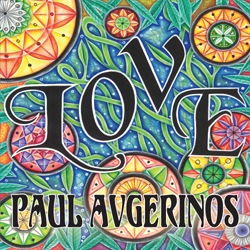
My latest offering is LOVE, which just came out in August. Blissful Lullabies celebrating our highest vibration, LOVE is a temple of sound in honor of Love. A sacred space of deep blissful contentment. The fertile soil of peaceful grace where we are able to feel and free to be our true nature…
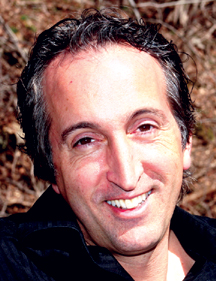
I collaborated with legendary New Age artist Kevin Braheny Fortune for the album.

LOVE is my most even, intimate, consistently blissful work that is already bringing lots of simple peace & joy to many souls.

You can find LOVE at iTunes, Amazon, and at my site www.RoundSkyMusic.com

About Paul:
Paul Avgerinos is a Grammy nominated Composer and Producer whose music is broadcast all over the world. Paul’s New Age albums consistently reach the Top Ten in Radio and have won major awards three years running. He has worked on over one hundred film and TV projects with over 3,000 TV licenses. Paul has been involved in a number of Platinum albums and has worked with Aerosmith, Jewel, Run DMC, Willie Nelson & Deana Carter.

Currently, he lives and works in Redding, CT, where the deer pass by his studio windows and the hawks and eagles give inspiration from above.

Learn more at www.StudioUnicorn.net and www.RoundSkyMusic.com.

The Wiccan Rede Project: Thuri Calafia

My take on the Wiccan Rede
By Thuri Calafia

Well, first I must say that I was several years down my path before I had any idea there was more to the Rede than the last eight words. To this day, that’s what I think of when I say I live by the Rede. And in that, I do, absolutely. When I did see the Rede in its entirety, as today, I find some that resonates deeply, and some that seems obscure or unnecessary. I’ve also noticed through the years, having seen “it” several times now, that there seem to be more than a few versions. As to this one, well, it seems silly to speak on the parts that hold no meaning for me, so I will comment only on that which resonates:

Bide the Wiccan laws ye must, In perfect love and perfect trust.
I can get behind the perfect love and trust thing, but other than the last 8 words of the Rede, I know of no “Wiccan laws,” although I suppose this piece of prose is laying them out for us. In that respect, no, I don’t follow all of the “laws” following. There is no absolute authority, no governing body in the Wiccan faith, and that’s a good thing. We see all too often in American politics and corporations (which are basically one and the same anymore) how easily power corrupts, especially when the millions are governed by the few.

Perfect love and perfect trust is somewhat relative, strange as that may sound. Do I hold a bunch of strangers in an open public circle in perfect love and perfect trust? Well, no. But I can hold my gods in perfect love and perfect trust when entering that circle, that they would not let me be somewhere where the energy is harmful to me.

In terms of one’s coven, I would have to submit that from personal experience to have perfect love and perfect trust of my covenmates would have to be a requirement, as least for me personally, to even consider being in coven with them to begin with. For me, a coven is a close, spiritual family. It’s deeper than family, actually, because a coven is a family by choice.

Live and let live- Fairly take and fairly give.
Live and let live has been a philosophy of mine since probably my late teens. Fairly take and fairly give is a tough judgment call… what is “fair” exactly, and who is in charge of determining that? I definitely believe in honesty and integrity, taking only that which I’ve earned or which belongs to me. Stealing is just stupid because it always comes back to bite you in the ass (see the threefold law). But “fairness”… that’s not so easy. Sometimes we can think life is being unfair to us, but perhaps it’s about a lesson our spirit is trying to learn. Then, what is actually a gift can be seen as a burden, when in fact it’s totally “fair” from the standpoint of our spiritual lessons.

Cast the Circle thrice about to keep all evil spirits out.
Hmmm, never heard of this one before reading this. Perhaps we do cast the circle thrice, in a sense, with our actions of purifying, charging, then casting. And yes, to keep evil out, but more importantly, to keep the energy in, until it’s ready to be released!

To bind the spell every time, Let the spell be spake in rhyme.
I’m sure many of us have had spells fly brightly when we didn’t use rhyme, but it’s also true that our gods, guardians, and other spirits love the sound of poetry. They also love candlelight and incense. I think there are many things that bind spells, however, the strongest being focus and intention. Whatever gets the practitioner into that energy pattern will work beautifully to help spells succeed, whether spoken in rhyme or not.

Soft of eye and light of touch-Speak little, listen much.
This just sounds to me like good manners, and having the good sense to know that you don’t know everything. I’m all for that!

Deosil go by the waxing Moon-Sing and dance the Wiccan rune.
In many traditions, it’s considered very important to move deosil if building, constructing. This keeps energy flowing in the right direction for its purpose. This also makes a lot of sense in terms of the moon “rule” here – during waxing moons is the time to do such actions. In some traditions, it’s no big deal if one moves widdershins momentarily, and in others it IS a big deal. I’m of the more laid-back camp, but still strive for that energy movement. As to the Wiccan Rune, I read the words to it in the Farrars’ Witches’ Bible. Didn’t really do it for me. I take this part as being somewhat symbolic – that if we want to raise energy, some of the best ways are with chanting, singing, and dancing.

Widdershins go when the Moon doth wane, And the Werewolf howls by the dread Wolfsbane.
The waning moon is considered very important for de-constructing or destroying. Again, it’s all about energy flow, just like with the waxing moon. Don’t know too much about werewolves, so I’ll refrain from comment on that one.

When the Lady’s Moon is new, Kiss the hand to her times two.
The only thing I can think this means is that we should show the goddess our love, respect, and reverence. This couplet may be speaking of saying devotionals, but I think I may be reaching a bit on that one. I must admit I haven’t a clue what these lines mean.

When the Moon rides at her peak, Then your heart’s desire seek.
Aaahh, yes. “Whenever you have need of anything, once in the month, and better it be when the moon is full…” These lines tell us that when we have need, to do our spellwork on the full moon to give it the most power. This could also be interpreted as the moon being at apogee – straight above us, which would be the most powerful time yet to cast a spell.

Heed ye flower, bush and tree-By the Lady blessed be.
For me this is about paying attention to my environment, and taking care of the planet. As one who holds the earth in reverence, I must do what I can to help the earth and show respect to all living things. In doing so, I am blessed by beautiful and healthy thriving life in my surroundings, and the certain knowledge that I have done right and have earned the Lady’s (and the Lord’s) respect.

Merry meet an merry part- Bright the cheeks an warm the heart.
Merry meet and merry part are common greetings and partings in the community in general and in circle also. A nice way to say, “I’m happy to see you!”

Mind the Threefold Law ye should-Three times bad and three times good.
Many believe that whatever we send out returns to us threefold. This is why you’ll rarely meet a Witch who’s ever cast a curse or done darker work without doing some serious homework and meditation about it. That’s not to say it never happens; just that if a Wiccan is going to engage in such activities, it’s usually considered wise to make sure no unnecessary harm befalls anyone, and many things have to be shifted into place in order to ensure that. It’s also why so many Wiccans are generous and kind and helpful. Not that we do good works just to for the hope of reward, but because if everything returns to you, it’s just so much wiser to have good returned than bad, and it begins the minute you do the action; it simply feels good to give, to help, to be kind. It’s a reward unto itself.

True in love ever be, Unless thy lover’s false to thee.
So… you can lie to your lover if your lover first lies to you? Nope. Personal responsibility is one of my soapbox issues. A common Wiccan saying that’s not in the Rede is “Give thy word sparingly and adhere to it like iron.” That is one of my most cherished guiding principles in life, for many reasons. So true in love I am, and if my lover lies to me, then it would have to be dealt with, but that doesn’t give me an excuse to break my word, though it would definitely strain, possibly end the relationship, depending on what the lie is about.

Perhaps this couplet is more about that old “an eye for an eye” principle, and I can certainly see where big lies could cause one to consider the relationship over, therefore there’s no longer a need to be “true.” In that case it’s simply an ending, however, like a breach of contract, and not an excuse to just go running around, causing harm and pain just to get even.

Eight words the Wiccan Rede fulfill-An it harm none, do what ye will.
A tough “law” to interpret, because everyone defines “harm” differently. I’ve known people who think I’m terribly unethical because I hunt, or have hunted in the past, although I do those actions ethically and with a great deal of respect to the animal, the environment, and the Goddess. I’ve also heard students call teachers on the carpet for smoking tobacco, because they’re harming themselves. So it really comes down to the individual’s definition of harm, and taking the responsibility to ensure our actions do not cause harm, which is still a pretty good guideline to live by.

About the author:
Thuri Calafia is a Wiccan High Priestess of many years standing, and the creator of the Circles System and School. She is the author of DEDICANT: A Witch’s Circle of Fire; A Course of Study in the Old Religion. Calafia is active in the Portland Pagan community, offering various workshops and priestess services, presenting regular Open Full Moon rituals and Witches’ Afternoon Teas, and teaching Circles Dedicant level classes. She is working on the second in the four-book series, INITIATE: A Witch’s Circle of Water. She lives with her beloved Labrador, Miss Alyssa Ramone.