I’m Calling it a Win

As most Magical Buffet readers know, I have a bit of an axe to grind about Zimbabwe. I won’t bog you down with links here. If you don’t know the history, just go to The Buffet’s home page and click on politics in the column on the right hand side of your screen. But consider yourself warned, I started all of this way back in July 2008! Goodness I’ve been talking about Zimbabwe for a damned long time!

I’m here to discuss one of my more recent posts on the subject. In November 2010 I sent a letter “across the pond” to Matthew Coats and Damian Green about Britain resuming enforced returns of failed asylum seekers to Zimbabwe. I thought I made some pretty eloquent points, if I do say so myself.

As an aside, that post is particularly special to me because if you look in the comments section you’ll see someone from Britain left a comment that ends with “Keep your nose out of British politics and decisions – you do not pay for the assorted wandering nomad immigrants who decide to dump themselves in Britain – I am forced to finance them.” A few years I ago I may have panicked, thinking, oh no, I upset someone. However my immediate response to seeing this comment instead was, oh my God! Someone in Britain is reading my blog? Sweet. For a while I was getting pretty regular visits from the U.K. I just assumed it was that guy looking to see if I responded to his comment. Sorry fella’, this is as close to a response as you’re going to see. And that day was when I realized I must truly be a blogger.

Where the heck was I? Oh yes, me writing to Britain about enforced returns of failed asylum seeker to Zimbabwe. A country that has the sad fate of possessing no oil, and having no A List celebrities adopting children from there, so the United States will continue to do nothing besides remind the country that we have targeted sanctions on President Mugabe and others. Oh, was that out loud? Good. I’m pretty bitter about it. (By the way, The Daily Show also wonders about America’s “Freedom Packages”.) Anyway, here’s where I’m trying to go with this. In that letter to Coats and Green I mention X Factor contestant Gamu Nhengu who was facing deportation.

Well, on May 11, 2011 BBC News published this. Yep, “X Factor’s Gamu Nhengu wins right to stay in the UK”. In the grand scheme of things, this isn’t much of anything. My letters definitely had nothing to do with it. But you know what? I’m going to just sit back, smile, and call it a win anyway. Some days, you just have to take what you can get.

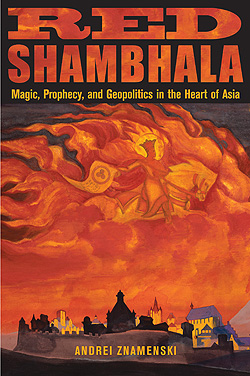
Red Shambhala: Magic, Prophecy, and Geopolitics in the Heart of Asia

Where on Earth do I begin? “Red Shambhala: Magic, Prophecy, and Geopolitics in the Heart of Asia” by Andrei Znamenski was totally alien to me. Knowledge of Tibetan Buddhism? Minimal. Familiarity with the politics of Eurasia in the 1920’s and 1930’s? Nonexistent. An understanding of the variety of interpretations of Shambhala and its associated prophecies? Nope. Are you now frightened of this daunting book? Well don’t be.

Author Andrei Znamenski breaks everything down to its most basic parts to help bring order to this chaos. He begins by explaining the assorted legends, myths, and religious tales of Shambhala and its association with those living in Mongolia, Tibet, and surrounding lands. To sum up, Shambhala is a legendary kingdom hidden somewhere in Inner Asia. It’s considered a land of purity and enlightenment and home for a more spiritually advanced and possibly technologically advanced civilization. Of course most modern Buddhists consider Shambhala a spiritual place to be found within oneself, but Znamenski carefully outlines a period of time when Shambhala was considered an actual location that those of pure intention could find.

The next layer to be added to “Red Shambhala” is an explanation of the Bolshevik revolution that took place in 1917. This was when the Bolsheviks, a faction of the Marxist Russian Social Democratic Labour Party, came to power during the October Revolution phase of the Russian Revolution of 1917. The Bolsheviks were an organization consisting primarily of workers who considered themselves the leaders of the revolutionary working class of Russia. This is where Znamenski starts to introduce you to some of the future players in the quest for Shambhala.

What comes next is the unbelievable true life story of how the idea of Shambhala was a tool used in assorted political and megalomaniacal schemes all focused on the conquest of Mongolia and Tibet. Alexander Barchenko wants to find Shambhala to learn the sacred wisdom there and believes by introducing the elite of Red Russia to the knowledge of Shambhala he will be able to make the Communist project in Russia less violent. The elite see Barchenko’s theological journey to Inner Asia as a chance to plant the seeds of Communism in other lands. Baron Roman von Ungern-Sternberg travels to the east, and uses the legend of Shambhala as a tool to unite the nomads of Mongolia in an effort to restore monarchies. The Roerichs, Nicholas, his wife Helena, and their son George, attempt to establish a Buddhist-Communist theocracy. Nicholas poses as the reincarnation of the fifth Dalai Lama, obviously not counting on the politically shrewd living Dalai Lama of the time. And those are just a taste of the eccentric, larger than life characters that really truly lived, and very much tried their hand at king making and empire building.

After reading “Red Shambhala” you’ll come away with new insights into the history of Communism, Tibetan Buddhism, and the use of propaganda. They say real life can be stranger than fiction, and Andrei Znamenski’s research proves that phrase to be very, very true.

“Red Shambhala” releases in June 2011.

Hadi Thawra! Rap Music in Libya

It’s no real secret that I’m a fan of rap music. Not all rap music, and I’m certainly not an expert, but I do know what I like. You’ve seen it in “Public Enemy and the People Who Love Them” and “Nas – Big Damn Hero”. You may also recall an article I wrote about how important it was that music had returned to Afghanistan in “Music Matters”, and that it also gave mention to the struggle of heavy metal music in Iraq. But I’ve always had the most fun discussing rap music in my sporadic but ongoing series of “Freeze! It’s the Vice Squad” articles. Several countries like Iran and Saudi Arabia have “Vice Squads” to police the morality of their citizens; be it showing a little denim pant leg or setting up turntables. Rap music in these environments was discussed back in 2007 in “Freeze! It’s the Vice Squad! Part 2: The Rap Edition” which dealt with Iran and in 2010 with “Freeze! It’s the Vice Squad! Part 6: Rap Music Strikes Again!” which was also Iran-o-centric.

I’ve always talked about how rap music can be the voice of rebellion, a means of expressing a life that many can’t imagine, and essentially a catalyst to society as a whole. This is why I was not surprised to learn that there is a rap music movement in Libya that has been exploding since February 21, 2011. Twenty somethings in Libya had been making music in hiding, never sharing it for fear of repercussions that would include prison and possibly death. 23 year-old Mutaz el Obidy of the group Revolution Beat is quoted in a France 24 article as saying, “We weren’t allowed to talk about the system, we could not speak our thoughts. We were not allowed to perform in college or anywhere. I was afraid not about myself, but about my family. They would have been killed, I’d have to watch my sister being raped. I never got in trouble because I wasn’t stupid about it, we never published it.”

However now France 24 interviewed Revolution Beat because they started distributing copies of their song “Hadi Thawra” to anti-Gaddafi demonstrators in Benghazi’s central courthouse. I’d say it’s public now. Leela Jacinto reporting for France 24 says, “This is revolution the way the Libyan youth see it. If every history-mending youth movement were to have its own Bob Dylan vocalizing the dissent and dreams of a generation, ‘Hadi Thawra’ is the ‘Times They Are a-Changin’ of the anti-Gaddafi hipster set.”

An Associated Press article quotes Mutaz el Obidy of Revolution Beat as he explains that, “Rap is more popular than rock and country among the young people in Libya because it expresses anger and frustration.” If it helps Mutaz, that’s what Grandmaster Flash and the Furious Five were saying with “The Message”, what Public Enemy was doing with “Bring the Noise”, and certainly what N.W.A. were expressing in “F*#k the Police”.

Rap grew in America when a segment of the population felt marginalized and set up by a system that didn’t appear to care about them. It is the universality of that feeling of anger and frustration that causes rap music to ferment globally. When I reviewed the book “Sufi Rapper” I learned of the vibrant French rap community that comes from the “deprived Paris suburbs”, aka the projects. I’ve written about the rise of rap music in Iran. And now we’re looking at Libya. Perhaps large segments of the population will never see or feel the way I do about the power of rap music, but the genre has withstood the test of time and has inspired people around the world. And I dare say, these rap communities in Iran or Libya are probably more true to origins of the music than we’re seeing from many popular rap artists today. For these artists rap music is about the struggle. They realize how unlikely it is that they will ever have the lifestyles of their American counterparts, but they just don’t stop. Maybe it’s just another facet of their struggle. Maybe they’ll write a song about it.

A Letter: Part Seven (The Wikileaks Edition)

Hasn’t Wikileaks made things interesting lately? I’m serious. The recent “dumping” of diplomatic cables gives the average American news viewer/reader the intrigue of politics from the perspective of 13 year-old girls gossiping in the bathroom. If I had known being a catty bitch made you a decent diplomat I would have definitely pursued it as a career option. Alas, I’m merely a catty bitch with a website, shall we proceed?

Personally, I was on the underwhelmed side as the media started sifting through the giant mass of diplomatic cables released on Wikileaks; but buried within those releases little nuggets of a pet project of mine started popping up. That’s right folks, Zimbabwe made Wikileaks! This has got to be the equivalent of having Weird Al Yankovic spoof you; you know you’ve arrived.

There is the whimsical “Warthogs delay US ambassador’s arrival in Zimbabwe”, which explains that Charles Ray was delayed in taking his post as ambassador in 2009 due to a plane in the Harare airport hitting warthogs and destroying lights on the runway. However, this amusing anecdote is shadowed with dread by stating, “Passengers on the Air Zim flight were stuck in the plane for about two hours; security authorities forced passengers to surrender any photographic evidence of the crash before they were allowed to leave.” Heaven forbid the rest of the world sees that a plane hit a warthog. Hakuna matata indeed.

Diplomatic cables from 2009 give conflicting insights into President Robert Mugabe. European Union officials describe him as “physically fit, mentally sharp, and charming”, but later in the year Ambassador Ray (having taken his post despite the nefarious warthog conspiracy) described Mugabe as frail, stating, “Mugabe appears uncomfortable when seated – he slouches and frequently turns his body as if to find a better position, and then sits straight up and speaks in a louder voice for a few seconds before lapsing back into the barely audible soft voice.”

The previously mentioned EU delegation all referenced a certain event that occurred during their meeting with Mugabe, “During the delegation’s meeting with Mugabe, a strong, young man entered with a bowl and pitcher of water on a silver tray. He knelt in front of Mugabe, who made a show of washing his hands with this subservient man at his feet.” John Clancy, spokesman for the EU Trade Commission, surmised “it showed that Mugabe has lost the plot of normal human interaction and the responsibility of leaders toward their people.”

Most interesting is learning that in 2007 a group of exiled Zimbabwean businessmen had been plotting a bloodless coup to remove Robert Mugabe as president. Keep in mind folks Archbishop Desmond Tutu told the BBC in 2008 that he “urged the international community to intervene in Zimbabwe – by force if necessary.” Have you seen an interview with Archbishop Desmond Tutu? If you can make this adorable, kindly, little man of God want to put a bullet in you, you’re being a very naughty president. Sadly, this “bloodless coup” being discussed in 2007 is pretty much the power sharing agreement that came to pass with Robert Mugabe as President and Morgan Tsvangirai as Prime Minister. I think my most recent letter regarding Zimbabwe sums up how well that has worked out. Of course, former US ambassador to Zimbabwe Christopher Dell didn’t have a lot of faith in Tsvangirai to begin with, so go figure.

What’s funny about all of this is that it’s just a preamble to my announcement that I got a letter from K Nokku of the Asylum Policy and Correspondence Team in Croydon, Surrey. Yes! A letter from Britain in response to the letters I sent in October regarding Britain’s plan to resume enforced returns of Zimbabweans who failed to gain asylum in the country. You can read my letter here, but to sum up I sent a note saying, huh?

 The letter itself is unremarkable. It essentially quoted parts of the press releases back to me and at no point addressed any of the valid points I felt I had raised. That said, I got a response. A response that appears to have been personally typed. A response that is longer than a postcard. A response that came in its very own enveloped post marked Great Britain. In other words, much like it is with television, Britain has surpassed the quality of what I’ve seen in the United States. Congratulations K Nokku! I’d say I tip my hat to you sir, but I don’t know if K is male or female. I guess this probably means we won’t be Facebook friends.

Freeze! It’s the Vice Squad! Part 6: Rap Music Strikes Again!

Iran’s “Vice Squad” is a long time favorite topic here at The Magical Buffet. Those spunky individuals charged with insuring that the citizens of Iran don’t stray too far from the government’s “norms”. In other words, they spend a lot of time harassing women for wearing make-up or showing off a little ankle. However, back in December 2007 I took a moment to discuss Iran’s rap music problem. And oddly, nearly three years later, Iran’s relationship with rap music has again found its way into my news browser.

In 2007 I suggested that as much as it’s said foul language may be provoking the ire of the Iranian government, in actuality it’s rap music’s history of empowerment of the marginalized that truly concerns Iran. I said, “As those of us ‘old school’ rap fans here in America know, sure, the swear words concern Iran, but the anti-authority, revolution inspiring themes, are what is really causing the Culture and Islamic Guidance Ministry to crackdown on the genre.”

I think I may have been on to something considering that almost three years later CNN International is reporting that “Police in Tehran have arrested several members of underground Iranian rap groups, the semi-official ILNA news agency reported.

Tehran Police Chief Hussain Sajedinia told ILNA that several young boys and girls were discovered using vacant homes to record and videotape illegal rap music for various websites and satellite networks.

Police raided the homes, arrested the young musicians and confiscated ‘western style musical instruments’ and several bottles of liquor, according to ILNA.”

Tehran police chief Sajedinia, through ILNA, “accused Iran’s underground rap scene of spreading profanity and poisoning young minds.”

Reading this article made me have two thoughts. One, “poisoning young minds” sounds an awful lot like, “the anti-authority, revolution inspiring themes, are what is really causing the Culture and Islamic Guidance Ministry to crackdown on the genre.” (Aren’t I the savvy pundit?) Two, please someone tell me that the “western style musical instruments” were turn tables!

I find the fact that rap music persists in Iran to be an encouraging thing. In April 2010 when discussing music returning to Afghanistan I said, “Music matters. I don’t have facts and figures to back up that statement. Sure, I could go online and find them, but you know it’s true, so why fight with WordPress to create a link? Music inspires, educates, and liberates, that’s just how it is, no sense in denying it.” Despite a regime that wishes to stifle creativity, rap musicians are finding a way to make it work; working out of abandoned houses, getting their music out to the internet, selling CDs on the sly; that my friends is truly “old school” and assuredly “hard core”.

A Letter: The British Edition

Long time readers know that me, letters, and Zimbabwe have a complicated history. For over two years now I have been following the exploits of Zimbabwe, all the while writing letters that have essentially been ignored. It starts with letters I sent to then President George Bush, Senator John McCain, Senator Charles Schumer, and then Senators Barack Obama and Hillary Clinton. I never heard anything from any of them. Then there’s the letter I sent to President Obama on Inauguration Day. In response, I got a truly lame postcard. Not even a form letter, a form postcard. I also sent a letter to Secretary Hillary Clinton, to which I never received a response. Feeling my time lobbying United States politicians had run its course I turned my attention to United Nation’s Secretary-General Ban Ki-moon. Again, not even a form letter in response. By May of this year I had abandoned hope of ever writing a letter to politician again. There was nothing left to do but to apologize to all those noble letters that tried valiantly, but in the end failed.

But wait! What’s that I’m hearing on BBC America’s World News? “The Home Office says it will resume enforced returns of Zimbabweans with no legal right to be in the UK, after a four-year moratorium.” The Minister for Immigration, a Mr. Damian Green, is saying stuff like, “The courts have found that not all Zimbabweans are in need of international protection and given the improved situation on the ground in Zimbabwe since the formation of the Inclusive Government in 2009…” and then Matthew Coats, Head of Immigration of the UK Border Agency, is saying things like, “There is no doubt that political persecution and abuses of human rights persist in Zimbabwe. However, these abuses are more targeted than previously and not all Zimbabweans are equally affected.” I’m an amateur Zimbabwe pundit, and an American no less, and I think these highly qualified guys are missing something.

To the computer! There are letters to write!

10/21/10

Dear Matthew Coats,

I write you today out of concern of learning that your country may soon resume enforced returns of failed asylum seekers to Zimbabwe. I appreciate that your country had been offering blanket asylum to Zimbabweans in the past due to the violence and political unrest in their home country. You offered support, stability, and safety to our friends from Zimbabwe when they needed it most and your country should be commended for your generosity.

However, I find statements such as, “The courts have found that not all Zimbabweans are in need of international protection and given the improved situation on the ground in Zimbabwe since the formation of the Inclusive Government in 2009….” (Mr. Damian Green 10/14/2010), and “Zimbabwe is for many people a safer and better place to live today than in 2008. There is no doubt that political persecution and abuses of human rights persist in Zimbabwe. However, these abuses are more targeted than previously and not all Zimbabweans are equally affected.” (Mr. Matthew Coats 10/14/10), to be alarmingly ill-informed and not suitable justification to send a single asylum seeker back to Zimbabwe.

Only five months ago The General Council of the Bar issued a report stating that, “The mission received a number of reports from persons it interviewed in Zimbabwe. The overwhelming weight of the reports was to the effect that rule of law issues had not in improved in the course of the year since the signing of the Global Political Agreement and many interviewees expressed the view that the position had grown worse.” They went on to add, “Incidents of extra-judicial killings, kidnappings, torture, and other serious human rights abuses have been pervasive in Zimbabwe for years but assumed epidemic proportions during the Presidential run-off elections of June 2008. Such human rights abuses continue to occur. These abuses remain un-investigated by authorities.” They end by saying, “The mission concludes that there has been no improvement and quite possibly a further decline in respect for the rule of law since the signing of the Global Political Agreement.”

Of course, that was five months ago. So let me instead bring to your attention to an article released by Human Rights Watch less than a month ago. They say, “Increasing violence in Zimbabwe during community meetings leading up to a constitutional referendum and new arrests of civil society activists highlight the lack of progress in ending human rights abuses and implementing urgently needed human rights reforms.” They state, “Human Rights Watch has received reports of violence in Harare, Bulawayo, Masvingo, Mashonaland West, and Mashonaland East during the outreach process. On September 18 in Greystone Park, Harare, a group of war veterans, and ZANU-PF youths reportedly barred white residents from participating in the outreach program, contending that the white residents were not Zimbabweans. One resident in the area was assaulted when he tried to intervene on behalf of the white residents.

The following day in Mbare, Harare, ZANU-PF supporters attacked MDC supporters and prevented them from attending an outreach meeting, which ended when the violence broke out. ZANU-PF supporters and uniformed police assaulted 11 residents and MDC supporters from Mbare with blunt objects as they left the meeting. One resident, Chrispen Mandizvidza, died from his injuries on September 22. Medical reports indicated that he died as a result of complications from a ruptured bowel, which he sustained after being hit in the abdomen with blunt weapons.

Human Rights Watch received similar reports of violence and intimidation by ZANU-PF supporters and war veterans in the Harare suburbs of Budiriro, Chisipite, Glen View, and Glen Norah.”

When it is said that “these abuses are more targeted than previously and not all Zimbabweans are equally affected’, what you’re politely saying is that if a Zimbabwean returns to their country they’ll be fine as long as they support President Mugabe and his party ZANU-PF and have no intention or inclination to participate in any attempts at democracy in the country. I find that a disappointing message and an unacceptable way of life that you intend to send these failed asylum seekers back to.

Since you have a head count of Zimbabweans who have sought asylum on record, 13,000, I can only assume that they have not been working illegally and thusly have been productive members of British society. Living and working within their new communities, perhaps participating in your culture (i.e., X Factor contestant Gamu Nhengu). With an estimated population of 62,041,708, have these mere 13,000 done something so wrong, so heinous in nature, that the only recourse is to pack them up and send them back to Zimbabwe, a country where people are being killed at the equivalent of a town hall meeting? Zimbabwe is scheduled to have another presidential election in 2011. Do you truly think there won’t be widespread violence during the process given that there are already many instances of “targeted” violence now, when the fate of the ZANU-PF presidency isn’t on the line?

On behalf of those asylum seekers who aren’t ready to return home, who do not feel strong enough to face what awaits them there, I ask that you reconsider your position on this issue.

Sincerely,

Rebecca Elson

Cc: Damian Green

And just like that I am back in the letter writing saddle again! What kind of response will I get from England? Who knows, but I really hope they use the word “cheeky” to describe me.

Religion and Politics

If I ever decided to write an autobiography or some sort of memoir I always imagined I would title it, “Whatever You Do, Don’t Ask about Religion or Politics”. It’s an idea that frightens me and motivates me. It’s the seed of apprehension that somehow managed to grow into The Magical Buffet.

Where does this common piece of social wisdom come from? I don’t recall any time in my life when my parents, friends, educators, or anyone else, actually told me this cultural truism. Yet, I knew it wasn’t supposed to be done. Somehow you, me, everyone, be they friend or co-worker, know that it just isn’t done. More so now, in this era of risk management political correctness, will you intrinsically be trained by society to absolutely, under no circumstances, ask anyone about their religion or their politics. It’s a good way to lose friends and gain enemies. I can’t help but feel that this generates a climate of fear in our society. How are we supposed to become a global community and not engage in conversation about the things that could potentially divide us the most? The simple answer is, we won’t.

Here’s another societal truism, people fear what they don’t understand, and fear becomes hate, and the next thing you know I’ll start quoting “Star Wars”. It’s true of course, people fear what they don’t understand. How else is the human animal meant to survive? I don’t understand those crackling lights ripping the sky apart, I’m going to hide in my cave. Right on my primitive brother from another mother, you get your prehistoric butt into that cave and preserve the human species! Emotions like fear and hate, come as readily to us as love. Only humans can experience love or hate in precisely equal measure. It’s what we do with those most potent emotions that define an individual, their community, and their society. It’s taken the better part of my adult life to not automatically default to hate when presented with an intolerable situation. At sixteen I hated Tipper Gore and her cadre of censorship cronies. That’s right, I said it, I hated Tipper Gore. (It’s as if I hear millions of liberals cry out, and then suddenly be silenced. See, more “Star Wars”!) I even wrote a terrible, horrible, utterly embarrassing poem forever preserving my righteous hate for her that was published in my high school newspaper (Go Bombers!). How dumb was I then? So painfully naive. I was not worthy to have anyone read my writing, I was not entitled to think I could educate others. It was with time and experience that I learned hate just isn’t an option. Hate doesn’t solve problems, hate creates problems. (And if you ever watch the television show “Burn Notice” you know that guns make you stupid, but duct tape makes you smart.)

Now that I’ve detailed two of our societies’ greatest truths: that we are not to discuss religion or politics despite their importance in many people’s lives, and that we fear what we don’t understand and that fear becomes hate, I’m here to offer a pretty obvious solution.

Fuck ’em. People who somehow send you the signal that you are never to discuss religion and politics can bite me.

That’s right folks, for the first time ever, I’ve dropped the f bomb in writing. (Those who know me personally are probably surprised it took this long!) I don’t mean to offend you, but to instead in the most graphic way possible, express my utter distaste for some of the worst ideas ever. Ever.

We know that people fear what they don’t understand and that fear can easily become hatred. For better or worse, this is coded in our DNA. No matter how loving or how enlightened an individual is, the potential for fear of the unknown other is always an option. So how about this idea, we work to make it so there is less to fear? If fear can potentially become hate, and hate is bad, why not attempt to lessen the amount of fear in the world?

But Rebecca, how on earth are we going to do that? As a start, I highly recommend asking people about their religious and political beliefs. But it makes things awkward, and potentially uncomfortable. You know what I say to that? Get over it. In my experience, if you’re polite, if you’re respectful, and if you’re honest about your lack of understanding, people will genuinely surprise you. You will find that yes, there are things you disagree on, but often you’ll also find that there are things you can agree on. (And before you say that is a cliché’, I’d like to state, for the record, that I have personally found common ground with Conservatives, Republicans, Evangelical Christians, and just about any other group you think I wouldn’t.) You learn about other perspectives, you learn about other points of view. You may not like them, you may not share the same beliefs as them, but you’ll also gain understanding about them. Those things that cause fear, those things that become hate, they become merely a differing view, from another person. Just another person.

Take notice all of you who are profiting from fear, anger, and hate. We’re not buying what you are selling anymore. I’m tired of being force fed outrage on a daily basis, and not for the “good fight”, not for “our children’s future”, but to turn a quarterly profit. We are ready to learn. We are ready to discuss. We are ready to get out there and find out for ourselves what is going on. We’re going to talk about religion and politics, and you guys are going to go find a new job.

Freeze! It’s the Vice Squad! Part 5: Saudi Arabia Again

It’s been years, YEARS, since I checked in with my assorted Vice Squads to see what kind of wacky adventures they’ve been having. For those of you who are unfamiliar with what I’m talking about, let me take a moment to break it down for you. Back in November 2007 news sources began releasing a list of moral vices that had been debuted in Iran. The list was part of a “moral crackdown” in the country that essentially was based on the premise that the police were now empowered, I guess more so than in the past, to cruise around Iran looking to bust anyone being loose with their morals. That bit of news spawned my first Freeze! It’s the Vice Squad post. Since then I’ve had a bit of a love affair with assorted Middle Eastern vice squads. What can I say, I’m a lady that loves her vices. And when the vices in question are rap music, women who use “witchcraft” to make men impotent, and questionable hair cuts, it’s pretty easy to meet with the Vice Squad’s discriminating standards. It turns out that while I was away, a few noteworthy Vice Squad events have taken place.

Picking on “emo” kids.

Picking on “emo” kids is really nothing new, regardless of how much I dislike that trend (I dislike the picking on. I’m a child of the 80’s, boys with eyeliner and skinny jeans are cool.). However, a Saudi Arabian coffee shop owner calling in the Commission for the Promotion of Virtue and Prevention of Vice because some women were in his shop exposing their skinny jeans and colorful t-shirts? Well, that’s a whole new level of harassment. Suddenly name calling, while offensive, looks better. Although before we all congratulate ourselves for merely having schools where kids call each other names based on how they’re dressed, and fill our hearts with righteous indignation over the situation for female “emos” in Saudi Arabia, I feel obligated to share with you an alarming news story from 2008 out of Mexico. Teens beaten to a bloody pulp over eye liner? That’s an extra heaping helping of not cool.

Man bites dog.

In actuality, there was no man, or dog. Just a woman in her 20’s sending a member of the Saudi Arabian Vice Squad to the hospital after kicking his ass. Now, as a fan of action movies, I’ll admit it, I’m kind of a fan of violence. Not for real life, but there is nothing wrong spending an evening watching Christian Bale get his gun kata on. I will readily admit though, that when I read the tale of a 20-something couple being approached by the Vice Squad at an amusement park to confirm their identities and relationship, I couldn’t help but smile when I read ” the woman then allegedly laid into the religious policeman, punching him repeatedly, and leaving him to be taken to the hospital with bruises across his body and face.”

What will be next for the assorted Vice Squads? Who can truly say? Personally, I’d be happy if a day comes when an article about these guys wasn’t a current events article, but was instead discussing ancient history.

10 Questions with Jason Pitzl-Waters

1. For my readers who are unfamiliar with you and your website The Wild Hunt, what is The Wild Hunt and how did it’s creation come about?

The Wild Hunt is a daily-updated blog focusing on news and opinion of interest to the modern Pagan community and its allies. I started it out of the frustration that there wasn’t a site like The Wild Hunt for me to read, so I ending up being the change I wanted to see in the world. Six-plus years later, here I am, still looking for and reporting on Pagan news.

2. As a less thorough and less prolific web writer I’m curious, how many hours a week do you put into The Wild Hunt?

Per week? On a “light” week I spend maybe twenty hours, sometimes more. It depends. Most days I usually spend at least three hours in the morning reading through my news feeds, deciding what goes on the site that day, and then writing it. When I’m doing first-person reporting or interviews it can take a lot longer. I nearly pulled an all-nighter not too long ago, but I value my sleep and try to avoid that.

3. How do you decide what news stories to discuss on your site?

A very good question! I try to pick what I feel are the most “newsworthy” story (or stories) of the day, the ones that I feel will have deep ramifications for modern Pagans in some form or another. So, for example, an update on an important legal case would take precedence over a routine “meet the Pagans” article. It’s a daily judgment call. I avoid trying to be exhaustive; Wren’s Nest at Witchvox does a far better job of that than I do.

4. You’ve covered many topics on The Wild Hunt, what do you feel are some of the more important articles you’ve done?

I think the current case involving Patrick McCollum and the “five faiths” policy in California is hugely important, and I’m proud of the work I’ve done covering it. Dan Halloran’s candidacy and win, and the growth of out Pagans in the political sphere is an ongoing concern. I also think the legal struggles of Santeria in the United States, which I’ve covered extensively, will have ongoing reverberations for all minority faiths, including ours, in the future.

5. Have you ever experienced backlash from any of the Pagan communities due to topics you’ve addressed?

Some, but not a lot, and nothing that got too personal. I don’t please everyone all the time, but I think I have a general track record of being fair in my assessments, and willing to entertain perspectives that I may not personally agree with.

6. What challenges do you see facing the Pagan/Heathen community? How can the community resolve those issues?

Our biggest challenge will be how we continue to handle our growth and (inevitable) entrance into the mainstream of modern culture. Many of the legal cases, conflicts, and big stories I cover stem, in one way or another, from the friction of a “Christian” society dealing with religions that don’t fit into an easily understandable monotheistic framework like Judaism or Islam. This is largely unavoidable, and the best thing we can do is continually engage the world around us, the people we live among, and be “out” about who were are and what we believe in.

7. Tell everyone a little bit about The Pagan Newswire Collective and Pagan + Politics.

The Pagan Newswire Collective is an open collective working to build a better Pagan journalism on step at a time. The ultimate goal being to create a true Pagan-run newswire that can bring news to a variety of Pagan media outlets. A first step has been the creation of topic-focused group blogs to engage and discuss important issues. Hence Pagan+Politics, our political-themed projects, and its sister sites, Warriors & Kin, dealing with Pagans in the military, and The Juggler, dealing with Pagan themes in the arts and pop-culture. Beyond that, we are looking to start building local bureaus that will start gathering and sharing news about their communities, to really engage modern Paganism in telling its own story.

8. Are there other projects that you’re working on that my readers should be looking out for?

See above, regarding the just-launching Warriors & Kin and The Juggler blogs. There’s more to come from the PNC, so keep your eyes peeled! I’ll also be at the Pagan Spirit Gathering in June to discuss the future of Pagan media, and I hope to engage my fellow Pagans at future gatherings as well.

9. What is your favorite interpretation/telling of The Wild Hunt?

I’m a big fan of Herne the Hunter, my favorite wild huntsman.

Sometime a keeper here in Windsor Forest,
Doth all the winter-time, at still midnight,
Walk round about an oak, with great ragg’d horns;
And there he blasts the tree, and takes the cattle,
And makes milch-kine yield blood, and shakes a chain
In a most hideous and dreadful manner.
You have heard of such a spirit, and well you know
The superstitious idle-headed eld
Receiv’d, and did deliver to our age,
This tale of Herne the Hunter for a truth.
— William Shakespeare, The Merry Wives of Windsor

10. Parting shot! Ask us here at The Magical Buffet any one question!

What do you feel is the most important story within modern Paganism that isn’t getting covered? As a journalist I’d love to know!

That’s actually a rough question because you get there first. I find more relevant, topical news stories on The Wild Hunt than anywhere else. Rarely do I stumble across something I think is noteworthy in Google News that you haven’t already touched on, or you do so the next day. And now with The Pagan Newswire Collective even more stories will be told and made available. Personally, I’m just excited to watch this whole thing evolve. However, if any of my readers have thoughts about things for The Wild Hunt to cover, leave it in the comments section for Jason to see.

About Jason:
Since launching “The Wild Hunt” in 2004, Jason Pitzl-Waters has become one of
the leading voices for analysis and insight into how modern Pagan faiths are
represented within the mainstream media. In addition, “The Wild Hunt” has also
conducted in-depth interviews with prominent figures within modern Paganism, academia, and religion journalism. Jason wants to raise the level of discourse and journalism on important issues within the modern Pagan and Heathen communities, while advocating a broader commitment to encouraging religious multiplicity and solidarity (where appropriate) with surviving indigenous and non monotheistic faith groups.

In addition to his work with The Wild Hunt, Jason has also written for newWitch Magazine, PanGaia Magazine, Thorn Magazine, and Llewellyn Worldwide. He also maintains a weekly podcast entitled “A Darker Shade of Pagan” that explores underground music from a Pagan perspective.

Jason is a former Board of Director member of Cherry Hill Seminary, and is coordinating The Pagan Newswire Collective, an open collective of Pagan journalists, newsmakers, media liaisons, and writers who are interested in sharing and promoting primary-source reporting from within our interconnected communities.

A Letter: To My Letters

Back in July 2008, when we relaunched The Magical Buffet in it’s shiny new blog format, the first article we published was “A Letter: Part One“. This was about a letter that I sent to then President George W. Bush, Senator John McCain, Senator Hillary Clinton, Senator Chuck Schumer and then Senator Barack Obama about the situation in Zimbabwe. You may also recall that I didn’t get a single response, not so much as a form letter from any of them.

Then, when Senator Barack Obama became President Barack Obama I sent a new letter. This was discussed in my article “A Letter: Part Two“. All of my complaining about not getting even a form letter from before was rewarded with the lame form postcard that I received in response. In “A Letter: The End of an Era?” I shared that I had contacted Secretary Clinton about Zimbabwe, and again received no response, but I did get an anti-climatic postcard from the White House.

However, just when I thought I had hit the end of my letter writing endeavors, I had a mischievous epiphany, I could send a letter to United Nation’s Secretary-General Ban Ki-moon! “A Letter: Part Four” outlined my thoughts on this. As I should expect by now, no response, not even a form letter.

I’m not sure if he sent it to make me feel better, or to kick me while I was down (I suspect a combination of both.), but not too long ago my father sent me a link to Govtrack.us. Specifically a link to their page of tips for communicating with Congress, which I read. While reading it I found that they got information from The Congressional Management Foundation’s 2005 project “Communicating with Congress: How Capitol Hill is Coping with the Surge in Citizen Advocacy“. It was only 46 pages, no House healthcare bill for sure, so I read it too.

I learned a lot from these websites, and thanks to what I’ve learned, I feel that several apologies are in order. No, I’m not apologizing to my elected officials or Secretary-General Ban. They can kiss my ever widening butt. No, the apologies go to those most wronged by my whole letter writing agenda, the letters themselves.

5/25/10

Dear Letters I’ve Written to Officials,

I hope this letter finds you well. I understand that you’ve had a rough couple of years. I can only imagine how humiliating it has been for you to be put on public display and then have your communication failures also published for the world to see. Believe me when I say, you’re in no way responsible for any of it. The truth is, it looks like this is the inevitable end that most letters reach. Sad but true. To make amends for the trials I have put you all through, I’d like to make a few overdue public apologies to you and yours.

To the Letters that I sent to my elected officials – I thought the fact that I took the time to write and mail a letter would give my communication some weight, not realizing that in the last decade the amount of letters sent to Congress has quadrupled, while the staff sizes are still roughly what they were in the 1980s. Trying to declare that my letter would be read would be equivalent to announcing that Tilda Swinton (who by the way I think looks great in this clip) is going to win this year’s Fug Madness only to find out she isn’t even in the running! It seems like a given, but that’s before you realize how less Swinton-like Tilda has been as of late, and how heinous almost every actress on the CW dressed this year. So yes, in this scenario, you, my Letters, are Tilda Swinton getting lost in a sea of poorly dressed television actresses.

However, it isn’t just about the competition, because you are the finest batch of letters I’ve written in my life and I’d hazard a guess far better than any letter received on any given day on “the Hill”. I thought that the oddity of you, the fact that you were sent from a total nobody in nowhere New York would illicit a level of curiosity, that you would captivate. Yes Letters, you’re still Tilda Swinton in this scenario. What I didn’t understand was that one letter, regardless of craftsmanship, is just one single letter. How was I to know that in order for you to get any level of respect you needed other letters, coming from other people, to make it part of “a movement” and thus worthy of at least being tallied.

Before you judge me harshly dear Letters, know that if too many of you had been sent to one office, especially with the same text, you would have almost immediately been thrown away. There is a fine line that must be walked between being part of a movement and becoming form letter garbage. Even if thrown away Letters, you were probably handled with far more respect than the emails that I send on behalf of the ACLU. It turns out that many Congressional staffers assume that I’m not even the one who clicked “send” on those. And God bless the faxed letters, for they too meet a quick end.

Here we are Letters, at what may truly be the end of our relationship. I’m uncertain as to how to proceed. I’ve for so long considered you to be the superior means of communicating with elected officials, I’m not sure how to go on without you. Going forward it may be emails, although they have their downsides too. Perhaps I can hand deliver some of you at some point, it’s hard to say. Just know this Letters, none of this is your fault. It’s not you, it’s the system you’re forced to exist in.

I hope we can still get together from time to time and reminisce about our past adventures.

Love Always,
Rebecca

P.S. Letter to Secretary-General Ban Ki-moon, I’ve got nothing for you. I thought we were in for a good time, but alas I was mistaken. Secretly I had hoped that a couple of nice men in blue helmets with assault rifles were going to visit me and ask about my letter because, let’s face it, you can’t buy that kind of press. I think it’s safe to say that your mission was a failure, and sadly, we’ll never know how it all went so wrong.