The Witch’s Path

Thorn Mooney gets it. “There was a time,” Mooney begins in her latest book “The Witch’s Path: Advancing Your Craft at Every Level”, “particularly toward the beginning of my practice of the Craft, when I would have planned an elaborate working to mark the occasion. The full moon is a great time to work magic, and I would have taken advantage of the opportunity. Maybe a spell for wealth or luck. Maybe I would have written a meditation and blended an appropriate incense to encourage visions. Maybe I would have cleansed and reconsecrated my altar and simply sat in silent prayer.”

“But not tonight,” she continues, “I had a long day at work and have a lot of other things on my mind. My boss is driving me nuts, I’m worried that I’ve misbudgeted and won’t have enough money to pay the car repair bill I just received, and I still need to figure what weekend would be good for our next coven meeting. I try to schedule two per month, but between a full-time job, birthdays, illnesses, and travel, it’s more like once per month. I’m exhausted, and I just want to sit on my couch with a glass of wine and remote control. That would be okay every now and then, but the truth is that I’ve made a bit of a habit out of this. This isn’t the first full moon I’ve skipped.”

THIS. I FELT THIS on every level. Mooney GETS IT. And I suspect those two paragraphs resonated with many of you too. If so, reward yourself with a copy of “The Witch’s Path”. This book answers the question of what comes after. After you’ve decided you’re a witch of some sort. After you’ve established a bit of a practice. After the practice becomes routine. She offers practical insights, ideas, and exercises to embellish or reinvigorate your practice.

If you’re new to the craft, “The Witch’s Path” offers guidance to help avoid pitfalls when establishing a practice, and if you have an established practice, there is definitely something here for you.

You can learn more here.

Shop your local indie bookstore <---This is an affiliate link to IndieBound, which supports independent bookstores throughout the United States. If you use this link to purchase the book, I will make a small commission at no additional cost to you.

Do you enjoy The Magical Buffet? Considering supporting The Magical Buffet on Patreon! For only $5 a month you’ll receive monthly tarot/oracle forecasts, classes, and behind the scenes updates! https://www.patreon.com/magicalbuffet

Consciously Detaching

By Steve Taylor (An Excerpt from “Extraordinary Awakenings”)

A significant lesson we can learn from the shifters who have experienced transformation through turmoil is to live in a mode of detachment. By this I don’t mean a state of emotional detachment, in which we are indifferent to other people or world affairs. I mean a state in which we don’t derive our identity and well-being from external things or mental concepts; I mean a state of being inwardly content and self-sufficient without attachment to possessions, achievements, roles, status, and ambitions.

In psychological terms the dissolution of attachments is the most important aspect of the shifters’ transformations. Since attachments are the building blocks of the ego, the dissolution of attachments leads to the dissolution of the ego itself, which allows a latent higher self to be born.

In this section I will show you how to practice a conscious form of detachment.

Becoming Aware of Your Attachments
First, we need to become aware of our attachments. Sometimes we have carried attachments for so long, and they have attached themselves to us so subtly, that we may not even be conscious of them.

There are so many different types of attachments that it’s difficult to describe them all. In their most obvious and “heaviest” form, attachments occur in the form of addiction — physical addiction to substances like drugs, cigarettes, food, or chocolate, and psychological addiction to electronic devices or to social media. Slightly less overtly, we may be attached to material objects, such as money and possessions. We may also be attached to our own bodies as material objects, caring excessively about our appearance or feeling depressed about the process of aging.

Less overtly still but perhaps most significant of all are our conceptual attachments. For example, we might be attached to our conceptual identity as a member of a national or ethnic group or to our identity and role as a spouse, parent, sibling, and so on. We might be attached to a concept of our status or achievements, feeling that we are “important” and successful people, superior to others. We may be attached in a similar way to our beliefs, our hopes, and our ambitions.

All these attachments build our sense of identity and hold together our ego as a structure. As already suggested, you can picture them as the building blocks of the ego.

In my workshops I often give people a list of different types of attachments and ask them to consider how attached they are to each one. Awareness is liberating in itself. To an extent, simply being aware of your attachments helps you to become free of them.

At the same time, we can take steps to free ourselves from attachments, which I will guide you through now.

Detaching through Spiritual Practice
One of the best ways to help free ourselves from attachments is simply to practice meditation or to follow a spiritual path of some form. Fundamentally, we need attachments because of our separate and fragile ego. Our attachments bolster and reinforce the ego so that it no long feels so vulnerable. So the most fundamental way of releasing ourselves from attachments is to heal the ego itself. This means cultivating a state of inner well-being and wholeness, which removes the need to seek identity and well-being outside ourselves. Without a sense of ego-separation, we won’t feel a sense of lack and fragility, so we will be able to let go of our attachments.

This is the main aim of meditation: to soften the ego as a structure so that its boundaries become weaker and we transcend our normal sense of separation. Meditation helps us to feel connected rather than separate, as if we were participating rather than just observing, without a sense of lack or fragility. It’s as if a broken fragment has become part of the whole again.

This is both a long- and short-term effect of meditation. If you had a good meditation this morning, you probably experienced the sense of connection and inner wholeness I’ve just described. Perhaps it lingered for an hour or two afterward, or perhaps longer — perhaps it’s still inside you now. However, it usually fades away once we have returned to our busy everyday lives and needs to be rekindled by another meditation practice later, or the following day.

At the same time, over the years or decades that you have practiced meditation, an ongoing sense of wholeness has been building up inside you. Even though you may still experience a more intense sense of wholeness when you meditate, the baseline of your normal state has changed. Over the years, your ego boundaries have become softer; your sense of self has become less fragile and separate. As a result — even though you may not be consciously aware of it, since the change has been gradual — your need for psychological attachments has diminished, and you have become less attached to external sources of identity and well-being.

Every spiritual path is a movement beyond ego-separateness and toward connection and union. This is part of the reason why most spiritual traditions emphasize cultivating compassion and practicing acts of service and kindness. By serving others, we transcend our own self-centered desires and ambitions and so move beyond ego-separateness. In this sense, practicing service and altruism can also indirectly help to dissolve our psychological attachments.

Most spiritual traditions also advocate detachment more explicitly. They emphasize a life of simplicity and moderation, without attachment to sensory pleasures or unnecessary possessions. They encourage us to be content with our present life situation rather than being attached to ambitions. They encourage us to be humble rather than to be attached to notions of status and achievement.

Any path or practice that helps you to cultivate inner well-being and wholeness will reduce your need for psychological attachments. You won’t need attachments anymore in the same way that a completed building doesn’t need scaffolding or support.

Breaking Attachments
There are also more direct ways we can use to liberate ourselves from psychological attachments. While following spiritual practices, we can simply make a conscious effort to weaken our attachments. This might sound challenging, but it’s important to remember that, although our psychological attachments may have originated in response to psychological need, in some cases (particularly if you have already begun to meditate or to follow a spiritual practice) they continue as habits. In other words, the attachments may remain intact even if we no longer have a psychological need for them, simply as habit patterns. This makes it fairly easy for us to free ourselves from them.

And even if this is not the case — that is, even if there is still some degree of psychological need — you might be surprised at how quickly you can adjust to the absence of the attachment. After an initial sense of loss and insecurity, you’ll quickly grow stronger. Your essential self will grow into the space left by the attachment, bringing a greater sense of wholeness.

I experienced this many years ago when I gave up smoking. After smoking heavily (twenty-five to thirty roll-up cigarettes a day) for twelve years, I decided to stop on my thirtieth birthday. I had heard many stories about the difficulties of giving up smoking, but for me — once I’d covered the physical withdrawal symptoms by chewing nicotine gum — it wasn’t such an ordeal. After about three weeks of conscious effort (which in itself was not particularly arduous), I was surprised to find that the urge to smoke quickly died away. But what I found even more surprising was the feeling of new strength and wholeness that filled me. It was as if the part of myself that I had sacrificed to my addiction had been given back to me in a natural process of adjustment and healing. I’m sure that this was because, over the previous year or so, I had undergone significant psychological healing. I had started meditating regularly and become a vegetarian. I had also met my future wife. As a result, I probably no longer had a strong psychological need to smoke. My sense of self was more connected and whole, and so I didn’t need the support of cigarettes anymore. To a large extent, I only had the habit to deal with rather than the psychological need. If there was still some psychological need, it evaporated in the process of giving up the attachment.

I would recommend making a similar attempt to weaken your attachments. For example, you might try to weaken your attachment to money and possessions by refraining from buying unnecessary things and following a simpler, more frugal lifestyle. You might try to weaken your attachment to your appearance by no longer wearing fashionable clothes or dyeing your hair. You may try to weaken your attachment to status and attention by making a conscious effort to stop obsessively posting on social media and incessantly trying to increase your number of followers.

This might feel uncomfortable at first but — particularly if you’re already following a spiritual practice — you’ll quickly begin to feel a new sense of inner strength and wholeness. Even if there is still some degree of psychological need for the attachment, a process of inner healing will take place, and your essential self will grow into the space left by the attachment, filling you with a sense of new strength and wholeness.
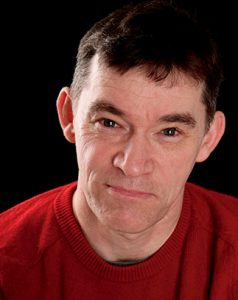
About Steve Taylor, PhD:
Steve Taylor, PhD, is the author of “Extraordinary Awakenings” and many other bestselling books. He’s senior lecturer in psychology at Leeds Beckett University and the chair of the Transpersonal Psychology Section of the British Psychological Society. Steve’s articles and essays have been published in over 100 academic journals, magazines, and newspapers and he blogs for Scientific American and Psychology Today. Visit him online at www.StevenMTaylor.com.

Adapted from the book from “Extraordinary Awakenings: When Trauma Leads to Transformation”. Copyright ©2021 by Steve Taylor. Printed with permission from New World Library — www.newworldlibrary.com.

Shop your local indie bookstore <---This is an affiliate link to IndieBound, which supports independent bookstores throughout the United States. If you use this link to purchase the book, I will make a small commission at no additional cost to you.

Do you enjoy The Magical Buffet? Considering supporting The Magical Buffet on Patreon! For only $5 a month you’ll receive monthly tarot/oracle forecasts, classes, and behind the scenes updates! https://www.patreon.com/magicalbuffet

Dawn of an Era of Well-Being

By Dr. Ervin Laszlo & Fred Tsao (An excerpt from “Dawn of an Era of Well-Being: New Paths to a Better World”)

Humankind today is facing monumental challenges—the sustainability of natural resources, climate change, wealth inequalities, breakdowns in social structures, the impact of artificial intelligence, and of course the threat of pandemics. The COVID-19 pandemic is an example of how the universe is constantly rebalancing itself to offset forces moving in contradiction to its natural energy, which in Chinese culture is called the Dao. An impact of the virus has been to slow us down and force us all to reflect, to open our eyes to the need for change, to see that a new normal is both required and also imminent. And the crisis also showed that we can heal if we choose a new way.

It is clear that we are at a crossroads. We have a choice—either to continue down the road beset by many crises caused by divisiveness and separation or find the road toward unity, well-being, and thriving. Change is needed on all levels: change for the individual, change for society, and change in the consciousness that defines what we do and who we are. It is imperative that we achieve constructive change on all levels if we are to avoid even greater crises heading our way with the direst of consequences.

It is easy to be overwhelmed by a sense of chaos, but amidst the chaos lies the possibility of connecting with each other, reconnecting to our roots, and creating a shift in our consciousness. Now we can set about creating a new and better era for the human family, an era marked by individual and collective well-being.

This task and possibility inspires and motivates the ideas put forward in this book. It is the hope and expectation of the authors that they will prove to be of practical value as the human community sets about the monumental task of building a better world, rising from the global health crisis as a phoenix rises from the ashes of the past.

The universe is more like a great thought than like a great machine. This realization, enunciated by cosmologist James Jeans over a hundred years ago, is dawning on many scientists today. It brings cosmology close to religion and spirituality and opens the way to reconsidering the idea of a divine element in nature in terms acceptable to science.

Coherence in society calls for working together and creating the system where “I” becomes “WE”—where the parts maintain their unique identity while working together to maintain the integral coherence of the whole that they form. This is the principle we obtain from the quantum paradigm. Public policy is the field for the application of this principle. It defines the coexistence of unique but not separate individuals in coherent wholes, whether these wholes are states and nations, or businesses or social and cultural groups.

We live in an integral quantum universe and not in a mechanistic world where whole and parts are separate, or even separable. In the intrinsically whole quantum universe, the whole is the existential context for the existence of the parts. Not only in abstract theory, but also in concrete practice, the whole and the part need to be treated as one, and for the good of the part, the whole needs to receive priority attention.

There is nothing more important in any group and in any society than having an informed and responsible leader. The quantum leader—the leader acting on the wholeness principle deriving from the quantum paradigm—is one who focuses on aligning, collaborating, and creating conditions conducive to the flourishing of life.

The leader effectively serving the good of society serves the interest of all life on the planet. This requirement may appear idealistic and even utopian in the context of today’s dominant ideology in business and politics. But the post-pandemic era requires radical changes in our idea and ideals of leadership. The quantum paradigm offers the necessary fundamental reorientation.

The universe is constantly calibrating with itself and its systems, reflecting collaboration in diversity. This is a dynamic process of alignment with its elements to arrive at harmonic balance. We need to awaken to the deep truth of this arrangement, and we can do so because we are creative. At its core, humanity cannot go against nature. There is a need to awaken to the fact that all things in the natural world are continually aligning and realigning with each other, collaborating in natural movement as the elements work toward their flourishing.

The goal is to achieve harmony and unity amidst diversity to make human society a reflection of the reality of nature. By integrating the Western life science of consciousness with traditional Chinese wisdom a foundational structure for universal ethics will guide humankind’s journey toward Great Unity, a society in which diversity is not only respected but deployed in the process of creation and collaboration. It is only in diversity that great things are made. The same things brought together create more of the same things, but diversity creates something extraordinary.

About Ervin László:
Ervin László is a Hungarian philosopher of science, systems theorist, integral theorist (and originally a concert pianist) who has published about 75 books and over 400 papers. An advocate of the theory of quantum consciousness, Laszlo has a Ph.D. from the Sorbonne and is the recipient of four honorary PhDs (from the United States, Canada, Finland, and Hungary). His many awards and distinctions include the Peace Prize of Japan, the Goi Award (Tokyo 2002), the International Mandir of Peace Prize (Assisi 2005), and a nomination for the Nobel Peace Prize (2004 and 2005). Formerly Professor of Philosophy, Systems Science, and Futures Studies in various universities in the US, Europe, and the Far East, Laszlo lectures worldwide. Today he lives in a four hundred year-old former chapel in the hills of Tuscany.

“Dawn of an Era of Well-Being” by Ervin Laszlo and Fred Tsao is available on Amazon. For more information, visit www.ervinlaszlobooks.com or follow @thelaszloinstitute on Facebook. You can also download a free copy of Dr. Laszlo’s other book “The Portable Laszlo” HERE.

Shop your local indie bookstore <---This is an affiliate link to IndieBound, which supports independent bookstores throughout the United States. If you use this link to purchase the book, I will make a small commission at no additional cost to you.

Do you enjoy The Magical Buffet? Considering supporting The Magical Buffet on Patreon! For only $5 a month you’ll receive monthly tarot/oracle forecasts, classes, and behind the scenes updates! https://www.patreon.com/magicalbuffet

The Intuitive Night Goddess Tarot

I need another favorite tarot deck like I need a whole in the head. I wanted to pick a few decks to work with repeatedly in an attempt to improve my overall tarot/oracle reading skills and after AGONIZING over deciding ultimately could only narrow it down to six. SIX IS STILL A LOT! Then comes along the female forward, goddess oriented “Intuitive Night Goddess Tarot” by Linzi Silverman and the count may come up to seven! In case you weren’t aware, seven is EVEN MORE THAN SIX! Sigh…..

Let’s start with the art. I love the vintage collage style art of this deck. This certainly isn’t the first deck to use this art style, “The Enchanted Love Tarot” by Amy Zerner and Monte Farber immediately springs to mind, but it doesn’t make it any less striking in “The Intuitive Night Goddess Tarot.” Beautiful.

It is the design that makes this deck truly stand out! No one card is particularly linked to a specific deity, it deals more in archetypes. The Fool become Potential, The Magician becomes The Witch, The Emperor becomes The Monarch, The Hierophant becomes The Mystic, and more! The Minor Arcana suites are Wands, Cups, Swords, and Pentacles, however Page, Knight, Queen, and King are replaced with Nymph, Warrior, Queen, and Spirit.

“The Intuitive Night Goddess Tarot” by Linzi Silverman really resonates with me. The art and design truly feel intuitive, just like the name implied it would! This is a fantastic deck for any empowered female identifying person and maybe anyone looking to get in touch with their feminine aspect.

You can learn more here.

You can purchase “The Intuitive Night Goddess Tarot” and any of my other favorite tarot decks by shopping through this widget. This widget goes to my Bookshop where you can support independent bookstores! I will make a small commission at no additional cost to you.

Do you enjoy The Magical Buffet? Considering supporting The Magical Buffet on Patreon! For only $5 a month you’ll receive monthly tarot/oracle forecasts, classes, and behind the scenes updates! https://www.patreon.com/magicalbuffet

US Horror Movie Death Count: How Safe Is Your State?

I know we just had a not entirely scientific pop culture article, but when CableTV.com reached out to me with this, I couldn’t resist sharing. “US Horror Movie Death Count: How Safe Is Your State?” Awww, yeah.

So, what is the methodology? Pretty solid. “First, we narrowed down Rotten Tomatoes’ 200 Best Horror Movies of All Time to include only movies with a US location. Then, we found the number of deaths in each film using Bodycounters.com and Fandom’s list of deaths.

With 63 films containing over 1,300 frightening fates, we totaled how many cinematic slaughters stack up in each state. (And if you’re in one of the 26 states not included, you should be safe . . . for now.)

Death totals include some non-human characters, and we did not include any deaths that weren’t shown on screen.”

Here’s the regional breakdown:
Northeast: 954 deaths
West: 225 deaths
Midwest: 108 deaths
South: 93 deaths

Apparently living near the coastline helps balance out your odds: The twenty non-coastal states accounted for nearly 59% of the horror movie deaths while the thirty coastal states accounted for just over 41% of the total kills.

Okay, no more teasing, here are the deadliest states according to horror movies:

State          Number of Deaths          Number of Movies
Pennsylvania          615                       6
New York              254                       7
California            163                       17
Maine                 60                        4
Illinois              45                        4
Ohio                  39                        4
South Carolina        36                        1
Nevada                34                        1
Missouri              16                        1
Texas                 15                        2
West Virginia         14                        1
Massachusetts         13                        1
Utah                  13                        1
Rhode Island          12                        1
Virginia              10                        1
Michigan              8                         2
Colorado              7                         2
North Carolina        7                         1
Florida               5                         1
Washington            5                         1
Tennessee             4                         1
Oregon                3                         1
Washington D.C.       2                         1

You can read the whole report by Trevor Wheelwright here.

Do you enjoy The Magical Buffet? Considering supporting The Magical Buffet on Patreon! For only $5 a month you’ll receive monthly tarot/oracle forecasts, classes, and behind the scenes updates! https://www.patreon.com/magicalbuffet

The Top Halloween Episodes in America

Do you watch specific Halloween episodes of television? I don’t really think to do that. Watch specific movies around Halloween time, yes? In fact, my husband and I just re-watched “To Cast a Deadly Spell” because hey, it’s the Halloween season! This is why although perhaps not the most scientific of surveys, I couldn’t resist diving into the results from USDISH’s report “The Top Halloween Episodes in America.

As I mentioned in the above paragraph, USDISH isn’t doing super in-depth research. As outlined in their report “The team at USDISH looked at the top 15 episodes on IMDb that were tagged ‘Halloween,’ produced between 1990 and 2020, had over 1,500 votes, and had a rating of 7.5 or higher. From there, we found the episode premiere’s viewership in the TV by the Numbers archive and ranked the shows from most to least popular based on viewership.

To find out each state’s most popular TV show during Halloween, we looked at Google Trends data from October 1–October 30, 2020, to find which show had the greatest search volume in each state.”

If you were going to watch television for Halloween, what would you watch? For me, any “Treehouse of Horror” from The Simpsons. If I was feeling bold AND daring, I’d go with any American Horror Story season. Below are the top television shows for Halloween by state:

Alabama                 Friends
Alaska	                Stranger Things
Arizona	                The Simpsons
Arkansas                The Big Bang Theory
California              The Simpsons
Colorado                Friends
Connecticut             The Simpsons
Delaware                The Big Bang Theory
District of Columbia	Stranger Things
Florida	                Stranger Things
Georgia	                Stranger Things
Hawaii	                Criminal Minds
Idaho	                Stranger Things
Illinois	        Friends
Indiana	                Criminal Minds
Iowa	                Friends
Kansas	                The Big Bang Theory
Kentucky	        The Big Bang Theory
Louisiana	        Friends
Maine	                The Big Bang Theory
Maryland	        The Simpsons
Massachusetts	        Friends
Michigan	        Stranger Things
Minnesota	        The Simpsons
Mississippi	        The Big Bang Theory
Missouri	        Friends
Montana	                Stranger Things
Nebraska	        The Simpsons
Nevada	                The Simpsons
New Hampshire	        Friends
New Jersey	        Friends
New Mexico	        Friends
New York	        Friends
North Carolina	        Stranger Things
North Dakota	        Criminal Minds
Ohio	                Stranger Things
Oklahoma	        The Simpsons
Oregon	                The Simpsons
Pennsylvania	        Criminal Minds
Rhode Island	        The Simpsons
South Carolina	        Stranger Things
South Dakota	        The Big Bang Theory
Tennessee	        Friends
Texas	                Friends
Utah	                Stranger Things
Vermont	                Friends
Virginia	        Stranger Things
Washington	        Stranger Things
West Virginia	        The Big Bang Theory
Wisconsin	        Criminal Minds
Wyoming	                Criminal Minds

You can view the whole USDISH report here.

Do you enjoy The Magical Buffet? Considering supporting The Magical Buffet on Patreon! For only $5 a month you’ll receive monthly tarot/oracle forecasts, classes, and behind the scenes updates! https://www.patreon.com/magicalbuffet

Peace and Spiritual Warrior Workout

This is a review that is WAY past due. OG Magical Buffet interviewee, and crazy well-known new age artist Paul Avgerinos is back with not one, but two albums!

First is “Peace.” This instrumental album was created to aid the listener in finding comfort and relaxation. This 10-track album is for those who enjoy meditation with music, massage therapists looking to create a cocoon of bliss for their clients, and anyone who just wants to close their eyes and exhale.

Take a moment to enjoy the first single from the album:

The second album to discuss is “Spiritual Warrior Workout w/ Deepak Chopra.” This isn’t the first time Avgerinos and Chopra have partnered up. You may remember that back in 2019 I shared that the two had collaborated to create “Musical Meditations on The Seven Spiritual Laws of Success.” The “Spiritual Warrior Workout” is crafted to provide an hour long “high-vibration” soundtrack to your workout. The songs feature Chopra speaking affirmations.

I honestly cannot decide how I feel about this one. The music is beautiful and upbeat; however, I find the spoken affirmations to be jarring sometimes. This album will be an acquired taste. It won’t be accompanying any of my workouts soon, but perhaps it will yours.

Try out the track “Observe Workout” from the album:

You can learn more about Paul Avgerinos and his music on his website.

Do you enjoy The Magical Buffet? Considering supporting The Magical Buffet on Patreon! For only $5 a month you’ll receive monthly tarot/oracle forecasts, classes, and behind the scenes updates! https://www.patreon.com/magicalbuffet

Living Magic

“Living Magic: Contemporary Insights and Experiences from Practicing Magicians” by Frater U∴D∴ is a collection of essays about magic from the founding members of the Bonn Workshop for Experimental Magic in Germany. Although anticipating discussions about magic, I wasn’t prepared from the biographical angle of the book. You’ll find interviews and personal recollections. I didn’t mind because I’m nosey by nature and love to learn about the practitioners as much as the practice, but it is something to keep in mind.

“Living Magic” is well-written, and I found many of the essays provided food for thought. If you’re interested in magic, particularly from the Western occult tradition, I’d recommend giving this book a try.

You can learn more here.

Shop your local indie bookstore <---This is an affiliate link to IndieBound, which supports independent bookstores throughout the United States. If you use this link to purchase the book, I will make a small commission at no additional cost to you.

Do you enjoy The Magical Buffet? Considering supporting The Magical Buffet on Patreon! For only $5 a month you’ll receive monthly tarot/oracle forecasts, classes, and behind the scenes updates! https://www.patreon.com/magicalbuffet

Think Before You Pink 2021

As most of you know, one of my favorite activist/charity groups is Breast Cancer Action. So, each year I promote their Think Before You Pink campaign. This is an annual event to bring attention to the Pinkwashing centered around October, aka breast cancer awareness month. Pinkwasher is a term coined by Breast Cancer Action in 2002. It is a company or organization that claims to care about breast cancer by promoting a pink ribbon product, but at the same time produces, manufactures and/or sells products containing chemicals that are linked to the disease. (Text from the BCA website.)

Susan G. Komen®, one of the largest breast cancer organizations in the world, has a history of minimizing the environmental harms linked to breast cancer — and their pinkwashing partners like Bank of America are fueling the problem.

Breast Cancer Action’s 2021 Think Before You Pink® campaign is calling out Komen’s partnership with Bank of America and the Susan G. Komen® Pink Ribbon Banking Program, which is comprised of both a credit and debit card. These cards use the goodwill of the breast cancer community to increase Bank of America’s profits, which fund the cancer-causing fossil fuel industry.

A Line of Credit or Pipeline to Cancer?

Every purchase made through the Pink Ribbon Banking Program goes toward the $1.5 million that Bank of America has pledged to Susan G. Komen® between 2021 and 2023.

Here’s the problem: These banking cards emblazoned with the notorious pink ribbon are a blatant example of pinkwashing.

Bank of America is a top financial contributor to the fossil fuel industry, an industry that increases our risk for breast cancer through environmental exposures produced all along the fossil fuel continuum. We are exposed to chemicals such as benzene, polyaromatic hydrocarbons (PAHs), dioxins, and PFAS along the continuum, from extraction to processing, to exposure to fossil fuel products and byproducts.

Susan G. Komen® is pinkwashing by accepting money from a Pink Ribbon Banking Program that also grows the profits of Bank of America, an institution that funds the cancer-causing fossil fuel industry. Susan G. Komen® cannot claim to care about ending breast cancer while pocketing MILLIONS from an industry that causes the disease.

Fossil fuel infrastructure disproportionately harms BIPOC and low-income communities. This is due to decades of racist urban planning practices, industrial zoning, and lending practices that lead to communities of color being disproportionately exposed to high levels of air, water, and soil pollution.

Bank of America currently finances a tar sands pipeline, commonly known as Line 3, which runs through Anishinaabe land in Minnesota and violates the treaty rights of many Indigenous folx. The pipeline, and the spills it has already caused in production, expose Indigenous communities, and all of us, to high levels of hazardous air and water pollution. Additionally, we cannot ignore the human rights violations that occur in erecting pipeline infrastructure.

Water protectors are over-policed, criminalized, and subject to state-sanctioned violence for protesting pipeline construction. Furthermore, under the oil boom, Indigenous communities have reported increased rates of human trafficking and missing and murdered Indigenous women in their communities.

Bank of America claims to care about the environment yet they continue to invest in this outdated, profit-driven energy source that is rapidly destroying our planet and our health. A recent report from Rainforest Action Network found Bank of America was one of the top three financial institutions to fund worldwide fossil fuel expansion between 2016 and 2020. In 2020 alone, Bank of America invested over $42.1 billion in fossil fuel projects.

The financial industry’s continued support of fossil fuel projects proliferates a legacy of climate destruction, environmental racism, and public health negligence. The Pink Ribbon Banking Program’s pink ribbon cards not only distract from the catastrophic devastation that is being caused; the program also exploits breast cancer for good publicity. But as always, we see right through it!

Card Declined: Stop Pink Ribbon Banking

Komen has partnered with the Bank of America for over a decade and has received more than $10.8 million since 2009. The bank is a National Presenting Partner of Komen’s 3-Day Walk®, Race for the Cure®, and More Than Pink Walk®. Komen’s continued partnership with a top fossil fuel investor exposes us to toxic chemicals, props up fossil fuel industries, violates human rights, and validates pinkwashing.

It’s safe to say that making money from an industry that puts profit before people and funds fossil fuels is fundamental to how Komen meets their budget goals, and it’s time for that to come to an end.

Komen has a new bold goal to reduce the number of breast cancer deaths by 50% in the United States by the year 2026. This is a meaningless goal if they continue to allow industries to CAUSE the very disease they claim to care about ending.

Susan G. Komen® claims to be “where the end of breast cancer begins.” If this is true, they must stop banking on breast cancer and divest from pinkwashing! Phase-out the Pink Ribbon Banking Program with Bank of America, a primary funder of the fossil fuel industry—an industry that’s fueling the climate and breast cancer crises!

Learn more about Think Before You Pink here.

Banned Books Week 2021

As you may or not know, yesterday was the start of Banned Books Week! We always celebrate here at The Magical Buffet. The American Library Association, along with assorted schools, stores, authors, and more, come together for one week to bring attention to continued attempts to limit what people can read.

This year’s theme is, “Books Unite Us. Censorship Divides Us.” Sharing stories important to us means sharing a part of ourselves. Books reach across boundaries and build connections between readers. Censorship, on the other hand, creates barriers. – from the ALA website.

The books featured during Banned Books Week have all been targeted for removal or restriction in libraries and schools. And just like in year’s past, I’m here today to make you aware of the top 10 challenged books of 2020. The ALA Office for Intellectual Freedom tracked 156 challenges to library, school, and university materials and services in 2020. Of the 273 books that were targeted, here are the most challenged, along with the reasons cited for censoring the books:

George by Alex Gino

Reasons: Challenged, banned, and restricted for LGBTQIA+ content, conflicting with a religious viewpoint, and not reflecting “the values of our community”

Stamped: Racism, Antiracism, and You by Ibram X. Kendi and Jason Reynolds

Reasons: Banned and challenged because of author’s public statements, and because of claims that the book contains “selective storytelling incidents” and does not encompass racism against all people

All American Boys by Jason Reynolds and Brendan Kiely

Reasons: Banned and challenged for profanity, drug use, and alcoholism, and because it was thought to promote anti-police views, contain divisive topics, and be “too much of a sensitive matter right now”

Speak by Laurie Halse Anderson

Reasons: Banned, challenged, and restricted because it was thought to contain a political viewpoint and it was claimed to be biased against male students, and for the novel’s inclusion of rape and profanity

The Absolutely True Diary of a Part-Time Indian by Sherman Alexie

Reasons: Banned and challenged for profanity, sexual references, and allegations of sexual misconduct by the author

Something Happened in Our Town: A Child’s Story About Racial Injustice by Marianne Celano, Marietta Collins, and Ann Hazzard, illustrated by Jennifer Zivoin

Reasons: Challenged for “divisive language” and because it was thought to promote anti-police views

To Kill a Mockingbird by Harper Lee

Reasons: Banned and challenged for racial slurs and their negative effect on students, featuring a “white savior” character, and its perception of the Black experience

Of Mice and Men by John Steinbeck

Reasons: Banned and challenged for racial slurs and racist stereotypes, and their negative effect on students

The Bluest Eye by Toni Morrison

Reasons: Banned and challenged because it was considered sexually explicit and depicts child sexual abuse

The Hate U Give by Angie Thomas

Reasons: Challenged for profanity, and it was thought to promote an anti-police message

If you want to support these authors, independent bookstores, and myself, consider visiting my online bookshop where for your convenience you can shop all these titles. (You’ll also find the beginnings of other book lists. I add to the shop as time allows.)

Do you enjoy The Magical Buffet? Considering supporting The Magical Buffet on Patreon! For only $5 a month you’ll receive monthly tarot/oracle forecasts, classes, and behind the scenes updates! https://www.patreon.com/magicalbuffet