
By James Twyman
Set aside your computer for a moment and see if you can guess who wrote these words: “I made a mistake. Without doubt, an oppressed multitude had to be liberated, but our method only provoked further oppression and atrocious massacres. What was really needed…were ten Francis of Assisi’s.”
I love asking this question and I’m not surprised when people give credit to revolutionary characters like Gandhi or Dr. Martin Luther King, Jr. When I tell them they’re wrong their answers become even more interesting – Napoleon, George Washington, etc. “How about John Lennon?” someone recently asked.
“You’re close,” I said, “but only because their names sound similar. The answer is Lenin, not Lennon – the architect of the Russian Revolution, Vladimir Lenin.”
Lenin? Is it possible that the communist leader who referred to religion as “medieval mildew” and called the clergy “gendarmes (French policemen) in cassocks” had fallen in love with a twelfth century Italian mystic who gave everything he owned to the poor in order to live the Gospel of Jesus as perfectly as he could? Clearly St. Francis has inspired millions of people for more than eight hundred years, to the point that statues of the saint occupy gardens everywhere you look today, but how did an atheist like Lenin become so enthralled?
Maybe Lenin has something to teach all of us in this regard. The end of the quote is: “What was really needed in Russia were ten Francis of Assisi’s,” but we could just as easily substitute that in our own world today – and it would be just as true.
Does it sound like a ridiculous dream in the world of bullying, fake news and racist attacks? When you know a little about the history of Europe, especially at the time of St. Francis, you realize things weren’t that different – the pope was at odds with the Holy Roman Emperor, city states were constantly at war with other city states, and tension between the very rich and the very poor was at an all-time high.
Which leads to the question Vladimir Lenin seemed to be asking – Are we trying to solve the problems of the world with the same thinking that got us into trouble? If so, maybe ten radical people like St. Francis of Assisi are enough to turn things around.
Margaret Mead famously said: “Never doubt that a small group of thoughtful, committed citizens can change the world; indeed, it’s the only thing that ever has.” Was Mead’s thinking influenced by St. Francis when he wrote: “Pure, holy simplicity confounds all the wisdom of this world?”
When you examine the current direction of the world — especially politically — it’s easy to agree that the current wisdom isn’t so wise, so maybe thinking outside the box isn’t such a bad idea.
 Presidential candidate Marianne Williamson has taken considerable heat for challenging the status quo. She encourages us to “love with conviction” and “wage peace,” the same ideas St. Francis would have expressed if he was alive today. But at least she is willing to stand for these ideas on a national stage, inching these concepts forward, planting seeds in the minds of people who may not have viewed the world from this perception.
So I’ve decided to throw my hat into the ring, but not as a Presidential candidate. I want to take up the challenge issued by Lenin and become one of the ten St. Francis’s needed to turn the world around.
Here are a few things I’ll need to do if I’m to accomplish my goal: Be willing to give everything for love; think less about my own comfort and more about the wellbeing of others; and finally, challenge my own limiting beliefs and be willing to see everyone through the eyes of love. If I can do that, even in some limited way, maybe others will make a similar decision and step forward in their own way. All I need are nine more.
St. Francis’s example directly challenged the powers that ruled Europe eight hundred years ago, and yet his vision is celebrated today. He lived at the end of what we now call the Dark Ages, but he was also one of the inspirations that initiated the Renaissance, an era of great light and creativity.
Is it possible that hundreds of years from now people will look back at this time in a similar way, calling it another Dark Age? And if they do, will they also celebrate the few dedicated people who stepped forward just as St. Francis did? Are we on the cusp of a New Renaissance?
 About James Twyman:
James Twyman, bestselling author of “Giovanni and the Camino of St. Francis”, will bring his stirring new musical on “St. Francis Brother Sun, Sister Moon” to Broadway on February 20-March 1, 2020. And with the beloved saint as his model-he will travel a continent penniless, on foot and with whatever food, housing and further transportation that God will provide to get him there, presenting the play in 10 cities along the way. Twyman is also the NY Times bestselling author of 15 other books including “The Moses Code” and “Emissary of Light”. He has also recorded more than 18 music albums including the Billboard chart bestseller “I AM Wishes Fulfilled” along with Dr. Wayne Dyer; as well as produced or directed seven feature films. For more information on Twyman, and the “Brother Sun, Sister Moon” Musical Tour stops and performances– and “Giovanni and the Camino of St. Francis”–visit: www.JimmyTwyman.com
Shop your local indie bookstore <---This is an affiliate link to IndieBound, which supports independent bookstores throughout the United States. If you use this link to purchase the book, I will make a small commission at no additional cost to you.
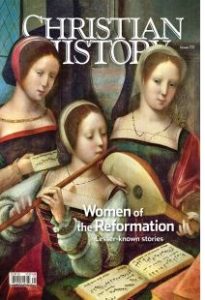 This issue, #131, titled: Women of the Reformation: Lesser-known stories, features women who are not as well known, including a printer, Margarethe Prüss; preachers, Katherine Schütz Zell and Marie Dentière; pamphlet writer, Argula von Grumbach; mystic, Ursula Jost and others, alongside Katie Luther, who pioneered the brand new role/profession of pastor’s wife and Anna Bullinger, whose husband Heinrich’s courtship letters formed the basis of the only lengthy excerpt from a male theologian in this issue.
 “Backwoods Witchcraft: Conjure & Folk Magic from Appalachia” by Jake Richards paints a vivid picture of life in Appalachia. He pulls you into a land of rough living, enchanted untouched places, folklore, and magical practices. A place where the Bible is equal parts magical text and religious philosophy.
 There’s so much more in the world to be considered a “familiar” than your typical black cat. D’Aoust takes a truly global approach to the conversation. Her discussion of Greek belly-talkers and sibyls and the source of their powers was eye-opening. The examination of the role of angels in Judeo-Christianity was something I never considered before as a “familiar” relationship. D’Aoust also looks at fairies, familiars in Chinese legend, and even their appearance in India. I also want to mention that the author’s own artwork is used throughout the book. It’s unusual that the author provides their own art, and in this case helps bring extra vitality to her words.
  The articles contained within are:
 “Self-Love through the Sacred Feminine: A Guide through the Paintings & Channelings of Jo Jayson” is a thoughtful exploration of what it is to identify as a woman. Jayson explores the lives/folklore and wisdom of Guinevere: The Queen, Mariamne of Magdala: The Magdalene, Brighid: Mother Goddess of Ireland, Isis: One Who is All, Mary: The Mother, Jeanne D’Arc: Maid of Orleans, Miriam: The Prophetess, Guan Yin: Mother of Compassion and Mercy, Morgan Le Fey: The Water Spirit, Artemis: Maiden of The Hunt, Kali Ma: The Dark Mother, Inanna: Star of Heaven and Earth, and Grandmother Spider: The Weaver.
 She’s right. In this time of #resistance, Austen’s look at universal spiritual feminism is right on the mark. Respect for the earth, community building, and reclaiming the power womanhood all blend together in “The Heart of the Goddess”. Instead of your typical who’s who of female deities, Austen discusses each goddess from the perspective of a piece of artwork featuring the deity. This allows for a discussion of the origin of the art (geography and date) and with it, the history and culture surrounding the goddess.
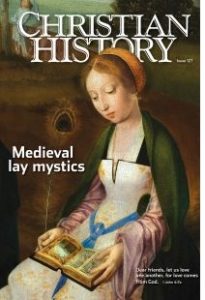 Christian History Institute (CHI), publisher of Christian History magazine (CHM), announces its latest issue, titled: “Medieval Lay Mystics”. The entire issue explores a mysterious question for many Christians, historians and scholars – What did it look like and what did it feel like to be a medieval Christian?
 Years after he changed the landscape of American filmmaking with 1973’s “The Exorcist”, director, co-writer and legendary storyteller William Friedkin moves from fiction to fact with his new documentary, “The Devil and Father Amorth”. What began as a brief conversation between Friedkin and Father Gabrielle Amorth – the head Exorcist for the Diocese of Rome for over 30 years – as two professionals who knew of each other’s work soon transformed into an once-in-a- lifetime opportunity, as Amorth agreed Friedkin could film an exorcism ceremony. It would be the ninth exorcism for a painfully afflicted woman, Cristina (a pseudonym), who had already been under Father Amorth’s care – and it would be filmed by Friedkin alone, with no other crew allowed, no light other than the natural light in the room and a small digital camera-and-mic unit that could capture the ritual and its revelations.
  As most of you know by know, I’m quite the fan of food and learning about religion. That’s why when Christian History Magazine emailed me about their latest issue I was pretty intrigued and wanted to share it with you. The issue is “Faith & Food, 2000 Years of Feasting and Fasting”.