The Beauty of Tarot Leaves

I recently became aware of Schiffer Publishing when they contacted me about reviewing “Wicca? What’s the Real Deal?”. I was surprised to learn that they also publish tarot decks and so I jumped at the opportunity to see what kinds of decks their company published. In response to my interest I was sent “Tarot Leaves” by Beth Seilonen.

Seilonen combines her love of tarot symbolism with the leaves of the trees she is accustomed to seeing growing up and currently residing in Maine. The deck follows the traditional Major and Minor Arcana, but they are presented through the prism of nature. The author shares, “The beauty of life is reflected within the leaves through the color, symbols, and imagery which overlaps with the veins of the leaf, much like that of a palm of a hand to a palmist; that which is most relevant at the time is revealed to the querant.” Of course you want to know what everyone really wants to know about a tarot deck, what is the art like? I found many of the cards quite striking and have a few favorites here to share.

Tower
Nine of Wands
Sun

I should also note, since I’ve never seen a tarot deck published by Schiffer before that the quality of the product is amazing. The cards are beautifully produced on sturdy card stock, the deck and accompanying book come in a hard cardboard laminated box that has a lid that lifts up and is closed firmly by a magnet, and the book that comes with it has the same dimensions as the cards (so it fits in the box)but instead of just being paper it has a sturdy, full color, card stock front and back cover. Each card is given its own page in the book and Seilonen also offers suggestions for card spreads that she finds work well with the “Tarot Leaves” deck. The suggested retail price for the deck is $24.99.

“Tarot Leaves” is a wonderful deck filled with beauty and whimsy. It would make a fine addition to anyone’s collection of tarot decks, but it’s perfectly suited for tarot readers and enthusiasts looking for a deck that reflects the natural world as much as the spiritual world.

Just Trust Me

I’ll admit I was surprised when I saw on Facebook that Quest Books was publishing a book called “Just Trust Me: Finding the Truth in a World of Spin” by attorney G. Randy Kasten. I mean, Quest Books is the imprint of The Theosophical Publishing House, the publishing arm of the Theosophical Society in America. What the heck were they doing publishing a book on spin? From an attorney? There was only one thing to do, read the book.

And what a fascinating book it is! Kasten examines in detail different types of lies, and there is a rainbow spectrum of lies out there. But “Just Trust Me” is about more than just politicians saying they didn’t have sex with that woman, or your friends telling you that your outfit doesn’t make you look fat. Kasten discusses bias, stereotyping, how the media works, advertising, and more! He doesn’t just stop there. He gives you the tools to look for deception, be it while listening to a news broadcast, or talking to a family member.

There is more than just pure information that makes “Just Trust Me” a good read. Thankfully Kasten writes in a straight forward, easy to understand manner. You don’t need a background in law to understand him. No legalese here. Also, the book isn’t frightening. “Just Trust Me” could easily have been panic inducing. 280 pages of lies, lies, lies….they’re EVERYWHERE. Instead things are discussed in a level headed manner. Although, your mind will probably be blown on more than one occasion as you realize, I do that, or I’ve experienced that. Humans are a strange animal indeed, and these are truly some of our strangest times.

After the satisfying experience of reading “Just Trust Me” I again found my mind wandering back to my initial question; why the heck is Quest publishing this book? As I said, they’re an imprint of The Theosophical Publishing House of The Theosophical Society. So you know what, I went to The Theosophical Society in America website where on their “About Us” page I read this, “In accordance with the Theosophical spirit, most Theosophists regard Truth as a prize to be striven for, not as a dogma to be imposed by authority. They hold that belief should be the result of individual understanding and intuition rather than mere acceptance of traditional ideas, and that it should rest on knowledge and experience, not on assertion. Truth should therefore be sought by study, reflection, meditation, service, purity of life, and devotion to high ideals.”

Truth. “Just Trust Me” goes after it on all levels. Kasten helps you not only recognize the lies that are being presented to you, but encourages you to find out what lies you may be telling yourself. And just like that, it all made sense.

Wicca: What’s the Real Deal?

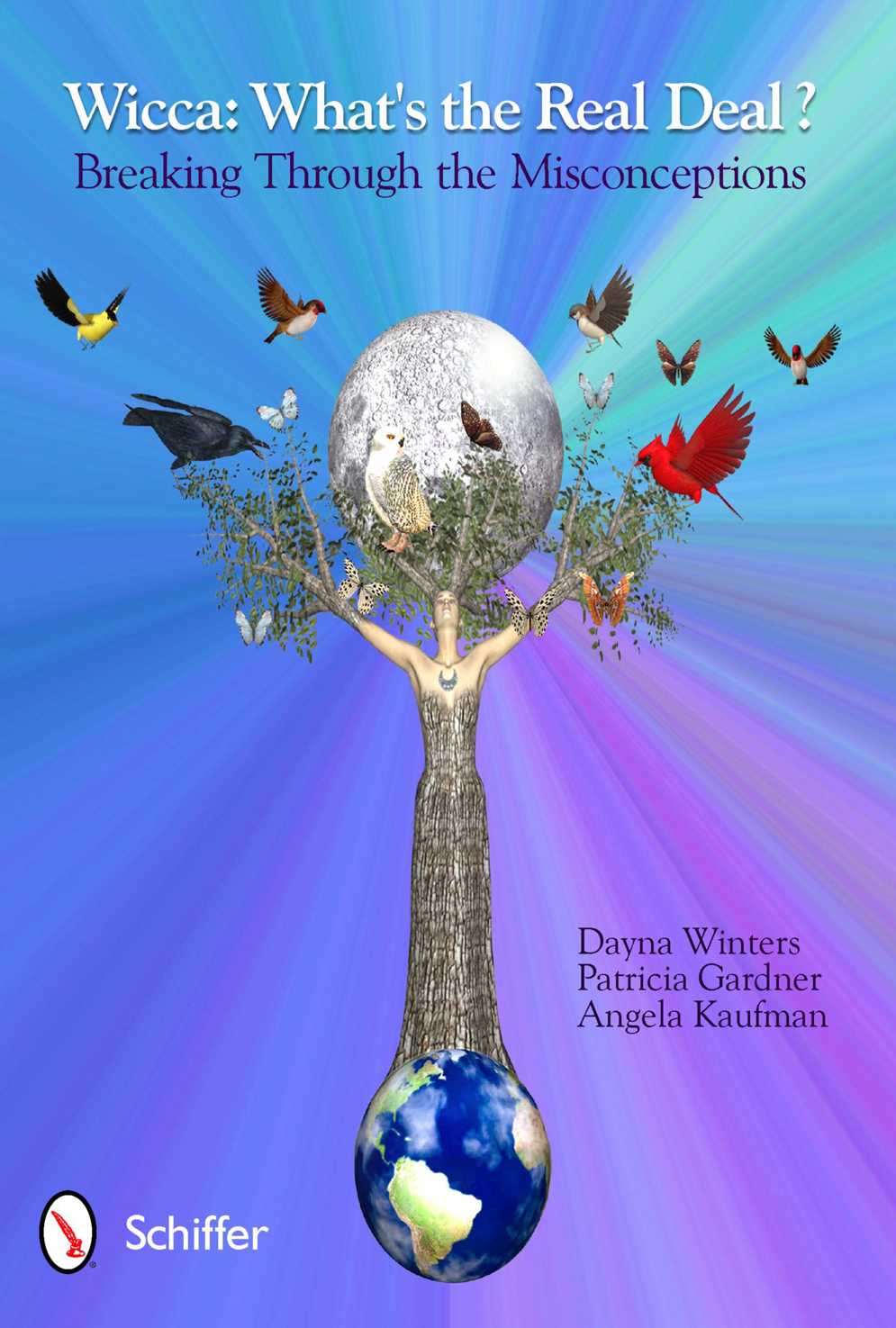
I first became aware of Patricia Gardner when her apartment exterior was vandalized in 2007. I wrote a little piece about it. What readers don’t know is that shortly after I wrote that article I spent an evening with Patricia (High Priestess) and got to meet Dayna Winters (Priestess) and other members of the Dragon Warriors of Isis Coven. As I was coming to expect from meetings like this, the group was filled with friendly and sincere spiritual seekers that welcomed me into their gathering with open arms. And this is why I was thrilled to learn that Schiffer Publishing has recently released “Wicca: What’s the Real Deal? Breaking Through the Misconceptions” by none other than Patricia Gardner, Dayna Winters, and Angela Kaufman.

These three ladies endeavor to navigate the murky waters of attempting to define and describe Wicca and its practices, which as most of you are aware is a journey fraught with peril as Wiccan practitioner’s perspectives and philosophies vary greatly. Overall I think the average Wiccan would feel the book adequately represents them, and at the end of the day, the three authors are Priestesses of their own coven, so it definitely reflects their own beliefs.

The bulk of the book concentrates on the misconceptions about Wicca with the first chapter being “Misunderstood Terminology and Erroneous Perceptions” and the second chapter being “Misunderstood Practices and Historical Misconceptions”. These chapters use the simple format of stating the myth, stating the truth, and then offering a detailed explanation. They discuss a variety of myths, such as: “All Witches follow the Wiccan religion”, “Wiccan revere nothing”, “Tarot cards are evil and their use attracts evil spirits”, “Witches use an athame to cut people or animals during their rites”, and “The Horned God that Wiccans worship is Satan”.

Next they discuss “What Wiccans Do”. Here is the basic description of rituals, a listing of holidays and other events like Handfastings and Esbats with a concise overview of each, some discussion of Wiccan tenets and principles, and even a look at the advantages and disadvantages of being a Wiccan. They share the vandalism incident that brought them to my attention within the disadvantages section.

Lastly is a fascinating chapter entitled “When Magick is Sane”. Very few books I’ve come across have so openly and frankly discussed that often times people who believe in magick are considered to be crazy. Since author Angela Kaufman is a licensed clinical social worker with experience working with individuals with mental health and substance abuse issues there is an extra weight of authority behind this chapter. They discuss spirits, divine guidance and hallucinations, a comparison of religion and culture versus diagnosable illness, and the difference between magick and self-delusion. From there it flows neatly into examining teens wishing to study Wicca, handling discrimination and intolerance, and some of the negative behaviors that can be found within Wiccan communities.

“Wicca: What’s the Real Deal?” could easily be mistaken as another “Wicca 101” book at first glance, and with most Buffet readers being well versed in Wicca or practicing Wiccans themselves, you may find yourself dismissing this book a bit too soon. With its straight forward myth/truth format and easy to follow explanations of the basics of Wicca and being Wiccan this book is, in my opinion, a must own for many people. High Priests and Priestesses should consider having a copy around for loaning out to concerned family members of those in their coven, or for a teenager interested in pursuing Wicca for them and their family to read together. With its discussion of what Wiccans do and the pros and cons of being Wiccan, anyone considering taking up the study of Wicca would benefit from reading this book. Also, anyone looking for an easy to digest introduction to Wicca would find use in owning this book.

A “Deluxe” Review

As a general rule, I hate the “deluxe” album. As someone who worked in music retail, I have an extra reserve of hate for them based on endless customers complaining that “they’re expected to buy the album….again?” Of course the worst is the greatest hits collection with those two extra songs there to annoy the devoted fans who already bought every album the artist ever released, but I digress, we’re discussing the “deluxe” album. In my experience “deluxe” is a meager handful of additional tracks, heavily featuring demo versions (and often times demo versions are better left unearthed) and remixes (which I sometimes enjoy, but to buy an album a second time for a few remixes….not likely). Now you can understand why despite how much I enjoyed the Florence and the Machine album “Lungs”, I kept turning my nose up at the “deluxe” edition out on store shelves.

Well one day in a moment of weakness and curiosity I finally picked it up to see what was so darned “deluxe” about this version of “Lungs”. I bought it that day, so as you may guess a lot. Let’s break it down for you. There are 11 additional tracks. Yep. Eleven. As in someone took the dial for “Lungs” and turned it up to 11. So there is a whole second disc of “deluxe”.

How many demo versions? One. The track “Ghosts” is the origin of the song “I’m Not Calling You A Liar” from the original album. Although not a revelation, it’s quirky and slightly more uptempo feeling demo was fun, and not a regrettable addition. Remixes? I’m going to stretch and say two. The deluxe disc features a remix of “Dog Days are Over” by Yeasayer. Honestly, not that impressed. However, there is also “You’ve Got the Dirtee Love” as performed at the 2010 Brit Awards. Since this introduced me to Florence and the Machine, I’ve got a soft spot for the performance. Also it is a fun mash up of Florence and the Machine’s “You’ve Got the Love” and Dizzee Rascal’s rap “Dirtee Cash”, so we can call that a remix if you like. (Fun fact: Florence won for best British album of the year at that show and Dizzee won best British male.)

A few other common tropes for the “deluxe” album are tracks from other compilation albums and covers of other songs, and the “deluxe” “Lungs” has those too. You’ll find “Heavy in Your Arms” which was originally on “The Twilight Saga: Eclipse” soundtrack. I still haven’t seen the movies, but I really should just man up and buy all the soundtracks because I seem to like every song I hear from the darned things, and this song is no exception. It’s almost a death march sound chronicling the overwhelming, unbearable, weight that love can have on a couple. As for the covers, they’re the real stand outs for me. So much so I’m going to toss a couple of videos at you!

Florence and the Machine take Robert Palmer’s gritty, grinding, and all around universally accepted as bad ass song “Addicted to Love” and turn it into a more delicate, pulsating version. (By the way, there was no “official” video for this song but this guy made a video for his Media Studies course at The New School in New York City, so I thought, why not share his work with more people.)

The other stand out cover is “Hospital Beds” which was originally done by the Cold War Kids. The live clip I’ve got here highlights Florence’s powerhouse voice as she adds her personal touch to the song.

Now would be a good time to remind you that there are a few totally 100% new tracks on here too. Technically I think they were part of some iTunes deal, but they’re new to me, so I’m calling it new! These songs reaffirm that Florence continues to have a crazy good voice, an ability to write compelling complex lyrics, and an adventurous spirit when it comes to making music.

Here is a live performance of “Swimming”.

Yes, I bought “Lungs” again, and I don’t regret it one bit.

Rebels & Devils

It’s only an anthology, I thought. A nice way to ease myself into the writings that Original Falcon publishes. Sure it’s titled “Rebels & Devils: The Psychology of Liberation”, but still, it’s just an anthology. Then, as you might suspect, the anthology kicked my ass.

“Rebels & Devils” features the writings of Robert Anton Wilson, William S. Burroughs, Timothy Leary, Ph.D., Phil Hine, Aleister Crowley, Osho, and more. I suspect you’re getting the tone now, right? Trailblazers of a sort, people who left behind the status quo. In short, rebels and devils.

What does it mean to be a rebel? How do you become a devil? These questions are asked and sometimes answered not just in the typical short essay format (An absolute stunner of an essay comes from Diana Rose Hartmann titled “The Calling of the Holy Whore”. Dare I call it a must read for every woman? I dare.), but also in the form of interviews (I loved Christopher S. Hyatt, Ph.D interviewing Israel Regardie!), fiction (Look forward to “Paradise Mislaid” by William S. Burroughs), poetry (I enjoyed “Prelude to a One-Night Stand” by Adam Matza. “I need a body-sized condom, to protect me from your malaise, and you from mine.” Rough.), and even a comic strip from Christopher S. Hyatt, Ph.D and S. Jason Black called “VoodooMan”.

“Rebels & Devils” dedicates a section of the book to “The World of Chaos”, which includes discussing the practice of Chaos Magic. If you buy this book and only bother to read “Beyond the Event Horizon: Responses to Chaos Culture” by Phil Hine and “Undoing Yourself with Chaos Magic” by Robert F. Williams, Jr., you will come away with the best understanding of Chaos Magic that the uninitiated can hope to attain. At least that was the case for me!

So hopefully now you’re psyched. You’re chomping at the bit, ready to dive in. Consider this a word of warning, this book WILL kick your ass. Am I in charge of my destiny? Do I only focus on myself, leaving others to fend for themselves? Is that a good or bad thing? Am I weak in ways I didn’t realize? These are just some of the thoughts that raced through my mind while reading this book. If it were a website, it would be NSFW (not safe for work). All manner of very adult themes are at play in “Rebels & Devils”. However, if you’re willing to take it on; if you’re ready to be confronted by ideas you’ve never encountered before, presented in some extremely outside of the normal comfort zone kind of way, you will be rewarded at the end of the journey.

The Small Town Pagan’s Survival Guide

There is no way for me to write this review and not be sad. If you read my April 12th article “A Nice Guy and Some Special Ladies in my Life” then you already heard part of this story, but those who have not, here it is.

While flipping through a magazine I saw that a book called “The Small Town Pagan’s Survival Guide: How to Thrive in Any Community” was coming out in June 2011. Without having even read the book I knew this would be excellent subject matter for an interview, so I reached out to Llewellyn Publications and secured a review copy of the book and my foot in the door for an interview with the author Bronwen Forbes. Under 72 hours later I learned that she had passed away. Ultimately I was saddened that I had missed the opportunity to interview a woman who had touched so many lives. Then I received my copy of “The Small Town Pagan’s Survival Guide”.

This book gives us a glimpse at a woman who lived an extremely full life, and she shares it in intimate detail. From divorces to workplace harassment, to meeting the love of her life, raising a small child, and moving around the country, it is there on the page for all to read and learn from. Forbes’ writing is honest, often times humorous, and authoritative. Just her experiences alone would have made “The Small Town Pagan’s Survival Guide” a worthwhile book, but she didn’t stop there.

Not only did Forbes recount her own experiences and lessons learned from moving to small town in Missouri from the suburbs of Washington, DC, but she surveyed and interviewed roughly 50 other people who identified themselves as Pagans residing in small towns. The book is filled with direct quotes from the surveys as well as insights gained from examining the survey results as a whole.

I was surprised to realize that “The Small Town Pagan’s Survival Guide” contained information that was useful for Pagans in smaller towns, but also Pagans in cities. There’s information for Pagans looking to start discussion groups or considering forming a coven. It would even be helpful for someone who perhaps hasn’t fully decided if they’re Pagan or not. This book has information and reflections that just about any Pagan would be able to take something away from. I also think the book is a worthwhile read for folks like me who are not Pagan, but are always looking for a better understanding of Pagan spirituality and the people who practice it.

But I’ll always wonder about that interview…..

“The Small Town Pagan’s Survival Guide” releases in June 2011.

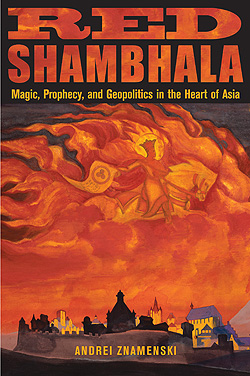
Red Shambhala: Magic, Prophecy, and Geopolitics in the Heart of Asia

Where on Earth do I begin? “Red Shambhala: Magic, Prophecy, and Geopolitics in the Heart of Asia” by Andrei Znamenski was totally alien to me. Knowledge of Tibetan Buddhism? Minimal. Familiarity with the politics of Eurasia in the 1920’s and 1930’s? Nonexistent. An understanding of the variety of interpretations of Shambhala and its associated prophecies? Nope. Are you now frightened of this daunting book? Well don’t be.

Author Andrei Znamenski breaks everything down to its most basic parts to help bring order to this chaos. He begins by explaining the assorted legends, myths, and religious tales of Shambhala and its association with those living in Mongolia, Tibet, and surrounding lands. To sum up, Shambhala is a legendary kingdom hidden somewhere in Inner Asia. It’s considered a land of purity and enlightenment and home for a more spiritually advanced and possibly technologically advanced civilization. Of course most modern Buddhists consider Shambhala a spiritual place to be found within oneself, but Znamenski carefully outlines a period of time when Shambhala was considered an actual location that those of pure intention could find.

The next layer to be added to “Red Shambhala” is an explanation of the Bolshevik revolution that took place in 1917. This was when the Bolsheviks, a faction of the Marxist Russian Social Democratic Labour Party, came to power during the October Revolution phase of the Russian Revolution of 1917. The Bolsheviks were an organization consisting primarily of workers who considered themselves the leaders of the revolutionary working class of Russia. This is where Znamenski starts to introduce you to some of the future players in the quest for Shambhala.

What comes next is the unbelievable true life story of how the idea of Shambhala was a tool used in assorted political and megalomaniacal schemes all focused on the conquest of Mongolia and Tibet. Alexander Barchenko wants to find Shambhala to learn the sacred wisdom there and believes by introducing the elite of Red Russia to the knowledge of Shambhala he will be able to make the Communist project in Russia less violent. The elite see Barchenko’s theological journey to Inner Asia as a chance to plant the seeds of Communism in other lands. Baron Roman von Ungern-Sternberg travels to the east, and uses the legend of Shambhala as a tool to unite the nomads of Mongolia in an effort to restore monarchies. The Roerichs, Nicholas, his wife Helena, and their son George, attempt to establish a Buddhist-Communist theocracy. Nicholas poses as the reincarnation of the fifth Dalai Lama, obviously not counting on the politically shrewd living Dalai Lama of the time. And those are just a taste of the eccentric, larger than life characters that really truly lived, and very much tried their hand at king making and empire building.

After reading “Red Shambhala” you’ll come away with new insights into the history of Communism, Tibetan Buddhism, and the use of propaganda. They say real life can be stranger than fiction, and Andrei Znamenski’s research proves that phrase to be very, very true.

“Red Shambhala” releases in June 2011.

King Solomon Oracle Cards

Every now and then I come across this problem. I see a product that looks cool. I ask the publisher if I can have a copy to consider for reviewing on this lovely website. They send said product, and it is just a wonderful as I anticipated. Then I am thoroughly unable to write a review.

By now the “King Solomon Oracle Cards” by Itzhak Mizrahi and Orna Ben-Shoshan from U.S. Games Systems are pretty old news. I’m pretty sure I’ve been sitting on them for at least a month! So why no review? Sheer inability on my part.

I like the art by Orna Ben-Shoshan. The coloring is vibrant, and yet the art conveys a soothing feel. I like the work of Itzhak Mizrahi. I appreciate how hard it is to come up with something new, and that the deck isn’t pretending to be a play on the traditional tarot deck. The “King Solomon Oracle Cards” are their own deck. A deck unto itself. Lastly, there are four amulet cards that also come with the deck. As per the included booklet, “These are your own personal sacred amulets that you may keep at home or carry with you wherever you go. These charms were written in Angel’s Writing and ancient Goatic symbols by the kabbalist Itzhak Mizrahi.” There is nothing more impressive looking than an amulet. Seriously. I love the included amulet cards and have them on my bulletin board so I can take breaks to look at them when I write.

Amulet One - Livelihood

That’s what I’ve got folks! After a month of handling the “King Solomon Oracle Cards”, a month of looking at the beautiful cards that I scanned into my computer for this review, a month of reading and rereading the over 40 page booklet included with the cards, I’ve got one paragraph to share.

Perhaps after reading this micro review some of you will be inspired to seek out these cards, and hopefully you’ll be able to do a better job of articulating just how wonderful they are.

Britney Spears is Dancing to the Apocalypse

The world is going to come to an end, and Britney Spears intends to dance her way to the apocalypse. Spears’ latest album “Femme Fatale” is the pop music equivalent of LL Cool J’s “Mama Said Knock You Out”. It’s a game changer for the artist. While many critics are whining that the album never wavers from its dance floor sensibilities, or that the album is more a victory for the producers than for Spears, I see it differently.

Thankfully the pop music landscape has changed in recent history, and I think for the better. Thanks to the efforts from female artists such as Lady Gaga, Rihanna, Robyn, and as always Madonna, female driven pop music blends more styles and takes more risks than ever before. Sadly, these innovations made still relatively young Britney Spears something of a pop music dinosaur. Despite her releasing some songs that could compete, overall she hadn’t managed to break through to the new era.

“Femme Fatale” rips open with “Till the World Ends”, a pounding booty shaker and it never lets go. The album draws heavily on the ever encroaching electronic/techo sound (Yay!) with a heavy helping of thumping beats. Don’t call it a comeback, Spears could always make you dance, and thanks to her long time producers, everyone is being reminded. Oh boo hoo, it’s a whole album of music that makes you want to dance. What a waste of time that is! You know what, sometimes I don’t want a ballad, sometimes I don’t want to dissect songs for deeper meaning, in short, sometimes this middle aged white girl just wants to feel good, and “Femme Fatale” delivers.

I can’t consider this review complete with directing your attention to some videos. (Note that both videos have a 15 second advertisement in front of them.)

This first one is for the opening song “Till the World Ends”. As an occult fangirl I was tickled at the use of the ever popular December 21st 2012, even if it’s already getting a little played out. Also, there’s some pretty shots of a city getting wrecked. I don’t know who actually choreographed the video, but it’s got the fingerprints of Paula Abdul’s “Cold Hearted Snake” all over it. (Remember the part where they pull the blinds down? Yeah, that part.)

The other video I’m going share is for the song “Hold it Against Me”. Let me start by saying, I don’t really care for the video. If you’re looking for an awesome dissection of the video for hidden meaning I have got to send you over to Vigilant Citizen. He explores the ideas of mind control present in the video supported by his thoughts on Disney and Spears’ career. It’s always a good time over there! With all of that out of the way, here are the two things about this video that I want to share.

One, watching the video on YouTube was the first time I heard “Hold it Against Me”. While listening to it from the beginning I thought, this is a great dance song, I can’t wait to hear a techno remixer chop it up because that would be awesome. And then at 02:46 it segued into the exact sound I had been hoping for! So a tip of my hat to you noble producers. Second, at that mark starts a sequence that features the generally hokey person fighting themselves scenario. Now I’m not going to proclaim Spears the next female action hero (which was my response to Madonna’s “Die Another Day” video) but thanks to some decent camera work and choreography it looks pretty decent. Also, the close up of her little feet in stiletto heels shuffling for position makes me giggle.

If you’re bummed and looking for a party in an album, look no further than “Femme Fatale”. As they say in the movie “Protocol”, it’s a “guaranteed good time.” (Okay kids, it’s a movie. Starring Goldie Hawn. You do know who Goldie Hawn is, right? Fine, I get it. I’m old and you’re not. Damn kids.)

Decoding the Enochian Secrets

There are a lot of things I could tell you about “Decoding the Enochian Secrets: God’s Most Holy Book to Mankind as Received by Dr. John Dee from Angelic Messengers” by John DeSalvo, Ph.D. I could tell you how pleased I was to see the author devoted some time to discussing the apocryphal “Book of Enoch”. Or how I found DeSalvo’s reflections on the purpose of “The Book of Enoch” that was given to Dr. John Dee via the scryer Edward Kelly insightful. I could go on and on about how the history and background presented about this new “Book of Enoch” was tremendously fascinating. However there is only one thing that I should need to tell you to make you understand why you should own a copy of this book; it contains the complete original text for “The Book of Enoch”.

That’s right folks, and when I say original I’m not talking about transcribed, or somehow divined by the author, or any other such way a book could potentially claim possessing the “original” text. “Decoding the Enochian Secrets” features each page as seen in the British Library collection, with the actual handwriting of Edward Kelly and Dr. John Dee. If you consider yourself any sort of occult nerd, this should already have you clicking “check out” on your book shopping website of choice. Just to give you a little taste of what I’m talking about, feast your eyes on this beauty.

A table from the Book of Enoch

Just in case that wasn’t quite occult nerd enough for you, John DeSalvo will blow your mind with his meticulous research and attention to detail. I haven’t devoted much time to learning about Dr. John Dee and his work with “The Book of Enoch”, and after reading this, I’m not sure I need to read anything else. You can’t get more intense than “complete original text”.

Obviously a book like this isn’t for everyone, but if you’re as fascinated by such matters as Enochian magic and occult history as I am, you must own this book.