The Inner World of The Sacred World Oracle

I’m so happy! Why? Because I get to talk about “The Sacred World Oracle” which was created by Kris Waldherr. That name may sound familiar to long time Buffet readers because back in 2010 I reviewed Waldherr’s fantastic “Doomed Queens” playing cards deck and the “Ask the Queens Advice Deck”. Both were so beautiful, intelligent, and whimsical that when I saw “The Sacred World Oracle” I was eager to dive in.

Butterfly

Most of the art was adapted from Waldherr’s various books, particularly “Sacred Animals” and the accompanying calendar. The art of “The Sacred World Oracle” is beautiful and creates a magical landscape. This is definitely an oracle deck for those who feel an affinity with nature.

Dragon

The deck is comprised of 44 cards that are divided into 4 types: earth, air, fire, and water. Within each quadrant you’ll find animals (real, mythological, and folkloric). The included book provides you with meanings for these creatures. The book also includes a few spreads to try out. Of course my favorite thing is to draw a single card each morning and then see if the day lines up with the intentions set forth by the card.

Elephant

However you decide to use them, you should get “The Sacred World Oracle” and give them a try.

Salmon

Update I apparently misunderstood the about the art and text section of the booklet provided with the deck. There was a line that credited artists incorrectly that has now been deleted. ALL OF THE ART WAS DONE KRIS WALDHERR.

The Grateful Table

People always talk about developing an “attitude of gratitude”. Around Thanksgiving people countdown what they’re thankful for on Facebook, at the Thanksgiving dinner table they recount what they’re thankful for, or at the least take a moment count their blessings. Perhaps during Christmas while making charitable donation people spare a thought of gratitude that they’re not the ones in need this holiday season. Yet I would guess that’s the extent of gratitude the average person or family shares in a year.

What if there are was a way to exercise your gratitude muscles on a daily basis? Enter “The Grateful Table: Blessing, Prayers and Graces for the Daily Meal” by Brenda Knight.

Brenda Knight is on a mission to bring more happiness, more joy, and more gratitude to people’s lives. With her book, “The Grateful Table”, each day you’ll find a different quote from a wide variety of people, ranging from Neil Gaiman to Elizabeth Edwards and Ray Bradbury to Saint Issac of Ninevah. The author hopes you’ll gather around the table and share these daily thoughts until you start to feel that gratefulness every day.

Now as you know, with all things like this, I always check out my birthday for the example to share. So May 29th is “Thank you for the reflection of Your Smile in all we see.” – Kenneth Kurtz.

Who is Kenneth Kurtz? Honestly, I’ve got no clue. I emailed a couple of publicists, they had no clue. Googled Kenneth Kurtz, got a handful of results, none of them seemed right. So dear Magical Buffet readers, if you know who Kenneth Kurtz is, let all of us know in the comments!

Until then, perhaps you should consider “The Grateful Table”. A beautiful little book to help you be thankful all year round.

Sacred Objects, Sacred Space

“Sacred Objects, Sacred Space: Everyday Tools for the Modern-Day Witch” by Dayna Winters, Patricia Gardner, and Angela Kaufman isn’t necessarily a direct follow up to their first book “Wicca: What’s the Real Deal? Breaking Through the Misconceptions”, but if you were smart and followed my recommendation and bought their first book, this is an obvious “must buy”. For those of you who may need, or want, a bit more information than that, here we go.

The ladies (Winters, Gardner, and Kaufman) did it again. Just like “Wicca: What’s the Real Deal?”, “Sacred Objects, Sacred Space” manages to pack an insane amount of information into a compact little space. The writing never feels rushed or overwhelming, and yet in under 200 pages you will read about any tool you can imagine. Seriously! Here’s just a taste to get you going: potion bottles, cauldrons, poppets, Book of Shadows, candles, athame, mirrors, mala beads, singing bowls, and believe it or not, more! And with each item they discuss appropriate care, maintenance, and any cautions you need to be aware of with the item. I really enjoyed that with each item they also included craft ideas to decorate or personalize the items, or sometimes how to create the item from scratch.

But that’s just the objects part of “Sacred Objects, Sacred Space”. When it comes to spaces, they leave nothing out; living rooms, closets, dorm rooms, offices, balconies, bedrooms, gardens, and more. They cover the use of color in the home and creating your home altar.

If you want to know about everything that’s everything having to do with magical tools and spaces, “Sacred Objects, Sacred Space” is for you. Dayna Winters, Patricia Gardner, and Angela Kaufman (yes, of Moonlight Tarot) have created another book that seriously, honestly, and truly you should own. I hope they have another one in the works!

Creature Book Double Feature

When we interviewed Varla Ventura for the website, it was primarily in regards to her role as the curator for a line of ebooks for Red Wheel/Weiser Publishing. After reading her two latest books, “Among the Mermaids: Facts, Myths, and Enchantments from the Sirens of the Sea” and “Banshees, Werewolves, Vampires and Other Creatures of the Night: Facts, Fictions, and First-Hand Accounts”, I can safely say is curating is what Ventura does best.

In a paranormal landscape where it may feel like you’ve read every bit of trivia and tale about vampires and werewolves, Ventura manages to find fresh new takes on the subject matter. And let’s face it, how often does anyone talk about banshees? She even discusses a few other rarely touched upon creatures like Pookas and Changelings. The back of “Banshees, Werewolves, Vampires and Other Creatures of the Night” has a huge list of resources such as books, movies, and websites where you can learn more.

For as cool as that was, “Among the Mermaids” is, for me, a million times cooler. I have always been fascinated by mermaids and sirens. Other than a passage here or there in a paranormal or creature encyclopedia I had never found much reading about them. Then Varla Ventura comes along with “Among the Mermaids”, a whole book devoted to merrows, mermaids, and sirens. Again, Ventura finds legends and factoids that you’ll never find anywhere else! At the end, you not only find resources such as movies and books, but also shopping. Looking for mermaid art or jewelry? There are links for that! Looking for your very own, custom made mermaid tale? There are links for those too!

As I said at the start, curating is what Varla Ventura does best and the wonderful work she did with these two books proves it. Both books are filled with unique myths and facts that make these must haves for lovers of legend.

Snoopy: Cowabunga!

Who doesn’t love Snoopy? I mean, I was offered the chance to review “Snoopy: Cowabunga!” A Peanuts Collection, and obviously I said yes. I grew up reading pocket Peanuts books and my father is a big fan. However, what can be done to make a Peanuts book worth reviewing? How can you make it new or different? Well, guess what? “Snoopy: Cowabunga!” is incredibly exciting!

First off, we’re talking 214 pages of full color Peanuts strips. And that’s right, I said FULL COLOR. I didn’t get that in my little pocket books. Along the side of the pages is a little Snoopy running back and forth. Yup, there is a bit of flip book action going on too!

Once you’re done reading the strips there is actually MORE to do! There is a section of activities at the back of the book. Learn how to make a bird feeder for other Woodstocks out there, make a Snoopy finger puppet, or learn how comics can reflect life. There’s still more activities, and there is a poster of all the Peanuts characters.

Now, let me just take a moment and blow your mind. At this point I assume you’re impressed with all “Snoopy: Cowabunga!” has to offer, well here’s the really amazing part. Suggested U.S.A. retail, $9.99. All of this for only $9.99! Hello holiday gift for like, everyone! Because like I said, who doesn’t love Snoopy?

Ah, the wisdom of Snoopy.

Living the Season

At this point in my life I’ve read quite a few books about Zen Buddhism, and since it’s me I’ve forgotten a healthy chunk of what I’ve read. (Seriously, I’ve got an awful memory, even for things I really want to learn and retain.) However, despite my crappy memory I feel quite certain I’ve never encounter a Zen book quite like “Living the Season: Zen Practice for Transformative Times” by Ji Hyang Padma.

Often Ji Hyang Padma shares stories from her own life and own experiences making “Living the Season” part memoir. The Zen Buddhism discussed in the book is based on what is practiced in Korea, which you rarely read about in the West. I’d never seen it before so I found that very interesting. I learned that my favorite goddess, or Bodhisattva if you hang with the Buddhists, Kwan Yin, is referred to as Kwan Seum Bosal if you’re a Korean Buddhist. “Living the Season” has loads of exercises. Once Ji Hyang Padma gets you meditating the sky is the limit. Literally. One of the exercises is sky gazing!

Ji Hyang Padma’s writing is sincere in acknowledging what most of us already know, we’re in a time of upheaval and change. Her message is to understand how we’re all connected and work to be of service to each other and also be of service to our planet. All of this is conveyed in her beautiful voice, filled with authenticity. “Living the Season” is a story, a Zen practice, and a mission statement, not to be missed.

Lights, Camera, Booze!

I’ve always had a soft spot for the movie “The Princess Bride”. Then when my husband and I got married we made reference to the book at our ceremony so we never officially declared it, but the movie sort of became “our” film. So obviously we did what any reasonable married couple would do with such a special film, we invited our friends over for “The Princess Bride”: The Drinking Game.

Yes my friends, you read that correctly. I received a review copy of “Lights, Camera, Booze: Drinking Games for Your Favorite Movies” by Kourtney Jason and Lauren Metz and illustrated by Amanda Lanzone, and you can’t get a book like that and not take it for a test drive. There were tons of tempting options: “The Goonies”, “Back to the Future”, “The Rocky Horror Picture Show”, “Clerks”, “Fight Club”, “Monty Python & the Holy Grail”, and so many more! Yet when everything was said and done my husband and I picked “our” movie, “The Princess Bride”.
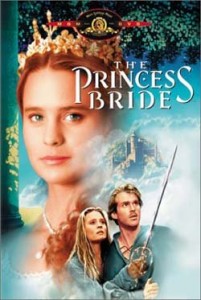
With the difficult decision of film picked out, we all gathered and prepared for the fun. “Lights, Camera, Booze” tells you when to drink. In this case, drink when….
1. “Farmboy”
2. As you wish
3. Mawwiage
4. Anyone mentions Andre the Giant’s size
5. Inconceivable
6. “My name is Inigo Montoya. You killed my father. Prepare to die.”
7. True love
8. The grandson interrupts
9. Sword fight
10. The Machine
11. Horse Rides
12. Dread Pirate Roberts
13. Rodents of Unusual Size
14. Man in Black
15. Westley defeats a foe.
16. 6-fingered man.
17. Prince Humperdinck
18. Buttercup is referred to as Highness or Princess

Each movie, along with the “drink when”, has a cocktail paired up with it. For “The Princess Bride” the drink is the True Love Cocktail. A mix of coconut rum (RUM!), peach schnapps, and cranberry juice. The first few to try it proclaimed that it “tasted like college” and others agreed. It was pretty sweet and needless to say, tasted better the more you had.

Being the super hostess, I had provided potato chips. I refer to them as fried sliced potato tapas. Fortunately a few of our friends had other things in mind. One friend brought roasted in the shell peanuts (“Anybody want a peanut?”), and snack size Snickers (to emulate the oversized chocolate Miracle Max pill). A different pair brought beer bread (Yum!) and M.L.T.s, yep, mutton, lettuce, and tomato sandwiches (Miracle Max’s favorite!). They were DELICIOUS!

The book stresses that when you “drink”, it’s a sip, not a pounding back the whole glass. Although even with that rule in place most of us thought we were in trouble with just the plot background at the start of the film. We were like, Buttercup, quit saying Farmboy and for the love of God Westley, shut up on the “As you wish”! Depending on the size of the glass, some folks were refilling by the time Buttercup was vowing she would never love again. It was ugly and it was HILARIOUS!

We all had a great time and when it was over I shared the trivia that “Lights, Camera, Booze” provides. They also have a game, which for The Princess Bride was a toy sword fight. Being adults, full of True Love Cocktails, in our crowded apartment; we opted to pass on the game. There’s also a Hot Topics section with some conversational questions which I totally forgot about and by this point my friends wanted to go through and look at other movies.

By the end of the evening people were talking about what the next movie/drinking game night should be and what other movies should have been in the book. With that in mind, I would give Jason & Metz’s “Lights, Camera, Booze” two thumbs up, way up.

Shanti Orchestra: Epic New Age Album

I love collaborations. I tend to romanticize, glorify, and other things that end in the “I” sound them. So you can imagine how excited I got when I heard about Ricky Kej’s album “Shanti Orchestra”. Composer Kej collaborated with over 20 different musicians from around the globe. The results are, well, for example, here’s “Pieces of Heaven” with lyricist and vocalist Alexis D’Souza from Qatar.

Not too shabby, right? Beautiful, yes? Dare I say enchanting? I think I dare.

Here’s “Exotic Dreams”:

Exotic, right? Mellow but you can groove to it, yes?

I really enjoy “Forever” featuring lyrics and vocals by Junior Bay from the Democratic Republic of Congo.

Just sublime, correct?

The liner notes describe “Shanti Orchestra” as an “epic ‘New Age’ album”. I’m by no mean an expert on the “new age” musical genre, but Ricky Kej’s undertaking with “Shanti Orchestra” was certainly epic and the results were certainly wonderful and evocative. That seems pretty much like an epic New Age album to me!

Thou Art That

How sad is this? I honestly feel just awful. I seriously started this book review over 5 times. That’s right kids, OVER 5 TIMES! I was given a copy of “Thou Art That: Transforming Religious Metaphor” by Joseph Campbell. It’s collected from previously unpublished work. It does what Campbell does best, compares the Judeo-Christian faiths similarities and misrepresentations with scholarship that is authoritative, yet a dummy like me can understand.

What do I say about that besides I liked it? That I REALLY liked it! Here’s what I’d like to say, it comes from Eugene Kennedy, Ph.D., “Thou Art That’s” editor:

“Tat tvam asi” is a phrase that appears often in these collected spiritual reflections of the late Joseph Campbell. These words also inscribe a signature of celebration on his life and work. Translated from the Sanskrit as “thou art that,” this epigram captures Campbell’s generous spirit just as it does his scholarly focus. The great student of mythology not only understood the profound spiritual implications of the phrase but, quite unselfconsciously, lived by them as well.

Joseph Campbell was fond of asking Schopenhauer’s question, found in his essay “On the Foundation of Morality:” “How is it possible that suffering that is neither my own nor of my concern should immediately affect me as though it were my own, and with such force that it moves me to action?…This is something really mysterious, something for which Reason can provide no explanation, and for which no basis can be found in practical experience. It is not unknown even to the most hard-hearted and self-interested. Examples appear every day before our eyes of instant responses of the kind, without reflection, one person helping another, coming to his aid, even setting his own life in clear danger for someone whom he has seen for the first time, having nothing more in mind than that the other is in need and in peril of his life….”

Schopenhauer’s response, one Campbell delighted in making his own, was that the immediate reaction and response represented the breakthrough of a metaphysical realization best rendered as “thou art that.” This presupposes, as the German philosopher wrote, his identification with someone not himself, a penetration of the barrier between persons so that the other was no longer perceived as an indifferent stranger but as a person “in whom I suffer, in spite of the fact that his skin does not enfold my nerves.”

And I feel like that’s the real story this collection of previously unpublished works is trying to tell us. Christian, Jewish, whatever. You are a person that’s part of this crazy experiment called humanity. “Thou art that.”