When you read that I’m about to discuss a book called “Drug Wars” your mind probably goes straight to America’s “war” on illegal drugs, but you would be mistaken. There is a war involving prescription drugs going on right now that many of us had no idea existed. It’s one where pharmaceutical companies always win and the public always loses.
A long time ago, before the mid-80’s (I can’t believe I called that a long time ago!) people realized that very few generic drugs were coming onto the market. Wait, let me back up for those of you who aren’t constantly on meds like myself. So in the fashion world designer label Louis Vuitton sells its “Saint Michel” purse for $1,700. It’s a bag, it holds stuff. You can also find on your better handbag websites what are subtly referred to as “knock off” versions for a couple hundred dollars. It’s also a bag. It also holds stuff. That’s essentially prescription drugs and their generic versions, except in this case the FDA makes sure that the bags are made of the same primary material. A prescription drug can be hundreds of dollars, but a generic drug is nearly identical at a fraction of the price. With the state of health insurance then, and now, there is an interest in generics for public consumption.
 Thus in 1984 The Drug Price Competition and Patent Term Restoration Act, often called the Hatch-Waxman Act, went into effect to stimulate a generic drug market. The Hatch-Waxman Act is a great idea. It attempts to strike a balance between capitalism and the common good. When a pharmaceutical company goes to market with a new chemical that company is given 5 years of exclusivity. It also streamlined the process for companies looking to bring a generic version to the market. Thus the originator gets 5 years of market dominance to recoup research costs, etc. while providing the eventual competition of a generic to make things easier on the consumer’s pocketbook and encourage pharmaceutical companies to get back to the drawing board to innovate and bring another new drug to market that again gets 5 years of competition free existence. Pretty elegant, right?
What no one saw coming, but let’s face it, those in the know probably did, was that pharmaceutical companies found ways to extend their periods of exclusivity, which of course makes things harder on us sickos of America. The use of lawsuits to stall generics going to market is common, and not surprising once you’re reading “Drug Wars”. What was shocking was the collusion between the manufacturers of the original drug and the companies making the generics. When these companies are in litigation they can fight it out, or settle. Oddly the settlement involves the manufacturer of the original drug paying obscene sums of money to the generic, and the generic agreeing to hold off going to market for several more years. There many ways safe and effect generic drugs are delayed from becoming available, and “Drug Wars” does an amazing job highlighting them. The authors, Robin Feldman and Even Frondorf, also make recommendations on how to fix these issues.
If you’re into intricate bureaucracies, healthcare in America, and a few laugh out loud absurdities then you need to read “Drug Wars: How Big Pharma Raises Prices and Keeps Generics Off the Market” by Robin Feldman and Even Frondorf.
To learn more, visit here.

 I’m here to tell you that author Nicholas Pearson has done it again with his latest book “Crystal Healing for the Heart: Gemstone Therapy for Physical, Emotional, and Spiritual Well-Being”.
 Let me start with, any of the subjects in “Witches and Wizards” is worthy of a whole book unto themselves. Many of them do have whole books dedicated to them! However something about the mix of types and eras makes for an interesting “big picture” look at magical practitioners that shaped our world. Inside you’ll read about Merlin, Aleister Crowley, Doreen Valiente, John Dee, the witches (or not witches) of Salem, Massachusetts and of course more.
 The cover describes “Buddhism 101” as a “Crash Course in Buddhism”, and what an amazing crash course it is! Despite its diminutive size, perfect for carrying in a purse (ask me how I know), “Buddhism 101” leaves no stone unturned. Kozak covers everything Buddhism, not just separating schools, but discussing the subtleties of the religion as they vary by country. He starts at the very beginning, before Buddha was Buddha, and leads you through a time line that eventually spans the globe to today.
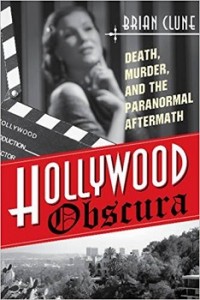 There’s nothing not to love about “Hollywood Obscura” by Brian Clune. The subtitle says it all, “Death, Murder, and the Paranormal Aftermath,” and Clune does deliver. Familiar and more obscure Hollywood deaths abound, each of them worthy of a book all their own (and many of them do already have books all their own!). However Clune does a great job of summarizing each death’s backstory, popular theories, and media coverage. Classic names like Benjamin “Bugsy” Seigel and George Reeves share book space with Thelma Todd and the Los-Feliz Murder Mansion. There may not be a lot new to discover if you’re a fan of the genre, but for someone new to the Hollywood death scene, it’s a great introduction.
 This makes “Yoga Cats” a great daily oracle and/or a fantastic yoga pose a day deck. Also, let’s be honest. It’s also just fun the thumb through the deck looking at the amusing cats. All together “Yoga Cats” makes a great, multi-purpose deck that just about anyone could find useful.
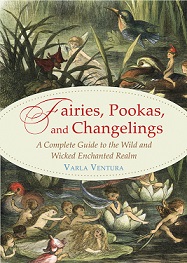 “Fairies, Pookas, and Changelings: A Complete Guide to the Wild and Wicked Enchanted Realm” is Ventura’s latest. This book is fantastic. The author’s enthusiasm for the subject matter is obvious as she relates assorted tales from folklore. I always love how she unearths the more obscure creatures for these books. In this one you’ll find fairies, pookas, and changelings (of course). You’ll also read about bonga, trolls, coblyns, brownies, and even Rumpelstiltskin! There’s even a section on methods for entering the fairy realm, an action the author does not advice taking lightly.
 “Bowls of Happiness” (by Brian Tse and Alice Mak, and translated by Ben Wang) is wonderful little book that entertains with its whimsical art and story, and it also teaches about ancient Chinese bowls. The book is part of a series which aims to introduce children to Chinese culture at an early age. The publisher recommends “Bowls of Happiness” for children aged 4 and older.
 The history of magic in Iceland is interesting as their magical and religious interactions with the influx of Christianity were more intermingling than in other regions. It makes their magical practice come across as a pragmatic, get the job done, kind of school. The first section also discusses lore and legends of Iceland’s magicians, which I loved! I adore reading about magic users and this was hands down my favorite part of the book for me. Before you get into the nitty gritty of the second half of the book, Flowers gives you a rundown of equipment you’ll probably want or need and the basic ritual format.
 And yes, I found myself thinking, yes, I could feel most of these being evoked when listening to the album. With titles such as “Serenity”, “Guru’s Grace”, “Angelic Presence” and “Always Blessed” it’s not hard to imagine. “Grace” is a soothing, relaxing journey. What I enjoy the most is that each time I listen I’ll notice something I hadn’t heard before; a smooth drone buried in the background, or a playful twinkle flitting throughout a tune.