10 Questions with Miguel Conner: Question One

Indeed you’ve read the title correct my friends, this post is only question one of The Magical Buffet’s patent pending ten question interview. Why only one question today? To put it bluntly, because I’m a jerk. Here’s why….

I got an email from Miguel Conner, host of “Aeon Byte Gnostic Radio”, the only topical and guest radio show on Gnosticism. He asked if I had any interest in his new book ” Voices of Gnosticism”, to which I responded, “Hecks yeah” (or perhaps something a bit more professional). After reading the book (So good! Buy it now!), I asked if he would be willing to do a 10 questions interview for The Magical Buffet, to which he responded, “Awwwww yeah” (or perhaps something a bit more professional).

So, how does that make me a jerk? It seems like a mutually beneficial arrangement, what jerk-like qualities are there to this? Well, the very first question I asked in the interview was, “Can you define for my readers what Gnosticism is? I’ll admit that I have a difficult time trying to come up with a brief definition that makes sense to someone who has never encountered it before.”

Miguel knew it wasn’t an easy request, and I knew it too….and it’s why I asked. See? Jerk.

However, my jerk-ish question yielded a wonderful, insightful, and entertaining response….that was two pages long. Thus far I’ve never edited down an interview, and I have no intention of ever doing that, especially to such an important answer. Consider this the background for the rest of the interview. And stay tuned because the other nine answers are not to be missed!

1. Can you define for my readers what Gnosticism is? I’ll admit that I have a difficult time trying to come up with a brief definition that makes sense to someone who has never encountered it before.

Gnosticism is probably harder to define than most religions because it’s still an academic field with vast uncharted territory; and then there is the problem of wading through the oceans of romantic misinformation that both mainstream and occult faiths have drowned the Gnostic ideology in. The Gnostics also loved to push the boundaries of both theology and philosophy–even creating parodies sometimes for their amusement—to the point they shrouded themselves in a cloud of mystery (even if they were actually very open about their belief systems). One thing you can be sure of—if the ink on a scripture was barely dry, the Gnostics would rewrite it; if a mythology or religious narrative was just spoken of, the Gnostics would deconstruct and reconstruct the plot; and if a dogma was conceived, the Gnostics would immediately reinterpret it. And often all three at once!

Stevan Davies, on our interview in Voices of Gnosticism, perhaps gives the best short answer:

“Gnosticism is about discovering the way that God has turned into you, and then realizing that if you can describe how it is that God turned into you, you can reverse the process.”

In his excellent book, The Secret Book of John: Annotated & Explained, Davies further describes Gnosticism as “developmental psychology, a descriptive Middle Platonic philosophy, and a cosmic mythology all rolled into one.”

To wit, unlike most faiths that urge one to find transcendence in the now or salvation in the future, the Gnostics contended that one had to voyage deep into inner and outer origins to either correct certain spiritual traumas or find missed doorways into the timeless dimensions. They believed the greatest origin was, of course, the Godhead. I think the Gnostics would agree with Tom Robbins who wrote “It’s never too late to have a happy childhood.” Although ancient heretics would call it being resurrected into a Christ while still in the flesh, as the Gospel of Philip states. The Gospel of Thomas also puts the Gnostic ethos in good perspective:

The disciples said to Jesus, “Tell us, how will our end come?”
Jesus said, “Have you discovered the beginning, then, so that you are seeking the end? For where the beginning is the end will be. Blessed is he who stands at the beginning: that one will know the end and will not taste death.”

Now the longer answer will be more complicated, and one has to bear in mind that there were many Gnostic schools of thought in history whose doctrines varied. Yet there is a framework that takes time to discern for those who have ears to hear and eyes to see, as Jesus often declares in Gnostic scriptures.

So put on your theological seat belts, here we go:

The Gnostics posited that there was an ultimate existence beyond Heaven and Earth, a primal consciousness that detonated in awareness and rippled out in self-understanding. This Big Bang of supernal imagination and creativity is usually referred to as the Pleroma, the Eternal Realm or the Treasury of Light. The biology of the Pleroma (“fullness” in Greek) consists of Aeons, which although anthropomorphized in their mythos are better understood as modes of thought, firing synapses, or the circuitry of a transmundane motherboard. The Aeons owned such titles as Truth, Love, Forethought, Incorruptibility, etc.

At some point, there is a glitch in the divine mind, a sort of pre-Creation Creation. The severity can fall between something cute, like the Aeon Reason falling in love with and literally bungee divine into the lower realms, to an outright cosmic cataclysm, like universe imploding during God’s first attempt as portrayed in some Kabbalistic traditions. The most prominent cosmology is the fall of the Aeon Sophia (“wisdom” in Greek). The exact details vary depending on the scripture; but she commits the sin of desire, breaking from the harmony of the divine mind and thus plunging into the Void or Chaos. Sophia either becomes pregnant with or tries to hide her negative emotions. The end result is an abortion known as Yaldabaoth or the Demiurge, which the Gnostics commonly equated with the God of the Old Testament. Sophia’s unruly spawn doesn’t waste much time after inventing time, manufacturing his own Bizarro Aeons known as Archons (Greek for “rulers”, but more akin to godlike TSA-agents with very bad dispositions). Then they cut a lot of corners and take long union breaks in order to fashion this wonderful universe The true God has lost his wisdom and wisdom is lost somewhere in a galactic Kennedy airport…who you gonna call?

Whether by the effects of the celestial mind-fart in the Pleroma or by a rescue operation hatched by Sophia to redeem herself, slivers of her essence are mingled into the material world. These Divine Spark, as they are often referred to, generally are housed in humans; although some Gnostic sects believed every living and even unliving thing contained the Divine Spark. The problem is that because of the good cop/bad cop routine of Yaldabaoth and his Archons we have forgotten our ambrosial heritage. Instead of igniting our Divine Spark in order to overcome the powers of darkness and too many astral travel regulations, we have come to believe we’re just overdeveloped apes. In Gnosticism, ignorance in all its forms is considered the greatest of sins and conditions.

From an ethereal borderland, Sophia sings to our Divine Sparks to kindle bright so that we may remember where our true home lies and how to defeat Yaldabaoth. At the same time, the Pleroma sends Aeons clothed in mammal skins–Jesus Christ and Hermes Trismegistus being two of the most exalted ones–who descend into matter to remove the shackles of ignorance with their teachings. This is gnosis, which in Greek means “knowledge”, yet is more akin to a slow-burn acquaintance with the divine mind. Gnosis is taking the Red Pill. Gnosis is discovering you’re in The Truman Show and it’s time to find a more authentic reality. Gnosis is realizing you’ve been incepted and you better get out of the dream within the dream, and into complete wakefulness.

The battle lines are drawn—Sophia, the Aeons wearing mammal skins, and awoken humans on one side; the Demiurge, the archons, and ignorant humans on the other. It doesn’t get more exciting than this!
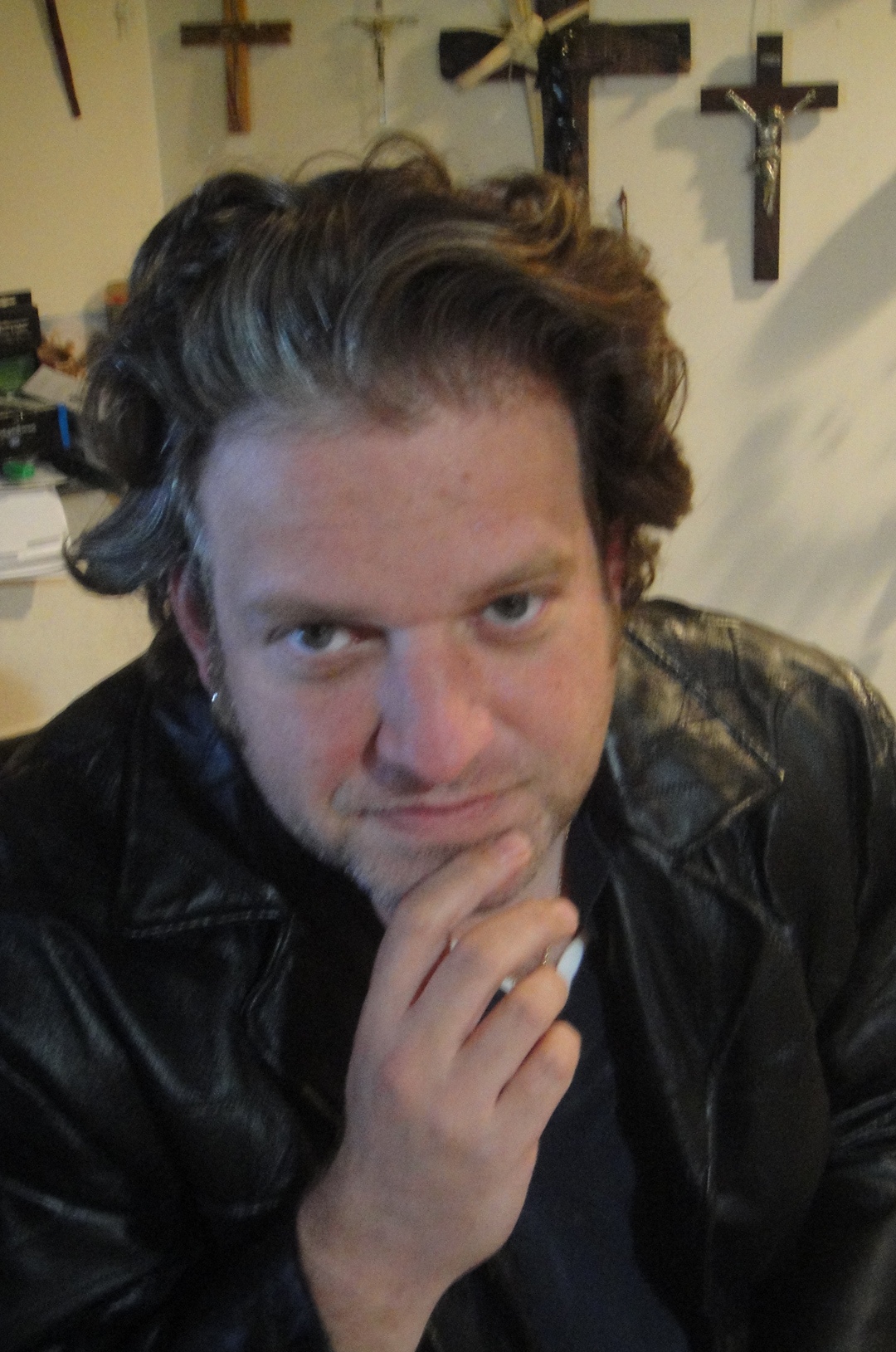
About Miguel Conner:
Miguel Conner is host of “Aeon Byte Gnostic Radio”, the only topical and guest radio show on Gnosticism and its brethren in mystical heresy, ancient and modern. He is the author of the critically acclaimed, popular, and Philip K. Dick-ish vampire epic, “The Queen of Darkness” (re-released as “Stargazer” in 2011). His articles, fiction, and reviews have appeared in such publication as “The Stygian Vortex”, “The Gnostic Journal”, “Houston Public News”, “The Extreme”, “The Cimmerian Journal”, “Examiner” and many others. He lives in the lawful dystopia of Chicago with his family, patiently waiting for the beginning of the world.

Miguel’s website is: http://www.thegodabovegod.com

Where Aeon Byte broadcasts and blog: http://www.aeonbytegnosticradio.com

Voices of Gnosticism Homepage: http://voicesofgnosticism.blogspot.com

Stargazer Novel homepage: http://stargazervampirenovel.blogspot.com

Learning about Christian Mystics

The folks over at New World Library were nice enough to send me a copy of “Christian Mystics: 365 Readings and Meditations” by Matthew Fox. Now to show you how out of touch I am with authors of spiritual texts, let me share this with you. “Matthew Fox is an internationally acclaimed theologian who was a member of the Dominican Order for 34 years. He holds a doctorate, summa cum laude, in the History and Theology of Spirituality from the Institut Catholique de Paris. Matthew Fox is author of 29 books that have been translated into 42 languages,” from www.matthewfox.org. In other words, this guy has game. However, to an under informed pop culture junkie like myself, I saw the author was Matthew Fox and immediately thought, isn’t he that actor from the television show “Lost”? I continue to bring nothing but honor to my clan. Sigh…..

So now that we’ve established that I’m a dunce, what does Fox have to say with “Christian Mystics”? Quite a bit it seems. Much the way I interpreted Julie Loar’s “Goddesses for Every Day: Exploring the Wisdom & Power of the Divine Feminine Around the World” as having a rebellious spirit, with Loar being on a mission to not let another girl grow up without knowing the power and importance of the sacred feminine, (Another book published by New World Library I might add.), Matthew Fox’s “Christian Mystics” also strikes a rebellious chord with me.

“In the West the modern age – meaning the sixteenth to mid-twentieth century – was not only ignorant of but actually hostile to mysticism. As Theodore Roszak has put it, ‘The Enlightenment held mysticism up for ridicule as the worst offense against science and reason.’ Still today, both education and religion are often hostile to mysticism. Fundamentalism by definition is antimystical or distorts mysticism, and much of liberal theology and religion is so academic and left-brain that it numbs and ignores the right brain, which is our mystical brain. Seminaries teach few practices to access our mysticism. This is why so many find religion so boring – it lacks the adventure and inner exploration that our souls yearn for.”, from the introduction to “Christian Mystics”.

Fox is on a mission to shake religious thought free of “Western religious dogma, guilt trips, and institutional churchiness” by attempting to feed the soul words of 25 different individuals he feels are some of Christianity’s greatest mystics from the last two thousand years. Readers will find quotes from Thomas Aquinas, Marcus Borg, M.D. Chenu, Hildegard of Bingen, Dorothee Soelle, Nana Veary, Martin Luther King Jr., and more. 18 more to precise. Each day is a new quote along with some of the Fox’s thoughts about it. Again, like the before mentioned “Goddesses for Every Day”, this book is meant to be a daily tool for thought and reflection. But as we already established in that review, I’m an asshole, and so just like with that book I immediately looked at day 149 which is May 29th, my birthday (again, send gifts!).

Readers today think exclusively of Jesus when they hear the words the “Son of God”. But the phrase had a life of its own before it was applied to Jesus…referring to angels (Genesis 6:2), the whole people called Israel (Hosea 11:1), and the king in David’s line (Psalm 2:7). Direct revelation extends God’s favor to people and angels; each is “the Son,” the beloved,” as Jesus became in his vision at his baptism (Mark 1:11).

Baptism, in fact, was when, according to Paul, God sends the Spirit of his Son into every believer, who cries to God, “Abba, Father” (Galatians 4:6). The believer becomes a Son, just as Jesus called upon his father; as Paul says in the same sentence, God sends his Spirit “because you are Sons.” The moment of baptism; the supreme moment of faith, was when one discovered oneself as a Son of God, because Jesus as God’s Son was disclosed in one’s heart.

– Bruce Chilton

Fox goes on to share this note following the quote:

I once met a Rabbi who said to me, “In my tradition, anyone who truly lives a life of wisdom can be called a ‘Son of God.’ For that reason I have no problem calling Jesus a Son of God.” When Christians, often in the name of proselytizing or building up empires, emphasize too much the divinity of Jesus, much is lost. We are all God’s sons and daughters, and this was the teaching of Jesus and even of Paul. But often we have missed that basic message in the Christian faith. Mystics call us back to the truth.

I feel “Christian Mystics” has much to offer a follower of the Christian faith, but also to those of us who are looking to learn more about the actual spirituality of Christianity, not just the political and academic arms of the faith that seem to dominate the mainstream conversation. Matthew Fox has offered up an interesting and engaging way to find a new perspective on Christianity.

Taking On Destiny: The Septrionic Order and the Naipes Cards

Honestly, I wasn’t sure what to expect when I started reading the copy of “Fate Fortune, and Mysticism in the Peruvian Amazon: The Septrionic Order and the Naipes Cards” by Marlene Dobkin de Rios that Park Street Press mailed to me. I had no idea what naipes cards were and I had never heard of the Septrionic Order, as I’m guessing many of you have not either. Well, this lean, mean text explains it all in amazing detail as well as offering loads of other information!

The book follows the journey of Marlene Dobkin de Rios: her start as an anthropologist studying the folk healing tradition in Peru, which in turn led her to become a fortune teller that uses the naipes cards in a shantytown in Peru called Belen, and the end where she has become an initiated member of the Sacred Mystical Order of Septrionism. It’s a journey that began in 1968 that Dobkin de Rios effectively relates in an engaging manner that’s presented with historical, social, anthropological, and religious context.

The first part of the book focuses on her time as a fortune teller and the history and use of the naipes cards. Dobkin de Rios also looks at the bigger picture. Why do the poor of Belen spend money that they can’t spare on fortune tellers? Why do her readings seem alarmingly effective? What do you learn from readings that cannot be learned from traditional testing such as the Rorschach and the Thematic Apperception Test? Dobkin de Rios offers excellent insight not only in the role of the naipes cards and the people who read them, but also into fortune telling in general.

In her time living with and studying the people of Belen, Dobkins de Rios began reflecting on destiny and how the people of Belen felt it affected their day to day lives. All the while, she was learning about the Sacred Mystical Order of Septrionism and their take on the role destiny plays in the lives of the people of Peru.

In 1968 Claudio Cedeno Araujo, also referred to as Shirky Gama, founded the Sacred Mystical Order of Septrionism. Dobkins de Rios describes Septrionism as “a contemporary mystical approach to self-knowledge and self-development, with emphasis on change. Personal knowledge of the spiritual world is primary. The goal is to control our instincts and passions. It sees as its role to provide a new view of the world and to delineate universal laws of causality. The doctrine questions the mission of human beings in society and their relationship to eternal forces. The primary focus of the doctrine is helping humankind to achieve spiritual peace and to overcome afflictions and tribulations.”

Dobkins de Rios carefully outlines the history, philosophies, and practices of the Septroinic Order and compares and contrasts both sides views on the role of destiny. I love learning about new religious movements, if you view Septrionism as a religion and not just a philosophy, and so this second part of the book was just fascinating. In attempting to learn more I found no listing in Wikipedia, a Google search just showed listings for this book, and the website Dobkins de Rios mentions (www.septrionismo.com) is in Spanish with no translate to English option. What I’m saying is, this stuff is fresh! At the end of the book you learn the author has started the first, and as far as I know of only, center for Septrionism in the United States (in California).

“Fate, Fortune, and Mysticism in the Peruvian Amazon” is a fantastic book. In this 122 page text you’ll learn about naipes cards, divination and fortune telling, the social and economic make up of Peru, the Septrionic Order, and more! I can’t recommend this book enough.

Goddesses for Every Day

New World Library was kind enough to send me a copy of “Goddesses for Every Day” by Julie Loar. Being a fan of big books that have lots of info about lots of different religions, I was excited to dig in. What I wasn’t prepared for, was to learn what a thoughtful, inspiring book this has turned out to be.

“Goddesses for Every Day: Exploring the Wisdom & Power of the Divine Feminine Around the World” features a selection of 366 goddesses that cover every religious and spiritual tradition you can imagine. Loar arranged the book to be a journey you take throughout the course of a year, and opted to arrange the deities by zodiac sign for those of you who like a little astrology with your goddesses. (For those of you still reeling or afflicted with concern about potential astrological upheaval thanks to the Minneapolis Star Tribune I’ll direct your attention to the always fantastic The Wild Hunt for their take on the issue.) At the beginning of each zodiac section of the year, Loar assigns a sacred feminine symbol and explains the characteristics of the sign and why specific goddesses were selected for that section.

Each day you’re introduced to a new goddess, Loar presents a theme along with a brief description of the goddess and the role she has played, or still plays today, and a contemplation to think about. What I found particularly interesting is that Loar suggests that not only can her book be a goddess a day book, but that “Goddesses for Every Day” can also be used as an oracle by setting an intention or asking a question and then allowing the pages to be turned at random, opening where it may, and let the wisdom of that goddess speak to you. A use that never would have occurred to me, but upon reflection makes perfect sense.

I’m not going to list every goddess in the book here for you, but to show the varied range we’re talking about here are a few: Athena, Selket, Inari, Paivatar, Ninlil, Mary Magdalene, Kwan Yin, Bast, and many more. A serious person, a respectful person, would undertake the work in the manner it was presented by the author; as a daily practice. However, I’m an asshole so I did what any disrespectful woman with this book in her hands would do….I immediately flipped to see what goddess was assigned to my birthday. Having done so, I thought I would share it with you to give you a feel for what each day holds.

May 29th (Yep, that’s my birthday…send gifts!)

Goddess: Polik Mana, Butterfly Maiden

Theme: Longevity

Butterfly Maiden, or Polik Mana to the Hopi, is a maiden who dances in the spring to bring life-giving rain to the deserts of Arizona and elsewhere on the earth. She is also a woman dancer at initiations for young Hopi girls. The Butterfly Dance takes place in August or September and is filled with beautiful color and gratitude, recalling the beauty of the butterfly as she dances from flower to flower in spring, pollinating the fields and bringing joy.

As many as one hundred pairs of girls and boys dance in the village plaza in late summer before the harvest, giving thanks for what Butterfly Maiden accomplished through her spring dance. The children are accompanied by a chorus of fathers, brothers, and uncles chanting meaningful lyrics. They pray for rain, health, and long life for all creatures as they give thanks for the blessings Butterfly Maiden gave by pollinating fields and flowers.

Contemplation: My life is a dance of joy, and happiness extends its duration.

For all the beauty, and the serene joy Loar expresses in “Goddesses for Every Day”, there is also a rebellious spirit. Loar is on a mission to not let another girl grow up without knowing the power and importance of the sacred feminine.

“Ancient Egyptians said every woman was a nutrit, a ‘little goddess’ who partook of the nature of the powerful goddess Nut. And, as you embark on your own journey around the sacred wheel, I hope you will be empowered to become the goddess you are, consciously embodying love, strength, courage, compassion, inner beauty, and receptivity. That’s the way we’ll save the world: one empowered woman at a time,” Julie Loar from the Preface of “Goddesses for Every Day”.

Interfaith Film Festival Accepting Submissions

I received an email about an event that I thought some Buffet readers may want to participate in. The folks over at The Pluralism Project have brought to my attention that the Interfaith Film Festival is accepting submissions! Submissions are due on January 31, 2011, which doesn’t leave us with much time to lollygag about. Here’s some details:

This is a showcase, a platform, and a foundation upon which to present your religion and beliefs in a good and positive light. The InterFaith Film Festival collects and shares stories about religious experiences that inform and inspire, whether religiously specific, inter-religious, secular, or otherwise.

What They Wants from You:

We invite you to contribute short films, with a duration of less than ½ hour, that inform and inspire, including: amateur or professional videos, documentaries, short stories, fables, lectures, sermons, parables, comedy, interviews, speeches, animation, slide shows, variety programs, musical performances, poetry readings, Scriptural recitations/chanting, and additionally; (you are also welcome to enter feature films longer than ½ hour, and we may post links to these films).

How the System Works:

All entries and selections are made in good Faith and on the honor system.

You can upload one or more entries through your own YouTube account, and then send us an email at ifff2011ce@gmail.com with:

1.) your notification of entry or entries to the IFFF 2011CE,
2.) the link to each entry on YouTube,
3.) your designation of the specific religious/secular affiliation or affiliations or inter-religiousness of each entry, and
4.) your synopsis, of 100 words or less, of each entry.

Instead of creating your own YouTube account, you are welcome to log into the YouTube account, “UndergroundGriot”, with the email address, undergroundgriot@gmail.com , and password, “interFaith”, and upload entries through the “UndergroundGriot” YouTube account, and proceed with steps 1.), 2.), 3.), and 4.).

All entries are screened for appropriateness before inclusion within the InterFaith Film Festival in April 2011.

For more information, contact ifff2011ce@gmail.com

You may remember that back in July I made sure to tell you about The Pluralism Project’s photo contest. If you go here you can see the winners that were announced in September.

If any readers decide to enter, definitely let the rest of us know so we can cheer you on!

(Pluralism Project Logo Designed by Than Saffel)

10 Questions with Dr. Bob Curran

1. I love your latest book “Man-Made Monsters: A Field Guide to Golems, Patchwork Soldiers, Homunculi, and Other Created Creatures”. I was amazed to find so many different types of “created creatures”! Were you surprised to learn what a vast topic this was?

I suppose the answer to this question is both yes and no. I was well aware that the notion of “created creatures” was prevalent in both folklore and history but I suppose I hadn’t realized just how prevalent. When I was asked to write the book by the publisher, I initially had of course in the back of my mind, the idea of Frankenstein and so forth but as I thought more about it, other ideas began to pop up – the Golem, homunculi etc. Maybe we’ve become so used to the idea of Frankenstein, mainly through popular culture, that a lot of these other ideas get pushed to the side – but they’re still there. The idea of being able to create life for them selves, independent of any Supreme Bring, seems to have intrigued our ancestors down the years and this has manifested itself through the folklore and traditions of groups and civilizations in the past. So it’s not really surprising that the topic is an extremely vast.

2. Your book is a reasonable, respectable 185 pages. With such an interesting and diverse topic to discuss, was it hard to not end up writing a gigantic tomb? Did a lot need to be cut throughout the editing process?

This of course leads on from my first point. Because the idea of life-creation is so fundamental to us, it has generated a great deal of speculation – scientific, literary and folkloric – all as you rightly say very diverse in both scope and nature. Therefore, when I was researching the topic I came up with a massive amount of information and I think, if I had not been limited, I could have written a book which was twice as long. Before I finally submitted it to the publisher I had to go through a fairly rigorous editing process which cut out some rather interesting material which unfortunately had to be sacrificed. And of course I should pay tribute to my publishing editor, Gina, who did a first class job as ever. There’s always the possibility of another book in order to use the edited material you know!

3. In discussing probably the most iconic of man-made monsters, Dr. Frankenstein’s monster, you tell the tale of Giovanni Aldini, Mr. Pass, and George Foster, and how their story may have influenced and informed Mary Shelley when writing “Frankenstein”. It’s such a fascinating tale, have you considered turning your section about the trio into a screen play?

I’m glad you found the story of Giovani Aldini, the tragic George Foster and the mysterious Mr. Pass – possibly one of the influences for Mary Shelley’s “Frankenstein” – so fascinating. I found it so myself, possibly because of the colorful characters and the development of the story itself. In fact I would agree with you that there is the basis there for a novel or a film – all the elements are in place. I think there have been a couple of drama-documentaries made for television but they were very short and perhaps didn’t do full justice to the subject. But yes, turning the section into a screenplay is certainly an idea worth thinking about. Judging by the response I’ve received from some of the readers it would certainly be a hit.

4. When doing research for “Man-Made Monsters”, were you surprised to find so many stories of created creatures linked to religions?

Not really. One of the most fundamental questions which man has faced down the centuries is “Who or what created me?” or much broader terms “How did life – both human and animal – come about?” For many people the answer was linked to some sort of supernatural belief. This has often been linked into the idea of a Creator Being which usually forms the basis of religious ideology. Thus in, say, Judaism and Christianity, the idea that man was created by God “from the dust of the earth” is taken as a fundamental principle and is still accepted by many people today. The question then arises – “Can man also create beings – with or without the help of a Supreme Being?” . The answer in some circles seems to have been “yes” but not as perfectly as those which the Supreme Being had created. This of course led to the fear that the beings so created would be monsters. But the root of that belief and fear lay in a religious perception and I don’t really think that the idea of life-creation can be easily disentangled from religion.

5. Do you think there is something to learn about humanity by studying our history and fascination with creating life outside of the natural order?

I certainly think that there’s something to be learned by studying these legends and beliefs which is why I think I write about them. All these old legends – not just those about the creation of life outside the natural order but also those about vampires, werewolves and other terrors – address very fundamental questions and provide an interpretation of the world which out ancestors used with the information that they had available to them. In this respect, these old stories and legends are in many respects as important as the actual historical documentation that has come down to us because they provide an insight into the thought processes of former times. This is what I try to explore in my books and I think the question is not “Do these things exist or have they happened?” but “Why do we want to believe in them or that they happened?” Many of these so-called “horrors” have continued to fascinate us both in books and film for many, many years. I think if we explore further into any of these subjects, it tells us a bit more about ourselves.

6. Out of the diverse bunch of man-made monsters you discuss in your book, which one is your favorite and why?

I don’t think I have a particular favorite since all of these beings interest me. Of course, I was intrigued by the myth of Frankenstein, simply because it’s so culturally known and I had read Mary Shelly’s iconic book many years ago. As well as that I’d watched all the old Frankenstein black and white films , and it had always intrigued me. But then I was also interested in the Golem and in the works of the early alchemists. And as I dug more deeply, researching the book, I came across more and more interesting things – ancient mechanisms and mechanical beings for example – and as I looked at them, the more my interest grew. So I suppose asking me to choose between them is like asking me to choose between my children – all have their own differences and fascinations so it’s really impossible for me to pick. If I was actually forced to, I would perhaps say Frankenstein, mainly because of the interesting story of Giovanni Aldini, but I’m not really sure.

7. One of my favorite creatures discussed in your book is the Golem. Can you tell my readers a little bit about them?

The Golem springs from Jewish tradition and folklore. Once again it addresses the question – “Can Humanity itself create life?” – which taxed certain of the early Hebrew thinkers. The answer was that Mankind might be able to create life but that it would do so imperfectly. Even God, it was suggested, had created an imperfect prototype – Adam Kadmon – before He actually created Adam. The Golem was a large man-like figure which was created out of clay but had only a limited intelligence. It could only be created by the holiest rabbis, using a formula which had been learned directly from God Himself, through the secret Book of Creation (the Sefer Yetzirah). Part of the formula was to write the word or a number of signs (aleph) emet (meaning “truth”) on its forehead or on a clay tablet which was placed under the figure’s tongue and this would bring it to life. In some cases the word was supposedly written in the rabbis own blood. However, it should be stressed that the word alone would not give life but the accompanying rituals and observances. In order to destroy the Golem, the first aleph was removed leaving met (meaning “dirt” or “inert matter”) whereupon the Golem would crumble and return to dust. A number of extremely holy rabbis allegedly created Golems but not one was really able to control them properly. The most famous Golem was said to have been created by Rabbi Judah Loew ben Bezalel, the Maharal of Prague (c1520- 1609). The creature was created at a time of great Jewish persecutions by Christians in Prague by Rudolph II, King of Bohemia and Holy Roman Emperor and was designed to protect the Jewish community. However, the Golem became too powerful and began to develop a consciousness of its own (as some of them were said to have done) and began to attack the Christian quarter of the city, killing many Christians there. The Marharal was forced to confront the creature on the steps of what is now the Old New Synagogue in Prague. According to one version of the tale, Rabbi Loew tricked the Golem into either bowing down or opening its mouth to sing Psalm 92 (which was being sung when the Golem arrived) and removing the clay tablet. However the Golem did not return to dust but rather remained inert and was stored in the geniza (a place where religious documents are kept) of the synagogue. It is supposedly there to this day. There are many stories around it such as one that in World War II it attacked Nazi soldiers who were going to destroy the synagogue. Indeed today the Chief Rabbi of Prague, Karel Sidon, receives hundreds to requests to visit the geniza of the Old New Synagogue to see if the Golem is there – all of which are refused. However, the Golem is still a figure of Jewish folklore and one which I, like yourself, found particularly intriguing.

8. Swamp Thing: Alex Olsen, Alec Holland, or an elemental entity that mistakenly thinks it’s Alec Holland?

Like yourself, perhaps, I was a fan of DC Comics – I still maintain a great interest in them – and picked up on the Swamp Thing in the early days. I haven’t been following it recently though, although I think it’s still going in various forms. It’s an intriguing entity because it looks at a number of issues. As you quite rightly point out, there were all sorts of entities which were believed in many cultures to lives in the various swamps and marshes of several countries. So it could be places in one of those categories. There were, however, too creatures which lived particularly in parts of America during the 1800s which were said to be the spawn of swamp creatures and runaway slaves. Some were said to be genetic mutations caused by inbreeding amongst settlers in the deep swamplands. Such beings were supposedly prevalent in the Louisiana and Florida swamps and were supposed to attack travelers who came through their area. Later, as cultural referents changed, these became the supposed results of scientific/genetic experimentation which are said to be still there. Even in places such as Michigan and in the Kirtland area of Cleveland, Ohio we find legends of the “Melon Heads” which are said to be the result of experimentation . So these elements also feature in the idea of the Swamp Thing. When we first talked about Man Made Monsters, I talked with the publisher about including such things, even Dr. Jekyll and Mr. Hyde but it was agreed that we would keep it to easily identifiable creatures for this book. But you never know, there may be another book on the subject further along the line and then I may get round to tackling the iconic image of Dr. Alec Holland.

9. What’s your next project my readers can look forward to?

We’re looking at a number of options at the moment. This year I’ve produced about four or five books – some in America, some elsewhere and in a number of languages – and I’m taking a little bit of a breather in the run-down to Christmas and take a bit of time with my family. I’m also doing some comic work – I used to work scripting comics – and book design, so I’m not really idle. But I’m still talking about a new book, particularly with New Page, but I don’t want to say too much as the ideas are still being considered. But one thing I will say – here will be a new book out next year and I think I will be part of an anthology which is coming out from New Page. I’ve been asked to contribute and the contribution is already written. So watch this space!

10. Parting shot! Ask us here at The Magical Buffet any one question.

O.K. Is there really a Santa Claus?

Absolutely, because I believe in justice, mercy, and duty.

Perhaps I should explain, my answer is informed from my reading of “The Hogfather” by Terry Pratchett. In it Death and his granddaughter Susan work together to save the Hogfather or else the sun would not rise. Pratchett’s Death (who speaks all in capital letters) starts:

      WHAT WOULD HAVE HAPPENED IF YOU HADN’T SAVED HIM?
      “Yes! The sun would have risen just the same, yes?”
      NO.
      “Oh come on. You can’t expect me to believe that. It’s an astronomical fact.”
      THE SUN WOULD NOT HAVE RISEN.
      She turned on him.
      “It’s been a long night, Grandfather! I’m tired and I need a bath! I don’t need this silliness!”
      THE SUN WOULD NOT HAVE RISEN.
      “Really? Then what would have happened, pray?”
      A MERE BALL OF FLAMING GAS WOULD HAVE ILLUMINATED THE WORLD.
      They walked in silence for a moment.
      “Ah,” said Susan dully. “Trickery with words. I would have thought you’d have been more literal-minded than that.”
      I AM NOTHING IF NOT LITERAL-MINDED. TRICKERY WITH WORDS IS WHERE HUMANS LIVE.
      “All right,” said Susan. “I’m not stupid. You’re saying humans need…fantasies to make life bearable.”
      REALLY? AS IF IT WAS SOME KIND OF PINK PILL? NO. HUMANS NEED FANTASY TO BE HUMAN. TO BE THE PLACE WHERE FALLING ANGEL MEETS THE RISING APE.
      “Tooth fairies? Hogfathers? Little – “
      YES. AS PRACTICE. YOU HAVE TO START OUT LEARNING TO BELIEVE THE LITTLE LIES.
      “So we can believe the big ones?”
      YES. JUSTICE. MERCY. DUTY. THAT SORT OF THING.
      “They’re not the same at all!”
      YOU THINK SO? THEN TAKE THE UNIVERSE AND GRIND IT DOWN TO THE FINEST POWDER AND SIEVE IT THROUGH THE FINEST SIEVE AND THEN SHOW ME ONE ATOM OF JUSTICE, ONE MOLECULE OF MERCY. AND YET – Death waved a hand. AND YET YOU ACT AS IF THERE IS SOME IDEAL ORDER IN THE UNIVERSE BY WHICH IT MAY BE JUDGED.
      “Yes, but people have got to believe that, or what’s the point – “
      MY POINT EXACTLY.

So yes Dr. Curran, there absolutely really is a Santa Claus.

About Dr. Curran:
Dr. Bob Curran was born and raised in a remote mountain area of County Down in Northern Ireland. Leaving school at 14, he worked in a number of jobs including gravedigger, lorry driver, professional musician, journalist, and even as a scripter of comics. He traveled extensively in many countries before returning home to settle down and work in the Civil Service. Later, he went to University where he obtained degrees in education, history, and educational psychology, whereupon graduating as a teacher.

Although he still teaches, much of his work is now regarding community development within Northern Ireland. In this capacity, he acts as a consultant to a number of cultural bodies within the Province. He deals with cross‐border matters with the Irish Republic, working for the Office of the First and Deputy First Minister of Northern Ireland.

Sitting on a number of cultural committees, Curran has also worked directly as a governmental advisor and as a consultant to several bodies which have been set up by other governments. He also acts as a consultant to a number of tourism companies, giving lectures and conducting tours on many topics of local and national Irish history.

As a writer, Curran has been extremely prolific and has approximately 38 books to his name mainly on the subjects of history and culture. In addition, he has a number of works published in other languages including Japanese, Italian, French, Portuguese (Brazil), Spanish (Spain and Mexico), German, Urdu and Latvian. He has also served as a contributor and consultant to various radio and television programs both for private companies and national networks.

Married and with a young family, Curran continues to live in Northern Ireland on the picturesque North Derry coast, not far from the celebrated Giant’s Causeway.

To see all of his work available from New Page Books, visit their website.

10 Questions with Benjamin E. Zeller

1. To start my readers off on level ground, can you tell them what you mean when you say “new religious movement”?

Generally, a new religious movement (abbreviated as “NRM”) is a religion that has formed in the past 50-60 years. That is a moving target, which means that some groups that were NRMs when scholars first coined the term in the 1970s are really stretching the limits of the word “new” by now. The Nation of Islam, for example, is often considered a NRM, but it was founded in 1931!

Scholars tend to use the term “new religious movement” where many other people would say “cult.” That’s because cult is a pejorative and subjective term. Who says they belong to a cult? Southern Baptists consider Mormons a cult. (But some people consider Southern Baptists a cult too!) The Hare Krishnas, who I study, are often called a cult here in America, but in India they are seen as a traditional religious denomination.

2. How did you end up focusing on these new religious movements instead of more established religions like Judaism and Christianity?

New religions are bellwethers—they are fast-changing and usually led by self-proclaimed prophets or seers who claim to speak directly for the divine. This means that they can respond quickly and straightforwardly to the big issues of the day. Established religions take a longer time to do the same. The vast majority of sociological studies of the past 40 years have shown that the people who join NRMs are normal people. What appeals to them and drives their religious questioning are the same issues that percolate through wider culture. NRMs are the cutting edge, so to speak.

3. What made you decide to examine new religious movements with regards to their relationships with science?

I think that science (and its daughter, technology) is one of the most powerful forces in the modern world, along with religion. Everyone today needs to deal with science, whether they want to or not. And when I looked at NRMs, I found that they all talked about science, often making science a central issue in their theologies.

More personally, I’ve always been interested in both the study of science and religion. I’ve been a science geek since I was a child, and obviously religion is something I’ve decided to study professionally. For me, it was an obvious choice.

4. What can we learn about religion and science from what you discovered in researching these new religious movements’ thoughts on the subject?

I was just teaching a class recently on science and religion, and I started the class by asking the students what came to mind when they heard the phrase “religion and science.” Most of the students said that they thought of controversies and conflicts. But that isn’t the reality on the ground. From my study of new religious movements, what I found was creative tension, not conflict. This creative tension leads to a number of very inventive ways to rectify science and religion in those NRMs. Oftentimes (but not always), creative people and groups have found ways to deal with even sticky issues like evolution or the age of the earth. That’s not to say that there aren’t heated disagreements and conflicts over particular issues. But it’s much more complex than what we might expect from listening to sound bites.

5. The three new religious movements you discussed in your book “Prophets and Protons” were The International Society of Krishna Consciousness, Human Individual Metamorphosis (Total Overcomers Anonymous), and Holy Spirit Association for the Unification of World Christianity; better known by most as Hare Krishnas, Heaven’s Gate, and the Moonies. Many label these organizations as cults, do you find some people become confrontational or offended by your study of these groups?

Well, some members of these groups are offended at being in the same category as the other ones! Remember, no one believes that they belong to a cult. I’ve had Hare Krishna members smirk when I say that I am studying the Moonies, and vice versa. But generally most people have understood that these groups are worth studying. I’ve given all sorts of talks on my research, not just at scholarly meetings but at bookstores and churches and such, and I’ve yet to have anyone tell me that they are offended by my work or that they disagree with my basic premise that controversial religions should be taken seriously and studied.

If I may make a comparison, it is like studying Creationists. One can study why people believe in Creationism without promoting or endorsing their specific religious positions. In fact, I think that these sort of non-mainstream groups need to be studied. We need to understand what power these ideas have, and why people find them attractive. Simply dismissing the odd or controversial is tantamount to the metaphorical ostrich sticking its head in the sand.

6. I hadn’t realized until reading your book that the Heaven’s Gate website was still up on the internet. Personally, I found it quite unnerving to Google “Heaven’s Gate” and BAM! Here’s essentially a website of suicide notes. Do you find it hard when studying a group that essentially killed itself off (literally and figuratively) to separate the academic research from the emotional response to some of what you learn?

Yes, it is difficult. Have you watched the “exit videos”—effectively video suicide notes? (You can find them at http://www.youtube.com/user/1RiverofAngels ) I disagree strongly with the choices they made. But I think it is very important to ask why they made those choices, and to recognize that they were in fact choices. Those suicide notes and videos are so disturbing because the members of Heaven’s Gate really believed in what they were doing, and they come across as rational people. If they were raving lunatics, it would be easier.

I never knew any of the original Heaven’s Gate members (though I did interview a former member, Rkkody, before his suicide a few months after the main ones). That being said, I look at my research as my own way to deal with the emotional response of their actions. We need to understand why they did what they did.

7. I was surprised to find that when choosing to study new religious movements and their relationships with science that Scientology didn’t come up. With its founder having been a prominent science fiction author, the groups’ use of things such as E-Meters and a sizeable internet presence, and with the word “science” almost literally in their name, it would seem like a match made in research heaven. How did Scientology not make the cut?

They were part of the original research, but they denied me access to their archives. My research is historical, and I need full access to their historical and current materials to do my work right. Scientology is at its heart an esoteric tradition, meaning that you need to be an insider to be allowed full access to the materials. Since I had a wealth of sources on the other groups, and my research on Scientology was so limited, I decided to drop them from the final project. I hope one day they open all their religious sources to scholars. That is what the Hare Krishnas and Unification Church have done.

8. The Magical Buffet are big Flying Spaghetti Monster fans! Is the Church of the Flying Spaghetti Monster and its adherents, the Pastafarians, a new religious movement?

Depends on your definition of religion! If you define religion as belief-based, then I am not sure. Do people really—I mean really, really—believe the faith statements promulgated by the Church? Most Pastafarians I’ve met don’t. On the other hand, there are other ways to define religion. Religion can be based on shared values, or community, or self-identification. In those regards, the Church of the Flying Spaghetti Monster is a new religious movement.

9. I greatly enjoyed “Prophets and Protons: New Religious Movements and Science in Late Twentieth Century America”. What’s your next project I can look forward to?

I’m working on two projects. One is a longer study of Heaven’s Gate. The group fascinates me, and I am always looking for a new angle to understand it. The new project tries to understand the relationship of Heaven’s Gate to wider currents in American culture, like conspiracy thinking and apocalypticism. In that way—connecting a controversial group to wider culture—it is a lot like the first book, just more focused on this one group.

The other project is on science as a religion. There are several groups and people I could look at, and I am still mulling over the options. One possibility is to look at social/scientific movements like environmentalism as a new religion. The other is to look to how working scientists engage and respond to religious ideas. Regardless of which direction I take with the research, I will continue to study the nexus of science and religion.

10. Parting shot! Ask us here at The Magical Buffet any one question.

How did you decide on the name “Magical Buffet”?

Ah, that’s right, you weren’t around here for the original Magical Buffet. Initially The Magical Buffet was a monthly online e-zine that focused entirely on religion and spirituality. I became inspired while watching the movie “Big Trouble in Little China” for probably the hundredth time, if not more. A character in the movie, Egg Shen, says, “Of course the Chinese mix everything up, look at what we have to work with. There’s Buddhism, Confucianism, and Taoist alchemy and sorcery. We take what we want and leave the rest…. Just like your salad bar.” That had me realize a lot could be gained by offering up articles introducing readers to as many different ideas as possible, enabling them to “Take What They Want, and Leave the Rest”.

However, I had other interests; music, food, politics, and I realized that those were also communities and that I would have even more fun and potentially more could be gained by my introducing all these different communities, spiritual and otherwise, to each other so The Magical Buffet still seems like an appropriate name for the site. And let’s face it, it’s a cool name.


About Benjamin E. Zeller: Benjamin E. Zeller researches religion in America, focusing on religious currents that are new or alternative, including new religions, the religious engagement with science, and the quasi-religious relationship people have with food. His book, “Prophets and Protons: New Religious Movements and Science in Late Twentieth-Century America” (NYU Press, 2010) considers how three new religious movements engaged science and what they reveal of broader culture. He holds a Ph.D. from the University of North Carolina, and a Masters of Theological Studies from Harvard University. Zeller serves as Assistant Professor of Religious Studies, Coordinator of the Religion and Philosophy Major, and Director of the Honors Program at Brevard College, a private liberal arts college in North Carolina’s Appalachian mountains.

Teachings of the Santeria Gods

“Teachings of the Santeria Gods: The Spirit of the Odu” by Ocha’ni Lele is an exploration of the patakis (an oral tradition of stories) tied to specific results achieved when using the sixteen-cowrie-shell oracle known as the diloggun in Santeria. This combination of divination and religious observance is a fascinating system I’ve never encountered before, and the patakis related to it give an insightful look at the stories that inform practioners of Santeria.

How does it start? Sixteen consecrated and modified cowry shells are cast by a trained priest with the mechanically opened side of the shell having a value of zero, whereas the natural mouth has a value of one. The numbers are added up and the result corresponds to a particular odu which is a divination pattern and the orishas (spirits) use this odu to speak to the priest. Thusly you have 16 odu that are linked to 16 orishas starting with one mouth, Okana, and ending with 16 mouths, Merindilogun.

However, this book isn’t about divination, it’s about the stories tied to the orishas that are generally passed along orally from priest to apprentice, parent to child, village to village, and across oceans. The stories embody every facet of the human condition: love, death, hope, violence, compassion, devotion, sex, greed, desire, despair, and more. Much like those consulting the diloggun, the orishas have lives, or have touched lives, filled with successes, failures, quests, and hard lessons learned.

There are stories that made me smile (and perhaps get a bit misty eyed) like the story “How a Man and a Woman Found Love” connected with Irosun who is linked to the odu of four mouths. There are also tales of intrigue, such as “The Story of Elegede” which is tied to Obara, connected to the odu of six mouths and “King Olushola Make Edo” which is connected with Ogunda, who is linked to the odu of three mouths. Also there are many stories explaining why things are the way they are, like “Why the Rooster Was First Sacrificed”, “The Creation of Copulation”, “How the Crocodile Became Powerful”, and “The Story of the Cat and the Rat”.

Loaded with stories that provide entertainment and unique perspectives, “Teachings of the Santeria Gods” is an excellent book for those looking to learn about Santeria or African folklore. I enjoyed it immensely.

10 Questions with Grace Schireson

1. I won’t start by asking, “What is Zen?” I’ve been lead to believe that by asking, Zen will already be lost. So instead, could you explain to my readers the difference between Zen and other branches of Buddhism?

What isn’t Zen? It is the branch of Buddhism that emerged after Buddhism wed Taoism in China. It is said that Zen is not dependent on words or scriptures (as many other Buddhist practices are),and that it is a direct pointing to Buddha as one’s own life. The word Zen actually means meditation. The basis of all Zen practices is meditation rather than studying Buddhist scripture or belief in a system. In Zen you are expected to meditate and just get it with little explanation of what the “it” is.

2. Until seeing your book on the shelf in a bookstore I hadn’t realized that you really don’t hear that much about women in Buddhism, and even less when discussing Zen. How is it that women show up so infrequently in Buddhist texts?

Buddhism emerged from Hinduism. Hindus believe(d) that to be born a woman was a punishment for poor behavior in a previous lifetime. Since you have been doomed to the lower rungs of humanity as a woman, it is hard to understand why/how you might have anything to say. While the Buddha and his emerging religion tried to establish themselves as less superstitious and more egalitarian, considering women as chattel was part of the surrounding culture in India. In China, there were different beliefs about women, but they boiled down to the same treatment—women belonged to their fathers first, their husband’s second, and their son’s third. If they missed having sons, they belonged to their brothers. Because women were historically seen as lesser beings across Asia (and pretty much all over the world), much of this treatment crept into the Buddhist religion. It was difficult for women to get an education, to travel or to be respected as the leader of a community. Buddhist women who did manage to enter training and succeed in teaching a community were later erased by misogynistic monks establishing an all male lineage. In Zen “lineage” became the measure of authenticity. All Zen teachers claimed to trace their teacher’s credentials back to his teacher’s credentials and so on back to the Buddha. This “lineage” myth erased the contributions of women, and coincidentally, established beyond a doubt that men could fully reproduce or single handedly father men, eliminating a need for women at all.

3. What provoked your interest in seeking out the stories of the women who practiced Zen?

When I became ordained by my male teacher I realized I had no idea how to embody the job of Zen priest. There were a few Western teachers for me to emulate, but unlike the rich literature describing the Zen patriarchs, there was almost nothing suggesting the archetype of the female Zen master. Note that the word “master” itself is a gendered word. There is no equivalent engendered female term for female “master” or “mastery.”

4. What can modern Zen practitioners learn from Zen’s female ancestors?

What we call Zen in the West is entirely based on the teachings developed by Asian male monastics. It is as if we were to base the science of developing team spirit entirely on the techniques of Army boot camp. Army boot camp is just one way of training young men, it does not represent a thorough or complete synthesis of motivational training. Currently, the way Zen is taught is from the perspective of male monastic training. It does not include training from married teachers about integrating spiritual training and family life. It does not include training on how to make use of spiritual development in the world of work outside the monastery gates. Currently in the West, more than 50% of Buddhist practitioners are women, and more than 50% of Buddhists adults are married. Wouldn’t it be wise to find relevant training experience? Many female Zen ancestors had been married prior to entering training, many of them practiced within a family setting, and often the female Zen masters needed to support themselves financially through work in the community. This makes the training and teaching of female Zen masters applicable to the style of Buddhism that is evolving in the West with many Zen Buddhist teachers married and working in the world and Zen students and practitioners doing the same.

5. Is there anything that women in particular, Zen practitioners or not, can learn from these women?

The most important learning is the Nike slogan: “Just do it.” How do we tap into our own wisdom and power and not be submerged by only serving as the caregivers or beauty queens we are often programmed to become? We also cannot get lost in anger or woundedness about the fact that women are not given full opportunity. We need to note that this unfairness towards women is still sometimes true, get our shit together and accomplish what it is that matters to us. Throughout history women have used ingenuity and endurance to accomplish amazing things, this should be no less true for those of us today who have both legal and economic power that were unavailable just 100 years ago.

6. Your book, “Zen Women”, is filled with all sorts of fantastic stories about early female Zen practitioners. Do you have a personal favorite?

I love Otagaki Rengetsu who lost husbands, children, family and her home by the time she was 30 years old. After all those losses, she maintained her spiritual practice as her basis, and she transformed her losses into beautiful art. She did not repress her pain, or use positive thoughts to banish it; instead she contained her suffering within the compassionate, concentrated and flexible mind that she generated with her Buddhist meditative practice. This Buddha mind absorbed and transformed her pain suffering from which she produce beautiful poetry that expressed her losses in the most subtle tones. By not fully articulating or describing her own personal story, she invites us to join her where we accept and allow ourselves to be touched and understood. For example in a poem to her children who had died so young she wrote the following poem:

To My Beloved Children

My final message:
Flowers blooming
With all their heart
In lovely Sakurai village.

In this poem she names an historical site, Sakurai village, where a samurai lord said good-bye to his samurai son as they went off to die in battle. And yet, now the place is made lovely by each person—whether infant or samurai—blooming completely as him/herself within the web of human love and loss. All we can do is be completely ourselves, and add our presence, our brief flowering scent to the village which becomes beautified by our being.

7. Since women have sometimes had an awkward history within Buddhism, I’m curious if you’ve seen any criticism of your focus on Zen women?

Yes, there has been criticism, but not from the direction of trying to redeem Buddhism’s past mistakes. I have seen two critical reviews by readers, who both said they had not read the whole book; both criticized the view as “not Zen enough.” Interesting criticism from a layman to a Zen Abbess (me). One critique from a woman, suggested that I had not sufficiently honored the traditional heroic Zen women. Obviously, she did not read the book. I did not spend 10 years of my life studying and writing about these women because I wanted to devalue their contribution.

8. In “Zen Women” you discuss “The Appearance of the Zen Zombie” which discusses what I think may be a common belief about how Zen practitioners, male or female, behave. Can you explain what a “Zen Zombie” is for my readers?

The Zen Zombie is a Zen student or a Zen teacher or practice leader who has decided to eliminate or repress feelings in the interest of trying to be like a Zen person. They walk around in Zen robes, at Zen centers, trying to look beyond feelings and holier-than-thou. Obviously, this is an occupational hazard for all religions. If you want to know what the opposite iteration of Zen practice is, refer back to question 6 and reread how Rengetsu integrated—rather than repressed—painful feelings.

9. Last question, many of my readers spend time pondering how to survive the inevitable zombie apocalypse, but I don’t think any of them have considered a possible Zen Zombie uprising. Any survival tips?

I believe the Zombies have reached their peak strength and are on the decline. But just in case, if you meet any Buddhists who say that feelings don’t matter, and there is NO self, women should run immediately to their nearest chocolate shop or head for your favorite clothing shop for a quick dose of self affirmation. Men may instead select from the following options: sports, watches or cars.

10. Parting shot! Ask us here at The Magical Buffet any one question!

How do you balance the buffet—inclusion of many spiritual options– with encouraging selection of one practice so that spiritual seekers may develop depth and commitment?

Honestly, I don’t. That said, I don’t do anything to hinder or dissuade any of my readers from choosing one practice to explore in depth. I’m fairly certain that many of my readers already have committed to a singular practice, and really only read The Magical Buffet for the rum jokes.

About Grace Schireson:
Abbess Myoan Grace Schireson is the founder and head teacher of the Empty Nest Zen Group, Modesto Valley Heartland Zen Group, and the Fresno River Zen Group. Grace is a Dharma heir in the lineage of the great Shunryu Suzuki-roshi—founder of the San Francisco Zen Center. Grace has practiced Zen meditation for more than 35 years and is author of the book “Zen Women: Beyond Tea Ladies, Iron Maidens and Macho Masters”. In the United States she has undergone her Soto Zen training with Sojun Mel Weitsman-roshi of Berkeley Zen Center—from who she received Dharma transmission from in 2005. Grace also has trained in Rinzai Zen in Japan under Keido Fukushima-roshi, retired abbot of Tofuku-ji Monastery located in Kyoto. She has taught classes on Zen throughout the United States and has also been trained as a clinical psychologist—teaching Asian methods of quieting the mind using techniques suitable for Westerners.

To learn more about Abbess Schireson and Empty Nest Zen, visit their website.

It was a Dark and Stormy Talk Like a Pirate Day

Avast Matey! Today is International Talk Like a Pirate Day! International Talk Like a Pirate Day (ITLAPD) is a parodic holiday created in 1996 by John Baur (Ol’ Chumbucket) and Mark Summers (Cap’n Slappy), of Albany, Oregon who proclaimed September 19 each year as the day when everyone in the world should talk like a pirate. For example, an observer of this holiday would greet friends not with “Hello,” but with “Ahoy, matey!” The holiday, and its observance, springs from a romanticized view of the Golden Age of Piracy. The holiday is a major observance in the religion of the Flying Spaghetti Monster. (Thank you Wikipedia!)

As a fan of ye olde Flying Spaghetti Monster and his salty Pastafarian followers, rougish rum drinking pirates, and well rum in general, I thought in honor of this high holy day I would share with you my personal thoughts, reflections, and recipe for the delightful rum cocktail, The Dark and Stormy.

I had my first Dark and Stormy on a Royal Carribean cruise to Bermuda, a trip I’m soon taking again I might add. In fact, it was that trip that really developed my interest in all things rum, and helped me become the rum swilling lass that I am today. Props to all the Jamaican bartenders that insisted on me trying every “drink of the day”!

A Dark and Stormy is an incredibly simple drink to make, so like all simple recipes it’s more about the quality of ingredients than anything else. All you need for a Dark and Stormy is a glass, a shot glass (if you’re prone to measuring like I am), ginger beer, and a spiced rum. That said, there are infinite variations and pairings that can be made.

For instance, you could go with ginger ale instead of ginger beer like these guys and get a servicable Dark and Stormy, but to get the best Dark and Stormy I heartily recommend Reed’s Ginger Beer. This gives your Dark and Stormy the tangy bite like the ones I had in Bermuda.

Reed's Ginger Beer's Lesser Cousins

Now it’s time to address the rum portion of this mix. In my opinion, if you enjoy rum you should have a bottle of Captain Morgan’s Private Stock on hand. It’s the go to workhorse rum for me and my borderline alcoholic friends. It makes a fine rum and coke, and when mixed with Reed’s Ginger Beer, a respectable Dark and Stormy.

Captain Morgan's Private Stock and Reed's Ginger Beer

I would be remiss in my duties as Dark and Stormy ambasador to International Talk Like a Pirate Day if I didn’t mention the existence of Kraken Black Spiced Rum. With it’s vintage appearing bottling and thematically kick ass name, it could easily be viewed as a must for those partaking in ITLAPD revelries. I’m not going to lie to you, tasted straight, Kraken can clean the barnacles off your poop deck if you get my meaning. However, when cut with, I mean when mixed with a nice cold Reed’s Ginger Beer, it makes a fine Dark and Stormy. No pirate would make you walk the plank for serving it this way.

Kraken Black Spiced Rum and Reed's Ginger Beer

Alas, it is time for the big reveal. How does Rebecca, fan of all things rum, make her personal Dark and Stormy? Behold!

Everything You Need for Rebecca's Dark and Stormy

Indeed, in a household containing no less than twelve different rums, some costing more than $50 a bottle, at the end of the day I choose the humble and inexpensive Castillo Spiced Puerto Rican rum for my Dark and Stormy. Above you’ll find everything you need for Rebecca’s Dark and Stormy.

Fill your pint glass with ice. Add a shot, and perhaps an extra splash, of Castillo Spiced Puerto Rican rum. Then fill the rest of the glass with Reed’s Ginger Beer. You’ll get a refreshing, tangy, rum drink with a little bit of bite. A Dark and Stormy is a great summer time cocktail, a refreshing alternative to the standard rum and coke, and the absolute best way I can think of to celebrate all things pirate.

If any of you guys give this a try, let me know how it goes! And if anyone has their own preferred recipe, definitely share it with us!