
By Cyndi Dale
Several years ago, my son Gabriel was brainstorming ways to make money. Apparently he didn’t think he would receive enough for Christmas—not an amount adequate to purchase that mighty amazing electric guitar, anyway. And so, he was establishing various tasks by which he could fleece mother of as much money as possible. How about twenty dollars for a flushed toilet? How about another hundred to clean it—just the top, of course? Upon hearing too many refusals, he chose another recourse. A threat.
“Mom, if you don’t let me make money, I’ll become a lawyer when I grow up.”
I think the idea was that he could then sue me for everything I was worth.
Every January, the turn of the calendar is synonymous with the word “pause.” Most of us want our upcoming year to differ, at least in part, from the previous one. So we set resolutions.
A resolution is usually defined as a goal or a promise. We decree that this year, we’ll lose weight, meet a mate, break up a bad relationship, or exercise. That’s great—but we have to remember that another definition of the word is “the process of resolving something.” We can’t create the future until we embrace, reflect upon, and with kindness, release the past. And maybe, we need to make a few changes.
Most of us review the past as if flipping through the pages of a book once read, stopping at the turned-down corners to peruse the most important moments, lessons, and events. Some storylines are painful. Life is tragic. It is full of undeserved pain, hurt inflicted by others on us; and even worse, harm we’ve caused to others. Some narratives are happier. Life is comedic, glistening with the serendipitous. We seemingly can’t—or don’t know how—to have one without the other. If we really desire a better future, however, we have to be a little more intentional than simply read the highlights. We have to dig.
We have to dig for the selves we’ve buried.
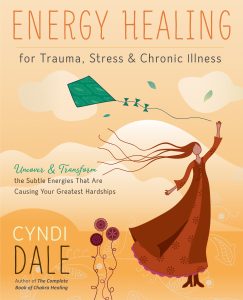 We lose so much of ourselves on the way. That five-year-old who was hated by her mother? That ten-year-old who was yelled at by dad? That first real life partner, the one who cheated on us? We’ve left so many ages of ourselves behind, thinking we’re better off without them, when the truth is that whatever—whoever—we fail to bring “up to date” continues to run our lives. That five-year-old will continue to attract relationships based on hate. The ten-year-old has either become an alcoholic or partners with them. And broken hearts just keep on breaking—or breaking the hearts of others, don’t they? If someone hurts us, we’ll either hurt others the same way or become vulnerable to people who are all too happy to scald us with the same hot water.
New Year’s Eve is a perfect time to pay tribute to who we are and have been by listening to the “village within,” the various selves that have been hurt, damaged, confused, or treated with unrecognized kindness and civility. Taking an hour or two for quiet reflection is a good start. Sit in silence or listen to calming music and ask the unremembered selves to appear. There might be quite a queue.
Let each present him- or herself and ask what occurred that made them feel like they had to remain hidden in the past. Most of the time, your inner selves will present detrimental or abusive memories. Sometimes, however, they’ll hold up a joyful event, one you’ve forgotten to remember and so, are having a hard time repeating. As the adult in the process, treat the inner self in the way you wished an authority would have. If you are confused, ask your higher self to assist. This is the part of you that knows it is connected to God. Or ask the Divine to help more directly. Finally, remember to reflect on the word “change.” Are there any actions you should take to complete this healing? To alter the present so you can forge a more fruitful future?
We don’t always have to walk the road of the distant past. Sometimes more recent inner selves require a listening ear. Maybe we forgot to say, “I’m sorry,” to someone we love. Maybe we need to say the same to our self. Maybe we need to pepper the universe with more thank you’s.
Peering through the looking glass backward is only half of the New Year’s blitz. Once we’ve jettisoned the anchors to the past, we have to decide where we’re going to head. Why set sail without a course?
Most of us confine our goal setting to New Year’s Eve, but it’s not a process to rush. Pause. Take time to savor your desires, one at a time. Ask your heart if an objective is really all that important or if you’d rather spend the energy a different way. We might want to buy a new house, but do we need to? Is the outcome worth the effort? Might we be better off spending more time with our kids or taking up a hobby? There’s that negligent ten pounds. Do we really want to pretend that we’re going to shed them or would we rather work harder and buy a new wardrobe? If you don’t get an immediate answer, meditate on the subject for a few days. Let the process unfold the outcome.
It’s also important to examine the motives for our goals. It would be a sad world, for Gabe to become a lawyer just because he’s mad at his mother. The truth is that people we set objectives for the wrong reasons all the time and then live in regret, yet another way of hiding in the past. That potential artist? The writer? The super-duper accountant or horseback rider or business consultant? He or she is still secreted in a corner of our hearts while the adult self cloaks itself behind medical garb or apron or cowboy boots or some other attire that doesn’t suit us.
Above all, remember the “two sides” to resolutions. There’s the part that concerns the past and the part that regards the future. In the middle, is our divine self—the self that can be contacted in any pause. Between heartbeats. Between breaths. Between thoughts and actions. We can visit this place, this space within ourselves, once a year, like most people do. Or we can decide to live there.
Maybe Gabe won’t grow up to be a lawyer after all.

About Cyndi Dale:
Cyndi Dale is an internationally renowned author, speaker, and energy healer. She is the author of 27 books on energy medicine, intuition, and spirituality.
www.cyndidale.com
Shop your local indie bookstore <---This is an affiliate link to IndieBound, which supports independent bookstores throughout the United States. If you use this link to purchase the book, I will make a small commission at no additional cost to you.
Do you enjoy The Magical Buffet? Considering supporting The Magical Buffet on Patreon! For only $5 a month you’ll receive monthly tarot/oracle forecasts, classes, and behind the scenes updates! https://www.patreon.com/magicalbuffet
 The 13 OVERgiving Imprints
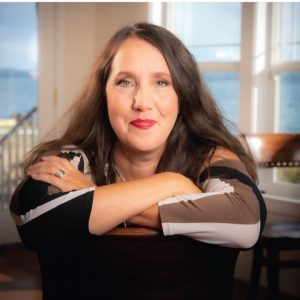 About Christine Arylo, MBA:
 This past Friday a single was released from Shunia’s forthcoming album. I listened to it at work and it was so uplifting and had such a great energy to it that I decided to share it! The song is “Sa Re Sa Sa” and it’s from Shunia’s self-titled album that is releasing January 15, 2021. They worked with Tony Award-winning producer Jamshied Sharifi on it.
 1. Gratitude: We all have much for which to be grateful. Let’s consider how much better off most of us are than our ancestors were 100 years ago during the influenza pandemic of 1918. During that crisis there was little communication – no internet to keep people updated or able to Facetime with friends and family, poor sanitation, and far too few hospital beds and other essential resources to manage the critically ill. There were not enough ambulances, caskets, or burial sites for those who had succumbed to the virus. Bodies were moved to bedrooms in homes, where they often remained for days or longer. Nowadays we have much improved access to medical care, food, and other necessities. As bad as things are, they could be much worse. We do indeed have reasons to be grateful.
 About Greg Hammer MD:
 I am so glad I did! I feel silly for having avoided numerology for so long. Ducie’s book is so straight forward and well-written. She progresses through the topic in a logical order, making it easy to follow. And as to my concerns about math, I should not have had any! It is simply basic math. Even I can handle it! It is all based on the numbers 1-9.
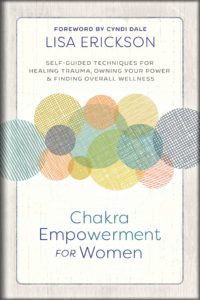 However, most chakra mappings and tools don’t account for the differences in how men’s and women’s chakras function. While at the spiritual level the energy moving through the chakras is ungendered, at the interface level between the chakras and the body, there are differences that mirror the physical differences between men and women. Trans and pan gender individuals will often experience the chakra patterns associated with the gender they most strongly identify with, or aspects of both. While male-female energy body patterns exist on a spectrum, rather than simply being binary, knowing about these differences can really help finetune chakra work.
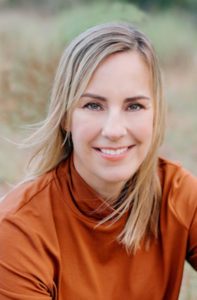 About Lisa Erickson:
 This is just the most charming book you could ever hope to see. Lichtenstein takes plants and their properties and pairs them with their crystal soulmates to create a “vibe”. Her book is divided into 4 parts: Fractals of Love, You’ve Got This, No Bad Days, and The Plant & Crystal Diet. Within them you’ll find pairings like “I Feel Pretty” (pink opal and a hibiscus plant), “Your Daily Podcast” (emerald quartz and a jade plant), “Bloom Where You Are” (rose quartz and a sweetheart hoya), and “Supercharged You” (rainbow aura quartz and a monstera). I’ve spent a lot of time Googling plants after reading this book!
 Since research on social/emotional needs is relatively new, many people grew up in families and schools where aspects of outdated relational practices were still in place. These rigid, shame-based patterns often resulted in a sense of inauthenticity, or a false self. Charles Whitfield, a medical doctor specializing in trauma and addiction, described in his book, Healing the Child Within, how a false self develops as a way to coverup fear and doubt, focusing on what others want. It is over-conforming, giving love only conditionally, and often covering up, hiding, and/or denying feelings. On the other hand, in an ideal environment, a child develops a sense of authenticity, separate from the needs and desires of others.
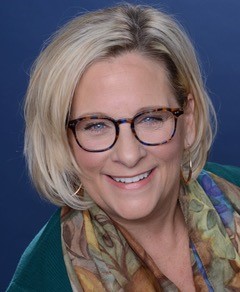 About Dr. Patti Ashley
 How did I find myself in such a predicament in the first place? My creative journey started optimistically, as many journeys do. I took up piano at age eight. My delight in playing, practicing, and generally being around the piano as much as possible made it clear right away that I would become a professional musician. Perhaps you have joyful early memories of creative encounters, too? As I entered the magical world of music, everything became hyper-real for me. Regular life seemed less vivid, less true, while the musical world bathed me in something golden, bright, eternal. I was home.
 About Diana Rowan: