Celebrate Samhain 2010

On Saturday October 23, 2010 I woke up at 5:45AM, hurriedly got dressed, got some breakfast, and by 7AM Jim and I were on the road to Peterborough, NH. What on earth could be so important as to cause me to wake up 5:45AM on a Saturday? Celebrate Samhain!

But Rebecca, you say, why drive three hours for an event? Let me lay it out for you. By taking a 3 hour drive I got to attend an event featuring nearly 30 vendors selling everything from lotions to altars to long stockings to books. Not only that, but I also had the opportunity to hear four different speakers, four very notable speakers: Dawn Hunt (“Kitchen Witch Workshop”), Christopher Penczak (“The Three Rays of Witchcraft”), Rosemary Gladstar (“Healing Herbs for Winter Health”), and Raven Grimassi (“The Cauldron of Memory”). Between presentations Jeanne Greene performed live music, and the day ended with a performance by The Gypsy Nomads. Impressed yet? Well hold onto your hats because here’s the bit that blew my mind….how much do you think it cost me to attend? Whatever you guessed is probably way too high. I had the opportunity to experience all of this for $5 a person with the donation of a nonperishable food item. $5 dollars!

With my $5 paid, what did I do at Celebrate Samhain? Holy crap the day was all about pleasing my inner fangirl! A handful of folks who have appeared on The Magical Buffet were there. You may remember seeing Christopher Penczak and The Gypsy Nomads on the site. The first thing I did was find their tables to take a moment to thank them for contributing their time to The Magical Buffet. I got to meet Christopher Penczak and Samantha of The Gypsy Nomads and they were both so genuinely nice you really just wanted to spend the day hanging around their tables talking. As an extra awesome bonus, Steve Kenson was there too! You may remember Steve from the great intro to roleplaying games interview he did for The Buffet. Anyway, just about every facet of fangirl that lurks inside of me got satisfied that day. My occult/magic fangirl got to meet Christopher Penczak, my music fangirl got to meet Samantha and Scott of The Gypsy Nomads, and my RPG/geek fangirl got to meet Steve Kenson! Walking out of the room I told Jim that alone was worth the drive.

The start of fangirl nirvana. Me with Samantha of The Gypsy Nomads. (Samantha is the awesome looking one on the right.)
Fangirl nirvana complete. Christopher Penczak (left), me (middle), Steve Kenson (right)

With that out of the way we began to roam all the vendor rooms, of which there were three. There was so much fantastic stuff I was bummed I couldn’t buy everything! I did do a little shopping though. I picked up a copy of The Gypsy Nomad’s album “Happy Madness”, I bought two pairs of adorable long stockings, and lastly, I bought a bottle of hand lotion from Rich at the Fairy Spa booth. Here’s the funny thing about discussing this last purchase, I bought it as a gift for my mother. I haven’t decided if I’ll be giving it to her for Christmas or Hanukkah yet. My mother likes fairies and has a small collection of fairy art, so when I saw there was going to be vendor of natural bath and body products called Fairy Spa at the Celebrate Samhain event I decided I had to get my mother a gift from them. If it’s a gift, how come I’m writing about this here on the internet before either holiday? It’s simple, my mom doesn’t use a computer, so I can discuss all these details with you guys, just don’t tell my mom! And seriously, Rich was a great guy and his stuff smelled and felt great! Maybe you should consider checking Fairy Spa out for your holiday shopping too.

Rich, one half of the Patrick and Richard team from Fairy Spa.

Shopping complete I was ready to hear some presentations. I got so wrapped up in shopping that I only caught the end of Dawn Hunt’s presentation “Kitchen Witch Workshop”. Upon hearing the end I immediately was bummed that I didn’t get to see the whole thing. The audience gave her a huge round of applause, and Hunt seemed humbled by their appreciation, a thing that’s always nice to witness. I decided to stay put and watch Jenna Greene perform while waiting for Christopher Penczak to start his presentation “The Three Rays of Witchcraft”. I’m glad I opted to just sit and enjoy Greene’s performance because the room filled up quick, well before Penczak’s start time!

Christopher Penczak’s presentation focused almost entirely about how his work, “The Three Rays of Witchcraft” came to be. Penczak spoke with ease and comfort about the personal journey that became “The Three Rays of Witchcraft”. What I enjoyed was learning about how much research and knowledge Penczak has about assorted schools of religion and magic. Nothing like a practitioner of Witchcraft referencing Theosophy to make my inner occult nerd squeal! Only time will truly tell, but as the room was clearing out I couldn’t help but wonder if I had witnessed a presentation by a man who years from now would be considered a defining magic worker of his generation.

In the spirit of full disclosure, I totally missed Rosemary Gladstar’s presentation about “Healing Herbs for Winter Health”, which took place after Penczak’s lecture. I took a lunch break. Even a fangirl has to eat you know! I did ask a few attendees about it and they said it was very good.

I did make sure to hightail it back quick like a bunny to snag a seat for Raven Grimassi’s presentation “The Cauldron of Memory: Retrieving Ancestral Knowledge and Wisdom”. It’s safe to say that Grimassi is an elder statesman in magical communities, and that reputation quickly translated into the room becoming standing room only. What can a person say about seeing Raven Grimassi give a lecture? He’s well-spoken and an expert at explaining complex ideas. His presentation was sprinkled with humor and the crowd adored him. I did not get a chance to speak with Grimassi personally, which is why you’ll find no photos of him here. Jim and I only take photos with the permission of the presenter, and since I never got to speak to him, I never got permission. It’s a little bit of a bummer to have not had the opportunity to shake the hand of THE Raven Grimassi, but I got to see him live and in person speak about his work, and that’s not a thing to sneeze at.

Janet (left) and Craig (right) get into the Samhain spirit!

To close out the day The Gypsy Nomads gave a live performance. I’ve heard and like their music, it’s why I did an interview with them; but listening to them on my iPod doesn’t compare to seeing them live. Samantha and Scott have boundless energy and are real showmen (or in this instance would it be show persons?). They laughed, they riffed off each other, and they kicked out some fantastic music. Being an amateur singer, I usually get bored by instrumental performances. I always want lyrics and a singer. However, The Gypsy Nomads are such great performers that their instrumentals flew by in a whirl of percussion, guitar, and clapping. I can’t recommend enough going out and seeing them live. In fact, just in case any of you are near where they’re going to be in the future, click here to see some of the places they’ll be playing next! You don’t want to miss out!

When the day was done, around 700 people came through the Peterborough Unitarian Universalist Church, and roughly 400 pounds of food was collected for the Peterborough Human Services Food Pantry. A big salute goes out to Jess and Kevin! The entire event was coordinated by just two people and a group of volunteers, an amazing feat in my book. Even after the three hour drive home, in the dark, along winding unfamiliar highways, I came home ready to leave for next year’s Celebrate Samhain!

Jess (left) and Kevin (right), the two coordinators for Celebrate Samhain

The Temple of High Magic for Everyone

Take note publishers, name dropping works. Months ago I received a review copy of “The Temple of High Magic: Hermetic Initiations in the Western Mystery Tradition” by Ina Custers-van Bergen from Destiny Books. It had a not entirely exciting cover and was authored by a woman I had never heard of. However, I noticed the forward was by Gareth Knight and that the author was initiated by Dolores Ashcroft-Nowicki so I knew that this book had to be something special. And boy howdy was I right.

Obviously I’m no expert on the Western Esoteric traditions, because let’s face it, I’m not an expert on anything, but I will dare say that this is the best introduction to the subject matter I’ve ever seen, or possibly that’s ever been published. My introduction to the subject matter was the book “Magick for Beginners” by J.H. Brennen, which I still highly recommend to anyone looking for a tiny taste of Western Occult practices. In writing him a letter (yes, I liked the book so much that I wrote the author), he suggested looking at Dion Fortune and Israel Regardie. Fortune and Regardie are both respected pillars of the ceremonial magic community but their works are dense and difficult for a beginner to wrap their brains around, or at least for this beginner they are. If only “The Temple of High Magic” had been available then!

Bergen’s book thoroughly answers the question, “What are the Western Esoteric traditions all about?” Seriously, if some random person I met on the street that I had never seen before in my life went, “Hey stranger I’ve never seen before, what is all this Western Occult/Mystery stuff like?”, I would say not a word and put “The Temple of High Magic” in their hands.

This book is only 383 pages including index, bibliography, glossary, and table of correspondences, and yet it answers any question you could possibly think of as a beginner. Better still, this book despite being translated from Dutch speaks clearly and goes light on jargon. Bergin covers the roots that feed into the current practice of Mystery Traditions today, explains the significance of temples, tools, and robes, covers Tree of Life basics, Chakras, features loads of exercises and rituals, and more, more, more!

This is the book I should have read before attempting to tackle Regardie’s works, or slowly suss out Fortune, and it is definitely a book for someone looking to learn about these traditions but isn’t looking to necessarily actively participate in them. In other words, this is probably the only book a generalist like me would ever need. That said, this book could easily be the springboard for someone with some interest in the topic to become someone looking to actively begin serious study and practice. I guess what I’m trying to say is, buy this book and then buy a second copy to give to anyone you know with even a passing interest in the Western Esoteric Traditions.

The Deborah Blake Bias: A Book Review

Some of you may recall a post I wrote back in 2009 about how The Federal Trade Commission will now require bloggers and celebrities to clearly state when they receive cash or “payment in kind” for endorsing a company’s products or services. So in the spirit of 100% absolute disclosure, let me say this.

I am not “fair” or “balanced” when it comes to Deborah Blake. I guess like most media outlets these days I carry an obvious bias, and that bias is, I love me some Deborah Blake. I’ve done interviews with her, she has commented on many of the articles here on The Buffet, she’s written original pieces for me, she’s generally been a champion of all things “Buffet”, and so believe me when I tell you that when it comes to Deborah Blake, her support is definitively “payment in kind”. Oh, and by the way, I just about jumped out of my skin when I saw that I, humble little TheMagicalBuffet.com, is a featured pull quote at the beginning of Blake’s latest book, “Everyday Witch A to Z Spellbook: Wonderfully Witchy Blessings, Charms, and Spells.” That’s right folks, if you go to your local bookstore and pick up a copy of “Everyday Witch A to Z Spellbook” and look under “Praise for ‘The Goddess is in the Details'” you will find, “[A]n engaging read with a lot of heart. -TheMagicalBuffet.com.” Which reminds me, I have a pretty good relationship with some of the folks over at Llewellyn and they send me free stuff to review, including “Everyday Witch A to Z Spellbook”.

Which leads us to the obvious question, why should you bother to read my review of Deborah Blake’s new book when it’s obvious without reading another sentence I’m going to like it? There are two answers to this question. One, I only publish reviews for stuff I like, so you knew without reading anything that I must have liked the book if I wrote a review for it, and two, I sometimes say some funny shit, and occasionally even insightful stuff, so you should just go ahead and read it.

Like most spiritual practices, you can ask 100 practitioners of magic their thoughts on buying spell books and probably get 200 different answers. Some practitioners love big books of spells to read over and use, some love books of spells for inspiration and innovation in their practice, some think that any spell you cast should be written personally, and many more mix and match on any variation of those themes. I don’t practice any magic myself, so I can’t speak on the topic with authority. What I can tell you is that I love reading spell books! For a person who has never cast a Circle, sparked some sage, or called the Corners, I have a hefty selection of spell books. I find them informative and entertaining. Each author brings a different sensibility to their spell book. Truth be told, I think you can tell a lot about an author by the way they discuss their spell work, and Blake’s “Everyday Witch A to Z Spellbook” is no exception.

So what do we learn about Deborah Blake when reading “Everyday Witch A to Z Spellbook”? Quite a bit. First, as I learned from her book “The Goddess is in the Details”, Blake is not a part-time Witch. There is no halfway, there is no subterfuge, Deborah Blake is a committed Witch and carries her spirituality with her in every thing she does, including in writing this book. How can I tell this from her book? How can you be sure I’m not just saying this because I know her? How many questions will I ask before finally quoting the author? The answer is three, and here’s the quote, “This is a spellbook for the everyday Witch: the one who lives their Pagan beliefs all day, every day, 24/7.” This mission statement guides the selection of spells the book contains. When you live in the spiritual space that Blake does, you find that you need some of the classics, such as spells to open yourself up to finding love, and some more mundane and little discussed ideas such as a spell for easing PMS.

That last spell example brings us to another we learn from Blake’s spell book, she has a sense of humor. Any author can write about working with an animal familiar, but not every author would have the familiar write their own section on working with familiars. You can tell Blake is a proud pet parent as she explains in the voice of her cat Magic, the dos and don’ts of familiars, including a begrudging wish for happiness “even if it is a dog”. By the way, spells that could be appropriate to do with your familiar are marked with a paw print. If the number of paw prints I see is an indicator, Blake’s cat Magic has a pretty busy schedule.

“Everyday Witch A to Z Spellbook” is accessible to all levels of experience. There is a section at the beginning of the book that covers much of the basics when it comes to casting spells: crafting the perfect spell, when it’s appropriate to cast a spell, writing the perfect spell, casting the perfect spell, and more. Great for beginners. However, she doesn’t bog down the book with those discussions, so for those of you who know the basics you can quickly get into the nearly 200 spells contained in the rest of the book. What does this say about Blake? She knows how to write a book for everyone. I suspect that’s why she’s had several books published with more on the way (“Witchcraft on a Shoestring” is out in September!)

In my opinion, you can never own too many spell books, so whether you have a shelf full or are looking for a good start, I can highly recommend “Everyday Witch A to Z Spellbook”.

By the way, did you guys know that Deborah Blake will be at the “A Magical Buffet of Authors” event September 11, 2010? Hey folks, I told you I was biased at the start of this!

The Brotherhood of Light Egyptian Tarot

In 1936 The Brotherhood of Light, the parent organization to the current, self-described, non-profit, religious, altruistic organization founded upon Hermetic Traditions, The Church of Light, published “The Brotherhood of Light Egyptian Tarot”. It was a black and white deck featuring designs by Gloria Beresford. Unlike many tarot decks that exist solely for use in divination, “The Brotherhood of Light” deck acts as a companion to “The Sacred Tarot” by C.C. Zain, the founder of “The Brotherhood of Light”.

Why am I talking about a 74 year-old tarot deck? Because in 2003 Vicki Brewer redrew the original black and white images and in 2009 she redesigned the cards into a full-color Egyptian tarot deck. In 2010 U.S. Games Systems was kind enough to send me the deck to take a look at.

First, because let’s face it, it’s the thing most people want to know, how does the deck look. As an amateur at best in things tarot and Hermetic, I would call the design Egyptian art deco. The images are striking, the colors sharp without over powering the art, and the cards are in the standard tarot size making them no harder, or easier (Am I the only one who has trouble wrapping their hands around a tarot deck?), to handle than any other deck. Of course this is the description from an untrained eye. In reading the 48 page booklet that comes with the deck, you discover how much thought and consideration was given to every single thing you see on the card. The meticulous attention to “Brotherhood” detail is amazing and I assume greatly appreciated by The Church of Light.

Now let’s talk mechanics. Let me give you some info from the booklet:

Following in the tradition of the Hermetic Brotherhood of Light, these tarot cards are an integral part of an internally consistent exposition of occult science in which astrology, alchemy, and magic (the tarot) are integrated.

Unique to this system is the correspondence of the twelve zodiacal signs and thirty-six ultra zodiacal decanate constellations to the Major and Minor Arcana.
The booklet goes on to explain the importance of the color with regards to focusing the unconscious mind and the correlation between these colors and astrological correspondences and the tarot itself. Also, the booklet explains interpreting the cards with regards to divination and offers a few spreads to try with them.

“The Brotherhood of Light Egyptian Tarot” booklet features excerpts from “The Sacred Tarot” by C.C. Zain. It is interesting reading. For those of you with interest, I checked the current Church of Light website, and you can order “The Sacred Tarot” as a hardbound for $21.95 before shipping and handling. The site also lists an ISBN number, so you may be able to have it ordered through your favorite local bookstore. As a dabbler, the content in the 48 page booklet is good enough, but I figure some of you guys out there would be interested in it.

The good news is that U.S. Games Systems is handling “The Brotherhood of Light Egyptian Tarot” so you should be able to find it anywhere that carries tarot cards, or have it ordered.

After some thought, I have to say, this deck would make a great addition to any tarot enthusiast’s collection. With it’s attractive art, roots reaching back to 1936, and it’s unique perspective, it would be at home in the hands of many different tarot readers/collectors.

10 Questions with Judika Illes

1. I’m sending you these questions right after you got back from the Sacred Space Conference in Maryland. How was the event?

It was wonderful. I hope to return for next year’s event. For those who are unfamiliar, Sacred Space presents an annual four day conference featuring diverse spiritual and metaphysical presenters, workshops, and rituals. Personally, I really enjoy lengthier, more relaxed events where people have time to socialize and exchange thoughts and experiences. Sacred Space has great vendors, great teachers, interesting people. And it was in a hotel! Four days in a hotel crowded with metaphysical people- it doesn’t get much better!

2. The other featured presenters were Christopher Penczak, Raven Grimassi, and Stephanie Taylor. I’ve interacted with Christopher a few times for The Magical Buffet and have always found him to be unreasonably nice. How was it to meet Raven Grimassi and Stephanie Taylor?

We had actually met before. I love their work and I love them. Raven, Stephanie, and I did an event together in Salem last October and will be reuniting this coming October for the Salem Witches’ Halloween Ball, which I’m really looking forward to. http://www.festivalofthedead.com/witchesball/

But Sacred Space was the first time I had the opportunity to attend one of their workshops. Raven and Stephanie are great, insightful, and very interesting teachers—very clear, very articulate and dynamic, and very generous with their wisdom.

3. Okay, I’m dieing to talk about the encyclopedias! I own “The Element Encyclopedia of 5000 Spells” that you authored and it is behemoth! What made you decide that you could compile so much magical information into one gigantic tome?

Insanity? Neither the publisher nor I realized how large that book would turn out to be until we were already deeply committed to the project and it was essentially too late to turn back. Just prior to writing “The Element Encyclopedia of 5000 Spells”, I had written a very lean book of spells, “Magic When You Need It”, which has one-hundred fifty spells. My publisher knew that I collected spells- I had boxes and boxes of notes- and asked whether I could write a massive compendium next, something like “The Joy of Cooking” but for spell-casting rather than recipes. The publisher was playing around with numbers- could I write a book with one-thousand spells, three-thousand, five-thousand? At one point, we were up to ten thousand.

In the beginning it was all very theoretical for me. I was asked, “Could you write a book with five thousand spells?” and I replied that theoretically we could do any number. Spells are infinite—they’re like grains of sand on the beach, stars in the sky. There’s always another spell or another variation. Even though five thousand is definitely a lot of spells, it’s still just the tip of the iceberg.

Writing that book in some ways was a luxury for me. As an author, I’m always conscious of the information that has to be left out because there isn’t space to include everything. With 5000 Spells, I was able to include variations of spells, demonstrate the incredible variety of spells, trace the way some spells have evolved over time and through cultures, which, with a smaller book wouldn’t have been possible.

4. You also wrote “The Element Encyclopedia of Witchcraft” and “The Encyclopedia of Spirits”. Can you give us a rough idea of the process you use to compile so much information from varying sources into one cohesive reference book?

Well, simply put, I work around the clock. I’m very focused on whatever I’m working on. It’s complete immersion. When I was writing “The Element Encyclopedia of Witchcraft”, I didn’t watch or read anything in my spare time that didn’t involve a witch. Likewise with “The Encyclopedia of Spirits”.

In terms of selecting content, there are three components. Once a book is designated an “encyclopedia” it has to be comprehensive. It can’t include only my favorite aspects of a topic. Certain things must be included. For example, you can’t write an “encyclopedia of witchcraft” without including Gerald Gardner, Aleister Crowley, Harry Potter, and the witch hunts.

Then I consider who or what should be better known: who are the unsung heroes of witchcraft, for instance, or what spirits aren’t getting the press they deserve. For example, there’s currently a very vital goddess tradition in Vietnam that not many Westerners are aware of—I made sure to include those goddesses in “The Encyclopedia of Spirits”. And then the third component evolves into a voyage of discovery for me. As you begin researching, one thing leads to another and you arrive at some very unexpected places. I learn something new with every book I write and I hope that my own enthusiasm and excitement translates into the pages.

Each of my other encyclopedias, to some extent, derives from the experience of writing 5000 Spells. Although each book is a stand-alone, they also complement each other and serve as companion volumes. Spell-casting is more successful and more pleasurable if you understand all its components. Books by their nature offer only limited space. There are only so many pages. There’s always more information that didn’t fit or was discovered after the book went to print. So although my books are huge and packed with information, I’m very conscious of what’s not in the book, what information isn’t discussed as fully as I would like. Those are things we can discuss more fully during my workshops but sometimes other books also create opportunities.

I began writing “The Element Encyclopedia of Witchcraft” immediately after completing 5000 Spells. One of the things I really wished to expand upon was the magical nature of many plants incorporated into spell-casting. In 5000 Spells there wasn’t always room to discuss in great detail why certain plants are used in certain spells, the significance of individual botanicals. One of the first sections of “The Element Encyclopedia of Witchcraft” that I wrote was a large section devoted to witchcraft-associated plants.

Likewise with the Encyclopedia of Spirits: in 5000 Spells, spirits are constantly referenced. Those spells are easier to understand and accomplish if you really understand the nature of these spirits, if they’re more than just names and superficial legends.

5.I know you love tarot. In a recent article I said I was a fan of more traditional in appearance tarot decks, such as the “Universal Waite Tarot” and the “Smith Waite Tarot”. What are some of your favorite tarot decks?

I call the Ride-Waite-Smith my “old reliable”—I was a telephone psychic for a couple of years and really came to depend on that deck. I love the Albano-Waite Tarot, too. Oswald Wirth’s deck is a favorite as is Kipling West’s Halloween Tarot- I really, really love that deck. Another deck that I’ve been working with lately is Robert Place’s Vampire Tarot—that one really intrigues me. I pull a tarot card almost every night on twitter using whichever deck is closest to hand. I find that’s the deck I reach for most frequently.

6.I saw on your website that you wrote a popular monthly feature, Beauty Secrets of the Ancient Egyptians for TourEgypt, the Egyptian Ministry of Tourism’s on-line magazine. How did you land that gig, and any simple beauty tips of ancient Egypt you can pass on?

They had advertised that they were looking for writers and I responded. The concept of ancient Egyptian beauty secrets was my idea. The ancient Egyptians had a very holistic outlook- they didn’t separate beauty from health from magic. It’s all intertwined. So fragrances, for example, are simultaneously evocative and seductive, magically powerful and potentially therapeutic. A very simple anti wrinkle treatment involves placing two drops of essential oil of frankincense into a teaspoon of sweet almond oil and applying it to the cleansed face before retiring for the night. As an added bonus, many people find frankincense to be aphrodisiac plus, if you inhale the fragrance, it creates a relaxing effect and frankincense, like essential oils in general, is antiseptic.

Now that’s a modern adaptation of an Egyptian formula. Back in the old days, the Egyptians would have used goose fat as the base but modern sensibilities probably prefer sweet almond oil, available at virtually every health food store and plenty of supermarkets, too. Another light vegetable oil could be substituted too, if preferred, such as apricot kernel or grape seed.

Link to TourEgypt articles:

http://www.touregypt.net/magazine/egyptcolumns.htm#Ancient%20Beauty%20Secrets

7. You’ve researched thousands of different cultures for your books, what is one of the most surprising things you’ve learned in your research?

The virtually universal existence of a magical culture that transcends ethnic, national, political, and religious boundaries. There is a culture of spell-casting that despite all kinds of regional and cultural differences shares so much in common. I am very proud to belong to this greater metaphysical community.

8.What are your thoughts on how magic is portrayed on television and in film?

Well, I’m an easy sell- if you stick a witch or magical practitioner into any sort of entertainment, I’m fairly guaranteed to watch it. But you always have to keep in mind that these portrayals are intended as entertainment. In most cases, what you’re viewing is fantasy and so you have to suspend expectations of reality. This is true even when what you’re watching on-screen superficially looks ‘real’ such as Arthur Miller’s “The Crucible”. That’s a work of fiction loosely based on a historical event, not an accurate depiction of the events in Salem. This may sound obvious if you’re already grounded in the realities of magic but I receive a lot of email from frustrated people who are sincerely attempting to learn practical magic by watching “Charmed” and “Buffy”.

What I look for personally is the essence of what’s being portrayed. The way that essence is portrayed makes the difference between something I enjoy watching and something that disturbs me. I like my witches fun, empowered, and unrepentant. My favorite movie witch is Veronica Lake’s Jennifer in “I Married a Witch”. I really like “La Sorcière”, although it’s tragic. The way Bellatrix LeStrange is portrayed in the Harry Potter films fascinates me for reasons that will probably end up in a book someday. I like Marge Simpson and her sisters in “Tree House of Horror VIII”.

I can enjoy watching something but still have issues with it. I think Kim Novak is gorgeous in “Bell, Book, and Candle”. I covet her wardrobe but I’m impatient with those old falsehoods about witches not being able to cry or fall in love or wishing they were mundane mortals. I love “Buffy the Vampire Slayer” even though I resent the way that witchcraft is used as a metaphor for addiction.

9. What projects are you working on now that my readers can look forward to?

I just completed “The Weiser Field Guide to Witches”, which should be out later this year. That was a lot of fun- it’s sort of a mini-encyclopedia. Right now, I’m working on another thousand-pager, an encyclopedia devoted to saints, holy people, and miracle workers from around the world and spells and rituals associated with them.

10. Parting shot! Ask us here at The Magical Buffet any one question.

Any suggestions for books or classes I should be working on?

I love your encyclopedias! If you can keep finding themes for them, I’ll keep reading them.

About Judika:
Judika Illes is the author of . She is a tarot card reader and a certified aromatherapist. Learn more at www.judikailles.com.

Crafting the Runes: A Venture into Self-Publishing

by Alaric Albertsson
Also appeared in The Heartland Spiritual Alliance newletter.

As I explained to my acquisitions editor over lunch last year, I needed a set of Anglo-Saxon runes for my next book, “Wyrdworking: The Path of a Saxon Sorcerer”. In addition to the book’s outline and a few sample chapters, I gave her several illustrations for the rune cards I hoped would be sold with the book.

Why cards instead of runes carved into little pebbles or bits of wood? Well, why not? The use of divinatory “rune stones” dates back to the early 1980’s – hardly what anyone would consider an ancient tradition –and I am pretty sure the early Saxons and Scandinavians would have made use of cardstock if they’d had it. Cards suited my purpose. Each rune card would include an illustrated conception of the corresponding passage of the 10th century Old English Rune Poem. One of my goals is to make the runes and their mysteries more accessible for people, and a significant percentage of my target audience is already familiar with the Tarot deck as a divination tool.

The illustrations were provided by Pagan artist Taren Martin. I wanted to work with him on this project not only because of his previous work, but also because he understood my vision. At least a dozen or more rune decks have been published over the years, but the overwhelming majority of these have been decks of the Elder Futhark, which lacks nine of the Anglo-Saxon runes. The decks frequently have illustrations which cannot be supported by the rune lore preserved in any of the Rune Poems. I wanted to create a deck that includes all of the English runes and, more importantly, a deck that remains true to the extant lore.
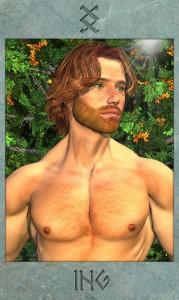
My acquisitions editor took my proposal back to Minnesota and I returned to Pittsburgh. For the next several months Taren and I continued working on the rune deck. I would send him a vague idea of what I wanted. Sometimes I was not sure of what I wanted, which was extremely frustrating for him. He would put together an image and send it to me, and I would then send it back explaining why that was not quite right. It is a testament to our friendship and to Taren’s enduring patience that I am alive to share this story today.

Meanwhile I continued working on the text for “Wyrdworking”. This book will present traditional Anglo-Saxon magic for our modern world. The chapters will cover herb magic, scrying, galdor and other magic techniques in addition to rune magic. At that time I was focused on the latter, and so the book and the rune deck were parallel projects.

In late spring I learned that the publishing house had rejected the deck. They wanted my book, just not the rune cards.

“But I can’t sell this book without the runes,” I protested to my acquisitions editor. “Thirty years ago I could do it. Maybe twenty years ago. But today every new age store in the United State sells the Elder Futhark. Most people are not going to the trouble to make their own runes when they can buy a set, even if that set is lacking almost a third of the symbols.”

My acquisitions editor, Elysia Gallo, understood and was sympathetic to my plight. In fact, hers was the most lovely rejection letter I have ever received. Unfortunately it was not within her power to overturn the decision. If the rune deck was to become a reality, Taren and I would have to pursue another course.

I was afraid Taren would be discouraged by the news but, if anything, he became even more determined to finish the rune deck. While he moved forward with the remaining cards, I talked to a few fellow authors about the problem. A publisher provides two essential things: capital and distribution. It soon became apparent that the publishers who could give us the distribution we wanted were unacceptable for other reasons. A couple of friends suggested we look into self publishing. The idea was not unreasonable. If we had to distribute and promote the deck ourselves, self publishing would generate much more income per deck sold.

While figuring all this out, I began to realize something else. It was time for me to turn the project over to Taren. I would still help him, but without the accompanying book, the rune deck was his baby. And so the cards became not just “the rune deck”, but the Martin Rune Deck.

In June, while I was at a book signing for “Travels Through Middle Earth” at Aquarius Books in Kansas City, my friend Barbara Criswell showed me Toby Evans’ Chakra Labyrinth Cards. Toby had decided to self publish when she created her chakra deck. I’ll readily admit that I know next to nothing about chakras, but I know a well crafted product when I see one, and Barbara told me that Toby had been very pleased with her printer.

Barbara Criswell is one of modern Paganism’s unsung heroes, so I’m going to sing a bit about her now. This woman has consistently supported the Kansas City metropolitan area’s Pagan community for decades. Twenty years ago when the Heartland Spiritual Alliance and other area organizations were trying to buy a Pagan campsite, Barbara offered space and promotion for fund raising projects to help bolster this monumental project. Around the same time she offered a meeting place for a discussion group known as Spirit Circle, which still convenes to this day. “When Travels Through Middle Earth” was published she threw a cake-and-lemonade party for me at the Heartland Pagan Festival to help promote the book, and then later invited me to speak at Aquarius Books where she showed me Toby’s Chakra Labyrinth Cards. She is a woman who puts her community first, and it is a great honor to be numbered among her friends.
So Barbara put me in touch with Toby Evans, I then introduced Toby to Taren and she introduced him to her printer in Hong Kong. This, of course, was not the end of the story.

The next thing Taren needed was investment capital. Notice how this has become “Taren” instead of “we”? Although I was still involved with the project and deeply supportive, I turned my attention back to “Wyrdworking” and began to devote most of my time to the book. I had signed a contract for the book now; I had a deadline. For the most part, the Martin Rune Deck was in Taren’s hands.

Scott DeRousse provided the investment capital. We had also considered soliciting multiple investors, but making a single payment each month is far preferable to paying back loans to a dozen different people. We now had another partner for the project. Anyone who knows Scott at all knows that he is the ultimate silent partner, but Taren acknowledged him in the accompanying booklet as a man “whose warmth and generosity knows no bounds”. That’s not entirely true; Scott’s generosity does know a few bounds. Fortunately the capital needed fell within that parameter.

I authored the aforementioned booklet. If you have ever bought a Tarot deck, you know the booklet I mean; the tiny brochure with an even tinier font that’s tucked into the box along with the cards. It was a challenge to describe the essential mysteries of the runes on pages only slightly larger than a business card. I do think the booklet gives the average customer enough information to get started, and he or she can always buy “Wyrdworking” when it’s released next year for a more comprehensive coverage of rune magic and divination.

It was just before Yule when Taren received five boxes of the Martin Rune Deck from the printer for his approval. If they were satisfactory, the entire order would be printed and delivered. To describe them as satisfactory would be an understatement; they were all that we had envisioned and more. Taren and I both felt that the final product validated the work and time we had invested in the deck.

The Martin Rune Deck can be used for divination or as a meditation tool. It is now available online through WolfDen Designs. Retailers should contact Taren Martin through the website under the Contact Us link for information about wholesale pricing.

About the Alaric:
Alaric Albertsson is the author of “Travels Through Middle Earth: The Path of a Saxon Pagon”. To learn more about Alaric visit his website.

The Logos of the Aeon and the Shakti of the Age

“They died within two years of each other; she within the smog-enshrouded Middlesex Hospital, amid the massive bomb damage done to London by six years of war; he in the salt-sea air of Hastings, in a large and stately boarding house with the evocative and curiously apt name of Netherwood.

When the woman died, on 8 January 1946, taken by acute myeloid leukaemia, it had been quite unexpected. She was still young (a mere fifty-five) and had lived a decent life; eating healthy food, taking appropriate exercise in various dimensions, engaging in stimulating mental activity involving august spiritual beings, and she had once written a book about the nature of Purity.

When the man died of a lung infection, on 1 December 1947, unloved in any usual way, no one was at all surprised. In fact they marveled that he had lasted so long. He was seventy-two, had lived a life full of adventure, indecency, and excess; had wrestled with demons of the darkest kind; had been branded by the national press as the Wickedest Man in the World; and finally his drug-wracked body had just given up.”
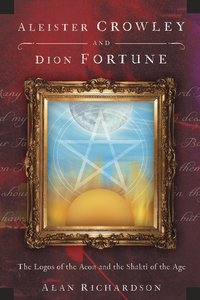
And so begins Alan Richardson’s “Aleister Crowley and Dion Fortune: The Logos of the Aeon and the Shakti of the Age”.

This book is described as a comparative biography of Crowley and Fortune (perhaps two of the best known occultists of the 20th century), and that’s a fair description. However, I feel it doesn’t do the book justice. The poetry of the writing, the nearly epic scope of the stories, the love, passion, and romanticism on the part of the author defy an easy summary, so forgive me for not trying. Richardson masterfully tells the stories of these two larger than life characters, all the while showing how their magical lives danced around each other; sometimes intersecting, other times diverging, but always close.

The book tells the stories of Crowley and Fortune’s lives in reverse, starting at death and going forward to their births (homage to training the Magickal Memory, remembering events in reverse sequence). Therefore, the book begins with Fortune and Crowley’s respective deaths in the Prologue, and then continues with seven chapters: Deaths and Afterward, The Wars of Their Worlds, Priests and Priestesses, Temples and Their Truths, Initiations and Other Awakenings, Falling to Earth and Other Trauma, and Past Lives and Similar Futures.

Although the author stresses that his book “is not meant as an exhaustive biography” on either of the subjects, I found (with my amateur level knowledge about Fortune and Crowley) that this book definitely hit all the marks, and certainly unearthed some extra information I had never heard before. At the very beginning of the book Richardson apologizes if the work seems to have a Dion Fortune bias, since he is an admirer, but stresses that he tried to treat both subjects with an even hand. I feel he succeeded. It is difficult to discuss Aleister Crowley. Generally, much like the man, people who write about him touch on the extremes of his character. I think fan and hater of Crowley alike will find the author’s treatment enlightening. Also, despite his concern that his affection for Fortune will color his writings about her, here too Richardson succeeds in offering the whole person, strengths and weaknesses alike.

This book tells the fascinating story of perhaps two of the best known, and best beloved by some, occult practioners of our time. Yes, their lives were fascinating, but only the talent of someone like Richardson can make them mythic.

10 Questions with The Vigilant Citizen

1. What made you decide to discuss occult symbolism through the prism of pop music, and particularly music videos?

My two passions in life are music and occult history. If I’m not focusing on one, I’m most probably focusing on the other. The more I gain knowledge on western occultism, the more I understand its importance in pop music. The weird or strange symbols I saw on album covers or music videos become easily readable. I collect old vinyls from the 60’s, 70’s and 80’s and I’ve noticed a great number those groups integrated this knowledge in their songs and artwork. It was done in an artistic way. I’ve however noticed a different type of occult symbolism in recent videos: it is used by mainstream pop artists, insidiously hidden and aimed at a young crowd. Far from being artistic, the imagery used in videos pushed by international media corporations is often deceptive and inherently sinister. I felt the urge to discuss those taboo issues so I’ve created Vigilant Citizen.

2. Do you feel the prevalence of occult symbolism found in pop music comes from the artists and video directors, or is it a coincidence stemming from occult symbolism seeping into the general consciousness?

I believe there are two types of occult symbols: the “artistic” ones – emanating from a desire to express one’s reality through symbolism – and the “corporate” ones – which often come from elite secret societies. A true artist using symbolism to in his/her art will be inspired by his/her surroundings and his/her inner being. Occult symbols are extremely powerful and are believed to be embedded in our subconscious so it is only normal for them to appear in artistic expression.

However, “corporate” occultism takes symbols from organized secret societies such as Freemasonry, or Illuminati and “plants” into mass media in order for them to become the norm. Confucius said “Symbols rule the world, not words nor laws”. In other words, you can recognize who is truly in power by identifying the symbols in popular culture. During the Middle Ages, almost all of popular art was religious and Christian. The Christian Church ruled the Western World.

Now, occult symbolism is increasingly apparent in popular art. Who rules the world? Occult secret societies.

3. I loved your interpretation of Lady Gaga’s “Bad Romance” video. Did you see dream analyst Carolyn Wills’ discussion of the video on Leslie Gornstein’s “Answer B!tch” blog? Thoughts?

I’ve read a couple of interpretations of Bad Romance and I can’t say that any of them is flat out wrong. Good art can have multiple layers of interpretations and, I have to say, this video is good art. When it came out, many readers of the site bombarded me with e-mails, pointing out symbols I’ve discussed in other videos. Bad Romance is definitively part of a bigger “movement” in music videos.

4. Often times the occult symbolism you find in music videos paints a dark and ominous picture. However, your analysis of The Black Eyed Peas “Meet Me Halfway” is actually quite uplifting. Does this mean that occultism doesn’t automatically equal bad?

Occult means “hidden”, not “bad”. Occult schools believe esoteric knowledge is too powerful for the profane to dabble with it. So it is kept hidden, the same way mothers hide knives from young kids. It is for their own safety. According to occult schools this knowledge can lead you to two extremes and everything in between: it can liberate you from the shackles of materiality, put you in direct contact with divinity and make you nothing less than immortal… Or it can also make you deal with demons, black magic and leave you into eternal torment.

“Meet Me Halfway” seemed to portray this positive side of esoteric knowledge. It is indeed quite uplifting.

5. In your post “The Occult Roots of The Wizard of Oz” you say, “the entire story of the Wizard of Oz is an allegorical tale of the soul’s path to illumination – the Yellow Brick Road.” However I feel that it could be argued that the concept of the “hero’s quest” or “hero’s journey” can be found before the Theosophical movement. Is this a what came first, the chicken or the egg kind of debate? What came first, the spiritual concept or the basic storytelling device?

Theosophy is nothing more than an attempt to find the common underlying knowledge found in ancient religions. It did not create any new concepts; it tried to put them together in a cohesive way.

Almost all ancient civilizations had allegorical tales which could be fully understood through the glasses of esoteric philosophy. Whether we look at Egyptian mythology, Greek epic poems or Native American legends, there is a “face value” meaning and a hidden meaning that can only be understood by initiates. The Wizard of Oz is what we can call an American allegorical tale.

6. Was there any nefarious occult symbolism in Miley Cyrus’s 2009 Teen Choice Awards performance? Because honestly, that was just evil.

Didn’t watch that, sorry.

7. Do you look at books and film with the same eye towards recognizing occult symbolism? If so, the Twilight series…discuss. Obviously werewolves are rife for the teenage males confronting puberty analogy, and vampires originally reared their fanged heads as a nifty way to confront sexual themes in repressive societies, but did Mormon author Stephenie Meyer accidentally push any big occult buttons?

I’d have to read the books to give a definite answer on Twilight’s underlying meaning (it there’s any). I’ve however watched both movies and I can say there is a definite use of “occult lore” in the movie but it is all done in a very superficial matter.

I think the movies focus on tapping into the primal needs of young girls (and not so young) such as: fascination with the mysterious and dangerous, feeling protected by a strong man, attraction towards the “forbidden fruit” and….oh yea, watching a bunch of shirtless guys.

8. Lady Gaga and Rihanna have both been big on your website as of late. Who is going to be the next artist trending heavy with occult symbolism?

Taylor Swift and Adam Lambert. They are definitively next.

9. I’m going to be honest with you, and in turn, some honesty for me. I love Lady Gaga and own both “The Fame” and “The Fame Monster”. Does Lady Gaga ever make its way onto your CD player?

Honestly, not in my CD player…I…I..just can’t. But I can’t say I get mad when one her songs come up in a dance club. Her music is has better production value than most of the crap out there.

10. Parting shot! Ask us at The Magical Buffet any one question.

OK, you’ve asked for it! Have you ever witness true magic resulting from a magical spell or ritual? If so, can you describe the event?

Alas, I have never witnessed what I would consider true magic.

About The Vigilant Citizen:
My quest for knowledge led me to obtain a Bachelor’s degree in Communications and Politics. I’ve mainly studied the way power uses mass media to shape and mold attitudes of the general public. My education was perfect to hold a job in marketing or PR but did not satisfy my thirst for truth.

My efforts to further understand the forces governing the world lead me to study secret societies, mystery religions, esoteric sciences and ancient civilizations. I’ve spent the last five years researching Theosophy, Freemasonry, Rosicrucianism, the Bavarian Illuminati and Western Occultism. These schools of thoughts have many things in common: they are based on Hermetic teachings (Hermes, Thoth, Enoch, Mercury), they attach EXTREME importance to symbolism and they recruit within their ranks the most prominent people of all fields of society, especially politics, law and public service. The natural result of this phenomenon is the display of occult symbolism in all aspects of society, whether it be music, movies, buildings or else. My goal is to bring out the meaning of those symbols in a clear, concise and entertaining way.

I am also a music producer who has composed music for some fairly known “urban” artists. My work in the music business has led me to deal with talent agents, video directors and record companies. Through my experiences and my contacts, I have discovered some of the darker aspects of the entertainment industry which I found were in direct connection with my studies in occultism. My understanding of the state of mind that prevails in the higher levels of the ladder makes it probably easier for me to decifer the symbolism in music videos than it is for everyday people.

Learn more at The Vigilant Citizen’s website.

Successful Spellwork

By Leandra Witchwood
(This article first appeared on her website, used here with her permission)

Lately some of my students have been asking me questions about Magick. Magick is a great subject because it is so personal and yet so universal. Several people can have the same intent and go about achieving it in very different ways, proving that there is no one right way to do things. The variety is stunning and holds special interest to me.

I had a one student ask me a question; I’m sure runs through everyone’s head when it comes to using Magick. Her question to me was, “What makes Magick work and why is it effective for some but not others?”

In my experience, several factors must work in your favor for a spell to be successful. This list of factors varies with each spell and each person, so getting things right is very important and tricky. I think this is where most of us get confused and deterred. The elements we need to work in our favor are not always within our control.

As many of you know a spell is commonly compared to a prayer, yet intensified. There are several elements to consider, like timing, tools, specific intent, location, etc. In addition, there are plenty of “don’ts” we are taught when it comes to spell casting. Who wouldn’t find the task a little daunting? I know I did at first.

I learned that if I follow some simple guides I tend to have great success with spells. Here is a list of things I have found help successfully create and cast spells. I am sharing this with my friends hoping that you can apply these ideals to make your own practice a little more effective.

1. Will. Keep in mind, this is not the same thing as intent. I have learned that I must have a specific desire that drives me to plan and execute a spell. This isn’t as simple as a general need, but strong desire that drives me to work and focus. It needs to be clear and obtainable…

2.Talent and Skill. Some people have a lot of natural talent and some have to work at Magick a little harder. Others have a little of both talent and skill and seem to have no trouble with Magick. It doesn’t matter if you have a little or a lot, just try your best, develop your skills, use your natural talents, and you will be amazed…

3. Patience. Some times we need things right away, but many times what we think is urgent, can wait a little while longer. When we are patient with Magick and ourselves, we can achieve things on a grand scale. You could be going without for many reasons. Maybe there is a lesson you need to learn or you are undermining your own needs and desires. Keep in mind that real life is not like Bewitched, we can’t crinkle our noses and poof we have a basket of apples appear. Sometimes it takes years for your intention to become reality. Maybe your prosperity you are working on now will manifest later when it is a better time. Relax and let things happen, as they need to happen. Plus if you are following a spiritual path there may be certain expectations placed on you in connection to obtaining your need/want.

4. Wiggle Room. Give your energy room to adjust, as it needs. When we allow it to self adjust we allow it to work in the best possible way for our own benefit. Give your energy freedom and room to work. Keeping it contained and too tightly controlled is no way to get what you want and need. Perhaps you think your Magick needs to go right but in fact it should go left in order to be productive and successful in outcome.

5. Trust. This is HUGE! Trust in the energy you call upon as well as your own. If you doubt it, scoff at it, second-guess it, etc., you deplete yourself and the energy. I think the consequences are obvious.

6. Confidence. This next item also goes hand in hand with trust. You must have confidence in the energy you conjure as well as yourself. If you cannot believe that you and the universe have the ability to move and change things, you will get nowhere. Be confident about your work and abilities, and be wary of arrogance. Also feel and know that you are worthy of obtaining what ever it is you conjure.

7. Intent. Clear intent is essential most of the time. Sometimes we don’t know exactly what we need and that is when we leave it in the hands of a greater power, (which is when spell work is more like praying). Magick is not necessarily passive. Magick is usually direct, after all it needs a place to go. Know what you want. State your intentions as clearly as possible. If you intend to come into a large sum of money by winning the lottery then say so. Just a warning… be careful what you wish for… You might get it.

8. Attitude, be positive. A positive attitude is everything. If you are continually negative about your situation, stop it! This is something we all struggle with from time to time. When I find myself down in the dumps, I change my attitude fast and decide to make it a happier day. Much of how things happen to us and what happens to use depends on how we look at things and how we react re-act.

9. Organization, get yourself organized. Organize your thoughts. Organize your tools/materials. (If you need them) Organize the space where you plan to work. Write your spell out and list the things you will do first, second, third, and so on. Also, make sure your space and tools are clean. When you have it all together you can focus and therefore making your spell more effective.

10. Personalization. Make the spell YOURS! Sure you can get ideas from others, why not! Just don’t rely on the work of others (which usually is tailored to that other person’s needs) to work specifically for you. Yes, in some cases it can happen, but not all the time. Make the energy yours, make the intent yours, make the spell yours! Own the energy and live completely in the moment you create.

11. Space. Being cramped or in a place that is too open can be distracting and can hinder your progress. Also, keep in mind other factors of the space, like the temperature of and noise factors. You want to keep your focus.

12. No after thought. When you are done with the spell and you release the energy, forget it! Clean up your workspace and tools, refrain from picking your work apart, analyzing your techniques, questioning the effectiveness, etc. Just let it go. If hours or days later you find yourself thinking about the spell and thinking about it in detail, distract yourself and find something else to think about or do. When we continually think about the energy we send out we end up calling it back to us and taking it away from your goal, thus depleting it of the strength you gave it in the first place.

13.Action outside the spell. Look at your situation before you plan your spell. I like to use “money” as an example when it comes to spell work because we can all relate. If you are sitting down to plan and conduct a spell that will attract more money to your life it is always a great idea to look at why you are low on funds to start.

Could you budget a little better? Do you spend money on needless things or things that are not sustainable? Do you need a budget to organize your spending? Perhaps you could just use some discipline. Once you look at why you have no money explore and decide on a plan of action that will help you keep the money you bring in. There is no use in doing a spell that will bring you more money if you can’t keep it and use it wisely. Take time to identify the things you can do to improve your situation. Then after you cast your spell put these things into action. If you found that you need to follow a budget to control your spending, then create a budget and stick to it. You can even add an element into your spell that will help you establish discipline in sticking to your budget. The point is Magick doesn’t and cannot work if you will not help it and allow it to work.

14. Practice makes perfect. Don’t expect that because you did one spell successfully that you are a pro. Keep up the good work by doing spells as often as your personal energy allows. Perfect your techniques and skills through repetition. You can do simple spells for your friends/family (with permission of course), for your dog, your cat, yourself, etc. Also, give yourself variety by trying different forms and techniques. If you are good at Candle Magick, try Color Magick or elemental Magick next… Variety keeps you fresh and inspired.

The list above, for me, matters in all Spellwork. Of course, there are other things we can add to the list, but I think this is fairly complete. I found that no matter the day, phase of the moon, or the position of the planets I can execute a successful spell by following this guide. Sometimes all the elements fall into place on their own and other times I have to work at them a little more. It all depends on the situation.

About the Author:
Leandra Witchwood has served her local community as a Minister of Earth-Base Spirituality, an Animal Card Reader, Spiritual Counselor, Leader, Teacher, and much more. Leandra enjoys facilitating Labyrinth walks and educational seminars. She also teaches classes on mediation, Witchcraft, Wicca, and various Magickal techniques. Her spiritual teachings and readings are inspiring and revealing. Leandra is currently writing books and blogs to benefit the larger community.

To learn more, visit: http://leandradraconiswitchwood.blogspot.com/

10 Questions with Ellen Dugan

1. What does it mean to be a “Garden Witch” or to practice “Garden Witchery”?

I define a Garden Witch as: “A practical, down-to-earth type of practitioner. A Witch who is well versed in green magick, herbal knowledge and its uses and who is a magickal gardener.”

2. How does your new book, “Book of Witchery”, differ from your previous release “7 Days of Magic”?

Well, to begin with its more than doubled in size! The 2004 manuscript which was made into 7 Days of Magic was only 34,000 words long. Book of Witchery finished up at over 87,000 words long.

I have been teaching classes all over the country from the information in 7 Days of Magic for years. So when the opportunity arose to re-release the book I told the editors that I wanted to expand the book make it more in depth and to make it bigger.

So Book of Witchery, has all of the basics, that folks have come to expect from me, but I added to the information and went deeper. It also now it features daily mediations, potion and philter recipes, magickal craft projects, a daily ritual, and a new chapter on “Full Moon Witchery”.

The “Full Moon Witchery” chapter goes a step farther than your usual magickal book and explores what magickal energies are in play when the full moon occurs on the different days of the week. For example, what will happen when a full moon occurs on a Monday- which is the day of the week devoted to the moon and lunar magicks….. This final chapter allows you to think outside the box and to learn something new.

3. Why write a book that focuses on the days of the week?

Because knowledge is power! Once you know your daily correspondences you have options and amazing opportunities to personalize your Craft and to advance your own magickal skills all on your own.

It always astounds me when I go to teach a class, and then I’ll ask folks, how many people there know their daily correspondences by heart, how few people actually do.

Adding this practical information to your spell casting repertoire is a smart thing to do. Since once you have that information in your memory, it opens up worlds to you. You won’t have to dive for your reference books and look things up. You will know what works the best, what items and deities compliment each other and work in harmony together- on any day of the week. Allowing you to successfully cast your spells no matter what phase the moon is in, because now you have a deeper knowledge and more spell-casting options.

4. What is your favorite day of the week and why?

I honestly don’t have a favorite day. In truth, each day has its own unique magickal energies and powers. I truly enjoy working with the different planetary energies throughout the entire week. Every day has new options and a different magickal theme- the opportunities and possibilities are endless. It’s fun and exciting, and as a Witch, I never get bored exploring all seven of the days of the bewitching week.

5. What challenges do you see facing the Wiccan/Witchcraft community? How can the community resolve those issues?

We are growing so fast as a community, people from all different backgrounds, experiences and incomes, and I think we all need to be more tolerant of each other and of the various different magickal traditions.

I see people getting into huge debates over silly things, like what a “Hedge Witch” is, and about how to pronounce athame, for Goddess sake. I have seen the self proclaimed “Grand High Pooh-Bahs” sneer at someone else who happily calls themselves self taught or eclectic. And I’ve seen Wiccans treat ceremonial practitioner like they were radio active or something. Its really getting old all of that “My tradition is real and yours is not”, type of thing. All this dissension among the ranks is such a foolish waste of time and magickal energy!

We can be different, and we can have different styles of magick, and different Craft practices and ideas, and still be a community. We do have to stand together and we do have to work together. Is it going to be easy? Probably not, but diversity is a beautiful thing. So embrace it, see what you can learn from other traditions and styles of magick and then grow from the experience.

6. You also wrote “Elements of Witchcraft: Natural Magick for Teens”. Why did you feel it was important to write a book specifically for teenagers?

At the time I wrote the book back in 2002, all of my children were teens.

I wrote a book that was smart, practical and focused on the natural elements, as opposed to fancy and expensive doodads and accessories. Interestingly enough it is just as popular (if not more) with adults. The book does not talk down to the reader. That is important to me, to be respectful to my readers no matter what their age or magickal experience level.

Today, I use the book as required text for my online class, “The Four Elements of Witchcraft” because the information there is solid, basic and accessible to any reader no matter what their actual age. The online classes have been very popular with my adult students and the feedback has been phenomenal.

Bottom line: Natural magick is very user friendly and it’s a great place for anyone to begin their studies when they want to understand, and to learn the Craft and magick on their own.

7. I see you now offer online classes, what can people expect from these?

My classes are affordable, practical, fun, and self paced. I keep my classes reasonably priced ($30.00 to $40.00) because in today’s economy its tough to come up with a few hundred bucks for an online class.

I began offering the online classes because I had so many requests from students all over the country and in the UK who did not have the opportunity to take a “live” class from me. That got me to thinking… and now I offer three on-line classes. With two more classes in the works. The newest class should be up and available for purchase within the next few weeks. The topic of the new class? “Hearth & Home Magick”. And folks are already clamoring for it.

With my online classes, you can expect new spells and charms for you to work on your own. Magickal folklore, deity information, and lessons that will challenge you to think for yourself and to stand strong and grow in your own style of magick and witchery. There are homework assignments, such as: creating different theme altars, working on your own books of shadows, writing your own spells and journaling exercises. There are some pictures in my Myspace albums of student’s altars form the “Four Elements of Witchcraft” class. Check them out if you’d like to see them.

8. As a Llewellyn author I’m curious as to your opinion, if Raven Digitalis and Deborah Blake got into a drunken fist fight who would win?

No Comment.

9. What can my readers expect to see from you in the future?

I am working on my twelfth book for Llewellyn Worldwide. It will be released in early 2011. The topic and working title is a secret- but I will tell you this… its different from my other books, a bit darker and the topic is heavier. Yes, there is still practical magick and humor, (I’m writing it after all.) But it is different. Even the writing process has been different for me this time. So its been an adventure and very exciting to see where it ends up. I love it when I get the chance to learn and to grow myself, as I write a book!

10. Parting shot! Ask us here at The Magical Buffet any one question.

One of my books is getting a new cover this fall, Herb Magic for Beginners. The new cover will be available in November. There is a picture of it in my Myspace albums. I love the change, (well its green and has flowering herbs on the cover- so you know I like it.) What do you all think of the new artwork?

I think it’s cute!

About Ellen:
Ellen Dugan, the “Garden Witch,” is an award-winning author, a psychic-clairvoyant and a regular contributor to Llewellyn’s almanacs, datebooks, and calendars. A practicing Witch for over twenty-five years, she is also a certified Master Gardener.

Ellen has written several books, including Garden Witchery, Elements of Witchcraft, Natural Magick for Teens, Cottage Witchery, Autumn Equinox, The Enchanted Cat, Herb Magic for Beginners, Natural Witchery, and How to Enchant a Man. Her Garden Witch’s Herbal, and Book of Witchery was published by Llewellyn in 2009.

When not spending time with her family, Ellen unwinds by working in her perennial gardens at home with her husband. She wholeheartedly encourages everyone to personalize their green spellcraft by getting their hands dirty, discovering the wonder and magic of the natural world, and connecting with the spiritual side of nature. To find out more, visit her website at www.ellendugan.com.(Photo © Mickie Mueller)