The Happy Couple from the Haunted Wood

The holiday gift giving season is well and truly behind us, so I feel totally safe in talking about this. Readers may remember that back in October 2011 Jim and I did a TON of shopping at Celebrate Samhain, and one of the things I bought was a small, beautiful Hanged Man from Mike Dolan at Haunted Wood Crafts. What I didn’t mention at the time is that Jim and I liked it so much that we decided to get tarot cards done for the bulk of our friends for the holidays!

It took a lot of time on our part. We made a list of everyone we wanted to give them to and then went through the Universal Waite Tarot (or Rider-Waite Tarot, or Smith-Waite Tarot, however you prefer) and “The Pictorial Key to the Tarot” by Arthur Edward Waite doing our best to attempt to pick out cards we felt best suited each person. It was difficult, but fun.

Of course things were simple when we contacted Mike through his online retail website, The Haunted Wood Online. The next thing we knew we had a big ol’ box of beautiful, framed pieces of wooden tarot art!

To complete the gift we made a small card to go with each frame that included keywords associated with the card, or a quote from “The Pictorial Key to the Tarot” that hopefully expressed why we thought that card suited the recipient. I think most everyone really enjoyed the gift.

Now Jim and I couldn’t get all those awesome looking cards done without getting some for ourselves too. What’s funny is, neither of us put any thought at all into the cards we chose. For some reason I’ve always like the Hanged Man, so I picked that one. I asked Jim what his favorite card was and he said The Magician, so I ordered that one for him. I didn’t ask him why, and I suspect, like me, he doesn’t have a specific reason for it. So here we are, the Hanged Man and The Magician. The happy couple.

The Hanged Man and The Magician

Perhaps any of my readers who are good with the tarot can tell me if there is any significance to a Magician and a Hanged Man hooking up. All I can tell you is, it seems to be working out pretty well.

If you’re interested in beautiful woodcrafts, I really can’t recommend Mike Dolan enough. You can check out his showcase of custom work at The Haunted Wood, and you can visit his online retail site at The Haunted Wood Online. (FYI, he has these adorable stick figure tarot coins that I love! That may be the next time I’m at an event he’s vending at.)

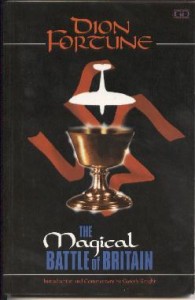
The Magical Battle of Britain Again

I’m a bit of an occult nerd, or would you say magical tradition fangirl? However, I’ve always been far more interested in the magic practitioner than their magical practices. I don’t know why that is, but that is just the simple truth. A perfect example of this would be, for most “The Golden Dawn” by Israel Regardie would be the first Regardie book to spring to mind. Perhaps the one that defines Regardie for them. For me, my favorite Regardie is “Crowley’s Apprentice: The Life and Ideas of Israel Regardie” by Gerald Suster. That’s not to put down, or belittle Regardie’s own writings in any way, I just found reading about the man himself far more intriguing than reading his work.

I had read both “Applied Magic” and “Psychic Self-Defense” by Dion Fortune and as per usual was getting ready to move on to the next thing. This was years ago, back when I first got my fangirl crush on Regardie, and still thought I would miraculously stumble across THE BOOK that would finally get me to settle down and study one spirituality or magical system. Anyway, Fortune was about to be shelved when I learned about a book called “The Magical Battle of Britain”.

It turned out that immediately following Germany’s invasion of Poland, which resulted in Britain’s declaration of war, Dion Fortune began a series of letters to members of her magical order, The Society of Inner Light, initiating a magical operation designed to stop the Third Reich. Those letters ended up being put together into a book…..”The Magical Battle of Britain”.

As someone more interested in practitioner than practice I was thrilled. To get to read letters outlining Dion Fortune’s magical call to arms? Her instructions on how to do battle? For reals yo? I was bouncing off the walls with excitement, which then turned to banging my head against the wall in frustration to learn that the book was out of print.

Of course I’m a lucky lady with a wonderful husband and so I was surprised with a very good condition used copy of “The Magical Battle of Britain” as a gift at some gift giving occasion not too long after learning of the book’s existence. It has been a cherished possession ever since. It offers a unique perspective on the war, magical practices, and most important to me, different glimpse at Dion Fortune.

So why am I telling you all of this? Because I am THRILLED to say that thanks to Skylight Press “The Magical Battle of Britain” is back in print! This book has really meant a lot to me and when I learned they were re-issuing it I knew I had to let you guys know about it. There’s just truly no other book like it, featuring Fortune or any other notable magical practitioner. If you’re interested in magical practices, I feel this book is a must own. It’s too cool not to have on the book shelf.

New Skylight Press Re-Issue!

Cranberry Solstice Cookies

As most of you are aware, I am all about “Tastes from the Temple: Kitchen Witchery from the Temple of Witchcraft” by Dawn Hunt and the Temple of Witchcraft Community. I interviewed Dawn Hunt and I hauled my lazy butt to New Hampshire to buy multiple copies of the book and make sure to get a signed copy for me and Jim. That left only one thing to do, finally try a recipe from the book!

It was tough to decide what to try. Due to some health issues on my end a lot of recipes were eliminated from the start. However, over the holidays I had become intrigued with the idea of cookies with dried cranberries in them. A friend of mine had been emailing me assorted recipes he’d tried or found on the internet, so it’s safe to say I’ve had cranberry cookies on the brain. Also Jim and I are always looking for unusual cookie recipes, ones that call for unexpected ingredients, and Jim always likes what looks like a challenge, so when I asked, “Do you want to make cookies that use tofu?” he was in.

So we tried Cranberry Solstice Cookies which was a recipe submitted by David Salisbury. The recipe happens to be vegan, but what interested Jim and myself more was the use of silken tofu, which is a type of tofu neither of us had used before, olive oil as the fat, brown sugar and no regular sugar, and of course for me dried cranberries. These cookies take a heavy hit of almond oil, and in our case due to a slip of the bottle, a very heavy hit, but to my surprise they bake up with just the right amount of flavor. They’re not overly sweet, but they still make an excellent dessert. Everyone that has tried them has enjoyed them greatly, and I suspect these guys may end up in our holiday cookie tins this year. (As an aside, Jim used the leftover silken tofu to make chocolate mousse which turned out awesome!)

What’s super exciting for all of you is that Copper Cauldron Publishing has given me permission to not only share the recipe with you, but all the associated content! This is going to give you a real peek at what makes “Tastes From the Temple” different from other cookbooks!

Cranberry Solstice Cookies
Submitted by David Salisbury, Washington, DC

Cranberries are to Fall as watermelon is to Summer. Once the air cools and the smell of autumn leaves is in the air cranberries make their triumphant return. Here in New England we have cranberries by the barrel full; cranberry scones, cakes, sauces, chicken, stuffing. The list goes on and on. David shares with us his vegan recipe for tart and sweet cranberry cookies.

David says:
“This recipe is one of the very first I’ve ever tried making myself. Since I was young, my grandmother used to let me go to town with mixing up random baking ingredients and cooking them in the oven just for fun. Usually they came out mush but sometimes we’d get something edible out of it. This recipe started as a random conglomeration of festival ingredients that I like to have around the winter holiday months. Because of that, they remind me that wonderful things can be born of our fearless creativity and love.

“I am a Priest of the Firefly House, a nature-based church in Washington DC. I have been practicing the Craft for 11 years and have been vegan for nearly as long. I enjoy mixing up creative vegan baked recipes as well as animal-free herbal products.”

Ingredients
1 1/2 cups flour
3 ounces silken tofu
1/4 cup olive oil
2 teaspoons almond oil
1/2 teaspoon baking powder
3/4 cup brown sugar
1/2 teaspoon cinnamon
1 teaspoon ginger
dried cranberries

Directions
Preheat oven to 350. Combine tofu, oil, sugar, and seasonings into a mixing bowl.

Add in the rest of ingredients until it forms a dough-like mix.

Form into small balls and place onto greased pan. Bake for 10-12 minutes.

Magickal Notes
David shares his magickal uses for these cookies:
“Mostly listed in the content itself but in terms of specific correspondences, cranberries are related to the sun and mars. Cinnamon and ginger have both solar and earthen correspondences, which add a great seasonal flare to its meaning.

“These bitterly sweet cookies make a perfect snack for your Yule festivities. The cranberries align your energies to the growing strength of the sun and even look like tiny suns nestled in the cookies themselves. Cranberries are famous for being able to grow in areas that would otherwise be considered wasteland. When we eat food with cranberries, we’re bringing in a “survivor” energy that helps sustain us for the raging winter months to come.”

Tokens of Light

It used to be all I ever saw were tarot decks; tarot decks that held pretty tight to the template set by the Universal Waite Tarot Deck. Then I noticed tarot decks that meandered off that path at times, and occasionally I saw sets of runes. Then it was oracle decks, that conformed in no way to the traditional tarot, and I saw I Ching sets. It seems for every person out there awaits a type of oracle just for them! And I’m here today to introduce you to another wonderful member of this expanding family, “Tokens of Light”.

“Tokens of Light” is subtitled “66 Paths for insights and prediction according to the Hebrew Alphabet” and it was created by Orna Ben-Shoshan. Astute readers will remember that name from back in April 2011 when I reviewed the “King Solomon Oracle Cards“. Orna was responsible for the beautiful artwork found in that deck, and I’m happy to say “Tokens of Light” is perhaps an even better space for her art.

The tokens are 66 sturdy coins (made of a slightly more sturdy stock than tarot cards). One side of the coin has its number, 1-66, (The total number of 66 was derived by using 3 different aspects of each one of the 22 Hebrew letters.) and underneath it a Hebrew letter with a serial code to which the answer relates. The other side has a beautiful Orna Ben-Shoshan illustration to help you make a visual connection with the coin. The coins come with a pretty drawstring bag to use for carrying, storage, or pulling the tokens from for readings.

You don’t need to be able to read Hebrew to use “Tokens of Light”. Thank goodness! The set comes with an interpretation booklet that gives you some ideas as to what drawing a particular coin might mean, and also some different suggested ways to use “Tokens of Light” for guidance. Despite its beautiful, mysterious, occult appearance, it’s pretty freakin’ simple to use. How about one more “Thank goodness!”?

Along with the tokens, you also get two amulet coins that are not to be included in your readings, but kept close to you. One coin contains the priestly blessing for protection and fulfillment of your wishes, and the other coin contains letter combinations taken from the “72 Names of God” that will bring balance and success to all areas of life.

“Tokens of Light” is a unique addition to the expanding landscape of oracle products. To learn more about it, visit their site.

An Introduction to “The Old Sod”

Excerpt from “The Old Sod: The Odd Life and Inner Work of William G. Gray” By Alan Richardson and Marcus Claridge. Skylight Press, 2011 (reprinted here with permission)

“OK so I’m an old sod, an old bastard, a thousand different kinds of shit if you like, but I am a human being who loved the esoteric Tradition I tried to serve… Perhaps I didn’t do very well with what I’d got but I did my best…”

[letter to Alan Richardson, 19th Sept. 1989]
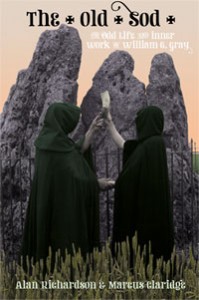
William G. Gray was a real magician, a kind of primeval spirit who worked his magic as an extension of the Life Force, not as a sop to ego. No-one who met him had any doubt that he was in touch with supra-human sources of wisdom, or that from his home in a dowdy back-street of Cheltenham he was bringing through energies from other dimensions that would one day influence us all. He reeked of psychism like he often reeked of incense, could give you the uncomfortable feeling that he could see right through you and beyond, and had been to places in spirit that we could scarcely imagine. He had powers of low-key prophecy which he often demonstrated, which were often accurate, and he turned some of the convoluted magical systems that had endured for centuries inside-out and upside-down, thus making it simpler for the rest of us to work with Light. Many of the books on magic and the kabbalah which appear today owe a huge if unrecognised debt to his pioneering writing. If nothing else, he was a true original in everything he did. In some ways he was larger than life, and many people were fearful of him. In other ways he had exasperating and unapologetic human quirks which could make him seem very small, depending on where you stood – or sometimes rather appealing if you didn’t get blasted by his ire.

Anyone who ever met Bill Gray must laugh at the books churned out by the self-styled witches, magicians and urban shamans who, a generation later, imagine they are High Priests, mighty adepts, or 21st Century brujos. What empty figures they are in comparison, clutching their amulet-filled power pouches or dream-catchers, communing with their power animals while riding their dainty silver broomsticks through crystal-singing candy-floss Otherworlds where everything is eternally positive and ineffably, irritatingly, nice – and always with at least one eye on achieving a few sound-bites on local tv.

As Bill might have said when asked if they raised any real power: “Raise power? That lot couldn’t raise so much as a good fart between them!”

Yet if there is anything evolutionary about the current urge to revitalise the present by looking at the patterns of the past, and the increasing notions that there are harmonic energies within the Earth and ourselves that can be worked with – whether through green eco-movements, the Celtic Revival or the Wiccan arts – then it is due in no small degree to the work that was done by an old bastard who lived near the bus station in a faded town in Gloucestershire.

At least Bill Gray could raise power. Power that could make your eyes water and your fillings ache, and seep out into the world to change it. That’s what real magicians do. Whether he could always handle it with love or wisdom, is another issue. He made many enemies. Even his friends often winced at his antics. Yet now, a decade after his death, both friends and enemies remain united in their recognition of the fact that – whatever his mortal faults – he was a one-off, and that holy magic flowed through his veins like blood.

Bill was hard. He could intimidate. A real sod at times. He wrote brilliant letters, but when it came to books he often fell out with his editors. Yet they tolerated a lot because they knew that he was in a different league to the other writers on their lists who simply made it up as they went along. Underneath the dense and often abrasive prose, with the alliteration he felt would help get concepts embedded in the readers’ mind, it was quite obvious to them that here was a new level of insight into the theory, practice, philosophy and sheer experience of Magic, and how it impinged upon the world. Here was a real magician.

He seemed to know everything, although he rarely bought a book or plundered the library:

“Do you know why Aleister Crowley spelled magick with a ‘k’?” he asked Alan Richardson once, and the young man perked up because he had read exactly that only days before and saw a rare chance to impress the old mage.

“Actually Bill I do. Not only did he want to distinguish the medieval, supernatural and spiritual art of Magic from mere conjuring, but the ‘k’ referred to the Greek word -”

But Gray wouldn’t let him continue. He had already worked it out himself, intuited it, and proceeded to explain at great length because the lecture was in his head just waiting for an audience. And although it wasn’t exactly what Crowley had said, it was impressively close. All to do with sex.

So for those of who are new to the topic, what do we mean by magic, as practised by real magicians? – regardless of which spelling they use. And why, of all things, did we call his biography The Old Sod?

Bill himself wrote of magic:

Definition of Magic is largely a matter of individual opinion…Fundamentally it remains what it always was: Man’s most determined effort to establish an actual working relationship through himself between his Inner and Outer states of being. By magic, Man shows that he is not content to be simply a pawn in the Great Game, but wants to play on his own account. Man the meddler becomes Man the Magician, and so learns the rules the hard way, for magic is concerned with Doing, while mysticism is concerned with Being.
[Magical Ritual Methods, Helios 1969]

Compare this with Crowley’s:

From the nature of things… life is a sacrament; in other words, all our acts are magical acts. Our spiritual consciousness acts through the will and its instruments upon material objects, in order to produce changes which will result in… new conditions of consciousness.
[The Confessions of Aleister Crowley Bantam Books 1970, page 110]

It was once an art. It was an integral part of Religion. As Bill further explained:

“The word Magic… had root connections with greatness, (Maj) and mastery (Magister), and providing this might be understood in the sense of spiritual development and self-mastery, it seemed a reasonable description of the Path I intended to follow. Orthodox religions of all descriptions rejected Magic as a dangerous rival, yet Magic was inclusive of religion… Religion was collective whereas Magic was individual, and I was all for individualism… I would find my own faith through whatever I might learn of Magic and its practical purposes.”

As to the title The Old Sod…

It was partly because he really could be, in the British vernacular, an old sod. That is to say, an extremely awkward character; a bit of a bastard. However it is a term that can be used with admiration and very deep affection also, akin to Americans calling someone an old fart. Second, it also refers to sod as a clump of earth, and has allusions to the pioneering Earth Magic which underlay a lot of his inner work. Bill was aware of both of these usages and grudgingly accepted them. But it never seemed to enter his head that it also referred to his role as the founder of the Sangreal Sodality – the latter word meaning a confraternity of like-minded souls. And beneath these there is perhaps a fourth reason: by calling him this, we could keep him at a slight distance, and not get sucked into the sort of fawning that so often mars the art of biography. We owe the man and his magic a huge debt, and want to repay this as fully and honestly as we can, but we were not totally blinded by his light.

Did Bill have any dark secrets? Well he certainly looked into and possibly explored many dark and secret areas of the psyche, but that is the path of anyone hell-bent on the getting of wisdom. William G. Gray could be and was a mighty magician, but he was also human, with many of the prejudices of his class, age and locale. He lived in Cheltenham for gods sake! and that alone explains much.

Next, to get the current (and tedious) spiritual and political correctness out of the way, Was he sexist, homophobic or racist?

Sexist? No. Not at all. Although hardly what you might call a Ladies’ Man, he could get on extremely well with women, and some – younger ones in particular – often found him immensely charming and loveable. Whatever his faults, none of the younger generation of women ever took him to task for being sexist, although his contemporaries might disagree.

Homophobic? No. We knew a number of gay people in common, who were involved in magical activities, and he never once took issue with their sexuality. In fact he didn’t really understand gay issues much, and the only weak part of his classic Ladder of Lights is when he gives some absurd advice to gay men and lesbian women as to how they might ‘get straight’.

Racist? Well, yes. No denying it. His use of the term ‘Nigerian’ as a euphemism for the obvious became tiresome very quickly. Yes he was a racist – although he modified the term in his later years to ‘racialist’, and this is something that must be looked at in some detail. But right from the start it is worth bearing in mind that one of his most respectful and meaningful encounters in South Africa was with Credo Mutwa, the famous Zulu medicine man, author of Indaba my Children and My People. They got on famously, expressed mutual admiration, and he spoke of it later with great pride. So the issue is not that simple, and we shouldn’t brand and reject him with the bald word ‘racist’ without looking at the whole issue.

For various reasons – legal, moral, literary and magical – we decided that it wouldn’t really be advisable to publish Bill’s autobiography verbatim. So we took the best bits in which he explained things in his own inimitable way, and turned the rest of it into a third person biography in which we could use the memories and comments of those who had known and worked with him. But as he wrote to Marcia Pickands, one of the inheritors of his Magic:

“For gods sake don’t make me out to be any kind of ‘Master-Figure’ with any kind of ‘powers’ or faculties other than those of human understanding. I have simply written what I have seen by the Inner Light afforded me. If this helps others well and good, and if it doesn’t I’m sorry but it’s all I’ve got. What I’ve written is for others to make their own way with and do a lot better than I possibly can. The more they can do with it the happier I’ll be.”
[29th July 1986]

Right then Bill, we won’t make you out to be any kind of Master-Figure as you term it. But you did have talents that went a little further than everyday human understanding; you did have an enormous impact on a wide range of people, either directly or indirectly; you weren’t quite as modest and self-effacing as the above quote might imply; and you could be so bloody difficult that we, who sort of idolised you, will let you have your say in all the important things relating to Magic, but also take this chance to make you listen. Just for once. Blast us to buggery if you want, but be aware that we’ve written according to the inner light that you sparked within us. We are determined to make that light grow. If readers can use it to find their own Holy Grails through the inspiration of your work and example, then we will be more than happy.

10 Questions with Varla Ventura

1. So Weiser Books just launched two lines of ebooks, Paranormal Parlor and Magical Creatures. Can you tell my readers a little bit about those two lines?
Magical Creatures is a collection of stories from out-of-print and public domain books and includes such delightful beings as mermaids; goblins, pookas, and other members of the fairy kingdom; vampires; werewolves; and even mummies! Most of these are “fiction” or folkloric. Paranormal Parlor covers the wonderful world of psychic and supernatural—from old Victorian séances to classic ghost stories.

2. You’re the official curator of these two lines of books. What does that job entail?
I comb through volumes of stories, folktales, and true accounts to find hidden gems with secrets of their own. Sometimes the story is more in the author or the creation of the story. Once I have picked out the pieces I write a little about each book and author into an introduction, trying to put it in modern context. Not all the books are outstanding literary works—sometimes they are just quirky enough to be collectible, which is really what this project is all about. Being a lover of the strange and the forgotten, it is truly a labor of love.

3. What are a couple of your favorite books from the two collections?
From the Magical Creatures collection one of my absolute favorites is Polidori’s “Vampyre, A Tale”. One could argue it isn’t the finest vampire story ever written, but it has tons of cultural and pop-cultural significance. Polidori was Lord Byron’s personal physician and was there the fated night that Byron, Percy Bysshe Shelley, and Mary (Wollstonecraft) Shelley were gathered round the fire, conspiring to write their own ghost stories. This story was born that night. In addition, this was the first vampire novel written and published in English, which pre-dates Bram Stoker’s “Dracula” by seventy years.

From the Paranormal Parlor collection I think the stand-out is this novel, “Jap-Herron”, which was written entirely via the Ouija board. Sounds interesting enough on its own, but it turns out the author and her medium were channeling the ghost of Mark Twain and they claimed this was a novel he had been waiting to write since he died seven years before. The author, Emily Grant Hutchings, claimed that Twain identified her as “the one” to be his scribe. It went to press but was pulled immediately from the stands because Twain’s publisher and daughter sued Hutchings and her publisher.

4. Not only are you the curator for these lines of ebooks, you’re also an author. You wrote “Beyond Bizarre: Frightening Facts and Blood-Curdling True Tales” and “Book of the Bizarre: Freaky Facts & Strange Stories”. What are these books like?
These are collections themselves, probably why Weiser’s publisher thought of me for the first of these e-book collections. They are books of supernatural stories, hauntings, ghost encounters, UFO sightings, strange laws still on the books, bizarre news stories, weird medical conditions, and all manner of sea shanties, rock and roll horror stories and basically truth-is-stranger-than fiction kind of stuff. The kind of thing you read or hear about and then think it isn’t true, and then you investigate further and discover not only is it true, but it is way weirder than you first thought.

5. How did you get interested in, for lack of a better phrase, “the bizarre”?
I was kind of raised in a freaky household. We played a lot with Ouija boards and Tarot cards, celebrated Halloween like most families celebrate Christmas. Seriously, one year my mom kept us out of school until after Halloween so we could fully participate in the costume making and pumpkin sculpting. So I kind of always had an unusual outlook on things. I love freaking people out and I was at a party spouting some weird story and my friend said, “Hey, why don’t you put all your crazy stories together into a book?”

6. Care to entertain my readers with a favorite “freaky fact”?
In 1971 a man in Pennsylvania sued Satan—sighting The Devil himself as cause for all of the man’s ill luck. It was thrown out of court on the grounds that it could not be proved that Satan lived in Pennsylvania at the time.

7. Will these two lines of books from Weiser only ever be released as ebooks? Where can my readers go to buy and download them?
As far as I know there are no immediate plans to make them print books, though I would guess that if one in particular were enormously popular it might be considered. The idea is for someone to be able to collect these inexpensively and amass a collection at their fingertips. They are currently available on Amazon for Kindle, B&N’s Nook and in the Apple store for the any of their reading devices. You can search by the names of the collections, individual title, or by my name.

8. Are there going to be more books added to these collections? Any that you can tell us about now?
Oh yes! Many, many more. We haven’t even scratched the surface of what there is to come. Most of these first ones are personal favorites, but I have begun now to start exploring for new books through a variety of channels—references from the backs of my favorite old volumes of books, recommendations from friends and readers, and online searches. Among the next round, which will be released in early December, we have a ghost story by Charles Dickens, a holiday kidnapping story by L. Frank Baum, a collection of Pooka tales, and a fabulous publication circa 1900 all about a series of séances that took place in San Francisco.

9. And what about you? Will there be more books from you for my readers to look forward to?
I am pretty immersed in unearthing and resurrecting these volumes of forgotten lore, but when I surface I am sure to be half-way through my next manuscript. I have a ton of ideas, and am constantly gathering stories.

10. Parting shot! Ask us here at The Magical Buffet any one question.
Have you ever seen a ghost?

Nope, but it isn’t for a lack of trying.

About Varla Ventura:
Varla Ventura is the author of “The Book of the Bizarre” and “Beyond Bizarre” and is a lover of all things odd and unusual and truly freaky. Her favorite holiday is Halloween, which she celebrates almost every day. She lives in the attic of an old Victorian in San Francisco. She can be found online at http://www.huffingtonpost.com/varla-ventura, http://varlaventura.wordpress.com/, and http://facebook.com/varla.ventura.

10 Questions with Kenaz Filan

1. For my readers who may not be familiar, what is Voodoo?
Voodoo is a family of spiritual and magical practices which draw inspiration from the religions of Dahomey – an area comprising modern-day Benin and parts of Togo. Both in Africa and in the African Diaspora, they have incorporated many other traditions as well: there is a strong influence from Kongo and Bantu (central/southern African) and Yorubaland (modern-day Nigeria), combined with a large helping of Freemasonry and Roman Catholicism. Among the traditions which arise from this root are Vodu Dominicano and Vodu Cubano (Cuban and Dominican Vodou), Haitian Vodou, Beninois Vodun, and New Orleans Voodoo.

2. What drew you to Voodoo?
In 1994 I encountered a spirit who identified himself as “Legba” and who told me I was going to become an initiate in Haitian Vodou. At that time Vodou was not really accessible to non-Haitians living in the US, and so I was skeptical.

Then, in 1999, as Vodou was becoming more popular, Legba showed up again and told me it was time for me to travel to Haiti. I informed him that this would be impossible since I had a job and a long-term girlfriend. Within a few days my boss died and the law firm closed. I came home to tell my girlfriend that, only to discover she was moving out and moving in with a guy she met at her job. My path thus cleared, I was able to travel to Haiti and get a lave tet from Danise David of Cyvadier: in 2003 I was initiated by Edeline St. Amand (Mambo Azan Taye) and Hugue Pierre (Houngan Si Gan Temps) in Société la Belle Venus #2 of Jacmel, Haiti and Brooklyn, New York as Houngan Si Pwen Coquille du Mer. And so my journey to Gineh began.

3. How does the Voodoo of New Orleans differ from Haitian and other schools of Voodoo?
Much modern day New Orleans Voodoo begins with Charles Massicot Gandolfo, proprietor of the New Orleans Voodoo Museum. Inspired by Robert Tallant’s 1940s work on New Orleans folklore and religion (Gumbo Ya-Ya, Voodoo in New Orleans and The Voodoo Queen: a Biography of Marie Laveau), Gandolfo’s Voodoo Museum aimed at the tourist trade: he hired practitioners of Santeria, Palo Mayombe and other African Diaspora traditions as well as initiates in Haitian Vodou to work for him. He also, in the best New Orleans tradition, was never one to let the facts get in the way of a good story.

As a result, many people complain that New Orleans Voodoo is a creation for tourists and doesn’t have authentic “roots.” But New Orleans rootworkers have always done a lot of business aimed at the tourist trade – the Crescent City has always been a tourist town, and people came to get mojo hands, gris-gris bags and other spells designed to bring back lovers and ensure gambling luck.

I’d even argue that this only serves to make New Orleans Voodoo an authentically American spiritual tradition: America has never been good about keeping business and religion separate. A religion which began as a money-making venture aimed at the tourists, but which went on to become a serious and even somewhat respectable spiritual tradition – how American is that?!

4. Your latest book, “The New Orleans Voodoo Handbook”, contains a whole lot of information about New Orleans aside from its Voodoo. The history, the music, and the food all feature prominently. How much influence did these factors have on what is considered New Orleans Voodoo today?
Blues music can be traced back to the Griots of Mali; gris-gris bags come from the “gerrygerrys” carried by the Mande slaves who were brought to New Orleans Voodoo is a product of its culture – or more precisely, of a unique blending of cultures.

5. New Orleans in the past and present has been the home to an amazing cast of characters. Who are a few of your favorite New Orleans people and why?
I am very impressed by Sallie Ann Glassman and Priestess Miriam Chamani. Both are strong, intelligent independent women who heard the Crescent City’s call and answered it. (Sallie Ann is from Indiana, while Priestess Miriam is from Chicago). Both have added new strains of magic to the local practice – Sallie Ann is strongly influenced by Thelema, while Miriam learned Belizean folk magic from her late husband. And both have given back a great deal to the community.

Fred “Chicken Man” Staten was an… impressive… fellow. Long before Ozzy Osbourne did his dove-decapitating trick, Chicken Man made a name for himself biting the heads off chickens. Yet beneath his sideshow geek exterior was a sensitive and tender-hearted fellow (save where chickens were concerned, I guess) who regularly offered aid and counsel to lovelorn tourists and to kids growing up on the Crescent City’s mean streets. He was scorned by many as a “mere showman” – but they forgot that Marie Laveau held dances for bored locals!

As far as New Orleans writers go, my all-time favorite is John Kennedy Toole. Confederacy of Dunces is far and away the greatest book about New Orleans and its ever-changing cast of characters. Ignatius J. Reilly, the book’s protagonist, is one of the greatest literary creations since Don Quixote.

6. The book you wrote with Raven Kaldera, “Drawing Down the Spirits: The Traditions and Techniques of Spirit Possession” features a lot of personal experiences. Did you two ever discuss how much of your own lives you were willing to share?
That is always an issue with me. I’m by nature a private and introverted person: I would rather write about facts, figures and events than share my deepest feelings with the world. Yet in “Drawing Down the Spirits” we found ourselves describing our experiences and providing a lot of sometimes unflattering personal information.

Ultimately, we decided the most important thing we could do with “Drawing Down the Spirits” is provide a guide for people who were experiencing trance possession. This meant we needed to talk about our mistakes so that they didn’t repeat them: it also meant that we had to describe some of our personal interactions with spirit. This wasn’t always a comfortable or an easy process, but I think we did a reasonably good job of describing trance possession for an interested audience. Hopefully some of our readers were able to learn from our errors and go on to make new errors of their own 😉

7. What do you feel is the biggest misconception about Voodoo? Would you like to take a moment here to clear it up?
Where to begin, where to begin? How about I list a few of the big ones:

Flesh-eating zombies come from George Romero, not Haitian Vodou. In Haiti a zombie is typically someone who has been “zombified” through drugs and ritual and who works as a manual laborer. I’ve also seen the term used to describe the spirit of a dead person who is called upon to do magical work I love Night of the Living Dead as much as the next guy – but it’s not Wade Davis’s Serpent and the Rainbow. (And while we’re on the topic, Davis’s book is fabulous but the Wes Craven movie it “inspired” is truly awful – Wes should have stuck to Elm Street and stayed away from Haiti).

“Drumbeat-driven voodoo orgies” are not part of Vodou. The only time sex and magic get mixed in Vodou is before fets or after initiations. You are expected to refrain from sex for 24 hours before a fet (spirit party) and 41 days after your initiation. So it’s not about licentious behavior but about abstinence! The problem is that black people have traditionally been eroticized by uptight Protestants: they saw people dancing and figured it had to have something to do with sex since “everyone knows those colored folks are hot-blooded.” (This isn’t just distasteful, by the way: it’s outright dangerous. Lynching was justified as a way of protecting white maidens from lust-crazed black men, while rape of black women was justified by saying “those savages don’t place any value on chastity.”)

Perhaps my biggest concern is the idea that you have to be initiated in Vodou to serve the lwa. This started when one notorious online personality decided to make a career out of selling Vodou Initiation Tours. The fact is that most people do not need the responsibilities that come with initiation to the Vodou priesthood, and they certainly don’t need to spend thousands of dollars to light a candle for the spirits. The Priesthood should be the culmination of one’s service to the lwa and entry into the next level, not the beginning.

8. Jambalaya, pralines, or beignets?
It depends. I don’t generally have that much of a sweet tooth, but I make an exception for pralines. Jambalaya is a rib-sticking bowl of pure nutritional goodness, depending on who is cooking it and what they threw in today’s batch. And beignets are the perfect accompaniment to one of the Big Easy’s greatest specialties – coffee with chicory.

9. What other projects are you working on that my readers can be on the look out for?
I’m working on a follow-up to “Drawing Down the Spirits” with Raven Kaldera. This is tentatively titled “Talking with the Spirits: a Guide to Personal Gnosis”. After that I’m hoping to follow up “Power of the Poppy” with a guide to stimulants in historical and contemporary culture – that book has the working title: “Speed: 4,000 years of Life in the Fast Lane”. And after that who knows: inspiration strikes when and where it will and we never know where it will take us.

10. Parting Shot! Ask us here at The Magical Buffet any one question.
What subject(s) would you like to see me cover next? Writing is a lonely business: it’s hard to determine what your audience wants and easy to take it personally when your work gets a less than enthusiastic reception. I’m always interested in hearing what people want to read and writing something that meets their needs.

I’m thrilled to hear you’re doing a follow up to “Drawing Down the Spirits” with Raven Kaldera and I’m very interested in the book about stimulants that you’re working on too! I love the historical context that you give to the subject matter of all or your books, which means that if you find something interesting enough to write about it, odds are very good that I’m going to want to read it!

About Kenaz Filan:
Kenaz Filan is the author of six books through Inner Traditions/Park Street Press, the most recent being “The New Orleans Voodoo Handbook”. The former managing editor of “newWitch” and an initiated Houngan Si Pwen in Haitian Vodou, Filan has written about Haitian Vodou, trance possession and the shamanic and medicinal uses of poppies. Filan has also published essays in various magazines, including “Renaissance” and “Mysteries” and is a regular contributor to “Witches and Pagans”.

You can learn more at http://www.kenazfilan.com and http://kenazfilan.blogspot.com.

10 Questions with Jordan Stratford

1. What is alchemy?
Well, obviously it’s a lot of things. But I think in essence it’s the practical and theoretic Natural Philosophy of the West, deriving from ancient Egyptian culture. The word “alchemy” means “of Khemet”, from khem meaning black – as in the black, fertile soil of the Nile Delta. This culture had a world-view that bore with it certain assumptions about the experiential universe, about meaning and the immanent divinity within the material world. Alchemy is and was about cracking open our experience of the material to discover the divine, and to discern meaning from that.

2. How is alchemy relevant in this modern era?
When we speak of modernism, that’s its own set of cultural assumptions that didn’t just emerge from itself. The roots of our world-view dig through the strata of Rome and Greece and Egypt and Sumeria, and the fossils of these cultures populate our everyday lives. The days of the week named after Woden and Thor and Freya, Saturn, Sun and Moon. Months of Janus and Juno and Mars. So understanding the past gives us a firmer footing in the present. Additionally we live in an age where science informs almost every aspect of our lives, and that science has its heritage in alchemical study. Newton called himself an alchemist.

The current dialogue and tension between science and religion strikes me as wholly artificial. Both shed light on aspects of human knowing, just as poetry and prose do not negate one another. What’s up for grabs is the role of meaning in the face of an exclusively materialist take on science which excludes meaning, or even the question of meaning. Alchemy contributes a scientific model which places meaning at its heart. We shouldn’t be so quick to get rid of that; I think we might need it later.

3. What personally drew you to study alchemy?
Jung. He empathized with the work of the alchemists in their goal of attaining understanding as a means of healing. Where their pursuit was general – healing the world, healing the human rift with God – his was particular, healing the patient through a discovery of their own archetypal landscape and the forces shaping this. Jung also identified alchemy from the late Middle Ages through the early modern era as the bridge to the Classical understanding of the universe; the NeoPlatonists, and back to the Gnostics. As a Gnostic, for me, this is tracing the breadcrumbs home.

4. How did “A Dictionary of Western Alchemy” come about?
Entirely by accident, to be honest. It began as scraps of notes I kept while wandering through these compelling, bizarre, encrypted original source texts. When a particular symbol or phrase or term would come to light, I’d jot a little note either in a Moleskin or a text file. After two decades, I’d amassed about three hundred of these, and began to organize their etymology, giving me something I could navigate more deliberately. It was only then that I realized that this was the germ of something others might find beneficial, and I spent the next few years identifying and filling in the gaps. Then of course the thing was much too big, more of an anemic encyclopedia, and I scaled it down to something concise and more easily accessible: a dictionary.

5. Traditionally alchemists shrouded their work in symbol and code. Do you feel someone using your dictionary in the course of studying alchemy is “cheating” the system?
The purpose of encryption was I think twofold: one was more pedestrian in nature, which is about protecting commercial, intellectual property. The cat’s out of the bag in that regard. If you want a process for polishing cotton so that it resembles silk – and this was one of the biggies – you can find that in seconds. Likewise was the formula for making potable gold. As to the second reason, it was to approach the subject with a sense of otherness, a sense of the sacred. But I feel this is still possible if the study of alchemy is done mindfully and with intent. So it’s not so much cheating as hacking. Here’s a tool, get in there, see what you can make of it.

6. How accurate of a portrayal of an alchemist do you feel Professor Snape from the Harry Potter series is?
Ha! I actually invoke Snape in my book’s Introduction. It’s not a bad start, actually, this image of Snape. He’s taking intangible concepts like luck or fame or fear, and making them finite, bottling and putting a stopper on them, in order to use them to solve a very real problem. The fact that he’s a literary character is a bonus; story and narrative and allegory are all vital components of alchemical Work. I think it does get to the core of it, despite all the additional stuff that goes along with him being in a children’s book.

7. You also wrote “Living Gnosticism: An Ancient Way of Knowing”. Do you find any similarities in the study of Gnosticism and the study of alchemy?
In perhaps the most famous Gnostic text, The Gospel of Thomas, Jesus says

Split a piece of wood; I am there.
Lift up the stone, and you will find me there.

So the material world isn’t in its natural root divine, but it functions as a vehicle for the divine. This subtle distinction is frequently mistaken for dualism, but it’s much richer than that, much more hopeful. And this is really the crux of alchemical thinking: there’s a plant, which will experience corruption and decay, and there’s the idea of the plant, which pre-exists the plant and will survive its material experience. Spagyrics, or plant alchemy, says that if you take away all the parts of the whole-plant-thing that’s useful while it’s experiencing material-plantness, what’s left is something pure and infinitely refined. And this is the medicine of the plant. The parts it needs for collecting sunlight and repelling predators goes away, and the soul remains. We have the ability to access that plant-soul, to respect it and learn from it and benefit from it.

Gnosticism says, hey, there’s this whole artificial world out there, a world of clocks and pay cheques and parking tickets and status, and none of that stuff is real. We made it all up, and yet we confuse that constructed world with the real world, the primordial idea of existence and how we ought to relate to each other and to the divine. So alchemy and Gnosticism share this dialectic of content and context. And both are ultimately engaged in this process of Restoration, of healing by identifying with the All.

8. You’re an ordained priest in the Apostolic Johannite Church, could you share a little bit about this particular tradition and how it varies from other Christian traditions they may be familiar with?
The Tradition begins with the community of John the Baptist, some of whom became Christians and others who, maintaining that John was Christ, spread East. Within the group of those who later followed Jesus, most took a Platonic view of the whole thing, stressing mystery and metaphor, while others took to the emerging party line of Peter and Paul. So there’s a schism, evident half-way through the Gospel of John, where these original John followers leave and take on what we eventually label a Gnostic flavour. This group’s teachings flow through various “heretical” movements; the Paulicians and Bogomils and Cathars, debating and disagreeing and pondering the whole way.

Then in 1804, Napoleon’s doctor comes across what purports to be a mediaeval text, a slightly different version of the Gospel of John wherein John and not Peter is the successor of Christ. There’s also no Resurrection narrative. So this 19th century doctor sets out to “restore” the John Tradition, the Johannite Tradition, along Masonic lines. This church wobbles around a bit, gets some validity through the bishop of Haiti, and pops up significantly at the end of the century. Many, many independent churches share this heritage through chains of ordination and consecration, but only recently has one church made it their main focus and aesthetic, and that’s the Apostolic Johannite Church. Rather than just hang this Tradition on the wall as one-among-many, this is our principal vein of inquiry and spiritual context. You can check out the website at www.johannite.org if you like.

9. Do you have any other upcoming projects that my readers will be interested in?
I hope so. I’ve committed to doing a book on Cathars for Quest (the alchemical dictionary’s publisher) as well as a follow up to my Gnosticism book. There are also some workbooks on Qabalah and Tarot in the hopper, and I just finished shooting a documentary film about Zen meditation in youth prisons.

10. Parting shot! Ask us here at The Magical Buffet any one question.
I would ask, what’s the alchemy of the site? What’s being refined here, transmuted by these conversations, and what’s your experience of the insight gained, for you personally, spiritually, creatively?

I always say that the Magical Buffet is where spirituality, politics, and pop culture collide, with hopefully entertaining and enlightening results. I know personally it has shown me that people are people. Regardless of education, spiritual or political association, gender, race, etc. at the end of the day we usually want the same things. More often than not, that involves alcohol.

About Jordan Stratford:
Born in Prince Rupert British Columbia, Jordan Stratford studied writing at the University of Victoria, where he was influenced by the fine art of the Victoria exhibition group The Limners. He found work early on in photography and in the field of digital layout and typography, and then freelanced as a writer, publisher and interactive designer until founding Arc New Media as the Creative Director in 1994.

Stratford received his Licentiate of Sacred Theology with his ordination as a priest in the Apostolic Johannite Church in 2005 and briefly studied the DMin program at Wisdom University. He is currently pursuing a Doctorate of Ministry Studies at St. Raphael the Archangel Theological Seminary. He served as the Rector of the AJC’s Regina Coeli Parish in Victoria BC from its founding until 2008. Stratford is also an outspoken local advocate for the rights of the homeless and mentally ill.

In 2006, U.S. News & World Report interviewed Stratford along with NT Wright and Dr. Marvin Meyer for a feature article on Gnosticism, and his work has also been cited in college course material and doctoral dissertations. Additionally, Stratford has regularly contributed to blogs relating to Gnosticism, Esoteric Christianity, Paganism, new religious movements and the Independent Sacramental Movement.

Stratford is also a screenwriter, independent filmmaker and artist, and has had several art shows at Michelle Frost Gallery and Rogue Art in Victoria. Currently he supports artists, writers, musicians and filmmakers as a creative coach, and has work-shopped over 30 screenplays from concept to draft. He serves on the board of directors for the Vancouver Island Film Producers’ Association and the South Island Film Commission.

In addition to “A Dictionary of Western Alchemy”, Stratford is the author of “Living Gnosticism” (Apocryphile Press 2007) ISBN 1-933993-53-7, reviewed in the Summer 2008 edition of PanGaia Magazine.

For more information visit: jordanstratford.com & on twitter @jordanstratford

The Woman Magician

“The Woman Magician: Revisioning Western Metaphysics from a Woman’s Perspective and Experience” is a fascinating read. Author Brandy Williams takes the reader along with her on a personal journey accompanied by Lady Tradition, Lady History, Lady Philosophy, Lady Science, Lady Culture, Lady Theology, and Lady Magic. These ladies provide the reader with a comprehensive study of Western occult traditions; their histories, their workings, their philosophies, and how they relate to women, the feminist movement, gender studies, female based theologies and so much more.

Williams uses her experiences as a Dianic Witch, an initiated traditional Witch, a Golden Dawn initiate, an ordained priestess of Ecclesia Gnostica Catholica, and a chartered initiator and former body master of Ordo Templi Orientis to full advantage in “The Woman Magician”. Not having had any of those experiences, one of my favorite parts of the book is at the beginning where the author not only describes how she performs The Lesser Ritual of the Pentagram of the Golden Dawn, The Star Ruby of Thelema, The Gnostic Mass of Thelema, and The Circle from one of the covens she works with, but she also describes how it feels personally to her to be a woman performing those rituals.

All those experiences and years of research lead the reader to the exciting second part of “The Woman Magician” where you realize everything you’ve read up to this point was in preparation to learn about the Sisters of Seshat. Williams takes all that she’s shared and shows you what it can mean to women who wish to take the journey of Western traditional magic. Sisters of Seshat is a sororal order in Western Traditional Magic. The system draws on Witchcraft, Ceremonial Magic, Neo-Pagan religion and the Women’s Spirituality Movement to create a system of magical and spiritual initiation.

It takes a bold woman to endeavor to chart a new path within communities that often pride themselves on their direct lines of tradition, but forge ahead she has. Williams provides the reader with all they need to know if they wish to become an initiate of the Sisters of Seshat. The rituals are beautiful to read and should be of interest not just to women, but anyone interested in the study of Western magical traditions.

Will Brandy Williams spark a revolution with “The Lady Magician”? With the author’s combination of intellect and heart, I certainly hope so. As Donald Michael Kraig, the author of “Modern Magick”, says in his blurb in the book, “The Woman Magician is coming, and we’ll all be better for it.”

Samhain and Pumpkin Cheese Cake with Dawn Hunt

By Dawn Hunt

Autumn in New England; what could be more beautiful? The trees turn deep crimson and burnt orange as the squirrels and chipmunks gather food for the harsh winter a head. We pile leaves into huge mounds and put away the garden tools for the season. Somewhere in the distance a fire burns in a wood burning stove and the scent dances on the cool breeze.

Somewhere in all of the summer craziness we may have forgotten that we are whizzing right by the Celebration of Lammas (which literally translates to Loaf Mass) in August. When Mabon, the Autumn Equinox comes we are usually so busy with back to school that we don’t take time to acknowledge this is Pagan Thanksgiving and the second of the three harvest Sabbats on the Wheel of the Year. But there is no mistaking Samhain. Thank Gods the last harvest of the season is rung in with Halloween and all the revelry the holiday has become accustomed to or we might let it pass us by too!

These three Harvest holidays are a Kitchen Witch’s dream!!! The Earth is giving so much during these first cool months here in New England. Everywhere you go pumpkins sit outside store fronts, from your local big name chain grocery store to your local farm stand. Apple picking is a big autumn tradition for Pagans and Non Pagans alike. I can remember it being such a big deal in my family that every October my family would travel 4 hours into the Catskill Mountains in NY to spend the day picking and nibbling on the freshest Cortland’s, Gala, Granny Smiths, and Macintoshes. Gourds, pumpkins and hay bales were strapped to our station wagon and set out in the yard when we got home to make sure the house had on its proper fall attire.

As I grew up and found the path of Kitchen Witchery these simple Fall traditions took on an all new meaning for me. Now I am not just decorating the home for the season, but I invite the autumn spirits in. The thrill of apple picking is not just a day out in nature collecting apples and creating memories, but it is a gathering of Magickal tools and ingredients. Now I ponder the recipes that will come from these wonderful things Mother Earth is providing. I imagine the smell of the apple pie as it bakes in my oven, the taste of the pumpkin spice bread as the butter melts into a slice right from the toaster, the warmth of the cider when it trickles over my taste buds after mulling all day with cinnamon and nutmeg.

Samhain, although the last of the blessed harvest celebrations, also marks the beginning of the dark time. Most witches and neo pagans consider it the end of the year, and the beginning of the next. Similarly to Beltane the veils between the worlds are thinnest at Samhain. In the spring we are more deeply connected with the spirits of life and the fey world whereas at Samhain we connect more with the underworld, and those spirits who have passed from this world to the next. It is the time to celebrate, reconnect and remember our loved ones.

Almost all of us have a recipe that has been in the family for years and years that has been passed from one cook to the next within the family. These recipes tell the stories of our families. Where did we come from and how we have changed? The ingredients keep us connected to the past and sharing them with our families and friends help us push those traditions into the future. This is the idea I like to call Heirloom Food Magick. In a sense it is all about those recipes and flavors our childhood memories would not be complete without. My grandmother, for example, had this bread she would make whenever the family gathered. It was commonly called “Grandma Bread” in our house. Although it was such a simple dish, stuffed Stromboli bread with spinach, cheese and a ton of garlic, every person in the family looked forward to a slice with anticipation from the children to the grownups. This recipe holds the spirit of Grandma. Although no matter how hard I try I can’t seem to get it exactly the same as her bread mine is pretty tasty if I do say so myself and I continue on the tradition of my family by sharing this with people I love.

In my opinion, the Harvest festivals are the time when Kitchen Witches come alive. I feel truly magickal at this time of year. Those of us who are in tune with the seasons can feel the change deep in the core of our beings. And Samhain is the time to do many magickal works in the Kitchen. Of course, gathering in a large Ritual circle with friends and family or local community is important. But for me a smaller more intimate ritual holds even more power. Samhain is a time for us to connect with our ancestors and what better way to do so then to prepare a meal in their honor and invite them to join us!

Invite the ancestors in with pictures set about the kitchen. Place the photographs of your passed relatives where you can see them as you cook. If you happen to have something of your ancestors bring that into the kitchen as well. Ideally cook with kitchen tools that have been handed down but if you don’t have that maybe you have a piece of jewelry or plate that has been passed down for generations, bring these items in to the kitchen. Enjoy the energy and guidance they bring into your cooking space. Make a meal that was a favorite of the person you are celebrating, a recipe that has been handed down for years, or even a meal that is indigenous to your national heritage. For me this is an easy one, because my family comes from Italy, but maybe your great uncle came from Poland and you make some nice porgies to celebrate him! I like to set a place at the table with photographs of the ancestors (all friends and family that I miss and want to celebrate at Samhain) and set a place for them. Pour a drink leave and pile the plate high with your feast. At the end of the meal you can offer the food to the nature spirits though the night!

This is a recipe that is perfect for your Samhain celebration. It is a variation on a traditional pumpkin pie and simply wonderful! It makes a fancy dessert with very little time and people will be so very impressed. It is a vegetarian dessert and if you have a gluten allergy like me, be sure to use a pre-made gluten free crust.

Pumpkin pie is a tradition for many family celebrations, Pagan or otherwise. But pumpkin actually has magical attributes of healing. Its round shape is also symbolic of the Mother Goddess. When you assemble this sweet and decedent pie, notice how the cream cheese layer looks like the full moon. Lightly trace the shape of the pentacle in it with your finger to bless this treat and all who eat it. Then you will layer the pumpkin on top sealing in all the protective energy of the blessing with the nurturing power of Mother Goddess energy from the Pumpkin. Also, using the cut outs for the crust can have magical energy too. As with all food magic intention is the key. Be mindful of your ingredients and put only your positive thoughts and intentions into this new twist on a traditional dessert. Invite the spirits of your ancestors to partake in the baking of this pie with you and start a new tradition for Samhain.

Pumpkin Cheese Cake Pie
1 package (2 crusts) refrigerated ready to roll pie crust

Cheese cake layer
1 8oz package reduced fat cream cheese softened
1/3 cup organic evaporated cane juice or sugar in the raw
1 tsp almond extract
1 egg

Pumpkin Layer
1 cup pumpkin puree (not pumpkin pie filling)
¾ cup sweetened condensed milk
½ cup packed brown sugar
2 eggs
1 teaspoon nutmeg
1 Tablespoon cinnamon
Pinch ground cloves
¼ teaspoon salt
1 egg beaten with 1 teaspoon of water

Heat oven to 400 degrees. Fit one piecrust into a 9” pie plate and set aside. Roll out second crust onto lightly floured surface. Using a small cookie cutter, no bigger than 1” cut out shapes of stars, holly leaves, or oak leaves. Place on a cookie sheet lined with wax paper. Make 40 to 50 cut outs and place in refrigerator until ready to use. Make the cheese cake layer. In a medium mixing bowl, beat cream cheese, sugar, almond extract, and egg until smooth. Spread evenly into pie crust. Set aside. Make the pumpkin layer. In a large bowl, beat pumpkin puree, milk, brown sugar, eggs, cinnamon, nutmeg and salt until smooth. Gently ladle or pour mixture over cream cheese layer. Brush edge of crust with beaten egg. Place cut out crust shapes overlapping around the edge. Brush lightly with egg wash. Bake for 15 minutes. Remove from oven and cover edge. Reduce heat to 350 and continue baking 45 minutes. Cool completely before serving. Serve with a dollop of whipped cream if you like.

About Dawn:
Dawn Hunt is the owner/president of Cucina Aurora Kitchen Witchery. Her products include everything from Herb and Energy infused olive oils to cooking tools. Her self-published cookbook has sold more than 250 copies in 6 months. She is currently working on a compilation Cookbook with Christopher Penczak and the Temple of Witchcraft called “Tastes of the Temple” due out in 2011. She teaches classes on Kitchen Witchery, Food Magic, and Seasonal Cooking on the East Coast. To find out more information, to purchase products, or for booking visit www.CucinaAurora.com.