Supermarket Magic

Well this is a bit embarrassing. I bought a book to review because I thought it was brand new and it wasn’t until I went to the publisher’s website that I realized it was published in 2013. 2013! But the book is good, it’s still available to purchase, and it was new to me, so I’m sharing it with you! We’re going to be talking about “Supermarket Magic: Creating Spells, Brews, Potions, & Powders from Everyday Ingredients” by Michael Furie.


I love food, as my ever widening ass can attest to. Which is why I love books that let me look at food in different ways. I also liked the idea of using a supermarket to do your magical shopping. It reminds me of all the times I would buy supplies at the local dollar store. I guess what I’m saying is that it was inevitable that I would end up reading this book, and it didn’t disappoint.

Now when I picked up “Supermarket Magic” I expected it to be wholly focused on what kind of magic you can work when your local supermarket is the closest thing you have to a magical supply shop. I was pleasantly surprised to see that Furie discussed a lot of magical basics and ethics. He then divides the book up into the most frequently used categories of magic: clearing and cleansing, harmony, healing, love, lust, and beauty, luck, money, protection, and psychic ability and divination. He also includes a section about Sabbats.

In each chapter Furie discusses what is involved in the category. Items that are associated with that type of magic, and several spells and/or recipes to use. There is a shopping list at the end of each chapter listing all the items he mentioned in the chapter. I found that particularly clever. He stresses that “Supermarket Magic” isn’t a cookbook, however there are a lot of recipes for brews and potions that sound…..magically delicious. (I couldn’t help myself!) Seriously, if something is tasty AND can have potential magical benefits, why wouldn’t you want to give it a go?

One of the shopping lists.

With its blend of beginner and advanced ideas “Supermarket Magic” is a great addition to any magic user’s library, whether you’re just starting out, or have been working with magic for years.

You can learn more here.

And by the way, “Supermarket Sabbats”, also by Michael Furie comes out this October! You can learn more, and preorder it here.
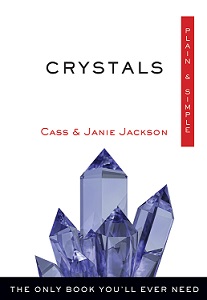
Crystals: Plain & Simple

Anyone that has been reading The Magical Buffet for a while knows that I love me those rocks, minerals, and gemstones. Generally they’re beautiful AND loads of people attribute benefits to having them, whether wearing them, charging water with them, or meditating with them. If I can have something pretty that might help with something, why the heck not I say.

That brings us to the latest book on crystals that I’ve read, “Crystals: Plain & Simple” by Cass and Janie Jackson. Red Wheel Weiser has been releasing a crap ton of books in the “Plain & Simple” series and honestly, I want to read them all! They cover topics as varied as runes, reincarnation, totems, numerology, and just about everything else. And they’re all in this compact paperback format that fits easily into your purse. I can’t be the only one who always has a book in their purse, can I? Enough about that, let’s talk about “Crystals”.

There are two amazing things about this book. One, it’s 135 pages long and doesn’t seem that long at all. Two, authors Cass and Janie Jackson crammed a lot if information in this book. Way more than 135 pages worth of info. They do a wonderful job of covering more bases than I was expecting. They guide you through shopping for crystals, how to clean and care for your crystals, and how to store them. You’ll also learn about prominent crystals from history and folklore. Then you get to the main event which is exploring individual crystals: their characteristics, their uses, and assorted correspondences.

If I have any criticism it’s just one, there are no color images of the crystals. I’m all for learning, but crystals are pretty and I wouldn’t mind some glossy, full color crystal porn in this, and any other book, about crystals. Just sayin’…..

“Crystals: Plain & Simple” says on the cover, “The Only Book You’ll Ever Need”. This book would provide an excellent base to start your journey learning about crystals, but it is a strong enough book that it could be the only one you’ll ever need.

To learn more, visit here.

Pssst……just as an aside, I’m already reading ANOTHER book about crystals. I love them so! Hopefully I’ll have that review for you soonish.

The Witches’ Almanac Coloring Book

Let’s face it, there are hundreds, probably thousands (maybe more?), of adult coloring books at this point. I don’t want to sound all hipster, but my mom and I were coloring in coloring books as adults when all you could do was poke around the children’s book section for something to color. In fact, I have a Hello Kitty coloring book right now because if you like coloring, you never outgrow the classics. I’ve reviewed adult coloring books before now and I will again. Prepare thyself.

The Witches' Almanac Coloring Book

The latest in my growing collection of adult coloring books is “The Witches’ Almanac Coloring Book”. I have to say I’m happy to see more occult, pagan, and witch oriented coloring books popping up and “The Witches’ Almanac Coloring Book” doesn’t disappoint. It has 7 different categories, although some are larger than others: woodcuts, constellations, the planets, creatures, Egyptians, Americas, and tarot. Woodcuts features a wonderful mix of woodcut illustrations. What is nice about them, and most of the images used in this coloring book, is that that feature bold black outlines with nice spaces to color. Sometimes these adult coloring books are so fixated on having non-childlike images that they forget someone is supposed to be coloring those pictures in! Anyway, you’ve got nudity in here, doesn’t get more adult than that! That’s right, you can color Adam and Eve. In constellations you’ll find the stars in the images of their namesakes. The planets shows the mythological beings that represent them. Creatures is filled with some surprising twists. Instead of more traditional mythological creatures, you get the crazy mish mash that are creature images from the Medieval period. The Egyptians section if loaded with the traditional hieroglyphic images that are immediately recognizable and perfect for coloring. The Americas has Calaveras, Mayan images, and other south of the border pictures. Lastly tarot offers all the classic tarot cards to color. There is a blank page at the very end to test colors before using them on your chosen picture.

I colored this myself!

Each section has a brief introduction offering some information about the images and some ideas of what to contemplate upon while coloring. Just in case concentrating on staying in the lines isn’t enough for you!

“The Witches’ Almanac Coloring Book” is a wonderful addition to the adult coloring book category. It’s perfect for those looking for an eclectic coloring experience.

You can find “The Witches’ Almanac Coloring Book” here.

Icelandic Magic

Not too long ago I finished reading “Icelandic Magic: Practical Secrets of the Northern Grimoires” by Stephen E. Flowers, Ph.D. and it was a truly fascinating work, a wonderful blend of scholarly and practical. (For those of you who consider working magic practical.) “Icelandic Magic” is divided into two books. The first part is history and basics of Icelandic magic and the second part is referred to as “Gray-Skin”, which is a reference to a famous magical book of semi-legend and in this case a book of magic in traditional Icelandic form.

The history of magic in Iceland is interesting as their magical and religious interactions with the influx of Christianity were more intermingling than in other regions. It makes their magical practice come across as a pragmatic, get the job done, kind of school. The first section also discusses lore and legends of Iceland’s magicians, which I loved! I adore reading about magic users and this was hands down my favorite part of the book for me. Before you get into the nitty gritty of the second half of the book, Flowers gives you a rundown of equipment you’ll probably want or need and the basic ritual format.
Then, if you’re ready, willing, and able you can venture forth with workings. These cover the categories: Wisdom, Power, Protection, Control, Prosperity, Love, Reception of Luck and Release of Blessings, and Sleep Magic. The groundwork laid down leading up to this point makes the workings easy to understand if not simple to master. You’ll also find useful appendices that include runes and magical letters, the names of Odin (hint, there are many), and the “Our Father” prayer in Latin.

“Icelandic Magic” is great for those interesting in learning about magical theories, history, and/or practice!

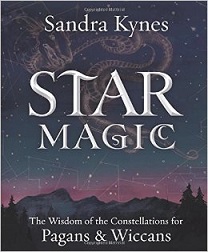
Star Magic

Sandra Kynes is a magical woman of many interests as her book catalog reflects. She’s the author of “Your Altar”, “Sea Magic”, “Whispers from the Woods”, and “Change at Hand” to name a few. Now Kynes has written into new territory again with “Star Magic: The Wisdom of the Constellations for Pagans & Wiccans”.

She starts with some historical background about astronomy and astrology, getting started with stargazing, and using star energy for magic and ritual. Using star energy for magic was inspired. Somehow for all the books I’ve read on using nature energies, until “Star Magic” I had never encountered a book suggesting using star energies. The moon? All the time. The stars? Not until now. She discusses using the stars for astral travel, dream work, and ritual.
From there it becomes an incredible reference guide. To make it helpful to Pagans the chapters are divided seasonally. It focuses on the northern hemisphere, but she makes sure to flip it around for the southern for some of the southern hemisphere constellations that we catch up north as well. What do you get once looking at a single entry? A whole lot.

Obviously there is the name of the constellation, along with a pronunciation. To help you locate it she provides visible latitudes (In Appendix A Kynes explains latitude and how you can find yours.), a description of the constellation, what constellations border it, and some good ol’ directions on how to find it in the sky. From there Kynes fills you in on history and folklore involving the constellation and also a few of the prominent stars within the constellation. If that’s not enough for you, and it’s not because we were promised some magic, you’re given magical interpretations and uses for the constellation.

In the appendices Kynes has an interesting section about the fixed stars of medieval magic. She discusses how we take for granted that now we know the difference between a planet and a star in the sky. More importantly, Kynes covers in detail Agrippa’s fifteen powerful stars which throughout time have been used medicinally, magically, and for astrology.

Sandra Kynes has done it again! “Star Magic” is a wonderful reference that is accessible to anyone. It would certainly be a welcome addition on not only any Pagan or Wiccan’s bookshelf, but in any magic user or astrologer’s collection too.

CONTEST SURPRISE!

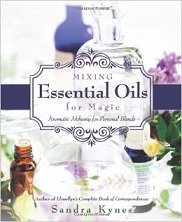
Did you know that Sandra Kynes wrote just as detailed of a resource about essential oils? Oh yes she did! “Mixing Essential Oils for Magic: Aromatic Alchemy for Personal Blends”.

Choose the best essential oils for your creative and magical mixing with this straightforward, hands-on guide. Through step-by-step instruction on how to measure, mix, and assess blends, you’ll move beyond following others’ recipes and into creating your own oil combinations.

“Mixing Essential Oils for Magic” offers everything you need to understand not only how to blend but also why specific blends work together. Learn how to mix oils by botanical family, scent group, and perfume note. Discover an encyclopedic listing of essential and carrier oil profiles, as well as thorough cross-references for the oils and their magical associations. With guidance on the historical and present-day uses of essential oils, you’ll make personal blending an integral part of your spiritual and magical practices.

Guess who has a copy to give away? Yup. May I direct your attention to the Rafflecopter entry form below?

a Rafflecopter giveaway

A Spell A Day

It’s January and although I’m not a fan of the New Year’s Resolution the start of the year is a great time to pick up your 365 day, or your “something” a day, type of book. Now I happen to have in my possession the most adorable little spell a day book you could ever want to own.

“A Spell A Day: For Health, Wealth, Love, and More” by Cassandra Eason is an amazingly diverse book of spells that quite literally has a spell for every occasion. First off, there are 366 spells in case of it being a leap year. Good catch Eason! Second, her introduction mentions that idea of opening the book for a spell at random. Suggesting that perhaps the spell you need will find you. I love that kind of thing. Third, it has a great index. With spell books, you want a good index because at some point you’re going to want to find some spell you read and you are NOT going to remember what day it was on.

Lastly, did I mention how cute it is? For reals yo. It fits perfectly into my small girl hands, and more importantly I can hold it open with one hand, which means just about anyone should be able to hold it while casting spells. It has a nice heft. It’s got a nice fabric and embossed spine. The font is in purple (I like purple). If the spells weren’t done so well, you could mistake “A Spell a Day” as a puff piece based on the book’s lovely physical appearance. Just remember, you should never judge a book by its cover. Just consider it a bonus feature when it’s awesome!

Cassandra Eason has crafted an interesting and diverse book of spells that, in my opinion, a beginning or experienced magic practitioner would find worth adding to their collection.

Sacred Objects, Sacred Space

“Sacred Objects, Sacred Space: Everyday Tools for the Modern-Day Witch” by Dayna Winters, Patricia Gardner, and Angela Kaufman isn’t necessarily a direct follow up to their first book “Wicca: What’s the Real Deal? Breaking Through the Misconceptions”, but if you were smart and followed my recommendation and bought their first book, this is an obvious “must buy”. For those of you who may need, or want, a bit more information than that, here we go.

The ladies (Winters, Gardner, and Kaufman) did it again. Just like “Wicca: What’s the Real Deal?”, “Sacred Objects, Sacred Space” manages to pack an insane amount of information into a compact little space. The writing never feels rushed or overwhelming, and yet in under 200 pages you will read about any tool you can imagine. Seriously! Here’s just a taste to get you going: potion bottles, cauldrons, poppets, Book of Shadows, candles, athame, mirrors, mala beads, singing bowls, and believe it or not, more! And with each item they discuss appropriate care, maintenance, and any cautions you need to be aware of with the item. I really enjoyed that with each item they also included craft ideas to decorate or personalize the items, or sometimes how to create the item from scratch.

But that’s just the objects part of “Sacred Objects, Sacred Space”. When it comes to spaces, they leave nothing out; living rooms, closets, dorm rooms, offices, balconies, bedrooms, gardens, and more. They cover the use of color in the home and creating your home altar.

If you want to know about everything that’s everything having to do with magical tools and spaces, “Sacred Objects, Sacred Space” is for you. Dayna Winters, Patricia Gardner, and Angela Kaufman (yes, of Moonlight Tarot) have created another book that seriously, honestly, and truly you should own. I hope they have another one in the works!

Crafting Calm

I love books that inspire and Maggie Oman Shannon’s “Crafting Calm: Projects and Practices for Creativity and Contemplation” does just that. And we’re talking truth in advertising, her book is divided up in to craft projects accessible to crafters of all levels that are designed to facilitate: calm, clarity, comfort, contemplation, creation, community, connection with others, and spirit.

By the time I was done reading “Crafting Calm” I had a handful of projects bookmarked that anyone could do, even me! There’s making personal prayer flags from crafting for clarity where you use things like placemats and a strong crafter’s glue for heavy beads and the like. There’s creating rock cairns from crafting for contemplation. The idea of taking some of my stones and minerals and stacking them meaningfully never occurred to me. Really! Then there are portable shrines from crafting for comfort.

I was particularly taken with Shannon’s description of a tiny matchbox style portable shrine that is often used in Central and South American countries. She bought one at an import store that was covered in bright fabric and had a small seal on it that read “Emergency Kit”. Inside was a “worry doll”, a red seed, and a clay angel pendant. The label glued to the bottom of the box read, “There are moments in which you need a peaceful vibe, a touch of good luck, and someone to tell your worries to. Use this emergency kit to balance those tough moments! An angel for peaceful thoughts, a Lucky Bean, and a Worry Doll.”

Shannon goes on to describe several simple ways you could make your own using Altoid tins or matchboxes. Some paint and some glue, a few bits and baubles that many have around the house and you’re well on your way. Well, I’m not a craft person. (Actually, I am and would love to be but I lack the time, space, and funds to indulge that part of myself.) However, I am a magical dabbler and one does not play in the occult without gathering up a box or two of portable shrine worthy odds and ends.

I decided to make a portable shrine focused on prosperity. I first found a piece of quartz, because in my opinion clear quartz makes everything better. Also, clear quartz is good for prosperity. I had a “wish stone” kicking around. It’s a smooth stone with the word “create” on it. I thought it would be a good addition because it would remind me and the universe to work to “create” prosperity. Lastly, I added some play cash, just to kind of spell out in clear, bold, text to the universe that we’re talking financial prosperity. Yes universe, CASHY MONEY! I didn’t have any tins or boxes, but if you’re a new age shopper like me you probably have multiple little velvet bags. So everything is in a royal purple velvet bag.

Not quite what the author intended, but I couldn't help but dive in!

This is how good “Crafting Calm” by Maggie Oman Shannon is; I couldn’t help but dive right in and create something after reading it! I hope to try more soon!

Crystals and Sacred Sites

I know it seems like I’m always super excited and gushing, but how excited was I to be given the opportunity to review the newest book by Judy Hall, the author of “The Crystal Bible”? The answer is, jumping up and down excited because as you may remember, I love minerals and gemstones. Judy Hall’s new book, “Crystals and Sacred Sites: Use Crystals to Access the Power of Sacred Landscapes for Personal and Planetary Transformation” does not disappoint.

Hall posits an intriguing theory. If you know the crystal or crystals associated with a location, you can align yourself with, connect with, and visit sacred locations. (Although I don’t see why you couldn’t use this for any location.) This means you learn about predictable locations such as Stonehenge and Glastonbury, but also unexpected spots like Pipestone National Monument in Minnesota and Lake Louise, Banff, Alberta Canada.

“Crystals and Sacred Sites” is oversized and entirely in full color. The images of the crystals are beautiful. This book is informative, thought provoking, and attractive. It’s equally at home on a shelf in your study or out on an end table as a picture book. “Crystals and Sacred Sites” is a welcome addition to category of books on crystals.

A diminished example of the beautiful work in Hall's book.

Crystals, Jewels, Stones

We just got done talking about the 2012 Claude “I’m a Bad Mutha’” Lecouteux’s “A Lapidary of Sacred Stones”. Now we’re going to talk about a reprint of Isidore Kozminsky’s 1922 “Crystals, Jewels, Stones: Magic & Science”, along with what the publisher calls a “preface” but it’s more like a mini book called “Crystals and the New Age” by Stuart Weinberg. What will 1922 Kozminsky be like versus Lecouteux’s 2012 Medieval lapidary? You’ll have to wait to find out because we’re starting with Stuart Weinberg’s “Crystals and the New Age”.

Stuart Weinberg is in a unique position to write about crystals, gems, and minerals. He’s the owner of Seven Stars Bookstore in Cambridge, MA and from the photos provided in the book, Weinberg carries an insane selection of crystals and precious stones. Sadly, I’ve never had the chance to shop there, but it is probably a good thing for my checking account. What’s he’s written is a perfect introduction, not just to Kozminsky’s work, but to the crystal oriented New Age in general.

Weinberg gives you an excellent and efficient introduction to chakras, astrology, and the role crystals can play in them. Then when he gets to channeling you’re given a rundown on Emanuel Swedenborg, Helena Blavatsky, Alice Bailey, Edgar Cayce, and Jane Roberts and Seth. Weinberg wraps things up with a little history of crystals themselves within the New Age movement. How the movement effected the availability of precious stones, what became popular when and how. A topic I feel confident Weinberg can speak expertly on. In fact, I would have loved for that section to have been longer. Could there be a solo Weinberg crystal book in the future? If so, more history on the retail of stones please!

Now it’s time to take a look in the past to see what Isidore Kozminsky felt should go in his book of “Crystals, Jewels, Stones: Magic & Science”.

Kozminsky opens explaining that a sincere attempt has been made to blend modern science with ancient occult philosophies. Obviously this is intriguing to the modern reader because the “modern science” in question is from 1922. Part One is “Crystal and Stones in the Bible and World Mythology”. It’s in here that he discusses “The Most Ancient Science” astrology, the Breastplate of Judgment (which is the rewarding topic of most of the chapters of part one), and stones in mythology. One chapter titled “The Greatest Charms in the World” is about the scarab. As a lady with earrings with scarabs carved into them, I will totally take “The Greatest Charm in the World” title. But enough about the opening act, you totally want to hear “Part Two: Precious and Semi-Precious Gems Arranged in Alphabetical Order”.

Just like I did with Lecouteux’s lapidary, I’m going to look up emerald in Kozminsky’s book. When I do, I’m told to see Beryl. Once I’m at Beryl, listed clearly underneath is Emerald. It gives me loads of alternate spellings and mentions that one of its derivations is through the Latin Smaragdus. (Readers will remember that Emerald was listed under Smaragdus in Lecouteux’s “A Lapidary of Sacred Stones”.) The entry also lists a few emeralds that are notable for their size. Sadly, it’s not very exciting of an entry compared to Lecouteux’s lapidary, but that’s just because I chose Emerald. Diamond has a wealth of intriguing stories as well as factual information.

Here we are at the end. Both books read, both books reviewed. Neither one is better than the other because they both have different things to offer, which I hope my reviews did a little bit to highlight. Sadly, when it comes to the land of studying crystals and precious stones, one really can’t have too many reference books. And I’m not just saying that to make the publishers happy. If you were starting your collection you wouldn’t do too bad having these two books on the shelf.