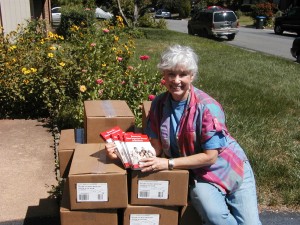
10 Questions with Jason Pitzl-Waters

1. For my readers who are unfamiliar with you and your website The Wild Hunt, what is The Wild Hunt and how did it’s creation come about?

The Wild Hunt is a daily-updated blog focusing on news and opinion of interest to the modern Pagan community and its allies. I started it out of the frustration that there wasn’t a site like The Wild Hunt for me to read, so I ending up being the change I wanted to see in the world. Six-plus years later, here I am, still looking for and reporting on Pagan news.

2. As a less thorough and less prolific web writer I’m curious, how many hours a week do you put into The Wild Hunt?

Per week? On a “light” week I spend maybe twenty hours, sometimes more. It depends. Most days I usually spend at least three hours in the morning reading through my news feeds, deciding what goes on the site that day, and then writing it. When I’m doing first-person reporting or interviews it can take a lot longer. I nearly pulled an all-nighter not too long ago, but I value my sleep and try to avoid that.

3. How do you decide what news stories to discuss on your site?

A very good question! I try to pick what I feel are the most “newsworthy” story (or stories) of the day, the ones that I feel will have deep ramifications for modern Pagans in some form or another. So, for example, an update on an important legal case would take precedence over a routine “meet the Pagans” article. It’s a daily judgment call. I avoid trying to be exhaustive; Wren’s Nest at Witchvox does a far better job of that than I do.

4. You’ve covered many topics on The Wild Hunt, what do you feel are some of the more important articles you’ve done?

I think the current case involving Patrick McCollum and the “five faiths” policy in California is hugely important, and I’m proud of the work I’ve done covering it. Dan Halloran’s candidacy and win, and the growth of out Pagans in the political sphere is an ongoing concern. I also think the legal struggles of Santeria in the United States, which I’ve covered extensively, will have ongoing reverberations for all minority faiths, including ours, in the future.

5. Have you ever experienced backlash from any of the Pagan communities due to topics you’ve addressed?

Some, but not a lot, and nothing that got too personal. I don’t please everyone all the time, but I think I have a general track record of being fair in my assessments, and willing to entertain perspectives that I may not personally agree with.

6. What challenges do you see facing the Pagan/Heathen community? How can the community resolve those issues?

Our biggest challenge will be how we continue to handle our growth and (inevitable) entrance into the mainstream of modern culture. Many of the legal cases, conflicts, and big stories I cover stem, in one way or another, from the friction of a “Christian” society dealing with religions that don’t fit into an easily understandable monotheistic framework like Judaism or Islam. This is largely unavoidable, and the best thing we can do is continually engage the world around us, the people we live among, and be “out” about who were are and what we believe in.

7. Tell everyone a little bit about The Pagan Newswire Collective and Pagan + Politics.

The Pagan Newswire Collective is an open collective working to build a better Pagan journalism on step at a time. The ultimate goal being to create a true Pagan-run newswire that can bring news to a variety of Pagan media outlets. A first step has been the creation of topic-focused group blogs to engage and discuss important issues. Hence Pagan+Politics, our political-themed projects, and its sister sites, Warriors & Kin, dealing with Pagans in the military, and The Juggler, dealing with Pagan themes in the arts and pop-culture. Beyond that, we are looking to start building local bureaus that will start gathering and sharing news about their communities, to really engage modern Paganism in telling its own story.

8. Are there other projects that you’re working on that my readers should be looking out for?

See above, regarding the just-launching Warriors & Kin and The Juggler blogs. There’s more to come from the PNC, so keep your eyes peeled! I’ll also be at the Pagan Spirit Gathering in June to discuss the future of Pagan media, and I hope to engage my fellow Pagans at future gatherings as well.

9. What is your favorite interpretation/telling of The Wild Hunt?

I’m a big fan of Herne the Hunter, my favorite wild huntsman.

Sometime a keeper here in Windsor Forest,
Doth all the winter-time, at still midnight,
Walk round about an oak, with great ragg’d horns;
And there he blasts the tree, and takes the cattle,
And makes milch-kine yield blood, and shakes a chain
In a most hideous and dreadful manner.
You have heard of such a spirit, and well you know
The superstitious idle-headed eld
Receiv’d, and did deliver to our age,
This tale of Herne the Hunter for a truth.
— William Shakespeare, The Merry Wives of Windsor

10. Parting shot! Ask us here at The Magical Buffet any one question!

What do you feel is the most important story within modern Paganism that isn’t getting covered? As a journalist I’d love to know!

That’s actually a rough question because you get there first. I find more relevant, topical news stories on The Wild Hunt than anywhere else. Rarely do I stumble across something I think is noteworthy in Google News that you haven’t already touched on, or you do so the next day. And now with The Pagan Newswire Collective even more stories will be told and made available. Personally, I’m just excited to watch this whole thing evolve. However, if any of my readers have thoughts about things for The Wild Hunt to cover, leave it in the comments section for Jason to see.

About Jason:
Since launching “The Wild Hunt” in 2004, Jason Pitzl-Waters has become one of
the leading voices for analysis and insight into how modern Pagan faiths are
represented within the mainstream media. In addition, “The Wild Hunt” has also
conducted in-depth interviews with prominent figures within modern Paganism, academia, and religion journalism. Jason wants to raise the level of discourse and journalism on important issues within the modern Pagan and Heathen communities, while advocating a broader commitment to encouraging religious multiplicity and solidarity (where appropriate) with surviving indigenous and non monotheistic faith groups.

In addition to his work with The Wild Hunt, Jason has also written for newWitch Magazine, PanGaia Magazine, Thorn Magazine, and Llewellyn Worldwide. He also maintains a weekly podcast entitled “A Darker Shade of Pagan” that explores underground music from a Pagan perspective.

Jason is a former Board of Director member of Cherry Hill Seminary, and is coordinating The Pagan Newswire Collective, an open collective of Pagan journalists, newsmakers, media liaisons, and writers who are interested in sharing and promoting primary-source reporting from within our interconnected communities.

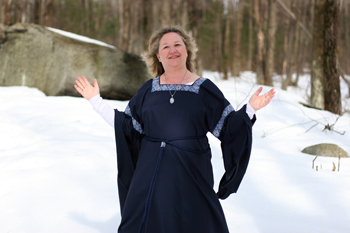
10 Questions with Ellen Evert Hopman

1. First off, we’ve been in contact for around 2 years, how is it possible that I’ve never done an interview with you? Am I the worst or what?

We live in “interesting times” and such things often get overlooked. Do not fret, all is forgiven!

2. My readers know you from your nonfiction work that has been featured on the site: assorted tree folklore, a review of “A Druid’s Herbal of Sacred Tree Medicine”, and your award winning essay “Female Druids”. What they may not know is that you’re also an accomplished fiction writer. How did you evolve into also writing fiction?

I don’t think I had a whole lot of say in the matter. I am convinced that the Spirits are “using me” for lack of a more elegant term. I am one of those people who has to write every day or I feel that I am not living up to my life’s purpose.

Tackling fiction was terrifying at first. I was not an English major and my training has mostly come from reading voraciously since the age of five. I have now penned three novels. Happily I seem to have found a certain rhythm to the writing. After the first one or two chapters the characters take over and then all I have to do is follow them around. I am just a scribe, recording their actions and what they speak about. It’s rather like watching a movie unfold.

All three novels take place in late Iron Age Ireland and Scotland. Only two are in print at this moment, “Priestess of the Forest: A Druid Journey” deals with the very first encounters between the indigenous Celtic tribes of Ireland and their Druids, with the Christian missionaries. It takes place several centuries before Patrick. He gets all the press but there were missionaries from Gaul and Coptic monks from Egypt actively converting people several centuries before Patrick appeared on the scene. It is written from the point of view of the Druids and includes rituals and ancient Celtic beliefs and practices. It also deals with the concept of sacred land as it was once understood by our European ancestors. Something we need to re-learn as a species if we are to have a future on this planet.

The second book continues where the first one left off. “The Druid Isle” deals with sacred water and the mystical voyages of the Celts called immrama. It takes place in the Hebrides of Scotland on a real island where I was privileged to spend time in 1983. That island was once a holy place of the Druids but was taken over by Christians in the fifth century.

The third book does not have an official title yet and it is sitting on the publisher’s desk awaiting approval. It deals with sacred fire on the land and in the sky. The three books make up a trilogy that honors Land, Sea and Sky, the mystical “Three Worlds” of the Indo-Europeans which form the basis of Indo-European cosmology.

3. In 2008 “Priestess of the Forest: A Druid Journey” was published. Now the next book in the series, “The Druid Isle”, has released. Without giving too much away, what can readers expect from the new book?

“Priestess of the Forest: A Druid Journey” is an introduction to rituals for all the holy days and life passages as understood from a Druid perspective. “The Druid Isle” goes more deeply into the actual training of a Druid or Fili (sacred poet). I would hope that the reader would understand Indo-European spirituality a bit more deeply after reading the second book.

4. “Priestess of the Forest” and “The Druid Isle” are fictional stories, but were carefully researched. What kinds of factual things can readers learn from these two books?

There are details such as clothing, food, housing, weapons and relationships that are researched. However, much of it comes from my own imagination, vision or intuition, or from whatever Spirits are guiding this process. For example, “Priestess of the Forest” came out in February of 2008. In April of 2008 British archaeologists announced the discovery of the very first Druid grave.

In my book the characters had shown me a Druid funeral rite which involved the herb Artemisia as a drink and as incense. When the archaeologists opened the grave they found inside a container that had last held Artemisia tea.

So far nothing quite as dramatic has happened with “The Druid Isle”; however one interesting thing did come to my attention after I finished the work. The characters of the second book showed me how the Fili (sacred poets) of Ireland made a peaceful transition to accepting the Christians and one of the major characters in that process is named Lucius. Shortly after I wrote the book I learned that the very first Pagan Celtic king to build a Christian church on his land was named Lucius. He was British.

These little confirmations show me that maybe somehow I am on the right track with all of this.

5. Do you feel that perhaps readers learn more from a compelling fictional story, rather than reading straight nonfiction?

The Druids were and still are intellectuals. Once thing most Druids of today have in common is that we are avid readers and generally highly educated. In ancient times it was exactly the same. However, there are many folk out there who would rather read a fast paced novel with lots of warrior action and romance in it and get their history and teachings as a by product. Not everyone gets joy out of hefty scholarly literature.

There are people who have thanked me for writing the books because they just didn’t have the temperament to read the scholarly tomes. I feel these books are a painless way into the mindset of the Druids and also a little primer on how to be a practicing Druid of today.

6. Now that “The Druid Isle” is published, what’s your next project that my readers can look forward to?

As I mentioned there is a third Druidic novel waiting to be accepted by the publisher. I am also putting the finishing touches on a book of Highland herbs and Scottish lore.

I have a new herbal that came out this month that teaches a person how to make simple and inexpensive first aid remedies from spices and foods found in the kitchen. It’s called “Making Kitchen Medicines – A Practical Guide”. You can order it here (eventually it will be at Amazon, Barnes and noble and other places)

7. Because my readers may be curious, you’re a Druid Priestess. How is a Druid different from a Wiccan or Pagan?

“Pagan” is a generic term that covers many different paths; Wicca, Witchcraft, Druidism, Asatru, etc. I wrote a book called “Being a Pagan – Druids, Wiccans, and Witches Today” (with Lawrence Bond) that explores all the many paths and permutations of Paganism. In case anyone is interested you can find all my books on my website www.elleneverthopman.com

Here is a definition of Paganism from The Papal Apology Project, an international effort that I was a part of some years ago;

“Modern Paganism (sometimes referred to as “Neo-Paganism” to distinguish it from original and indigenous pre-Christian folk traditions) is a revival and reconstruction of ancient Nature-based religions, adapted for the modern world. Paganism is an umbrella term denoting a collection of natural religions of the living Earth. Pagans generally view humanity as a functional organ within the greater organism of all Life, rather than as something special, created separate and “above” the rest of the natural world. Pagans seek not to conquer Nature, but to harmonize and integrate with Her. Paganism should be regarded as “Green Religion,” just as we have “Green Politics” and “Green Economics.”

See more here.

“Wicca” is a modern religion that was invented in the 1930’s primarily by Gerald Gardner but with the help and inspiration of a number of others. If you want to learn how it was put together the best book I have read is Ronald Hutton’s “The Triumph of the Moon”. Wicca is duo-theistic and posits that “all the Gods are one God and all the Goddesses are one Goddess”. Wiccans cast circles and call in the four directions. Wiccans are cheerfully eclectic and find no harm in invoking Pan, Thor and Kwan Yin into the same ritual.

“Druidism”, at least the kind that I practice, is firmly grounded in the folklore, language, music, art, religion, archaeology, beliefs, prayers, hymns and incantations of the ancient Celts. There are other types of Druids who are more Wiccan and some Druids who are actually practicing Masonry with a paper thin veneer of Celtic flavoring, but the type of Druidism I practice honors the Three Worlds of Land, Sea and Sky and addresses only the Celtic deities. We make offerings to water, fire and trees and try to use actual charms and incantations from genuine Celtic sources.

8. If any of my readers wanted to learn more about Druidism, where would you suggest they start?

I would suggest going to the Whiteoak website and checking out the basic reading list. It was put together by fifty or more Druids specifically to cover all aspects of our beliefs, history and practices. When you have read five or more of the books feel free to apply to our discussion list (which is by invitation only). We also have a teaching program that leads to initiation for those who are so inclined. But the first step is always to do the reading and then get on to the discussion list.

As a shameless self promotion I have to plug my own books, each of which is designed to instruct the reader in basic Druid spirituality. “A Druid’s Herbal for the Sacred Earth Year” takes you through the seasons and teaches the appropriate herbs to use for ceremonies and life passages such as weddings, funerals, house blessings, etc., giving the spiritual and medicinal properties of all the herbs.

“A Druid’s Herbal of Sacred Tree Medicine” teaches about the Irish, pre-Roman, Ogham alphabet and specifically the oldest version which is called the Tree Ogham because the letters are all named for trees. In that book I teach the spirituality and medicinal uses of trees. I also teach about the Celtic Fire Festivals; Samhain, Imbolc, Beltaine and Lughnasad, and include a primer on Ogham tree divination.

These and more of my books can be found on my website. As an author I really appreciate it when people go through my site to purchase books!

9. Have you found any portrayals of Druids in popular culture that you liked?

Not really. That’s a sad statement but I find that Druids are usually portrayed as men and often as violent, murderous creatures. Female Druids are generally ignored and overlooked by popular writers. I wrote an article on female Druids that you published a while back (thank you!) and I hope people will read it to see what they have been missing;

10. Parting shot! Ask us here at The Magical Buffet any one question.

I’d like everyone to look deep inside and ask themselves what kind of world they really want for all the Earth’s creatures. And then call your representatives and demand that they listen!

About Ellen:
Ellen Evert Hopman has been active in American Druidism since 1984. She is co-chief of the Order of the Whiteoak (Ord na Darach Gile), a popular author of Druidry-related titles including Priestess of the Forest: A Druid Journey and The Druid Isle (Llewellyn), and a master herbalist. She lives in Massachusetts.

To learn more, visit her website, The Order of the WhiteOak (the Druid Order of which she is Co-Chief), Shrine of the Goddess Brighid (that she co-created with J. Craig Melia), Llewlleyn, and Dreamz-Work Productions (where you can get your copy of “Making Kitchen Medicines” which will soon be available from Amazon, Barnes and Noble and other outlets).

10 Questions with Judika Illes

1. I’m sending you these questions right after you got back from the Sacred Space Conference in Maryland. How was the event?

It was wonderful. I hope to return for next year’s event. For those who are unfamiliar, Sacred Space presents an annual four day conference featuring diverse spiritual and metaphysical presenters, workshops, and rituals. Personally, I really enjoy lengthier, more relaxed events where people have time to socialize and exchange thoughts and experiences. Sacred Space has great vendors, great teachers, interesting people. And it was in a hotel! Four days in a hotel crowded with metaphysical people- it doesn’t get much better!

2. The other featured presenters were Christopher Penczak, Raven Grimassi, and Stephanie Taylor. I’ve interacted with Christopher a few times for The Magical Buffet and have always found him to be unreasonably nice. How was it to meet Raven Grimassi and Stephanie Taylor?

We had actually met before. I love their work and I love them. Raven, Stephanie, and I did an event together in Salem last October and will be reuniting this coming October for the Salem Witches’ Halloween Ball, which I’m really looking forward to. http://www.festivalofthedead.com/witchesball/

But Sacred Space was the first time I had the opportunity to attend one of their workshops. Raven and Stephanie are great, insightful, and very interesting teachers—very clear, very articulate and dynamic, and very generous with their wisdom.

3. Okay, I’m dieing to talk about the encyclopedias! I own “The Element Encyclopedia of 5000 Spells” that you authored and it is behemoth! What made you decide that you could compile so much magical information into one gigantic tome?

Insanity? Neither the publisher nor I realized how large that book would turn out to be until we were already deeply committed to the project and it was essentially too late to turn back. Just prior to writing “The Element Encyclopedia of 5000 Spells”, I had written a very lean book of spells, “Magic When You Need It”, which has one-hundred fifty spells. My publisher knew that I collected spells- I had boxes and boxes of notes- and asked whether I could write a massive compendium next, something like “The Joy of Cooking” but for spell-casting rather than recipes. The publisher was playing around with numbers- could I write a book with one-thousand spells, three-thousand, five-thousand? At one point, we were up to ten thousand.

In the beginning it was all very theoretical for me. I was asked, “Could you write a book with five thousand spells?” and I replied that theoretically we could do any number. Spells are infinite—they’re like grains of sand on the beach, stars in the sky. There’s always another spell or another variation. Even though five thousand is definitely a lot of spells, it’s still just the tip of the iceberg.

Writing that book in some ways was a luxury for me. As an author, I’m always conscious of the information that has to be left out because there isn’t space to include everything. With 5000 Spells, I was able to include variations of spells, demonstrate the incredible variety of spells, trace the way some spells have evolved over time and through cultures, which, with a smaller book wouldn’t have been possible.

4. You also wrote “The Element Encyclopedia of Witchcraft” and “The Encyclopedia of Spirits”. Can you give us a rough idea of the process you use to compile so much information from varying sources into one cohesive reference book?

Well, simply put, I work around the clock. I’m very focused on whatever I’m working on. It’s complete immersion. When I was writing “The Element Encyclopedia of Witchcraft”, I didn’t watch or read anything in my spare time that didn’t involve a witch. Likewise with “The Encyclopedia of Spirits”.

In terms of selecting content, there are three components. Once a book is designated an “encyclopedia” it has to be comprehensive. It can’t include only my favorite aspects of a topic. Certain things must be included. For example, you can’t write an “encyclopedia of witchcraft” without including Gerald Gardner, Aleister Crowley, Harry Potter, and the witch hunts.

Then I consider who or what should be better known: who are the unsung heroes of witchcraft, for instance, or what spirits aren’t getting the press they deserve. For example, there’s currently a very vital goddess tradition in Vietnam that not many Westerners are aware of—I made sure to include those goddesses in “The Encyclopedia of Spirits”. And then the third component evolves into a voyage of discovery for me. As you begin researching, one thing leads to another and you arrive at some very unexpected places. I learn something new with every book I write and I hope that my own enthusiasm and excitement translates into the pages.

Each of my other encyclopedias, to some extent, derives from the experience of writing 5000 Spells. Although each book is a stand-alone, they also complement each other and serve as companion volumes. Spell-casting is more successful and more pleasurable if you understand all its components. Books by their nature offer only limited space. There are only so many pages. There’s always more information that didn’t fit or was discovered after the book went to print. So although my books are huge and packed with information, I’m very conscious of what’s not in the book, what information isn’t discussed as fully as I would like. Those are things we can discuss more fully during my workshops but sometimes other books also create opportunities.

I began writing “The Element Encyclopedia of Witchcraft” immediately after completing 5000 Spells. One of the things I really wished to expand upon was the magical nature of many plants incorporated into spell-casting. In 5000 Spells there wasn’t always room to discuss in great detail why certain plants are used in certain spells, the significance of individual botanicals. One of the first sections of “The Element Encyclopedia of Witchcraft” that I wrote was a large section devoted to witchcraft-associated plants.

Likewise with the Encyclopedia of Spirits: in 5000 Spells, spirits are constantly referenced. Those spells are easier to understand and accomplish if you really understand the nature of these spirits, if they’re more than just names and superficial legends.

5.I know you love tarot. In a recent article I said I was a fan of more traditional in appearance tarot decks, such as the “Universal Waite Tarot” and the “Smith Waite Tarot”. What are some of your favorite tarot decks?

I call the Ride-Waite-Smith my “old reliable”—I was a telephone psychic for a couple of years and really came to depend on that deck. I love the Albano-Waite Tarot, too. Oswald Wirth’s deck is a favorite as is Kipling West’s Halloween Tarot- I really, really love that deck. Another deck that I’ve been working with lately is Robert Place’s Vampire Tarot—that one really intrigues me. I pull a tarot card almost every night on twitter using whichever deck is closest to hand. I find that’s the deck I reach for most frequently.

6.I saw on your website that you wrote a popular monthly feature, Beauty Secrets of the Ancient Egyptians for TourEgypt, the Egyptian Ministry of Tourism’s on-line magazine. How did you land that gig, and any simple beauty tips of ancient Egypt you can pass on?

They had advertised that they were looking for writers and I responded. The concept of ancient Egyptian beauty secrets was my idea. The ancient Egyptians had a very holistic outlook- they didn’t separate beauty from health from magic. It’s all intertwined. So fragrances, for example, are simultaneously evocative and seductive, magically powerful and potentially therapeutic. A very simple anti wrinkle treatment involves placing two drops of essential oil of frankincense into a teaspoon of sweet almond oil and applying it to the cleansed face before retiring for the night. As an added bonus, many people find frankincense to be aphrodisiac plus, if you inhale the fragrance, it creates a relaxing effect and frankincense, like essential oils in general, is antiseptic.

Now that’s a modern adaptation of an Egyptian formula. Back in the old days, the Egyptians would have used goose fat as the base but modern sensibilities probably prefer sweet almond oil, available at virtually every health food store and plenty of supermarkets, too. Another light vegetable oil could be substituted too, if preferred, such as apricot kernel or grape seed.

Link to TourEgypt articles:

http://www.touregypt.net/magazine/egyptcolumns.htm#Ancient%20Beauty%20Secrets

7. You’ve researched thousands of different cultures for your books, what is one of the most surprising things you’ve learned in your research?

The virtually universal existence of a magical culture that transcends ethnic, national, political, and religious boundaries. There is a culture of spell-casting that despite all kinds of regional and cultural differences shares so much in common. I am very proud to belong to this greater metaphysical community.

8.What are your thoughts on how magic is portrayed on television and in film?

Well, I’m an easy sell- if you stick a witch or magical practitioner into any sort of entertainment, I’m fairly guaranteed to watch it. But you always have to keep in mind that these portrayals are intended as entertainment. In most cases, what you’re viewing is fantasy and so you have to suspend expectations of reality. This is true even when what you’re watching on-screen superficially looks ‘real’ such as Arthur Miller’s “The Crucible”. That’s a work of fiction loosely based on a historical event, not an accurate depiction of the events in Salem. This may sound obvious if you’re already grounded in the realities of magic but I receive a lot of email from frustrated people who are sincerely attempting to learn practical magic by watching “Charmed” and “Buffy”.

What I look for personally is the essence of what’s being portrayed. The way that essence is portrayed makes the difference between something I enjoy watching and something that disturbs me. I like my witches fun, empowered, and unrepentant. My favorite movie witch is Veronica Lake’s Jennifer in “I Married a Witch”. I really like “La Sorcière”, although it’s tragic. The way Bellatrix LeStrange is portrayed in the Harry Potter films fascinates me for reasons that will probably end up in a book someday. I like Marge Simpson and her sisters in “Tree House of Horror VIII”.

I can enjoy watching something but still have issues with it. I think Kim Novak is gorgeous in “Bell, Book, and Candle”. I covet her wardrobe but I’m impatient with those old falsehoods about witches not being able to cry or fall in love or wishing they were mundane mortals. I love “Buffy the Vampire Slayer” even though I resent the way that witchcraft is used as a metaphor for addiction.

9. What projects are you working on now that my readers can look forward to?

I just completed “The Weiser Field Guide to Witches”, which should be out later this year. That was a lot of fun- it’s sort of a mini-encyclopedia. Right now, I’m working on another thousand-pager, an encyclopedia devoted to saints, holy people, and miracle workers from around the world and spells and rituals associated with them.

10. Parting shot! Ask us here at The Magical Buffet any one question.

Any suggestions for books or classes I should be working on?

I love your encyclopedias! If you can keep finding themes for them, I’ll keep reading them.

About Judika:
Judika Illes is the author of . She is a tarot card reader and a certified aromatherapist. Learn more at www.judikailles.com.

10 Questions with The Vigilant Citizen

1. What made you decide to discuss occult symbolism through the prism of pop music, and particularly music videos?

My two passions in life are music and occult history. If I’m not focusing on one, I’m most probably focusing on the other. The more I gain knowledge on western occultism, the more I understand its importance in pop music. The weird or strange symbols I saw on album covers or music videos become easily readable. I collect old vinyls from the 60’s, 70’s and 80’s and I’ve noticed a great number those groups integrated this knowledge in their songs and artwork. It was done in an artistic way. I’ve however noticed a different type of occult symbolism in recent videos: it is used by mainstream pop artists, insidiously hidden and aimed at a young crowd. Far from being artistic, the imagery used in videos pushed by international media corporations is often deceptive and inherently sinister. I felt the urge to discuss those taboo issues so I’ve created Vigilant Citizen.

2. Do you feel the prevalence of occult symbolism found in pop music comes from the artists and video directors, or is it a coincidence stemming from occult symbolism seeping into the general consciousness?

I believe there are two types of occult symbols: the “artistic” ones – emanating from a desire to express one’s reality through symbolism – and the “corporate” ones – which often come from elite secret societies. A true artist using symbolism to in his/her art will be inspired by his/her surroundings and his/her inner being. Occult symbols are extremely powerful and are believed to be embedded in our subconscious so it is only normal for them to appear in artistic expression.

However, “corporate” occultism takes symbols from organized secret societies such as Freemasonry, or Illuminati and “plants” into mass media in order for them to become the norm. Confucius said “Symbols rule the world, not words nor laws”. In other words, you can recognize who is truly in power by identifying the symbols in popular culture. During the Middle Ages, almost all of popular art was religious and Christian. The Christian Church ruled the Western World.

Now, occult symbolism is increasingly apparent in popular art. Who rules the world? Occult secret societies.

3. I loved your interpretation of Lady Gaga’s “Bad Romance” video. Did you see dream analyst Carolyn Wills’ discussion of the video on Leslie Gornstein’s “Answer B!tch” blog? Thoughts?

I’ve read a couple of interpretations of Bad Romance and I can’t say that any of them is flat out wrong. Good art can have multiple layers of interpretations and, I have to say, this video is good art. When it came out, many readers of the site bombarded me with e-mails, pointing out symbols I’ve discussed in other videos. Bad Romance is definitively part of a bigger “movement” in music videos.

4. Often times the occult symbolism you find in music videos paints a dark and ominous picture. However, your analysis of The Black Eyed Peas “Meet Me Halfway” is actually quite uplifting. Does this mean that occultism doesn’t automatically equal bad?

Occult means “hidden”, not “bad”. Occult schools believe esoteric knowledge is too powerful for the profane to dabble with it. So it is kept hidden, the same way mothers hide knives from young kids. It is for their own safety. According to occult schools this knowledge can lead you to two extremes and everything in between: it can liberate you from the shackles of materiality, put you in direct contact with divinity and make you nothing less than immortal… Or it can also make you deal with demons, black magic and leave you into eternal torment.

“Meet Me Halfway” seemed to portray this positive side of esoteric knowledge. It is indeed quite uplifting.

5. In your post “The Occult Roots of The Wizard of Oz” you say, “the entire story of the Wizard of Oz is an allegorical tale of the soul’s path to illumination – the Yellow Brick Road.” However I feel that it could be argued that the concept of the “hero’s quest” or “hero’s journey” can be found before the Theosophical movement. Is this a what came first, the chicken or the egg kind of debate? What came first, the spiritual concept or the basic storytelling device?

Theosophy is nothing more than an attempt to find the common underlying knowledge found in ancient religions. It did not create any new concepts; it tried to put them together in a cohesive way.

Almost all ancient civilizations had allegorical tales which could be fully understood through the glasses of esoteric philosophy. Whether we look at Egyptian mythology, Greek epic poems or Native American legends, there is a “face value” meaning and a hidden meaning that can only be understood by initiates. The Wizard of Oz is what we can call an American allegorical tale.

6. Was there any nefarious occult symbolism in Miley Cyrus’s 2009 Teen Choice Awards performance? Because honestly, that was just evil.

Didn’t watch that, sorry.

7. Do you look at books and film with the same eye towards recognizing occult symbolism? If so, the Twilight series…discuss. Obviously werewolves are rife for the teenage males confronting puberty analogy, and vampires originally reared their fanged heads as a nifty way to confront sexual themes in repressive societies, but did Mormon author Stephenie Meyer accidentally push any big occult buttons?

I’d have to read the books to give a definite answer on Twilight’s underlying meaning (it there’s any). I’ve however watched both movies and I can say there is a definite use of “occult lore” in the movie but it is all done in a very superficial matter.

I think the movies focus on tapping into the primal needs of young girls (and not so young) such as: fascination with the mysterious and dangerous, feeling protected by a strong man, attraction towards the “forbidden fruit” and….oh yea, watching a bunch of shirtless guys.

8. Lady Gaga and Rihanna have both been big on your website as of late. Who is going to be the next artist trending heavy with occult symbolism?

Taylor Swift and Adam Lambert. They are definitively next.

9. I’m going to be honest with you, and in turn, some honesty for me. I love Lady Gaga and own both “The Fame” and “The Fame Monster”. Does Lady Gaga ever make its way onto your CD player?

Honestly, not in my CD player…I…I..just can’t. But I can’t say I get mad when one her songs come up in a dance club. Her music is has better production value than most of the crap out there.

10. Parting shot! Ask us at The Magical Buffet any one question.

OK, you’ve asked for it! Have you ever witness true magic resulting from a magical spell or ritual? If so, can you describe the event?

Alas, I have never witnessed what I would consider true magic.

About The Vigilant Citizen:
My quest for knowledge led me to obtain a Bachelor’s degree in Communications and Politics. I’ve mainly studied the way power uses mass media to shape and mold attitudes of the general public. My education was perfect to hold a job in marketing or PR but did not satisfy my thirst for truth.

My efforts to further understand the forces governing the world lead me to study secret societies, mystery religions, esoteric sciences and ancient civilizations. I’ve spent the last five years researching Theosophy, Freemasonry, Rosicrucianism, the Bavarian Illuminati and Western Occultism. These schools of thoughts have many things in common: they are based on Hermetic teachings (Hermes, Thoth, Enoch, Mercury), they attach EXTREME importance to symbolism and they recruit within their ranks the most prominent people of all fields of society, especially politics, law and public service. The natural result of this phenomenon is the display of occult symbolism in all aspects of society, whether it be music, movies, buildings or else. My goal is to bring out the meaning of those symbols in a clear, concise and entertaining way.

I am also a music producer who has composed music for some fairly known “urban” artists. My work in the music business has led me to deal with talent agents, video directors and record companies. Through my experiences and my contacts, I have discovered some of the darker aspects of the entertainment industry which I found were in direct connection with my studies in occultism. My understanding of the state of mind that prevails in the higher levels of the ladder makes it probably easier for me to decifer the symbolism in music videos than it is for everyday people.

Learn more at The Vigilant Citizen’s website.

10 Questions with Ellen Dugan

1. What does it mean to be a “Garden Witch” or to practice “Garden Witchery”?

I define a Garden Witch as: “A practical, down-to-earth type of practitioner. A Witch who is well versed in green magick, herbal knowledge and its uses and who is a magickal gardener.”

2. How does your new book, “Book of Witchery”, differ from your previous release “7 Days of Magic”?

Well, to begin with its more than doubled in size! The 2004 manuscript which was made into 7 Days of Magic was only 34,000 words long. Book of Witchery finished up at over 87,000 words long.

I have been teaching classes all over the country from the information in 7 Days of Magic for years. So when the opportunity arose to re-release the book I told the editors that I wanted to expand the book make it more in depth and to make it bigger.

So Book of Witchery, has all of the basics, that folks have come to expect from me, but I added to the information and went deeper. It also now it features daily mediations, potion and philter recipes, magickal craft projects, a daily ritual, and a new chapter on “Full Moon Witchery”.

The “Full Moon Witchery” chapter goes a step farther than your usual magickal book and explores what magickal energies are in play when the full moon occurs on the different days of the week. For example, what will happen when a full moon occurs on a Monday- which is the day of the week devoted to the moon and lunar magicks….. This final chapter allows you to think outside the box and to learn something new.

3. Why write a book that focuses on the days of the week?

Because knowledge is power! Once you know your daily correspondences you have options and amazing opportunities to personalize your Craft and to advance your own magickal skills all on your own.

It always astounds me when I go to teach a class, and then I’ll ask folks, how many people there know their daily correspondences by heart, how few people actually do.

Adding this practical information to your spell casting repertoire is a smart thing to do. Since once you have that information in your memory, it opens up worlds to you. You won’t have to dive for your reference books and look things up. You will know what works the best, what items and deities compliment each other and work in harmony together- on any day of the week. Allowing you to successfully cast your spells no matter what phase the moon is in, because now you have a deeper knowledge and more spell-casting options.

4. What is your favorite day of the week and why?

I honestly don’t have a favorite day. In truth, each day has its own unique magickal energies and powers. I truly enjoy working with the different planetary energies throughout the entire week. Every day has new options and a different magickal theme- the opportunities and possibilities are endless. It’s fun and exciting, and as a Witch, I never get bored exploring all seven of the days of the bewitching week.

5. What challenges do you see facing the Wiccan/Witchcraft community? How can the community resolve those issues?

We are growing so fast as a community, people from all different backgrounds, experiences and incomes, and I think we all need to be more tolerant of each other and of the various different magickal traditions.

I see people getting into huge debates over silly things, like what a “Hedge Witch” is, and about how to pronounce athame, for Goddess sake. I have seen the self proclaimed “Grand High Pooh-Bahs” sneer at someone else who happily calls themselves self taught or eclectic. And I’ve seen Wiccans treat ceremonial practitioner like they were radio active or something. Its really getting old all of that “My tradition is real and yours is not”, type of thing. All this dissension among the ranks is such a foolish waste of time and magickal energy!

We can be different, and we can have different styles of magick, and different Craft practices and ideas, and still be a community. We do have to stand together and we do have to work together. Is it going to be easy? Probably not, but diversity is a beautiful thing. So embrace it, see what you can learn from other traditions and styles of magick and then grow from the experience.

6. You also wrote “Elements of Witchcraft: Natural Magick for Teens”. Why did you feel it was important to write a book specifically for teenagers?

At the time I wrote the book back in 2002, all of my children were teens.

I wrote a book that was smart, practical and focused on the natural elements, as opposed to fancy and expensive doodads and accessories. Interestingly enough it is just as popular (if not more) with adults. The book does not talk down to the reader. That is important to me, to be respectful to my readers no matter what their age or magickal experience level.

Today, I use the book as required text for my online class, “The Four Elements of Witchcraft” because the information there is solid, basic and accessible to any reader no matter what their actual age. The online classes have been very popular with my adult students and the feedback has been phenomenal.

Bottom line: Natural magick is very user friendly and it’s a great place for anyone to begin their studies when they want to understand, and to learn the Craft and magick on their own.

7. I see you now offer online classes, what can people expect from these?

My classes are affordable, practical, fun, and self paced. I keep my classes reasonably priced ($30.00 to $40.00) because in today’s economy its tough to come up with a few hundred bucks for an online class.

I began offering the online classes because I had so many requests from students all over the country and in the UK who did not have the opportunity to take a “live” class from me. That got me to thinking… and now I offer three on-line classes. With two more classes in the works. The newest class should be up and available for purchase within the next few weeks. The topic of the new class? “Hearth & Home Magick”. And folks are already clamoring for it.

With my online classes, you can expect new spells and charms for you to work on your own. Magickal folklore, deity information, and lessons that will challenge you to think for yourself and to stand strong and grow in your own style of magick and witchery. There are homework assignments, such as: creating different theme altars, working on your own books of shadows, writing your own spells and journaling exercises. There are some pictures in my Myspace albums of student’s altars form the “Four Elements of Witchcraft” class. Check them out if you’d like to see them.

8. As a Llewellyn author I’m curious as to your opinion, if Raven Digitalis and Deborah Blake got into a drunken fist fight who would win?

No Comment.

9. What can my readers expect to see from you in the future?

I am working on my twelfth book for Llewellyn Worldwide. It will be released in early 2011. The topic and working title is a secret- but I will tell you this… its different from my other books, a bit darker and the topic is heavier. Yes, there is still practical magick and humor, (I’m writing it after all.) But it is different. Even the writing process has been different for me this time. So its been an adventure and very exciting to see where it ends up. I love it when I get the chance to learn and to grow myself, as I write a book!

10. Parting shot! Ask us here at The Magical Buffet any one question.

One of my books is getting a new cover this fall, Herb Magic for Beginners. The new cover will be available in November. There is a picture of it in my Myspace albums. I love the change, (well its green and has flowering herbs on the cover- so you know I like it.) What do you all think of the new artwork?

I think it’s cute!

About Ellen:
Ellen Dugan, the “Garden Witch,” is an award-winning author, a psychic-clairvoyant and a regular contributor to Llewellyn’s almanacs, datebooks, and calendars. A practicing Witch for over twenty-five years, she is also a certified Master Gardener.

Ellen has written several books, including Garden Witchery, Elements of Witchcraft, Natural Magick for Teens, Cottage Witchery, Autumn Equinox, The Enchanted Cat, Herb Magic for Beginners, Natural Witchery, and How to Enchant a Man. Her Garden Witch’s Herbal, and Book of Witchery was published by Llewellyn in 2009.

When not spending time with her family, Ellen unwinds by working in her perennial gardens at home with her husband. She wholeheartedly encourages everyone to personalize their green spellcraft by getting their hands dirty, discovering the wonder and magic of the natural world, and connecting with the spiritual side of nature. To find out more, visit her website at www.ellendugan.com.(Photo © Mickie Mueller)

Catching Up With Rose

Back in 2007 I received an email from a woman named Rose Rosetree, who offered to do an article about face reading for The Magical Buffet. Since that well received article, we’ve had her back for an interview, and she even had me as a guest blogger on her “Deeper Perception Made Practical” blog in 2008. It seemed like it was past time to catch up with Rose and see what she’s been doing.

Still suffering a bit? I just published a new book that might help. It’s “Become The Most Important Person in the Room: Your 30-Day Plan for Empath Empowerment.” It’s my second how-to book for empaths. Consider it a prequel to the other book, “Empowered by Empathy.”

That first book happened to be the first book in English for helping “merely talented” empaths to become Skilled Empaths. And foreign editions are in Japanese and Turkish, as well as that magical kind of printing called “audio book in English.” But “Become” is funnier, and a quicker way to learn the skill set of Empath Empowerment ™.

Lately, I’ve created a new website especially for empaths, www.empoweredempath.com.

As for the other chunks of my work, am I still doing Face Reading Secrets (R)? Of course! The same with Aura Reading Through All Your Senses (R) and 12 Steps to Cut Cords of Attachment (R). That means teaching classes, doing personal mentoring by phone, and doing a whole lot of phone sessions to help people move STUFF out of their auras and enjoy life more.

That magical feeling I always get when reading/dining at The Magical Buffet is similar to my typical work day.

About Rose:
Rose Rosetree is a spiritual writer, empath coach, aura reader, face reader and healer. By now she has nearly ¼ million copies of her books in print. You can preview them at the home page of her main website www.rose-rosetree.com.

Later this month, Rose will return to Japan for Teaching-and-Session Tour #10. Since her interview with Magical Buffet, Rose has twice broken a record for VOICE, the sponsoring company that brings teachers and healers to Japan. Both times, Rose’s sessions with clients were by far the most popular in the company’s 27-year history.

Rose’s big work in progress, which she hopes to complete before going to Japan (otherwise before the end of the year) is to fully activate all the websites about her work that have been sitting inactive for the past two years.

At this writing, the only ones ready with clickable articles are: The Empowered Empath website, with tools and articles for empaths, and the blog “Deeper Perception Made Practical”

More buffets of knowledge to come!

Catching Up With Paul

Since we last spoke in April of 2007, an Angel named Thomas put his hand through the top of my skull and massaged my soul while channeling a Choir of One Thousand Angels. My music can’t quite match that, but I keep trying…

My 2008 album Garden of Delight , won the New Age Reporter award for Best World Album , was Echoes CD of the Month, Top Ten for Three Months, and featured on Hearts of Space. I also did an OM chanting CD called Gratitude Joy that did not win one single award but still brought peace and joy to many people which is of course, the whole point of all this!

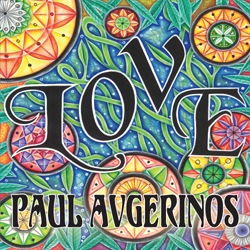
My latest offering is LOVE, which just came out in August. Blissful Lullabies celebrating our highest vibration, LOVE is a temple of sound in honor of Love. A sacred space of deep blissful contentment. The fertile soil of peaceful grace where we are able to feel and free to be our true nature…
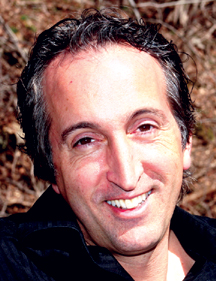
I collaborated with legendary New Age artist Kevin Braheny Fortune for the album.

LOVE is my most even, intimate, consistently blissful work that is already bringing lots of simple peace & joy to many souls.

You can find LOVE at iTunes, Amazon, and at my site www.RoundSkyMusic.com

About Paul:
Paul Avgerinos is a Grammy nominated Composer and Producer whose music is broadcast all over the world. Paul’s New Age albums consistently reach the Top Ten in Radio and have won major awards three years running. He has worked on over one hundred film and TV projects with over 3,000 TV licenses. Paul has been involved in a number of Platinum albums and has worked with Aerosmith, Jewel, Run DMC, Willie Nelson & Deana Carter.

Currently, he lives and works in Redding, CT, where the deer pass by his studio windows and the hawks and eagles give inspiration from above.

Learn more at www.StudioUnicorn.net and www.RoundSkyMusic.com.

10 Questions with High Priestess

1. I love your music, and we’ll get to discussing that soon, but first, as a woman, seeing a woman who looks as drop dead gorgeous as yourself, I have to ask, what is your secret to staying in such great shape? And if you tell me soda and French fries we’re ending this interview at question one!

In a nutshell? What works for me personally? I hike in an old growth forest with my dogs a few times a week, get a great kitty cat stretch with yoga poses every day and practice aikido. I also dance without inhibition and play instruments regularly. I eat only organically, about half of which are raw fruits. I eat organic vegetables and meats almost exclusively produced locally. I eat no corn in any form, including high fructose corn syrup and dextrose, no wheat in any form including bread, pasta, baked goods, sauces or breading, and no other gluten-containing grains. I use food as medicine.

It’s interesting that you ask, as I am writing a book about Faerie Magic, and it touches on this subject a few times. Obviously, glamour is one of the most well-known types of faerie magic! We have appropriated the word in modern times to refer to high fashion, movie stars and “an air of compelling charm, romance, and excitement, especially when delusively alluring.” The glamorous beauties of the fashion and entertainment world are now uplifted and perfected with the art of modern technology! The magic of Photoshop creates a beautiful illusion which, for better or worse, has seduced the world. So first let me acknowledge that magic in my public persona. However, it goes deeper.

My beauty reflects my magic, because I have cultivated my beauty magically for a number of years. The idea of visualization is becoming quite popular now, but as a child I knew it innately, and formed in my mind again and again the shape I desired for myself.

The other aspect of beauty that I think is really important is self-care. If we tend to our bodies as we would lovingly care for a child, an elder, or even the Goddess Herself, we will reap the benefits exponentially as we age. By tuning into the body’s deeper nutritional needs, and to our spirit’s playtime/physical exercise needs, we can bring our bodies back into natural balance. I have found that people who carry the faerie energy may often be thin, yet are sometimes still fairly out of healthy balance with their natural cycles. It’s more important to play than to work out. Bring the element of play in, and choose a way to get some physical exercise that is so delightful that you will happily put off work for it!

The same principles apply to the dreaded dietary changes required by “health.” Instead of trying to make some dramatic and inevitably ill-fated change, simply start by dropping major sources of bad food in your life 6 days per week. Give yourself a day off per week from any diet you are doing (unless it’s a food allergy). Start by swearing off fast food and coffee, soda or other sweetened drinks. Once you have done this your taste buds will start to readjust to natural food after the ultra-enhanced flavors of pre-made food are done away with. Then it’s time to get creative exploring the exotic world of fruits and vegetables! This should be what you eat most of the time. The choice to eat meat is very personal. It is an ethical decision which has, at times, pained me greatly. My physiology runs at optimum with meat in my diet, but I am scrupulous about only consuming meat which is given a good life, with natural feed, sunshine and grass to roam in. I don’t support any genetically modified feeds, or weird hormones or drugs given to the animals. Insisting on organic will mostly guarantee these standards, but you must trust your instincts and assess each company on its own.

Food has a cultural dimension, which is ultimately reflected in our health as well. The accepted food of American culture is that which is sold on television. Sadly this food is controlled by corporations, who are most often valuing the bottom line over what might be good food for their tribe to consume. It is ultimately a political act to prepare your own food, and an anarchistic act to actually grow or forage your own food. As I perceived the damage that this culturally-approved diet actually does to the human organism, I had no choice but to permanently boycott their “food.”

We live in such a culture of too-many-good-things! A bit of chocolate or a cookie isn’t going to kill any diet… In fact, soul food is very real and famously healing on all levels. When your heart needs it, indulge intelligently in something organic.

2. Your first album, “Sellisternia”, has a very electronic/techno sound to it. You followed that with “OakSong” which is more Celtic rock in its sound. What inspired the change?

Sellisternia, meaning a “feast in honor of the Goddess,” was a priestess alone in her studio learning the art of expression via technology. I had never really played music with other people. My studies were in classical piano and composition… both of which can be fairly solitary. I was dizzied with possibilities as a producer called Mother shepherded me through my first recording sessions with concert harp, flute, trombone and my own vocals. This process was going on in 2000-2002. I had no concept of what he was doing as he used EQ and effects on the tracks. By the time I did OakSong I had been playing with this awesome band, Advanced Bliss, for 2 years. I had taken my education to the next level at USC, and gotten much deeper into technology, arranging and orchestration. I wanted to take those songs that we had been so successful with playing out, and capture them in a studio setting. Here I turned to the magic-man Christian Wood for my engineering and mixing. It was a completely different process… Still some songs were developed with the band, and others came as mystical revelations. The album itself is both dreamy and provocative, much like Radiohead.

3. You’re also an extremely talented harpist. Any chance there will be a solo harp album someday?

Thank you so much! You know how to make a girl feel comfortable! I actually think I might have recently granted your wish! Faerie Archives volume 1 is our latest release—it’s brand spankin’ new, in fact! It features predominantly harp, but it is steeped in worlds of lush high fidelity nature sounds, delicate vocal harmonies, and exotic ancient instrument such as the medieval Viola de Gamba and Sitar. We invoked the faerie realm, created a magnificent faerie altar, left offerings and made invocations (some of which are audible on the CD). We invited the faeries in, and we recorded the music that came to us. The music was so very unique that we were inspired to start the “Society for the Preservation of Faerie Arts.” Learn more at www.faeriearchives.com. Samples of the newest release can be heard on my MySpace page and the best way to purchase the album is via CDBaby.com. Enjoy!

4. On your My Space page there is your version of the Blondie song “Rapture,” including a music video for it. I love the original and your cover; what made you decide to cover that song?

I love the original! Blondie is such an inspiration. I worked on that piece with producer Nick Launay (Yeah Yeah Yeahs, upcoming Cribs featuring Johnny Marr, Arcade Fire) and he thought I would really shine with the range of that piece. We wanted to give Retro-Gothy-New-Wave some “new school” claws. I think it worked.

5. Can you tell us a little bit about some of the folks that travel and perform with you?

I have just posted a video blog of our latest tour on Youtube! You can go to http://www.youtube.com/user/thehighpriestess22 to see the goings-on!

My dearest companion is my husband, Alexander Polinsky. He is my best friend and collaborator. It was his amazing faerie altars which opened the portal to the other realm. He has quite a lot of notoriety on his own, actually. He was a child actor on the series Charles in Charge, and has gone on to a successful career in voice acting. He is heard all the time on shows like Transformers, Batman, Legion of Superheroes and Starship Troopers. He is also an amazing singer, and fronts our band Flow Temple. He works one on one with performers, healing blocks and facilitating authentic singing and voice acting. I couldn’t do it without him.

I also have a very dear butler named James. He and I have been friends for about 13 years now! He actually played piano at my 19th birthday party. We have lived together, and played music together for the last 5 years, and he also is an important person in the tribe. He is a student of astrology, and always advises us on possible arising situations. James plays the vibraphone, which is sort of like a xylophone but dreamy. He comes from a family of musical geniuses, and his brother actually plays guitar with the Eagles.

6. What is the House of Bliss?

The House of Bliss is an outpost of love and authenticity amidst this modern Babylon! It originally started as my place of healing… and by the grace of all the amazing creatures who have passed through the doors, it has become an interdimensional portal, a food garden, a healing oasis and a very effective place for making beauty in a myriad of forms. In short, it is where we live.

7. For you, what is bliss?

Mmm! So many things! For now I’ll say only a few things. A purring cat, the morning sun, the rain at any time, delicious food, chocolate, playful dogs, an unexpected dance, musical or visual inspiration, a well-sung tune, playing my harp, hearing the wind play my harp, long kisses, happy people working together, voices in harmony, union with the Goddess, true awareness of the moment and the open road.

8. Are you familiar with Paul Avgerinos? He’s the only other musician we’ve featured here so far at The Magical Buffet. Anyway, I think a collaboration between you two would be brilliant and inspired. If you two ever do an album together, will you dedicate it to me?

Absolutely! And I’d be thrilled to do an album swap if he’s game!

9. What is one of your favorite albums that would most surprise our readers?

One of the most sublime albums of all time is Beethoven’s 3rd and 4th piano concertos. This is my painting music.

10. Parting shot! Ask us here at The Magical Buffet any one question?

What’s on the menu?

Stuff that is fried, preferably with cheese.

About High Priestess:
High Priestess is the musical project of composer Regan, who is known for her versatile musical ability. High Priestess’s music ranges from Celtic harp to electro-industrial, and Regan is known for her sensual, spiritual and operatic (though often dark) vocal styles. Regan and her posse, who are all known to be practicing Pagans, reside near Los Angeles in the “House of Bliss.” The band can be reached online at www.high-priestess-productions.com and www.myspace.com/advancedbliss

10 Questions with Alaric Albertsson

1. First, clarify for my readers, you follow the path of a Saxon Pagan. What are the Saxons? Does this differ from Celtic or Nordic paths?

Both “Saxon” and “Anglo-Saxon” are collective terms for the Germanic tribes that immigrated to Britain from the 3rd to 6th centuries. Their language and culture were similar to those of the Norse, although there are distinct differences. As Brian Branston points out in The Lost Gods of England (Thames and Hudson, 1957), the Saxon god Woden appears vastly different than the warrior-god described in the Norse Eddas. The Saxons were unrelated to the British Celts, although both cultures almost surely adopted some customs from each other.

2. What drew you to the spirituality of the Saxons?

This has been a long, spiraling journey for me. The first Pagans I met invoked Saxon gods and goddesses in their rituals. That was back in 1971. Over the years I explored and experimented with many expressions of Paganism, but I kept circling back like a moth around a flame. Buckland’s The Tree, a Saxon variation of Wicca, came out in 1974 and drew me back to the Anglo-Saxon gods, but it wasn’t what I was searching for. I believe that my gods – Ing Fréa in particular – have guided me over the years in my quest to reclaim Saxon spirituality.

3. What made you decide to write a book?

You’ll have to blame Christopher Penczak for that. Several years ago, while we were both at the Between the Worlds gathering, Christopher encouraged me to write a book about Saxon spirituality. At first I was hesitant, but after I played around with the idea for a while I realized that I wanted to write a book for people like myself – for that boy who was looking for guidance in the early 1970’s, and for those like him who are looking for guidance now. That’s when I began to seriously write Travels Through Middle Earth. And Christopher has been supportive and encouraging throughout this entire epic adventure. He has become a dear friend.

4. Your book is called “Travels Through Middle Earth: The Path of a Saxon Pagan”. What is the connection between Saxon spirituality and Tolkien?

Professor Tolkien’s stories were inspired by Saxon spirituality. His fictional wizard Gandalf was modeled after the god Woden, so if you’ve seen the movies you have a pretty good idea of Woden’s personality and nature. His elves and dwarves and orcs are incarnate personifications of Saxon spirits. The names and entire language used by the Rohirrim is Old English. And “Middle Earth” itself is simply the Saxon term (middangeard) for the physical world we live in.

I do think it’s important, though, to distinguish between Tolkien’s novels and true Saxon spirituality. Gandalf is a powerful being in The Lord of the Rings, but he is not a god. Woden, who inspired the character of Gandalf, is the leader of the Saxon gods.

5. Geek question! Who’s your favorite character from the Lord of the Rings books?

I would have to say the hobbits of the Fellowship, all four of them: Frodo, Sam, Merry and Pippin. They weren’t grand and flashy, and they had a hard time fully comprehending the events unfolding around them, but through it all they remained loyal to one another. Characters like Aragorn and Legolas were noble heirs, but the hobbits were plain folk, loyalty to each other with no thought of glory or reward.

6. I know it’s a waste of question, but I just want to say I’ve never consumed or even considered mead, but now that I’ve read a whole chapter of your book dedicated to it I totally want to try some.

Be sure to try a few varieties. “Mead” is as broad a term as “wine” and can vary as much as Dom Perignon does from Mogan David.

7. What challenges do you see facing the Pagan community? How can the community resolve those issues?

I think the biggest challenge we face – and we have been challenged by this for as long as I’ve been Pagan – is a tendency to believe in One True Path. Face it, most of us are still first-generation Pagans, and part of our baggage is the One Way Syndrome. I believe the central defining quality of Paganism is, or should be, an acceptance that there are many gods and many paths. My way is the best way for me. It may not be the best way for you. Superficially we all seem to agree with this, but on other levels I constantly see people behaving towards others in ugly, judgmental ways.

8. Where can someone learn more about Saxon spirituality? (After they’ve read your book, of course.)

For an enjoyable read I highly recommend Brian Bates’ The Real Middle Earth (Palgrave MacMillan, 2002). And although it’s a bit dry, the classic is Branston’s The Lost Gods of England. You might also want to check out Galina Krasskova’s Exploring the Northern Tradition (New Page, 2005).

9. What’s next?

You probably noticed the topic of magic was limited to one brief chapter in Travels Through Middle Earth: The Path of a Saxon Pagan. That was intentional. I believe too many Pagan books today place an inordinate emphasis on magic. I believe there is a hunger for alternative spirituality that doesn’t necessarily involve casting spells or raising power. So my first book focused on developing a personal spirituality, with only a cursory look at magic.

My current project is tentatively titled Wyrdworking: The Path of a Saxon Sorcerer. This is the magic book. But I sincerely hope readers who want to explore runes and worts and galdor will first build a solid spiritual foundation with what I’ve presented in Travels Through Middle Earth.

Initially I’d planned to write a separate rune book that would be sold with a deck of Anglo-Saxon rune cards. But Llewellyn turned down the card deck, and I don’t think I can sell a book about runes when the runes themselves aren’t available (the Anglo-Saxon runes have nine more characters than the commonly sold Elder Futhark runes). So I’m mashing the rune book together with the magic book. I’m pretty excited about it. Wyrdworking will be packed full of useful material for the aspiring Saxon sorcerer.

10. Parting shot! Ask us here at The Magical Buffet any one question.

Where can I find a publisher for a very nice deck of Anglo-Saxon rune cards? The man who did the art work for the deck has put in countless hours to ensure that each card illustrated the meaning of the relevant passage in the Anglo Saxon Rune Poem. I really want to see this deck eventually reach its intended audience. Maybe one of your subscribers has the answer?

One place you might want to contact is US Games, they publish loads of awesome decks (many of which get reviewed here on the website). Also, you could always save up some cash, maybe find a few investors, and publish the deck yourself. Thanks to the wonders of the world wide web, you can reach an international market fairly easily.

About the Alaric:
Alaric Albertsson is the author of “Travels Through Middle Earth: The Path of a Saxon Pagon”. To learn more about Alaric visit his website.

10 Questions with Patrice Chaplin

1. Your book “City of Secrets: One Woman’s True-life Journey to the Heart of the Grail Legend” is an incredibly intimate memoir. Was there any hesitation on your part about sharing your past?

I did not hesitate about sharing what is published but it isn’t complete by any means. I wanted to give a sense of the power of the relationship. Also I had written about Jose before in “Albany Park” and “Siesta”.

2. The story primarily takes place in Girona, Spain. Would it be wrong of me to describe “City of Secrets” as a love letter to Girona?

Right! Definitely a love letter to the place and the man at that time.

3. “City of Secrets” is so personal, do you sometimes find doing all these interviews a little, cold or disconnected? Do you ever want to just yell “This is my life, not just a book!”?

I am used to doing interviews and some are better than others. Let’s say some interviewers bring out new stuff by their attitude and questions. Others are not at all on the wavelength and have an agenda of their own.

4. How did finding love in Girona evolve into seeking out answers with regards to the Grail?

That is what the book is about. Going from that first powerful connection to the much later research which was not without a certain danger.

5. This won’t mean anything to those who haven’t read “City of Secrets” yet, but I have to ask, for me, do you ever regret not going up the mountain with Jose?

I have been up other “mountains” metaphorically with him and they can be catastrophic.

6. A number of your works have been translated into films or for the stage. What’s it like watching someone take your work and reinterpret for a different medium?

I can see what a director does to the writing and concept and go running from that place – Or I try to reconnect with them and the intention of the piece. Sometimes I have to admit “the enemy” has a point – other times what they bring, the directors and actors, makes it a different but excellent work. Ultimately you have to give it over and trust.

7. I went to The Internet Movie Database online to read about “Siesta”, the movie based on your novel of the same name. Under “Memorable Quotes” was this line, “The marvelous thing about making mistakes is that you can keep making them, the same ones, over and over again.” Is that yours? Because it’s fantastic!

No, that quote is from an artist friend I knew who truly lived on the edge.

8. “City of Secrets” is so cinematic, has there been any interest in turning it into a film?

Yes, but I distrust “options”. The work can get lost. I’d rather give an option of time and take the book back if its gone nowhere.

9. What is your next project we should be looking for?

A book about the journey of the intiates from Girona to the portal following a Venus Magic Square under the Constellation The Great Bear and Seven Stars with 11 sites. It takes 2-3 weeks and is a journey of evolvement – sometimes not easy with accounts from 4 initiates in the 1800s and one in 1956 – it’s a continuation in part of “City of Secrets”.

10. Parting shot! Ask us here at The Magical Buffet any one question.

Is a portal the next phenomenon taking over from interest and fascination in the Grail? I have heard from a high initiate that the Grail is “the key” or “activator” to open and enter a portal.

The Grail and Portals are both items of interest in spiritual circles. I think the recent interest in the Grail: what is it, what it did/does, etc. has started getting some people to wonder if there is or could be a connection. I’ll leave it to the experts to decide.

About Patrice:
A writer and playwright, Patrice Chaplin has written over 25 books.
Her novel Siesta became a film starring Jodie Foster and Isabella Rossellini. As a Bohemian in Paris she spent time with Jean Paul Sartre and Simone de Beauvoir. Married to Charlie Chaplin’s son Michael, in Hollywood she worked with Lauren Bacall, Miles Davis, and Salvador Dali. She lives in London. To learn more visit her website.