Don’t Be a Jerk

Brad Warner is one of my favorite authors on the subject of Zen and I loved his latest book “Don’t Be a Jerk: And Other Practical Advice from Dōgen, Japan’s Greatest Zen Master”, which is his interpretation of Dōgen’s “Shōbōgenzō”. This is a book that has greatly influenced all of Warner’s writing and I assume his practice. I found “Don’t Be a Jerk” interesting and inspiring. I’m happy to get to share an excerpt from the book’s introduction with you.

Don’t Be a Jerk
An Introduction from Brad Warner

It used to be that nobody outside the worlds of stuffy academics and nerdy Zen studies knew who Dōgen was. And while this thirteenth-century Japanese Zen master and writer is still not one of the best-known philosophers on the planet, he’s well-known enough to have a character on the popular American TV series “Lost” named after him and to get referenced regularly in books and discussions of the world’s most important philosophical thinkers.

Unfortunately, in spite of all this, Dōgen still tends to be presented either as an inscrutable Oriental speaking in riddles and rhymes or as an insufferable intellectual making clever allusions to books you’re too dumb to have heard of. Nobody wants to read a guy like that.

You could argue that Dōgen really is these things. Sometimes. But he’s a lot more than that. When you work with him for a while, you start to see that he’s actually a pretty straightforward, no-nonsense guy. It’s hard to see that, though, because his world and ours are so very different.

A few months ago, my friend Whitney and I were at Atomic City Comics in Philadelphia. There I found “The War That Time Forgot”, a collection of DC comics from the fifties about American soldiers who battle living dinosaurs on a tropical island during World War II, and Whitney found a book called “God Is Disappointed in You”, by Mark Russell. The latter was far more influential in the formation of this book.

The publishers of that book, Top Shelf Publications, describe “God Is Disappointed in You” as being “for people who would like to read the Bible…if it would just cut to the chase.” In this book, Russell has summarized the entire Christian Bible in his own words, skipping over repetitive passages and generally making each book far more concise and straightforward than any existing translation. He livens up his prose with a funny, irreverent attitude that is nonetheless respectful to its source material. If you want to know what’s in the Bible but can’t deal with actually reading the whole darned thing, it’s a very good way to begin.

After she’d been reading “God Is Disappointed in You” for a while, Whitney showed it to me and suggested I try to do the same thing with “Shōbōgenzō: The Treasury of the True Dharma Eye”. This eight-hundred-year-old classic, written by the Japanese monk Eihei Dōgen, expounds on and explains the philosophical basis for one of the largest and most influential sects of Zen Buddhism. It’s one of the great classics of philosophical literature, revered by people all over the world. However, like many revered philosophical classics, it’s rarely read, even by those who claim to love it.

I immediately thought it was a cool idea to try to do this with “Shōbōgenzō”, but I didn’t know if it would work. I’ve studied “Shōbōgenzō” for around thirty years, much of that time under the tutelage of Gudo Wafu Nishijima. Nishijima Roshi was my ordaining teacher, and he, along with his student Chodo Mike Cross, produced a highly respected English translation that was for many years the only full English translation available. I had already written one book about “Shōbōgenzō”, called “Sit Down and Shut Up” (New World Library, 2007), and had referenced “Shōbōgenzō” extensively in all five of my other books about Zen practice.

My attitude toward “Shōbōgenzō” is somewhat like Mark Russell’s attitude toward the Bible. I deeply respect the book and its author, Dōgen. But I don’t look at it the way a religious person regards a holy book. Zen Buddhism is not a religion, however much it sometimes looks like one. There are no holy books in Zen, especially the kind of Zen that Dōgen taught. In Dōgen’s view everything is sacred, and to single out one specific thing, like a book or a city or a person, as being more sacred than anything else is a huge mistake. So the idea of rewriting Dōgen’s masterwork didn’t feel at all blasphemous or heretical to me.

But “Shōbōgenzō” presents a whole set of challenges Russell didn’t face with the Bible. The biggest one is that the Bible is mainly a collection of narrative stories. What Russell did, for the most part, was to summarize those stories while skipping over much of the philosophizing that occurs within them. “Shōbōgenzō”, on the other hand, has just a few narrative storytelling sections, and these are usually very short. It’s mostly philosophy. This meant that I’d have to deal extensively with the kind of material Russell generally skipped over.

Still, it was such an interesting idea that I figured I’d give it a try. My idea was to present the reader with everything important in “Shōbōgenzō”. I didn’t summarize every single line. But I have tried to give a sense of every paragraph of the book without leaving anything significant out. While I’d caution you not to quote this book and attribute it to Dōgen, I have tried to produce a book wherein you could conceivably do so without too much fear of being told by someone, “That’s not really what Dōgen said!” Obviously, if a line mentions Twinkies or zombies or beer, you’ll know I’ve done a bit of liberal paraphrasing. I have noted these instances, though, so that shouldn’t be too much of a problem.

About Brad Warner:
Brad Warner is the author of Don’t Be a Jerk and numerous other titles including Sit Down & Shut Up, Hardcore Zen, and Zen Wrapped in Karma Dipped in Chocolate. A Soto Zen priest, he is a punk bassist, filmmaker, Japanese-monster-movie marketer, and popular blogger based in Los Angeles. Visit him online at www.hardcorezen.info.

Excerpted from Don’t Be a Jerk ©2016 by Brad Warner. Published with permission of New World Library. http://www.newworldlibrary.com

Geek Month in Review: September 2015

By JB Sanders

You know, Fall’s coming…

A Record Player, with Lasers
Stop making Dr. Evil gestures! It’s a real record player, vinyl disks of grooves, only instead of crude needle jolting through the channels, it uses lasers. No damage to the original at all. Plus if the record is already dinged up, it’ll compensate.

Lost Tunnels of Liverpool
So, there are these tunnels underneath the city of Liverpool — which is not exactly odd, except that no one knows who made them, or why. They’re over 200 years old, too, so it’s a mystery with some dust on it.

Archaeologists Reconstruct Doggerland
Remember that island off the east coast of England? No? It so totally used to be there, about 8000 years ago. Then the sea levels rose.

Recover Sound from Silent Video — and More!
This is some straight-up science fiction, here, only now it’s science fact.

Prosthetic Hand That Can Feel
DARPA researchers have created a prosthetic hand that can actually send a sense of touch to the wearer’s brain.

That’s Not Slow Motion, This is Slow Motion
Scientists have developed a camera that takes a trillion pictures a second. Yeah, you read that right. A trillion, with a “t”. It slows things down so much, they can observe light moving across an object.

Touch Screen That Grows Buttons
Those crafty folks at MIT are working on a screen that creates real buttons when you need them, right on the screen.

Blindsight and Human Consciousness
There’s more to human perception, and to human consciousness, then … er … meets the eye. It starts with a guy who is blind in one eye, but in repeated tests can still somehow perceive out of it. It gets stranger from there.

About John:
John’s a geek from way back. He’s been floating between various computer-related jobs for years, until he settled into doing tech support in higher ed. Now he rules the Macs on campus with an iron hand (really, it’s on his desk).

Geek Credentials:
RPG: Blue box D&D, lead minis, been to GenCon in Milwaukee.
Computer: TRS-80 Color Computer, Amiga 1000, UNIX system w/reel-to-reel backup tape
Card games: bought Magic cards at GenCon in 1993
Science: Met Phil Plait, got time on a mainframe for astronomy project in 1983

Oh Fudge!

By Mitch Rosenzweig

I laughed out loud, although I really shouldn’t have. She was a cute as a button. Curly blonde hair and petite, maybe 3 years old at the most. She had on the cutest little dress with a Christmas print, white tights, and bright, shiny Mary Jane shoes to complete the perfect picture. Her Dad, at the other end of her hand, was clearly a work-a-day type. Gnarled and whiskered, there were paint spatters flecking his plaid shirt and blue jeans. As they walked into the black Friday store, Dad remarked, “Look at all the people!” And in a cute, tiny voice with a little-kid accent, the delicate princess exclaimed loudly, “No Shit!” My coffee almost exploded all over me as I guffawed. Red-faced and embarrassed the Dad bent close to his daughter and gave her a loving reminder: “Now Chelsea, we don’t say those bad words in public.” I wondered if it was okay in private. With wide eyes she nodded, obviously confused and overwhelmed by the bustle of the store.

In the 70s, George Carlin made famous the seven words you can’t say on TV. But really, if you ask anyone, there are way more than seven that we classify as expletives or bad words. When we are kids, we rejoice in their delicious sounds. From the “doo-doo head” and “poopy” of childhood, to the rude mother-degrading curses of teens, we continue to thrill at the obvious insults. It’s not just an American thing; I have seen comedic dictionaries about how to curse in every language. We classify them as “bad” words. Never to be spoken, especially not in public.

Of course no words are really “bad.” They are just sounds on our tongue or letters on a page. It is in the meaning and context that the moralistic value occurs. We can exclaim about abundant waste in a toilet but we better not tell someone they are full of it. It’s all about the context. I have to re-train my brain after my various military stints, where bad words are sprinkled throughout casual conversations. I once heard a Platoon Sergeant use more than 14 of them in a single sentence. The worst part is that I understood and agreed with what he said-and how he said it. I shook his confused hand in congratulations. Bad, bad, bad.

What I don’t understand is why other, non-curse words aren’t considered bad. They have negative connota­tions in all contexts: such as “hate,” “unemployed,” “addiction,” “kill,” and millions of others that produce a visceral response in any setting. We don’t use them in polite society either. I will avoid further examples but I am sure you can think of your own that are far worse than “doody-head.”
As parents and polite adults, we teach our children and train ourselves to avoid using bad words. Even though the best of us occasionally drop an “f-bomb,” most of us don’t cuss like drunken merchant marines. We realize that as reserved and thoughtful adults there are better ways to express our emotions. Only the vulgar cuss-until you stub your toe in the middle of the night. And then that raw instinct forces us to damn something to the nether regions. I’m not holier-than-thou; I am just as likely to slip one in now and then. Especially the milder ones, like sh*t, damn, and hell. Somehow, “doo-doo happens,” or “oh fudge” just doesn’t cut it in all situations.

I have a proposal. Can we create a list of the seven words that we must say? Wouldn’t it be just as important to teach our children those words? The positive rather than negative? Wouldn’t it be amazing to see a dad stooping to teach his to child to say, “Holy love!”? My list of seven words we must say would be: love, faith, caring, peace, giving, forgiveness, and thanks. I’m willing to bet we have just as many reasons to say them in public. Maybe they are prohibited too, since I rarely hear them.

Today, I am going to offer my seven every chance I get. I will fully express myself and let people know how I truly feel. No holds barred. If I offend, so be it. I don’t need a filter. I will pepper my conversation with them and shock people. Even when I stub my toe, I will offer thanks for having a toe to stub. OK, well, maybe after I cuss and fuss a bit.

Express yourself-it’s healthy. Let it out already, Dagnabit!

About Mitch Rosenzweig:
In this new book “Reaching for Insights: Stories of Love, Faith, and the Kitchen Sink”, veteran clinical psychologist and social worker Mitch Rosenzweig attunes his therapeutic sensibilities to his daily landscape and uncovers life lessons for us all – treasures gained by observing the ordinary from an often amusing, and always positive, perspective. This rich collection of 200 brief essays penned from his personal and professional observations delights us and invites us to grow into better, more compassionate human beings. For more information, visit http://www.reachingforinsights.com/

The King and I

By Angela Kaufman

I have worked with valuable coaches who have helped me grow. Yet one stands out above the rest.

He doesn’t mind when I call seek his guidance at odd hours. He is available via the written and spoken word, and when all else fails I can watch his videos on YouTube.

His advice has been priceless both in my personal life and in adding to my understanding of humanity and relationships. As an Intuitive Relationship Coach, I reference his work frequently. Even when I worked in the clinical field I encouraged my clients to seek out his books.

I have paid him very little over the years for the wisdom he has given me, and perhaps even more strange, he does not even know I exist, and I am ok with that.

My long-distance-Mentor is Stephen King.

Once considered the Master of Suspense, King has emerged into something more, at least in my view. Yes, we typecast, and titles are deceiving. Stephen King is the Master of Social Commentary. He has a brilliant knack for reflecting the conflicts of his time.

The first Life Lesson from the King is that we all are on a path of evolution and must allow each other space and time to grow without judgment. Contrast one of the early works written under the pen name Richard Bachman with a more recent and “sober” work like 11/22/63 and the growth is evident.

Not only are there significant shifts in the tone, attitude and depth of King’s works as time goes on, but his characters seem to “grow up” as well. Thus we are reminded not to judge a person by their struggles, but to give them space to grow, or falter, on their path.

Life Lesson 2- Each Individual Possesses a Dual Nature.

King’s characters are, for the most part, complex. He is a master of illustrating the depth of humanity. Very few of his characters are outright evil and even the bad-ass bullies (Ace and his crew from “The Body”, the greaser youths from “It”, and the kids from “Carrie” for example) illustrate social injustices and are products of their culture and times. This is also apparent in King’s characterization of historical figure Lee Harvey Oswald in his fictional depiction for 11/22/63. By portraying the connection between cultural context, early upbringing (domestic violence, alcoholism, incest, poverty, racism to name a few) with antisocial and cruel behavior later on, King provides a psychological framework for characters who have a dirty job which someone has to do. That job is to hold a mirror up to society and individuals and reveal the Shadow side within us all and the dark side of our culture. The “monster” within comes alive in the obsessive, deranged killers of his stories.

Of course his stories seldom feature the bad guy acting alone. There is typically a supernatural element, an abstract “Hand of Fate” which serves to tempt (or push) a fundamentally wounded character over the edge. In It it is the entity Pennywise, representation of the corruption and denial of small town America, which corrupts the mind of the already desperate and unstable, tempting them with seduction of fame, power, revenge etc. A similar phenomenon occurs in The Stand. In this story as well, the battle lines between the righteous and the depraved is a fine line carved by a combination of free will and the failing nature of human desire. The insecurities that would tempt some characters to betray their morals, and each other, to serve the entity personifying evil (Randall Flagg) while other characters, while obviously flawed, find the will to follow a higher calling and follow the path of light, embodied by Mother Abigail.

This brings us to the 3rd Life Lesson from Stephen King. We all have choice and free will and at any given moment we have access to a number of guides who will serve our higher purpose, if only we will occasionally quiet the ego to listen.

King’s characters repeatedly encounter special mentors, guides and teachers. Danny Torrence from the Shining is serendipitously connected to Dick Halloran (the hotel Cook) who recognizes his ability to “shine” and in the sequel, Dr. Sleep, Danny himself becomes mentor to another youth named Abra. King’s characters often don’t realize they are seeking a special kind of assistance until their talents, or needs are met by those they encounter synchronistically. The same occurs in reality and when we open to intuitive guidance and attraction dynamics, we allow powerful connections to be made without the cumbersome presence of ego to get in the way. The examples of this are too numerous to list individually, so pick your favorite Stephen King story and this pattern will be evident.

Life Lesson: Suspense can be a good thing….

More Life Lessons from the King to come as this series continues.

About Angela Kaufman:
Angela Kaufman is Your 21st Century Relationship Psychic. As an Intuitive Relationship and Empowerment Coach Angela is passionate about helping modern women interpret their lives and world through a more intuitive, Spiritual lens. While recognizing that Spirit speaks to us in many ways, even through the writing of a novelist from Maine.
For more information on Intuitive Relationship Coaching and other practical, spiritual soul-utions, visit intuitiveangela.com or contact Angela at intuitiveangela@gmail.com.

Geek Month in Review: August 2015

By JB Sanders

Not as hot as expected August…

Roomba Makers Exploring Autonomous Lawn Mower
Yup, robotic lawn mowers, just trimming away on their own. What could go wrong?

HyperLoop Actually Happening
Remember that crazy scifi pneumatic tube train that Elon Musk (super villain in training) was talking about a while ago? Sounded like a crazy, looney-tunes idea, right? Super-high-speed trains, running in tubes with little or no air, and getting places in an hour that normally require six. Yeah, that. They’re starting construction in 2016. Really.

Oldest Message-in-a-Bottle Found
At over 100 years old, this bottle has been floating around for a long, long time.

Real Locked Room Puzzle
Apparently, there’s a craze spreading around where people build real locked-room puzzles. Remember those things in video games where you find yourself locked in a room, and have to solve a variety of mechanical (or magical!) puzzles to unlock the door. Well, now people are doing that in real life.

Integrated Space Plan
Originally conceived by scientist Ron Jones, the “wildly detailed” plan to map how humans will expand into space has recently been updated. It sets out milestones and technology we’ll need to do things like permanently settle Mars, create a self-sustaining Moon base, and other fun items. Plus it comes in a handy poster form!

About John:
John’s a geek from way back. He’s been floating between various computer-related jobs for years, until he settled into doing tech support in higher ed. Now he rules the Macs on campus with an iron hand (really, it’s on his desk).

Geek Credentials:
RPG: Blue box D&D, lead minis, been to GenCon in Milwaukee.
Computer: TRS-80 Color Computer, Amiga 1000, UNIX system w/reel-to-reel backup tape
Card games: bought Magic cards at GenCon in 1993
Science: Met Phil Plait, got time on a mainframe for astronomy project in 1983
His Blog:http://www.glenandtyler.com/

The Shadow Soul

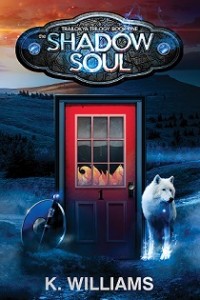
“‘The Shadow Soul’ is the first part of The Trailokya Trilogy, a fantasy series that follows the rise and fall of fabled races and souls at the junction of three worlds: Zion, Earth and Jahannam. K. Williams weaves a tale that will leave you questioning long held convictions about the human legends of Heaven and Hell. Are you ready to enter the gates of Zion and learn the truth?

Captain Maiel is a duta warrior of Zion, a race of giant, winged guardians and chroniclers of the lesser souls. Maiel’s assurances are shaken when she nearly loses a young human girl to the dark forces of Jahannam, the prison realm where the lowest beings reside. To avoid answering to the leaders of her world, Maiel seeks refuge on Earth, but she is pursued by a baron of Jahannam intent on destroying her. Can she be saved before time runs out? Or will she be sacrificed to secure the borders of Zion and to hide the lie her journey uncovers?

With each step further into darkness, long held secrets are revealed and shadows rise from the past to challenge absolutes.”

We’re lucky enough to have a brief excerpt to share:

Reluctantly leaving the child to his whispers, Maiel followed the corridor to the right. A squad might be able to dislodge him, and the suggestion would go in her report. However, right then, there was someone whom she could not ignore. Dashing past the open door of a dim room, Maiel caught a glimpse of a shadowalker. She halted and took several slow steps back.

A dark cloud hovered over the bed of a young patient. The curious brown ether was what her kind called smokers. A nurse checked her pulse with great dismay. In the corner of the ceiling, a youngling was trapped in web-like bonds. Maiel grimaced at the guardian, drew her bow and aimed.

“Smoky,” Maiel called out to the shade.

The wispy figure ignored Maiel, as it crouched over the child, drooling and licking its lips as it waited for the final moment. A string of light stretched from the child’s mouth to that of the shade. The human’s heart beat much too slowly. Maiel’s eyes flicked to the shade and back. The kid didn’t have much time. If the shade drew much more energy, the bio-vessel would die and she would be returned before her time, or stolen to Jahannam.

“I’m talking to you, shit-eater.”

The figure stopped feeding, turning its blank face to look at the duta addressing it. A macabre mash of scars adorned the head. The blank face opened where a mouth should have been. Sparks of lightning flashed in the cloud, followed by a long, snake-like tongue. It sniffed the air through tiny slits and hissed.

“I’ll count to three. Give you a head start.”

The shade opened its mouth, every wisp of smoke making up its sattva tightening, and bellowed a terrible howl. Maiel loosed her arrow. It landed its mark at the back of the smoker’s throat and pressed through. She grimaced as it slumped and dripped black blood all over the bed and floor. She entered the room and freed the young guardian with her dagger.

About the K.Williams:
Born in Saratoga Springs, New York, where she continues to reside, K.Williams embarked on a now twenty year career in writing. After a childhood, which consisted of voracious reading and hours of film watching, it was a natural progression to study and work in the arts.

K attended the State University of New York at Morrisville, majoring in the Biological Sciences, and then continued with English and Historical studies at the University at Albany (home of the New York State Writer’s Institute) gaining her Bachelor’s Degree. While attending UA, K interned with the 13th Moon Feminist Literary Magazine, bridging her interests in social movements and art.

Currently, K has completed the MALS program for Film Studies and Screenwriting at Empire State College (SUNY), and is the 2013-2014 recipient of the Foner Fellowship in Arts and Social Justice. K continues to write and is working on the novels of the Trailokya Trilogy, a work that deals with topics in Domestic Violence and crosses the controversial waters of organized religion and secularism. A sequel to OP-DEC is in the research phase, while the adaptation is being shopped to interested film companies. Excerpts of these and more writings can be found at: http://bluehonor.com/.

And we’re even LUCKIER because I happen to have a signed copy of “The Shadow Soul” by K. Williams to giveaway to a reader! Contest ends at midnight Eastern time Sunday Sept. 6, 2015. See the Rafflecopter below!

a Rafflecopter giveaway

Geek Month in Review: July 2015

By JB Sanders

Fireworks!

Touching Holograms
Remember that scene in Iron Man or Avengers where someone moves holograms around like they’re real, physical objects? Yeah, we’re not that far away from having that.

Star Trek Bluetooth Communicator
So sure, it’s nothing more than a bluetooth headset in a weird form, but it does look freakin’ cool. How odd is it (for those of us above a certain age) to see something like this and think “that’s retro-future nostalgia tech”.

TWA Terminal in Time Capsule
It’s a view back to the Jet Age, when the wealthy travelled by jet airliner and smoked in their designer finery. It’s like a posh version of the Jetsons.

Super Camper Van
Planning an expedition to the arctic? Or that trackless wilderness that hides a pyramid? Then this “camper van” is your ideal companion. It’s something the company in the movie “Congo” would have bought. It has everything.

Blade Runner Prop Photos
See the miniatures created for all the effects in Blade Runner. You know, because there was a time before CGI.

Underground Drone Video
Not just for high-level aerial footage anymore — now drones are flying around the tunnels under London.

LEGO Queen Mary
Yup, an ocean liner model made entirely of LEGOs. It’s 25-feet long, has over 250,000 bricks, and weighs 600 pounds.

Giant Arrows from a Bi-plane Age
Obsolete infrastructure can be found all over the place — just look out the train window in the Easter US and see the telegraph cabling. There used to be arrows all over the US guiding early flyers to the nearest airport.

Healing With Ultrasound
Scientists are working to heal wounds with ultrasound, sci-fi style. Not instantly, mind you, but the technique appears to work on chronic wounds which won’t otherwise heal normally.

Plastic Roads
Like giant LEGO(tm) bricks, Plastic Roads are being developed in the Netherlands, and are designed to be modular.

The Tree That Bears 40 Different Fruits
Yeah, really. It’s not some weird genetic hybrid that might have tentacles if someone slipped a digit somewhere, this is straight-up ancient-as-hell hybridization. Or more specifically, grafting. Some joker grafted 40 different varieties of fruit-bearing tree limbs onto one tree, and then repeated the idea in several dozen locations. The article has a link to a map, if you want to see these trees in person.

World’s Largest Vertical Farm
Kickin’ it scifi-style in New Jersey with the indoor, sunlight-free, aeroponic farm. The facility will be capable of producing 2 million pounds of produce a year when it’s finished, and it doesn’t use nearly the resources of regular farming.

EM Drive May Actually Work
When it was originally announced, the EM space drive got a lot of scorn. Thrust from “nothing” (no reaction mass)? Yeah, lots of doubt. However, several independent scientists have now tentatively confirmed that there is something going on there. Space travel, ahoy!

Quietest Rooms in the World
Soundproofed, shielded from electromagnetic noise, and isolated from pretty much any odd earth movement, these rooms in Switzerland are great places to mess with particle physics.

Lamp Runs on Sea Water and Metal
Two Phillipine geniuses (genii?) have invented a lamp that can run on salt water and electrodes that only need to be replaced once or twice a year. It even has a port to charge cell phones.

http://www.upworthy.com/a-brother-and-sister-in-the-philippines-invented-a-lamp-that-runs-entirely-on-metal-and-salt-water?c=bl3

About John:
John’s a geek from way back. He’s been floating between various computer-related jobs for years, until he settled into doing tech support in higher ed. Now he rules the Macs on campus with an iron hand (really, it’s on his desk).

Geek Credentials:
RPG: Blue box D&D, lead minis, been to GenCon in Milwaukee.
Computer: TRS-80 Color Computer, Amiga 1000, UNIX system w/reel-to-reel backup tape
Card games: bought Magic cards at GenCon in 1993
Science: Met Phil Plait, got time on a mainframe for astronomy project in 1983
His Blog:http://www.glenandtyler.com/

Geek Month in Review: June 2015

By JB Sanders

Summer!

The 20-year-old Cleaning Up the Oceans
That’s not hyperbole, either. Boyan Slat has two major projects underway right now to do just that. The first one starting in August will collect more data in three weeks on the plastic floating in our oceans “than anyone has in 40 years”. In 2016, he’s deploying a device to collect plastic out of the ocean which will be the longest floating structure around (2,000 meters). I think he’s giving Elon Musk a run for his money. The guy’s only 20!

Flying Tricycle in Prototype
Technically, it’s a “coaxial, Y6-layout tricopter”, but if that confounds you — no worries. If you’ve seen Return of the Jedi, you’ve seen a flying motorcycle much like this. Yes, there’s video.

James Bond Cars Through the Years
Cool website that shows all the James Bond cars. Nice effects and cool art. Plus hot cars.

Magic, Light, and Quadracopters
Art and science meet, produce a wonderful dance. Done only with lights, lampshades, and some well-programmed quadracopters.

3D Printed Bridge
These crazy Dutch engineers/programmers/scientists have created prototype robots that are going to 3D print a bridge in place and kind of mid-air. Scifi in Action folks!

Gustav Eiffel’s Secret Tower Apartment
Built into the 3rd level of the Eiffel Tower is a secret apartment that the builder had put in over 100 years ago. See pictures of (more or less) how it looked back in the day.

Lexus Makes a Hoverboard — For Real!
It is 2015 after all, the year Marty McFly DeLoren’s to in Back to the Future. It had to happen sometime. Even if the hoverboard in question requires a metal surface to work.

3D Color Images of 1850’s Japan
No, it’s not the result of time travel, it’s stereoscopic photography during the time it was invented. It’s been converted for your convenience into animated GIFs.

Tactile Tablet
It’s like an iPad, only it creates a raised surface for braille, contour maps, or whatever.

Creepy Writing Doll
What is even creepier is that the doll in question is over 240 years old. Nothing quite like 18th century clockwork automatons.

About John:
John’s a geek from way back. He’s been floating between various computer-related jobs for years, until he settled into doing tech support in higher ed. Now he rules the Macs on campus with an iron hand (really, it’s on his desk).

Geek Credentials:
RPG: Blue box D&D, lead minis, been to GenCon in Milwaukee.
Computer: TRS-80 Color Computer, Amiga 1000, UNIX system w/reel-to-reel backup tape
Card games: bought Magic cards at GenCon in 1993
Science: Met Phil Plait, got time on a mainframe for astronomy project in 1983
His Blog:http://www.glenandtyler.com/

What if the U.S. Disappeared?

By Dr. Saqib Qureshi

Of course that’s not happening, unless somebody knows how to use the Force in ways which George Lucas hasn’t envisioned, but let’s just imagine a world in which the US government completely withdraws from the rest of the world. Let us just imagine. This is not a bizarre idea. After all, hundreds of millions of people world over accuse the US of failing to mind its own business, of interfering and poking its nose where it’s not wanted. And there is also the non-interventionist tradition within American foreign policy, a position that ironically enough emanates from Robert Walpole, Britain’s prime minister from 1721 to 1742, and was later shaped by presidents Jefferson and Monroe.

So what will happen? What will a disengaged world look like? Well, for a start, there’d be a big economic problem…. and I am not referring to the elimination of the US$50bn in foreign aid which DC doles out every year through the State and Defense Departments, as well as via multi-lateral organizations. Mind you, some countries would be the up the wall … Afghanistan and Israel each receive from the US about hundred times the aid per capita which Bangladesh and South Africa receive. It’s fair to say that Afghanistan would be ‘game over’, that is assuming it wasn’t already, while Israel would need to reduce its military spending and seek a fair peace with the Palestinians.

The real big economic problem is that US federal government needs loans (largely from China via bonds) for funding. An America that cuts itself off from the rest of the world will rapidly realize that it can’t function. It won’t be able to pay civil service salaries, infrastructure development and all the other things that the government currently covers. To cut to the chase, the US would go through a massive recession… since not only would the government have to rapidly reduce its spending, but exports would take a hit too. After all, with the US in recession, there’s a good chance that the world will enter a recession. Where is everything ‘Made in China’ going to go? For that matter, where is everything ‘Made in America’ or ‘Designed in California’ going to go?

World politics would also be affected, maybe not … but maybe as badly as world economics. NATO countries, Japan, Israel, the Gulf countries, South Korea and Taiwan would feel the loss of America’s shield. Since they and their neighbours will struggle to raise military spending in a recession, resolving regional tensions would take on a greater sense of urgency. NATO and Russia would listen more carefully to each other, as would America’s Asian allies to China, the GCC to Iran and Israel to the Palestinians and Arabs. There is though a real risk that economic frustrations are politically channeled through war, even if most of these countries have nuclear deterrents. This credible counter-scenario to my proposed scenario is nuclear war… and that partly comes down to domestic politics and society.

With a sharp economic recession and the collapse of various UN agencies which get their funding from the (withdrawn) US and other countries which can’t afford the to keep up their dues, countries will have tougher societal issues to deal with than in a world with an engaged US. Poverty rates would explode. Law and order, as well as political stability could be up for grabs. Full term parliaments would become rarer than they already are. Institutions of civil society would be starved … fewer people would donate to charities and non-profits, or even to pay for the news. Hospitals and other societal infrastructure would be severely strained. And the nastier end of the human spectrum, the xenophobes and racists, would get a wonderful kick in the arm much like Hitler got in the early 1930s. That would have an interesting impact on inter-state politics.

So, what do I conclude as we ponder the meaning of 4th of July? I’m fasting – it’s Ramadan but I can still somewhat think. Yes, there’s a fair chunk that the US does which it should be ashamed of and needs to fix (do I need to mention Guantanamo, black church-burnings, poverty levels, Islamophobia etc?) …. but we are probably ALL better off with an engaged US than an isolated one.

About Dr. Saqib Qureshi:
Dr. Saqib Qureshi is a divergent strategist who looks at things a little differently. He writes intellectual and thought provoking articles on Reconstructing Strategy and received his PhD from the London School of Economics. Dr. Q has lived in Europe, Asia and North America and has worked for McKinsey & Co., HSBC Investment Bank and several governments. He was the first person to appear on British television to raise concerns about Muslim extremists in the West and the failure of western culture to properly understand the Muslim community. His new book, “Reconstructing Strategy: Dancing with the God of Objectivity” is available now.