
If you’ve been a reader of The Magical Buffet for just about any length of time, you know I love me some Brad Warner. I’ve featured nearly every book he has written on my site. So, believe me when I tell you that this may be my FAVORITE Warner book. This is the book I’ve been waiting for and Warner has been putting off writing. Welcome to your Zen Buddhism 101 book with cool professor Warner. In order to pull it off, Warner needed a framing device to make it work for him. He did it in the form of letters to his childhood friend Marky, who passed away shortly before work on the book began. I’m generally not a fan of the letters format, but Warner’s conversational writing works perfectly with it, and honestly, whatever it took for him to finally give me my grand overview of Zen Buddhism is okay with me.
Here’s a 5 minute video where Warner discusses the book:
And New World Library was kind enough to provide an excerpt to share as well….
By Brad Warner
 Through sheer dumb luck I happened to encounter Zen Buddhism when I was a teenager. I didn’t go looking for it. It was just there at exactly the time I needed it to be.
I don’t believe in Buddhism either, by the way. It’s not like I heard their fairy tales and figured they were better than anybody else’s stories. The Buddhists have fairy tales too. The difference is that nobody cares if you believe them. They don’t care whether you believe their stories because the very idea of a you who can believe in stories is something they also call into question.
Even so, I’m not all that interested in Buddhism. I’m much more interested in what is true. What I like about Buddhism is that the Buddhists are also interested in what is true. At least, most of them are.
I’m not sure if Zen Buddhism would have helped you or not, Marky. I never tried to sell it to you. You knew I was into it, but you never asked.
I never liked people who tried to sell me their religions. I know you didn’t either, so I wasn’t gonna do that to you. No one ever tried to sell me Zen Buddhism. If they had, I would have regarded them as people who were too insecure to believe in something unless a bunch of other people believed it too. I have no time for that.
But nowadays I’m a minor spiritual celebrity. I’m not as big as Deepak, but I’m big enough to make a living at it. Which was always a source of embarrassment whenever I interacted with you and still embarrasses me when I’m around friends who, like you, knew me long before I started doing what I do now.
I see spiritual celebrities as charlatans, as people who make their living selling empty promises that they themselves don’t even believe. I swear that’s not what I do. But I don’t have anything against anyone who assumes the worst about me in that regard. Because that’s probably what I’d assume about me if I wasn’t me.
Spiritual celebs play the same stupid games as regular celebs. They, or maybe I should say we, validate each other the same way cheap nightclub singers do when they get on TV talk shows.
It’s like there’s a little Enlightened Beings Club. Here’s how it works. Some guy says he’s got enlightenment. He has a story to back him up about the wonderful day when he finally understood everything about everything. Another guy, his teacher, certified him as a member of the Enlightened Beings Club. And now he’s ready to help you learn to be just like him.
You go to the enlightened guy, and he trains you to imitate the things he says. Or if he’s real clever he teaches you how to rephrase his schtick in your own words. If your imitation meets his criteria, he gives you his seal of approval, and off you go. The industry is self-perpetuating. It’s in your teacher’s best interests to support your claims of enlightenment since you, in turn, are expected to support his. Without such support, the whole thing falls to pieces.
If someone comes along and says, “Ain’t no such thang,” it threatens the whole system since it is built on extremely shaky ground. Unless people believe in enlightenment, enlightenment cannot exist. The enlightenment they sell is nothing more than the belief in enlightenment.
This is the same deal with religions. Believing in God is not like believing in the existence of Mount St. Helens or something tangible like that. The difference is that you can question the existence of Mount St. Helens all you want, but it doesn’t go away. But when someone questions the existence of God, the very existence of God is threatened, because that sort of God is nothing more than the belief in God.
And here’s what’s even weirder.
It turns out that enlightenment actually is real.
God actually does exist.
I don’t know how you feel about my saying that now that you’re dead, Marky. But I know that when you were alive you would have rolled your eyes at me. And I would not have blamed you.
There are a lot of things I wish I’d talked to you about. But I didn’t. And so I’m writing you this letter. Maybe I’ll write you a bunch of letters. There’s a lot to say. I don’t know if there’s an afterlife and you can somehow read these letters, or if there’s reincarnation and you’re still a baby and can’t read them, or if you just stay dead after you die, in which case you’ll never even know of their existence. Maybe I’ll write about that in another letter.
All I know is that whether or not you can receive what I’m saying doesn’t change the fact that there are things I want to say. And so I’m going to say them.
But I’m going to have to say them later because right now there’s nobody else in the Pizza Pazza and the surly guy behind the counter is giving me a funny look. So I’d better scarf down my cold pizza and go.
 About Brad Warner:
Brad Warner is the author of “Letters to a Dead Friend about Zen” and numerous other titles including “It Came from Beyond Zen”, “Don’t Be a Jerk”, and “Hardcore Zen”. A Soto Zen teacher, he is also a punk bassist, filmmaker, and popular blogger who leads workshops and retreats around the world. He lives in Los Angeles where he is the founder and lead teacher of the Angel City Zen Center. Visit him online at www.hardcorezen.info.
Excerpted from the book “Letters to a Dead Friend About Zen”. Copyright ©2019 by Brad Warner. Printed with permission from New World Library — www.newworldlibrary.com.
Shop your local indie bookstore <---This is an affiliate link to IndieBound, which supports independent bookstores throughout the United States. If you use this link to purchase the book, I will make a small commission at no additional cost to you.
But wait, there’s even MORE! New World Library is going to send one lucky winner a copy of “Letters to a Dead Friend About Zen”! As usual, we’re doing the Rafflecopter thing, so see the widget below! Contest ends 12/06/2019 at 11:59pm eastern.
a Rafflecopter giveaway
 Presidential candidate Marianne Williamson has taken considerable heat for challenging the status quo. She encourages us to “love with conviction” and “wage peace,” the same ideas St. Francis would have expressed if he was alive today. But at least she is willing to stand for these ideas on a national stage, inching these concepts forward, planting seeds in the minds of people who may not have viewed the world from this perception.
 About James Twyman:
 1. Everything happens for me, not to me. There is meaning and growth opportunity in this experience. You can’t control what happens in your life. Believe me, I’ve tried this from all angles (and endured a lot of suffering from doing so). You can, however, control what these events mean to you. You have the power to create any story you want. You can say, “This is the worst thing that has ever happened to me,” or you can create a more positive and empowering narrative.
 About Carly Pollack:
 About the Author:
 At the same time, our lack of Enlightenment or freedom is only apparent, for in a special sense “the light shineth in darkness; and the darkness comprehended it not.” In this sense the darkness is also a manifestation of the light but does not understand it. Therefore as soon as we understand that our very lack of realization is itself an aspect of Enlightenment, our ignorance turns into wisdom. Thus a Buddhist text says, “If the accumulation of false imaginations is cleared away, Enlightenment will appear. But the strange thing is that when people gain Enlightenment they realize that without false imaginations there could be no Enlightenment.” In Vedanta philosophy and Buddhism alike Enlightenment is the nature of the universe; all possible forms and aspects of life are manifestations of Brahman or “Buddha nature” because there is only one ultimate Reality. Thus maya, which in one sense is darkness or illusion, in another sense is the creative power of Brahman. Now Enlightenment is the condition of union with that power, and we realize its freedom in understanding that not even in ignorance or darkness can we be deprived of that union.
 About Alan Watts:
 Magick leads to spells and exerting your will upon the cosmos to influence desired changes and effects. Divination is the act and process of divine seeing or foretelling the future. Herbalism is the knowledge and application of herbs for medicinal, culinary, and ritual use. The combination and interplay of these three streams of knowledge enable other practices like seership, soul flight, and necromancy to take shape. It is only when these various practices are blended together that witchcraft emerges as a distinct practice that uniquely combines history and folklore, magick, divination, herbalism, hedgewitchery, and necromancy into a unifying system that we refer to collectively as the Six-Fold Path.
  Empathy
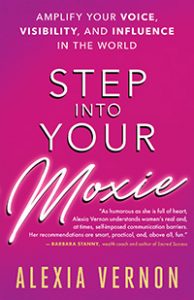
 About Alexia Vernon:
 About Brad and Kasey Wallis:
 About Sunny Chayes:
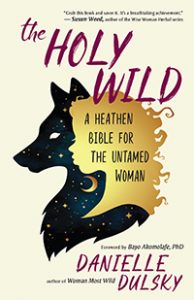 As women of the wild, we deserve our own holy books, our own teaching tales, and our own venerable verses of validation. The spiritual wisdom of the feminine has always been born of lived experience, and the hooded Crone in all of us knows that her truth, her cyclical ways, are unique to her and her alone. The her-stories I offer here have merit only in their meeting with your own life; they do not stand alone as immutable truths or a step-by-step path toward any lofty and permanent healing goal, nor do they assert any secret mysteries that I alone am privileged to know. Without their soul-specific relationship with your memories, passions, woundings, and core values, Priestess, these verses are only words. Without your willful exploration of how the feminine archetypes I discuss in this heathens’ bible live and breathe within your own psyche, their names remain merely the default teaching tools used by outmoded traditions that have long required feminine shame to survive.
  About Danielle Dulsky: