
Today we’re talking with Sandra Kynes, author of “Herbal Remedies for Beginners” and many other wonderful books. We discuss herbs, research methodology, and more!
1. With this being such a tumultuous time, how are you doing?
Thank you for asking. My family and I are doing well. Of course, big servings of ice cream always help. It’s been a time of major changes in my life. Just before the pandemic I became semi-retired from my day job (yay, more time for writing!), sold my house in Portland, Maine, and moved north. It’s been very strange to be in a new place and not able to go out and meet people, not even my nearest neighbor who is about a quarter mile down the road.
Any way, I moved out of the city to the country. In England I lived in the countryside, but it was much more tame. Here in Maine we have all kinds of wildlife nearby including moose, bears, and coyotes. They’re known informally as coywolves since they’re a cross between coyote and gray wolf; they’re very wolf-like and beautiful. Although we hear them in the woods frequently I’m glad I haven’t met one face to face. I’ve been spending a lot of time outdoors; it’s very inspirational to be living so close to nature.
2. At this point, you have written 17 books for Llewellyn. How did it all start?
Oh gosh, I think I always wanted to be a writer. When I was a kid I would write and put together little books and when I was a teenager I wrote a lot of poetry. It wasn’t until I was in my 40s when I started having articles published. I submitted short pieces to Llewellyn for various almanacs and calendars and then eventually sent in the manuscript for a book. They turned down the first one, but I persisted, revamped it and they liked it. There was no turning back because the muse was unleashed.
3. Ever since I read your book “Llewellyn’s Complete Book of Correspondences”, which released in 2013, I’ve been obsessed with figuring out how you take ALL that information and organize it, and then put it into a book. Any chance you can give us a glimpse of your process?
I must have been a librarian in a past life; I like organizing things. I think it’s just a skill. Some people are skilled carpenters and I would love to be able to build things, but I’m a complete klutz in that department. My process for writing, once I have an idea (or rather my muse decides what I’m going to work on) I start with a rough outline to get an idea of how it will flow. And then I dive into the research. I really enjoy that part of the process because sometimes it can be like putting the pieces of a puzzle together. Sometimes you come up with differing information and have to keep digging to figure out what’s what. Occasionally a lead can take me down a rabbit hole and a dead end, but it’s all part of the process. I also like working on projects where I’m learning new things; it keeps life more interesting. I take tons of notes and that’s where organization comes in because it can be easy to get lost. I get annoyed when I can’t find something.
 4. Your latest book is “Herbal Remedies for Beginners”, but you also wrote “Plant Magic”, “Llewellyn’s Complete Book of Essential Oils”, “Mixing Essential Oils for Magic”, and “Herb Gardener’s Essential Guide”. Is it safe to say that plants play a large role in your life? And if so, how?
Yes, and actually my first plant book was “Whispers from the Woods”. Yeah, plants have become a focus although I like to veer off now and then because there are so many interesting things to explore like birds and how they relate to the Goddess. My book “Bird Magic” is very dear to my heart.
The green world speaks to me and touches my soul, but I think that’s true for most people whether they realize it or not; being in nature is a spiritual experience. Nowadays it’s so important to be aware of the issues we’re facing as a planet and to do all that we can, no matter how small it may seem, to turn things around. In addition to connecting us with the natural world, plants provide a connection with the past. We have several millennia worth of information on how people have used plants. Even in my lifetime, witnessing what my grandmother did; her gardening, preserving, and using plants gives me a connection with her and all my ancestors. Plants can also connect us with the future, if we are mindful and good stewards.
5. How is “Herbal Remedies for Beginners” different from your other plant topic books?
This is one of my three mainstream, non-magical books, but it’s different in that it required a lot of medical research. I didn’t want to just say use this recipe or herb for this ailment, I wanted to provide explanations on what to look for and how it may differ from similar issues. I tried to keep in mind what information I wanted at my fingertips when I was first learning about herbal remedies. I wanted to put together a “best of” book to provide an introduction and foundation for making remedies and working with herbs that would also serve as a comprehensive reference. Although I prefer writing magical books, when my editors ask if I’m interested in doing something different I view it as a fun challenge.
6. How do you use herbs in your daily life?
I use the plants themselves and essential oils. I use them for cooking, cleaning, scenting my house; and of course, in magic and ritual. Also, growing herbs and other plants provides aesthetics and a connection with nature and magic. Working with or growing plants that my grandmother used brings back good memories.
7. What advice would you give someone just starting out working with herbs?
Don’t get overwhelmed. While it may seem as though there is so much to learn, don’t feel daunted because you don’t need to know everything all at once. Working with herbs is a journey, not a destination. An important point is to read precautions and warnings because herbs are powerful and need to be used with safety in mind.
You can start with one of your favorite herbs and learn its uses. Or, you can start with an ailment and learn which herbs can be used to treat it. As you go along, you will learn what you need to know for you and your family because you will be able to tailor remedies, personal care products, etc. to your specific needs and preferences. And you don’t have to remember everything, refer to books and keep notes. Most of all have fun.
8. I have repeatedly tried to grow my own herbs indoors in pots, and the poor plants die horrible deaths. In your experience, what are the best herbs for indoor growing, and any tips for those of us who continue to kill them?
First of all, don’t get discouraged. I managed to murder a pot of thyme this summer that I wanted to grow in the house for winter. Just like an outdoor garden, you need to assess the locations you have so you can choose the right herbs to grow indoors. Avoid windowsills that are above radiators as plants will dry out quickly and won’t do well with the fluctuating temperatures in the winter. Many indoor herbs that require a lot of sun will also need some shade. Instead of a windowsill, put them on a table near a window where they can get direct sun as well as some shade. An advantage of potted plants is that they can be moved to different windows to follow the sun throughout the year. Some herbs that work well indoors are basil, thyme, chives, oregano, and rosemary. Experiment.
9. What’s next? Do you have any upcoming projects that you’d like to share with our readers?
When “Whispers from the Woods” went out of print, my editors asked if I would like to do a re-vamp of it that focused on magic. Of course I said “yes”. While I adapted some material from “Whispers from the Woods”, I did a lot more than re-vamp it. The entire section of tree profiles has been completely re-researched, rewritten, and expanded. “Tree Magic” will be out in June 2021. I have another project that my editors don’t know about yet so I have to keep that a secret for now. All I can say is my new surroundings have had a major and magical impact on me.
10. Parting shot! Ask us at The Magical Buffet any one question.
What is your favorite herb or other type of plant and why? Oops, that’s a double question; can it count as one?
I love rosemary! Many a poor rosemary plant has passed away due to my good intentions of having all the rosemary, all the time. It smells good and makes everything taste delicious. Since I can’t get rosemary from my own garden, I’m a big fan of Cucina Aurora’s rosemary olive oil. It’s made with love, and magic, and rosemary.
 About Sandra Kynes:
Sandra is a writer who likes to develop creative ways to explore the world and integrate them with her spiritual path and everyday life. Her unique views and methods form the basis of her books. Her writing has been featured in a number of Llewellyn almanacs, “Sage Woman”, “The Magical Times”, “The Portal”, and “Circle magazines”, and “The World Ocean Journal”. Her work has also appeared online at Utne Reader and she was a contributor to The Meaning of Life at Excellence Reporter.
Sandra has lived in New York City, Europe, England, and now Mid-coast Maine where she lives with her family and cats in an 1850’s farmhouse surrounded by meadows and woods. She loves connecting with nature through gardening, hiking, bird watching, and kayaking. She can be found online on Facebook, her Plant Magic blog on PaganSquare, and www.kynes.net.
Guess what?!? Sandra Kynes was kind enough to give us a signed copy of “Herbal Remedies for Beginners” for me to give away to a reader! The contest is open internationally to entrants 18 years and older. The giveaway ends on Friday 08/21/2020 at 11:59 pm eastern.
Shop your local indie bookstore <---This is an affiliate link to IndieBound, which supports independent bookstores throughout the United States. If you use this link to purchase the book, I will make a small commission at no additional cost to you.
Do you enjoy The Magical Buffet? Considering supporting The Magical Buffet on Patreon! For only $5 a month you’ll receive monthly tarot/oracle forecasts, classes, and behind the scenes updates! https://www.patreon.com/magicalbuffet
 The Satanic Temple (TST) has announced that its religious abortions during the first trimester are exempt from state regulations that hinder access to pregnancy termination services and serve no medical purpose. TST has expressed concerns about the opportunity for its members to perform certain voluntary religious practices, specifically its abortion ritual. Currently, those seeking to terminate a pregnancy around the country may be required to endure unnecessary waiting periods, mandatory counseling, unwanted sonograms, and may be given unscientific reading materials that are designed to elicit shame and sway their decision.
 Have you been spending more time at home? Well, you should be, there IS a pandemic going on after all. I should be using this time to accomplish loads of things, but honestly, I’m not. Sure, some people are learning new skills, or getting shape, but there is nothing wrong with just maintaining. That’s pretty much what I do…. maintain.
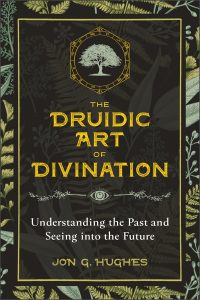 Hughes follows a pre-Celtic Druid tradition that has been passed down as an oral tradition. As such, he spends some time giving you background. He explains the three types of Druid; Craft Druid, Elemental Druid, and Intuitive Druid, which is the rarest. Hughes discusses the morality and belief system that he, and others of his tradition share. It is an interesting read, particularly since I have read a lot of books most would consider Druid-adjacent, but not focused on the whole of pre-Celtic Druid spiritual life.
 To learn more about the Grab Your Wallet Alliance, I encourage you to
 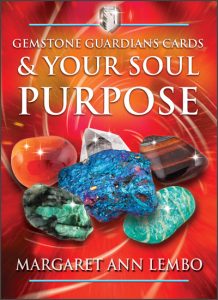 For starters, it is 44 full-color cards featuring crystals! Pretty, pretty, crystals. However, there is more to this deck of cards than just full-color crystal porn. Lembo outlines that there are 11 Soul Purpose archetypes: Art, Building, Communication, Education, Entertainment, Entrepreneurship, Finance, Healing, Investigation, Justice, and Protection. Within those archetypes are 44 life paths. This deck is designed to help you understand yourself and your goals. Each card has a Soul Purpose, a life path, and a crystal, and affirmation to help support you.
 At its heart, “The Vanishing Trial” is about Robert Katzberg’s life and times as a law student, clerk, federal prosecutor, and ultimately, a defense attorney for those accused of white-collar crimes. However, in telling his story, we learn a lot of the nuts and bolts of being an attorney, particularly a defense attorney. A cast of colorful characters populate “The Vanishing Trial” because we learn that a trial lawyer is not only intelligent, but also a showman. Katzberg’s recollections reveal the strengths, and flaws, in the federal legal system. It is a fast, fun read.
 According to Christian History, this issue “features a collection of in-depth articles chronicling how the Scientific Revolution, that unfolded in Europe between 1550-1700 in Christians founded universities, laid the groundwork for modern science. Over the past twenty centuries, followers of Christ pursued scientific and technological innovation with Christian motives and understandings, that were both productive and controversial.”
 Full disclosure, I am not a fan of horses. It’s not like I actively hate them, I just don’t have that gushing adoration that so many people have for them. As a little girl, I never went through a “horse phase”. I didn’t even go crazy for unicorns until my late teens/early twenties when I learned more about them. (Specifically, that they could be beautiful killers. The murdering unicorns are the ONLY reason to watch the movie “Cabin in the Woods”.)
 Each chapter features a horse drawn from a wonderfully curated collection of examples in religion, folklore, and history. After the example you will find a spell or ritual associated with or inspired by the example. The spells are clearly written and well thought out, being sure to list supplies at the start. And, if you’re a nerd like me, the BEST part is at the end of each chapter there is a list of additional resources! I don’t if it was the authors or the publisher who made the decision to do this, but I hope to see more books going forward contain this feature.
 2. Your latest book is “Modern Witchcraft: Goddess Empowerment for the Kick-Ass Woman.” What made you decide to do a goddess-oriented book on witchcraft?
 About Deborah Blake: