Russian Magic

It’s not that I never think of Russia, except that honestly I don’t really think about Russia. Nothing against the country, just for some reason, they never really cross my mind. That’s why I was thrilled to be given the opportunity to review “Russian Magic: Living Folk Traditions of an Enchanted Landscape” by Cherry Gilchrist. I was hoping that I would come away with a refreshing understanding of a country that I had obviously overlooked. I was right.

“Russian Magic” is everything a book of its type should be, potential authors of folkloric books take note. The book is engaging and covers a surprisingly large swath of Russian traditions, religious practices, folklore traditions, and more. It is well researched but also filled with first hand accounts from the author brushing up against these practices.

There were the “standards” such as Baba Yaga and Matrioshka (those adorable nesting dolls). However I was also introduced to a colorful cast of characters like Father Frost, Mokosh (Damp Earth Mother), and Perun (Lord of Thunder). I learned about various divination practices, dates of unique celebrations, the landscapes, and even the significance of the architecture of the traditional village house! Better still, whereas most books of this type would only look at these things from the perspective of their significance in the past, the author takes all of that history and shows you its influence on modern society in Russia.

I also need to tell you that I couldn’t help but be pleased when the domavoi made an appearance. Some readers may remember that WAY back in 2006 I wrote an article about these helpful and potentially harmful house guests. What I didn’t know then, but do now (thanks to “Russian Magic”) is that the domavoi’s birthday is February 10th! If you have one of these guys in your home, that’s the day to really kiss up to him! And now you know.

And if you’re looking to know more, I highly suggest picking up this entertaining and enlightening book.
The Way of Beauty

“Look at it like this – how long do you think you could sing about gold?”

“It’s yellow and it goes chink and you can buy things with it,” said Tomjon experimentally, as they strolled through the crowds on the Plaza of Broken Moons. “Four seconds, I think.”

– Terry Pratchett “Wyrd Sisters”

That snippet from “Wyrd Sisters” is exactly what I thought of when I picked up the copy of “The Way of Beauty: Five Meditations for Spiritual Transformation” by Francois Cheng that Inner Traditions sent me. A book that discusses nothing but beauty? I mean, how long could I discuss beauty? Let’s see, um, flowers are pretty, puppies are cute, and Angelina Jolie is smoking hot. (I just wish she would put a little of her weight back on. Current Skeletor Jolie is considerably less hot than “Gia” Jolie, can I get an amen in here?) Oh, and sunrises, and sunsets, very beautiful. So what am I at, like 20 words if you don’t count my aside about Angelina Jolie’s current weight? Let’s just say I was curious how you manage to fill 116 pages with an examination of beauty and have it not start sounding like “Gold, gold, gold, gold, gold, gold”.
Fortunately beauty, beauty, pretty, beauty, beauty, beautiful, was not how this book read. “The Way of Beauty” is an exquisitely personal discussion of Cheng’s thoughts on beauty and our relationship with it, that, like all great personal works, readers can find themselves in the text. Here’s one of many beautifully crafted excerpts for you:

Formal beauty exists, of course, but it hardly encompasses the entire reality of beauty. That is more strictly a matter of Being, moved by the imperious desire for beauty. True beauty does not reside only in what is already manifest as beauty; it resides almost primarily in the desire and the impulse. It is a becoming, and the dimension of spirit or soul is vital to it.

“The Way of Beauty” uses Western and Taoist thought to make the reader consider beauty in ways that they may not have thought of before. Honestly, it’s nearly impossible to write a “review” of the book. Such a thoughtful, enlightening, and yes, beautiful book defies review in my opinion.

What I can tell you is that it is beautiful. It will make you think. You should read it.

This Blog Post Brought to You By…

For those of you who follow the exciting world of “tech” news, you may have been hearing a lot of noise about how on December 1, 2009 The Federal Trade Commission will require bloggers and celebrities to clearly state when they receive cash or “payment in kind” for endorsing a company’s products or services. This seemed as good of time as any to let you in on how I, and in turn The Magical Buffet, operate. Prepare to probably not be surprised.

As of this moment, The Magical Buffet generates no revenue. We have no paid advertisers, we don’t charge for access to the site (and we never will), and I am not compensated monetarily by anyone for the enchanting articles that I write (but if someone wants to pay me, email me!). In truth, I actually lose money every month creating this wonderous thing you see before you. That said, this unpaid gig is not without its perks.

First, I get to interact with all kinds of awesome people. Have you had an email exchange with Oberon Zell-Ravenheart or Steve Kenson? You know who has? This lady. Also, instead of being “polite” and not talking about politics or religion, I get to do that whenever I want. Take THAT “polite society”! Lastly, I get sent review copies of books and DVDs.

I know from time to time I mention in my reviews that the thing I’m talking about was sent to me by the publisher or distributor, but I don’t always clearly state that fact. Just in case you didn’t know, the books and DVDs I review are given to me in the hopes that I review them.

Here’s the shocker. Stuff that gets reviewed on this website is all stuff I genuinely like. In fact, I had toyed with setting up a website that I wanted to call “Shit Rebecca Likes”. Instead, you poor souls have to put up with hearing about shit I like between articles and interviews from actual professionals. When I started doing reviews I made the conscious decision to only write reviews for things I like and that I think my readers will like. So yes, that means that there is stuff that I get sent that never makes it onto the website, and I’m drunk with the power. Drunk I say!

I’m not anticipating an FTC crackdown on The Magical Buffet, in fact, I’m fairly certain the FTC will never know that I, or my little website that could, even exist. However, it is fair to let people know that hey, I didn’t pay for this book that I’m reviewing. So, um, hey, I haven’t paid for any of the books that I’ve reviewed, but I’ve only reviewed the books and movies that I liked, I’m all moral like that.

And that my friends will probably be the only time I’ll be described anywhere, by anyone, as moral.

The Return of the Dead

My initial thoughts on “The Return of the Dead: Ghosts, Ancestors, and the Transparent Veil of the Pagan Mind” by Claude Lecouteux were, this is SO COOL! In case that’s not enough for you to go out and give this book a try, let me give you some details.

Now this isn’t my first rodeo, I’ve read all kinds of ghosty folklore type books. However, this book discusses revenants and ghosts from a whole new perspective, through the lens of medieval literature. When I first picked up the book I thought, a former professor of medieval literature wrote this book? Not what I’m used to seeing in the bios of what would be lumped into the ever growing “paranormal” book category. Once I started reading it, I was like, hell yeah, bust out those sagas professor!
How do I love thee “The Return of the Dead”? Let me count the ways. (See I can be all literature-like when I want to be.)

One, it’s nice to see Lecouteux giving revenants their due. Revenants are the animated corpses of the medieval era and honestly, they’re not discussed as much as I’d like. I found myself asking, when was the last time I read anything that even mentioned revenants? I’m not positive, but I think it was in my White Wolf gaming phase, before I moved to a town where all these gamer heathens play Hero and Dungeons and Dragons. Anyway, what I’m saying is that I suspect there are many out there that aren’t familiar with the term revenant, and that’s a shame. It’s a fantastic name for a truly creepy thing. If you’re interested in the paranormal, read this book and up your game by learning about some old school haunting.

Two, sagas. This book is loaded, jam-packed, nearly bursting at the seams with excerpts of sagas. From the “Saga of Kormak” to the “Saga of the Volsungs”, you will find great excerpts and explanations of the ancient literary traditions of medieval times. All with an eye to the restless dead. Sagas are cool, end of discussion.

Three, perspective. Thanks to thoughtful writing and well selected excerpts, I feel I have a better understanding of the medieval Pagan mind. I found it surprising, but how people view death and their dead offers great insight into their lives. All of you modern day Pagans that are interested in learning about the pre-church lives of medieval European citizenry should definitely check this book out.

Four, perspective. That’s what’s fantastic about perspectives, there can be more than one! Due to the time period this book focuses on, Lecouteux has to address the influence of the church. “The Return of the Dead” focuses equally on steps the church took to eliminate Pagan beliefs and how the citizens adapted to the church’s influence. I find the evolution of religions fascinating, making this my favorite thing about the book.

Here we are, at the end of my review. To sum up, and touch back on my initial thoughts. This is SO COOL!

The Most Wonderful Time of the Year

Okay, maybe not the MOST, but certainly one of my favorite times of the year. What time is that? When Llewellyn starts busting out their annuals.

Although I’m not a practicing Witch, Wiccan, or Pagan, even I appreciate the detail in their yearly date books. Seriously, I save those bad boys. You never know when you’ll want to know the moon phase on a particular day in 2003. That statement may explain why I keep running out of room for books in my home.

Now that you know that, you’ll understand why I was in full on geek bliss when I received copies of Llewellyn’s “2010 Witches’ Companion” and Llewellyn’s “Sabbats Almanac: Samhain 2009 to Mabon 2010”. Let’s break it down, shall we?

The “2010 Witches’ Companion” has over 20 essays divided up into the categories of “Community Forum: Provocative Opinions on Contemporary Issues”, “Witchy Living: Day-by-Day Witchcraft”, “Witchcraft Essentials: Practices, Rituals, and Spells”, and “Magical Transformations: Everything Old is New Again”. Nice, right? Let’s delve in a little deeper now. Within those categories are articles from loads of authors who have been featured on this very website: “Giving Back to the Spirit World” by Lupa (who wrote “An Abbreviated Introduction to Chaos Magic” for us back in January 2008), “Cyber Altars: Using New Technology in Traditional Ways” by Lisa McSherry (she was interviewed by us back in 2007 and she recently contributed to our Wiccan Rede Project), “Crafting the Perfect Spell” and “The Modern Eclectic Coven” by Deborah Blake (who we interviewed in September 2008), and “Color Magick” by Raven Digitalis (who we enjoy so much that we interviewed him in November of 2007 and again in August 2008). Along with those, and more wonderful essays, you also get a lunar calendar, a monthly break down with the dominant astrological signs, and a moon void-of-course tables. All of THAT for $10. Why on earth wouldn’t you buy this? It’s entertaining, informative, and a great way to get acquainted with several authors…for only $10! Let me say it one more time….only ten dollars.
Now for the “Sabbats Almanac”. This book is divided up by the eight sabbats, surprising, right? This collection is an amazing look at the history and modern celebration of these holidays. This includes rituals, recipes, craft ideas, planetary influences, and family activities. The list of contributing authors is impressive, and again features some Magical Buffet favorites. The previously mentioned Deborah Blake contributes “Spring Equinox” and “An Ostara Ritual for New Goals”. She is joined by Thuri Calafia (who we interviewed in December 2008) who authored “May Day” and “A Beltane Ritual: Erotic Energy” .There are also two essays, “Summer’s End” and “A Mabon Mystery: John Barleycorn”, by Oberon Zell-Ravenheart (who we were honored to interview in January 2008). This book is so much fun! Since I love food so much, I have to admit I enjoyed reading the recipes the most! If you’re looking for new insights and ideas for celebrating the sabbats, this book is a must!

Hopefully you now understand why I can call this one of the most wonderful times of the year!

Compassion and Meditation

I’m not entirely sure of the statistical accuracy, but according to Adherents.com there are roughly 376 million Buddhists worldwide, with the 2008 Pew Survey saying there are roughly 2 million Buddhists in America. Even if these surveys aren’t entirely accurate, it’s safe to sum up that there are a whole lotta’ Buddhists out there. And yet, how much do most of us Americans know about this religion? I’ll admit that despite penning an article here and there that discuss a facet of the faith, I don’t know that much. I’m guessing many of you guys reading this don’t know much either.

Is Buddhism an exotic religion, filled with themes and ideas that are alien to our predominately Christian nation? Not according to Jean-Yves Leloup, author of “Compassion and Meditation: The Spiritual Dynamic Between Buddhism and Christianity”.

Leloup weaves a soothing tapestry between Buddhist and Christian thought. The author shows that compassion and spiritual integrity can be found easily in both faiths, and that the Buddhist practice of meditation and the Christian tradition of hesychast is a profound tie that binds.
“Compassion and Meditation” is meant to be a meaningful examination of the similarities of the two faiths (which it is), but it also serves as an introduction to many basic Buddhist concepts, and the presumably (I hadn’t heard of it before this book.) little heard of practice of hesychast.

If you’re looking to learn a little about Buddhism, and see a side of Christianity that is rarely discussed, this book is a must read.

I Love the Ida Maria CD

“Find a cure for my life.
Put a price on my soul.
Put a smile on my face.
Build a wall,
Build a fortress ‘round my heart.”
“Oh My God” by Ida Maria

The frantic pace and build up of those words in Ida Maria’s song “Oh My God” cut me to the quick. “Oh my god, oh you think I’m in control. Oh my god, oh you think it’s all for fun.” Is there anyone who hasn’t felt that way at one point or another in their life? Where you’re not in control, that everything is most definitely not fine? Well hopefully you’ll find Ida Maria’s beautiful, edgy voice rising into a scream, as therapeutic as I do.

The rest of Ida Maria’s album “Fortress ‘Round My Heart” is a wonderful mixed bag. The entire album is littered with awesome rock tunes with infectiously catchy melodies. A real stand out in that category is “I Like You So Much Better When You’re Naked”, a rock tune with an amazingly catchy chorus that you can’t resist singing along with that turns the table on rock clichés by taking a stab at objectifying men. (But not curing a blogger of creating run on sentences.) Maria’s voice is light and feminine but at other times it’s biting and pushing the edges of her vocal range, in a good way. There are a few smoky ballads as well, such as “Keep Me Warm” and “In the End”. But for me, Maria is at her best when she’s yelling into a microphone on tracks like “Morning Light” and “Stella” and “Oh My God” and “Queen of the World” and “Drive Away My Heart” and I really liked this album, can you tell?

Check out the song that started it all for me, “Oh My God”.

And click here to enjoy the ultra catchy “I Like You So Much Better When You’re Naked”.

Standing With Stones

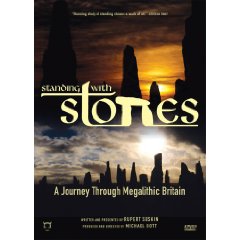
When I first saw the package for “Standing with Stones: A Journey Through Megalithic Britain” I thought, whatever, yet another thing about Stonehenge. I can’t tell you how glad I am that I still opted to pop it into my DVD player.

“Standing with Stones” dedicates possibly one full minute to Stonehenge and nothing more. So what the heck does writer/presenter Rupert Soskin talk about for a little over two hours? Everything else, and if there is one thing you take away from this film is that there is a whole lot of everything else. Soskin leads you on a picturesque tour that covers England, Wales, Ireland, Isle of Man, and Scotland, revealing the treasure trove of stone circles, cairns, standing stones, and more that exist relatively unnoticed by modern society.
Soskin makes for a charming tour guide. He displays a whimsical, mischievous nature, nearly delighting in the unsolvable puzzle that these ancient sites present. Other times he cuts through your inclination to get caught up in a perceived spirituality of the sites with insightful, practical observations.

Producer/Director/Cameraman Michael Bott captures the beauty of the land wonderfully. Sweeping shots of majestic landscapes are broken up with amusingly framed scenes of impressive stone displays being frequented by live stock.

“Standing with Stones” is a beautiful, thoughtful examination of all the ancient stone sites that Britain and its surrounding environs have to offer. This film is a must for anyone interested in Britain’s countryside because “Standing with Stones” is a beautiful travelogue. Also, anyone whose spiritual practices are linked to ancient Britain will find this a useful film to watch to get insights into what their spiritual ancestors lives may have been like, including a wonderful segment dedicated to ancient Druids.

Although not a summer movie blockbuster, no explosions or alien invaders here, I did find “Standing with Stones” and a nice glass of wine to be an enjoyable way to spend an evening.

You can purchase “Standing with Stones” at Amazon.com, Disinfo.com, and iTunes.

Drawing Down the Spirits

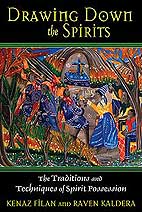
Are you ready to have your mind blown? Seriously, are you looking for a book that will force you to confront and/or reevaluate your thoughts on the very prospect of God or Gods themselves? Then you must, I repeat must, get your hands on a copy of “Drawing Down the Spirits: The Traditions and Techniques of Spirit Possession” by Kenaz Filan and Raven Kaldera.

Where to begin? First, I like the authors’ honesty and straight forward nature. There are ample texts out there that study the phenomena of spirit possession, the cultures that practice it, etc. Most of it is written from a perspective of trying to dissect it, to figure out why practitioners believe it’s happening and what’s really going on. This makes for intriguing reading. The authors here make it clear that this is not that kind of book.

The metaphysical preconceptions underlying this book are quite simple. The authors believe that possession is a real phenomenon; we also see the spirit world(s) as a real place, and that at least some instances of possession involve the displacement of the horse’s ego by an outside entity. We acknowledge scientific method as a useful tool, but we do not limit ourselves to this method, nor do we believe it can explain all possessions.

(These guys would get along with LeShan and his theories on the study of the paranormal.)

So with that out on the table by page 34, you might be inclined to think that “Drawing Down the Spirits” is going to become an odd how-to book, or a long winded retelling of first hand experiences. Boy howdy would you be wrong!

The book opens with a fantastically well written, in depth look at the history of spirit possession. This involves a retelling of the history of Spiritualism, Edgar Cayce, Madame Blavastky and Theosophy, and JZ Knight and Ramtha. This all leads into a geographical history lesson in spirit possession that covers Africa, Asia, Europe, the Middle East, and Oceania. I would gladly have purchased this book for the historical overview alone.

What follows is a compelling look at everything from what constitutes a genuine possession to cosmologies to safety tips to seriously, anything and everything you could ever want to know about spirit possession. Really, anything.

This book presents itself to the reader as a practical look at the phenomenon of spirit possession, and it is, but what really appealed to me was that it is impossible to read “Drawing Down the Spirits” and not spend some time thinking about your thoughts and relationships with God and/or Gods. Hidden within this informative, straight forward text, is a philosophical discourse that is fascinating. Once you open this book, you’ll find it hard to put down.

The Summer of Sovereign

Astute Magical Buffet readers will remember that back in December I commented on a music video by Lady Sovereign, who is a British rap artist. Apparently Perez Hilton wasn’t aware that the video was actually paying homage to the movie “The Warriors”, and instead declared it a video with “Dancing Midget Zombies”. By the way, as proof (as if it was required, but still) that the ladies over at Go Fug Yourself kick ass, they are aware of the film “The Warriors” and name checked it appropriately in a post about Christina Aguilera. Take that Perez! Where was I? That’s right, Lady Sovereign. In the December post I commented that I didn’t know when the album with the song “I Got You Dancing” from the music video would be released. Well it’s out now!

I know nothing about the British rap music scene, or the grime scene, which is what Wikipedia tells me, is the classification for Lady Sovereign’s music. Here’s what I do know. Roll down the windows, slide on the sunglasses, because Lady Sovereign’s new album “Jigsaw” is your summer jam.

The single I’ve been hearing off the album is “So Human” that relies heavily on The Cure song “Close to Me”.

I’m only vaguely familiar with Lady Sovereign’s work previous to “Jigsaw”, so I don’t know how typical or atypical this album is when compared to past efforts. It’s filled with catchy songs, bizarre humor, and flip flopping between spoken word and sort of singing. Lady Sovereign’s voice has a wide range so one song, like “Human” will feature a light feminine voice, and another, like “Guitar”, will have low moans. Also, I suffer from that all too common American affliction of just adoring a British accent, so there’s that too.

If you’re looking for a fun album to tap your foot to while driving in the summer sun, this will do nicely.