Guess who is finally back? Granted, my ass is dragging and my head is aching, but that’s a whole other post. For now I’m back and I bring you beer! That’s right, I went to Glens Falls Brewfest 2016!
Let me tell you people, this little lady drank! There were a bunch of hard ciders represented and I don’t care what anyone says, hard ciders are great. Despite their wide representation at the event I overheard more than one attendee say, oh, they just do cider, and walk away from a booth. That’s just more cider for the rest of us! This worked out great for me because it meant lots of hard ciders and short lines. Hard cider drinkers of the world unite! I guess I should tell you what I drank, huh?
 Champlain Orchards Cidery – Vermont Hard Cider – Heirloom: This was refreshing because it wasn’t overly sweet. According to their website their Heirloom “is pressed, fermented, and crafted from old and new world cider varieties.” I could see serving this to people who like hard ciders but also wine drinkers.
Elf’s Farm – which is maybe also the Adirondack Cider Company, it was all very confusing – the cider itself was…..cider. It was good. I’d gladly drink it again, but other than the cute name of Elf’s Farm, it wasn’t a superstar.
 Downeast Cider House – Cranberry Blend: Seriously, just drink it. Drink lots of it. The tartness of the cranberry combined with the sweetness of apple combined with booziness is what makes life worth living.
1911 Spirits – Ciders – Founders’ Reserve Hopped: I noticed an alarming trend of adding hops to hard ciders while at Brewfest. I am not a fan of hoppy beers and so at first I was quite concerned seeing ciders, now with HOPS! However, the addition of hops to this cider added no bitter after taste and I found it to be a pleasantly sweet sip.
Naked Flock Hudson Valley Hard Cider – Draft: What made me pick this one was that it’s fermented with Belgian Trappist Ale yeast and used maple syrup. I wish I could say that I was all like, man I can really sense that Trappist Ale yeast, but honestly, it was just a tasty hard cider.
 Awestruck Ciders – Lavender Hops: This bad boy wins for originality and taste. A great balance of sweet and dry. The scent of lavender is pervasive and I’m not sure what lavender tastes like, but I think this cider tastes faintly of it, and that it tastes good! It was so unusual it took a few sips for me to definitely decide I liked it, but once I did, I was telling everyone I saw to give it a try. Delicious!
Just as an aside, McKenzie’s Hard Cider and Doc’s Draft Hard Cider were both in attendance as well, but I’ve tried both of their ciders before so I skipped them. They both make some tasty and pretty widely available hard ciders.
And yes, I did have a couple of beers too.
Smuttynose Brewing Company – Amber (?): At the event my husband jotted down that what we tried was called Amber. It was pretty great. Very smooth and a touch sweet up front with an almost too bitter for me finish, but as I mentioned earlier, I’m a hops wimp. When I go to Smuttynose’s website I can’t find “Amber”, so who knows what I really drank?
21st Amendment Brewery – Toaster Pastry – India-Style Red Ale: How can you resist a brewery called 21st Amendment? You can’t. This was good. I wish I had something intelligent to add but all I’ve got was, it tasted good and I liked it.
This other one I found rather amusing. I work in an office, so when I see Avery, I automatically think office supplies. In fact, I and my friends were sipping our Smuttynose beers making fun of a brewery that would call themselves Avery. “I can’t do it,” I told them, “I can’t drink a beer with the same name as an office supply company.” But then I was like, “How can I NOT?”
 Avery Brewing Company – Joe’s Pils: I’m not ashamed to say I like Pilsners and I’ll be damned if Avery doesn’t make a fine one. My friends had one of their stouts and were pleasantly surprised that the office supply company did a good job there too. And thus ended the office supply company jokes and instead we admitted we would just have to be content with enjoying their beer.
I also have to give a shout out to the awesome hometown heroes of Shmaltz Brewing Company. They were at the event as well but there were only two of their brews I really wanted to try, because I haven’t yet, Slingshot (American Craft Lager) and She’brew (Triple IPA) and they didn’t have those with them. But they’re a great bunch of guys so I wanted to give them a shout out!
If that wasn’t enough, there was food! Sadly demand was greater than what most vendors brought so by the time we got over there everyone had packed up except for The Queensbury Hotel, from which I tried some great corn chowder and a soft pretzel stick, and SUNY Adirondack Culinary, who provided a taste of suckling pig with a cauliflower puree. Delicious!
Glens Falls Brewfest 2016 was a great event and I had a lot of fun. I’ll probably be going next year.


 Healing Arts Press offers “Natural Remedies for Inflammation” by Christopher Vasey, N.D. Vasey does an excellent job describing inflammation and the different ways it can affect the body. As you can tell from the fact that we’re still discovering things that may be linked to inflammation, it’s still hard to say exactly what can or can’t be directly linked to inflammation. Yet Vasey highlights and explains many things that if inflammation isn’t the sole cause, it plays a large role in the malady. Arthritis, eczema, tendonitis, and gout are all characterized by inflammation.
 1. “Among the Mermaids: Facts, Myths, and Enchantments from the Sirens of the Sea” by Varla Ventura. As someone who has always loved myths and stories about sirens and mermaids, “Among the Mermaids” was a definite stand out for the year. Not only did Ventura fill the book with lore and legends of merrows, mermaids, and sirens, but the resources section in the back lists books, movies, and shopping. Shopping! Want your mermaid tail?
 3. “The Daemon Tarot” by Ariana Osborne. Based on Jacques Auguste Simon Collin de Plancy’s “Dictionnaire Infernal”, this 69 card deck isn’t just a divinatory tool, but a piece of occult reference. Obviously it cannot be used exactly as a tarot deck, but thanks to a researched and well thought out companion book, you’ll be doing a single card draw or a six card spread in no time.
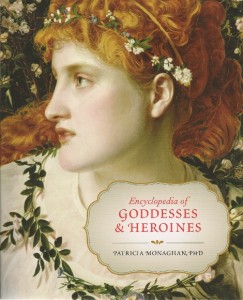 5. “Encyclopedia of Goddesses & Heroines” by Patricia Monaghan. Monaghan published the first encyclopedia of divine females in 1979, and that book has stayed in print in one form or another right up to today. The latest is newly expanded and features more than 1,000 heroines and goddesses from folklore, literature, and religion from around the world. It. Kicks. Ass.
 7. “The Yoga of Cleaning” by Jennifer Carter Avgerinos. Weird, right? Nope. Avgerinos background as both a certified yoga instructor and having worked in the consumer packaged cleaning tools industry for the past several years indeed gives her a unique perspective on these two seemingly divergent topics. She brings them together in a way that, I swear, makes you want to clean.
 9. “The Wisdom of Near-Death Experiences: How Understanding NDEs Can Help Us Live More Fully” by Dr. Penny Satori. There have dozens of books written about near-death experiences, however in my opinion this is the one we’ve been waiting for. Dr. Satori’s book is based off of the UK’s first long term prospective study of near-death experiences and she was awarded a PhD for her research in 2005. That’s right, it’s science. Although the research is grounded in science, Satori also includes many of her experiences from her 17 years as an intensive care nurse. This makes “The Wisdom of Near-Death Experiences” a compelling read.
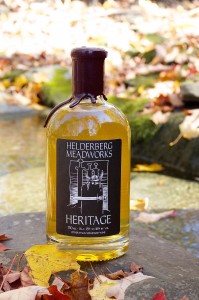 10. Helderberg Mead. 2014 gets to be the year that I fell in love with Helderberg Mead. As Peter Voelker said when I interviewed him about Helderberg Meadworks, “Most mead that you can buy in the wine stores around here either tastes like a low alcohol honey syrup or a nice soft white wine. While there’s nothing wrong with that (I love a nice Vidal Blanc), HMW takes a different approach. We use techniques that would have been used many moons ago and produce a mead that has big, bold and feral qualities to it. We’ve adapted old world methods to modern day sanitation and palettes without catering to any particular group of consumers. This is mead as we think it should be. With that said, there are 2 major differences between HMWs mead and others. The first is our alcohol content, which has a range on the label of 15% to 16%. Our current “Burgundy Wax” batch is at the high side of that range. Most others are from 8% to 11%. The second difference is our use of oak aging. Back in the days before metals were commonly available, oak would have been the preferred storage vessel for nearly all drinks. We have taken this concept and applied it to our mead. The result is a powerful mead (shouldn’t all traditional mead be POWERFUL?) with a whiskey-like nose and great honey flavor without being overly sweet.”


